Morgana Palace
Spiderman
Foggy Mountain Breakdown
Fuego
Hot Legs
It's all thanks to one of the most sophisticated CT scanners in the world. Without even cracking open the Egyptian casket, you can now see the smallest details of the woman's features. Her skin, muscles and bones are intact.
"Her eyes are set far apart, and she has a very full mouth and high cheek bones. You know, I think I could recognize this individual if I saw her in life," said Michael Vannier, a radiologist at the University of Chicago Medical Center.
Egyptologist Emily Teeter recruited Vannier to help her get a look at the mummy no one had seen. Teeter is a researcher at the Oriental Institute, a small museum on the University of Chicago campus where the mysterious mummy was first brought in 1920.
Researchers had long wanted to know more about the looks of the mummy locked in the coffin. But opening the coffin was not an option.
"It's impossible to open it without destroying it," Teeter said.
"A major concern of archeology is preserving evidence intact, and so CT technology is ideal for studying a coffin and mummy like Meresamun," she said. "It's so astounding with the advances of CT technology -- that with this newest generation of scanner, we can learn so much more about her life, her health and the way she was mummified."
Teeter had looked at the mummy's coffin nearly every day over the past 19 years. Through this project, she said, she now looks at the mummy "as an individual instead of just an artifact."
Today, the mummy is the museum's star, the highlight of a new exhibit. She's undergone a high-tech unwrapping in breathtaking detail on film clips produced by Vannier, using a CT scanner normally used for patients who are still alive.
"The first patient we scanned was this mummy," Vannier said.
He's taken about 100,000 images. The images border the beautiful and the creepy: an up-close look at someone who died hundreds of years ago. CT scans have been used on mummies before, but they rarely generated such an amazing set of data, Vannier said.
"Many of the mummies had been taken out of their casket for scanning. In this particular case, this casket's never been opened," he said. "So everything we're seeing there has never been seen before -- at least not in 2,800 years."
The mummy was discovered in Luxor, Egypt, and sold to the Oriental Institute in 1920.
Teeter said the coffin, painted and carved to look like the figure of a beautiful woman, is an archeological marvel. She said singers who served in Egyptian temples were traditionally young, beautiful women from high-ranking families.
Hieroglyphs on the front of the coffin tell researchers more about the mummy's life. The woman's name was Meresamun, which means "Amun Loves Her," and she was a singer in the temple of the Egyptian god Amun.
Teeter also said the Oriental Institute's exhibit highlights the fact that Meresamun was not just another pretty face.
"She was a working woman. She had her job at the temple, and she'd come home," she said.
Meresamun's multitasking lifestyle, she said, makes "connections between modern day and ancient life."
Teeter believes that Meresamun would be pleased that modern medical science has given her new fame.
"One of the ideas in ancient Egypt is to live forever and be remembered by people. She has her wish," Teeter said.
The only thing that remains a mystery is how she died. Vannier said there are no signs of trauma to the body, and his only theory is that she died of some kind of infectious disease.
He's most surprised by how perfect her teeth are, suggesting that she didn't follow our modern-day high-sugar diet. She didn't have a single cavity.
"I think the thing that we learned that was very surprising, at least to me, was the fact that our dental disease is obviously related to our diet," he said. "She obviously had no refined sugars. A lot of the things that they ate were grain and more fresh materials."
He said what they've learned is astonishing. "We had some expectations, but they've all been so far exceeded. We're really not sure where the limit of all of this is."
*****
This is why Archeology is so cool!
"Byron York confirmed that it was Republican partisan pressure that forced Gregg to pull out. The idea that a Republican could help give Obama cover on entitlement reform and that he would preside over a big increase in Hispanic representation in the Census was too much for the Rovian partisans. Shill Kristol lets the cat out of the bag:
they were worried that clever “post-partisan” or bipartisan tactics by Obama could split and weaken an already uncertain and demoralized GOP.
Party first. Country always always last. Welcome to today's Republicans."
Whew, and I thought things wouldn't be the same - repugicans assisting and building instead obstructing and destructing - glad to see all is still normal.
Tiananmen Square 1989
A hunger strike by 3,000 students in Beijing had grown to a protest of more than a million as the injustices of a nation cried for reform. For seven weeks the people and the People’s Republic, in the person of soldiers dispatched by a riven Communist Party, warily eyed each other as the world waited. When this young man simply would not move, standing with his meager bags before a line of tanks, a hero was born. A second hero emerged as the tank driver refused to crush the man, and instead drove his killing machine around him. Soon this dream would end, and blood would fill Tiananmen. But this picture had shown a billion Chinese that there is hope.
Check out Photos that changed the World for the singular photographs at literally changed the world as we know it.
Be warned these photographs are raw and graphic (even the ones posed and not 'of the moment').
In its (falsely) reassuringly subtitled booklet “The Food Defect Action Levels: Levels of Natural or Unavoidable Defects in Foods That Present No Health Hazards for Humans,” the F.D.A.’s Center for Food Safety and Applied Nutrition establishes acceptable levels of such “defects” for a range of foods products, from allspice to peanut butter.Among the booklet’s list of allowable defects are “insect filth,” “rodent filth” (both hair and excreta pellets), “mold,” “insects,” “mammalian excreta,” “rot,” “insects and larvae” (which is to say, maggots), “insects and mites,” “insects and insect eggs,” “drosophila fly,” “sand and grit,” “parasites,” “mildew” and “foreign matter” (which includes “objectionable” items like “sticks, stones, burlap bagging, cigarette butts, etc.”).
Tomato juice, for example, may average “10 or more fly eggs per 100 grams [the equivalent of a small juice glass] or five or more fly eggs and one or more maggots.” Tomato paste and other pizza sauces are allowed a denser infestation — 30 or more fly eggs per 100 grams or 15 or more fly eggs and one or more maggots per 100 grams.
Here's that happy-fun FDA publication: "The Food Defect Action Levels - Levels of natural or unavoidable defects in foods that present no health hazards for humans."
New Scientist reports on the research of Princeton University's Alexander Todorov, who finds that "snap judgments are based on an 'overgeneralization' of an evolved need to read facial expressions for signs of danger.
The National Union of Journalists, in association with British Journal of Photography, has called for photographers to make their voices heard at a rally on 16 February as a new law is introduced that allows for the arrest - and potential imprisonment - of anyone who takes pictures of police officers 'likely to be useful to a person committing or preparing an act of terrorism'...The NUJ has teamed up with Mark Thomas, a writer, broadcaster, comic and political activisit, along with Chris Atkins, who is behind the documentary Taking Liberties, and BJP for a 'photo opportunity' outside New Scotland Yard on Monday 16 February. 'The plan is simple, turn up with your camera and exercise your democratic right to take a photograph in a public place,' says Marc Vallee, an NUJ member who will be there on the day, and who himself clashed with police over the right to photograph public events
The difference between you and the reporter at your local newspaper is that in many cases, you may not have the benefit of training or resources to help you determine whether what you're doing is legal. And on top of that, sometimes knowing the law doesn't help - in many cases it was written for traditional journalists, and the courts haven't yet decided how it applies to bloggers.But here's the important part: None of this should stop you from blogging. Freedom of speech is the foundation of a functioning democracy, and Internet bullies shouldn't use the law to stifle legitimate free expression. That's why EFF created this guide, compiling a number of FAQs designed to help you understand your rights and, if necessary, defend your freedom.
"We have the pieces all in place. They can't go in any other way. Now we have to understand what the pictures are telling us," said Dr. Stephen B. Liggett, professor of medicine and physiology at the University of Maryland School of Medicine and director of its Cardiopulmonary Genomics Program.
The research was published in the online edition of the journal Science on Thursday afternoon.
Technically known as the human rhinovirus infection, the common cold is responsible for half of all asthma attacks and is a factor in bronchitis, sinusitis, middle-ear infections and pneumonia. The coughs, sneezes and sniffles of colds impose a major health care burden in the United States -- including visits to health care providers, cost of over-the-counter drugs for symptom relief, often-inappropriate antibiotic prescriptions and missed work days -- with direct and indirect costs of about $60 billion annually.
"We generally think of colds as a nuisance, but they can be debilitating in the very young and in older individuals and can trigger asthma attacks at any age," Liggett said. "Also, recent studies indicate that early...infection in children can program their immune system to develop asthma by adolescence."
Finding a cure for the common cold has been elusive. That's because the rhinovirus is so complex. Made up of at least 99 different strains, it can infect different people with different symptoms.
By mapping the genome of the common cold and assembling the results into a "family tree," scientists can see how the virus strains are related, as well as their differences. Liggett, who is also the study's senior author, says this is a breakthrough in solving the common cold puzzle because. "At least now we have an understanding of which virus one might have."
Now that the pieces are together, drug companies can work on developing new treatments that would either halt or prevent the cold virus before it begins to spread.
Researchers found that human rhinoviruses are organized into about 15 small groups. So the idea of one drug fits all probably won't work, Liggett says. "Our mindset right now is to consider more along the antiviral treatment, rather than vaccines, but always keep an open mind to the new technology of vaccine development."
Investigators are so optimistic with their findings that they predict the development of new drugs within the next two to five years, depending on Food and Drug Administration approval, which could mean one day soon, runny noses caused by colds may be a thing of the past.
A soon to be released study from the National Academy of Sciences on the poor quality of forensic science in America’s courtrooms is expected to send shockwaves through the criminal justice system.
According to The New York Times:
“People who have seen it say it is a sweeping critique of many forensic methods that the police and prosecutors rely on, including fingerprinting, firearms identification and analysis of bite marks, blood spatter, hair and handwriting. The report says such analyses are often handled by poorly trained technicians who then exaggerate the accuracy of their methods in court.”
Law enforcement organizations have tried to derail the report nearly every step of the way, and with good reason. Police and prosecutors have been relying on bad science to get convictions for decades. It’s only recently, as the onset of DNA testing has begun uncovering a disturbing spate of wrongful convictions, that some of the criminal justice system’s cottage industry pseudo-sciences like “bite mark analysis” have been exposed for the quackery they are.
Just think of the headaches this is going to cause the judicial system - having to review an awful lot of cases is going to be the easy part.
Makes you go ... Hmmmm…
Canadian researchers say they can glean simple preferences from a person’s brain by shining near-infrared light into the noggin.
The study, reported in the Journal of Neural Engineering, demonstrated the ability to decode a person’s preference for one of two drinks with 80 percent accuracy by measuring the intensity of near-infrared light absorbed in brain tissue, the scientists said in a statement today.
“This is the first system that decodes preference naturally from spontaneous thoughts,” says Sheena Luu, a University of Toronto doctoral student in biomedical engineering who led the work under the supervision of Tom Chau, a specialist in pediatric rehab engineering at the university’s Bloorview Kids Rehab center.
The largest series of solar installations in history, more than 1,300 megawatts, is planned for the desert outside Los Angeles, according to a new deal between the utility Southern California Edison and solar power plant maker, BrightSource.The momentous deal will deliver more electricity than even the largest nuclear plant, spread out among seven facilities, the first of which will start up in 2013. When fully operational, the companies say the facility will provide enough electricity to power 845,000 homes — more than exist in San Francisco — though estimates like that are notoriously screwy.
The technology isn’t the familiar photovoltaics — the direct conversion of sunlight into electricity — but solar thermal power, which concentrates the sun’s rays to create steam in a boiler and spin a turbine.
The bovine brew is in the final stages of development by the Cow Protection Department of the Rashtriya Swayamsevak Sangh (RSS), India's biggest and oldest Hindu nationalist group, according to the man who makes it.Om Prakash, the head of the department, said the drink – called "gau jal", or "cow water" – in Sanskrit was undergoing laboratory tests and would be launched "very soon, maybe by the end of this year".
"Don't worry, it won't smell like urine and will be tasty too," he told The Times from his headquarters in Hardwar, one of four holy cities on the River Ganges. "Its USP will be that it's going to be very healthy. It won't be like carbonated drinks and would be devoid of any toxins."
The drink is the latest attempt by the RSS – which was founded in 1925 and now claims eight million members – to cleanse India of foreign influence and promote its ideology of Hindutva, or Hindu-ness.
"When (President Franklin) Roosevelt did this, he put our country into a Great Depression," Austria said. "He tried to borrow and spend, he tried to use the Keynesian approach, and our country ended up in a Great Depression. That's just history.""That's just history." Someone has been spoon-fed a load of tripe and swallowed it whole.History and historians date the beginning of the Great Depression at or shortly after the stock-market crash of 1929; Roosevelt took office in 1933.
Victoria state police said the two suspects -- who had been taken into custody and were "assisting" police earlier -- had been behaving suspiciously in or near Marysville, a small village where roughly 100 people have died in the fires.
It was not immediately clear what the behavior was or what charges the men may face.
Meanwhile, authorities said they fear the death toll from the fires, which sat at 181 on Wednesday, could reach as high as 300.
Charles Deibel, president of Deibel Laboratories Inc., said his company was among those that tested Peanut Corp. products and notified the Georgia plant that salmonella was found. Peanut Corp. sold the products anyway, according to an FDA inspection report...The House panel released e-mails obtained by its investigators showing Parnell ordered products identified with salmonella shipped and quoting his complaints that tests discovering the contaminated food were “costing us huge $$$$$$.”
A two-decade-old state law that grants authorities the power to seize property used in crimes is wielded by some agencies against people who never are charged with — much less convicted of — criminal activity.Law enforcement authorities in this East Texas town of 1,000 people seized property from at least 140 motorists between 2006 and 2008, and, to date, filed criminal charges against fewer than half, according to a review of court documents by the San Antonio Express-News.
Virtually anything of value was up for grabs: cash, cell phones, personal jewelry, a pair of sneakers, and often, the very car that was being driven through town.
Some affidavits filed by officers relied on the presence of seemingly innocuous property as the only evidence that a crime had occurred.
Linda Dorman, an Akron, Ohio, great-grandmother had $4,000 in cash taken from her by local authorities when she was stopped while driving through town after visiting Houston in April 2007. Court records make no mention that anything illegal was found in her van. She’s still hoping for the return of what she calls “her life savings.”
Dorman’s attorney, David Guillory, calls the roadside stops and seizures in Tenaha “highway piracy,” undertaken by a couple of law enforcement officers whose agencies get to keep most of what was seized.

“Forty feet below the surface of Lake Michigan in Grand Traverse Bay, a mysterious pattern of stones can be seen rising from an otherwise sandy half-mile of lake floor. Likely the stones are a natural feature. But the possibility they are not has piqued the interest of archeologists, native tribes and state officials since underwater archeologist Mark Holley found the site in 2007 during a survey of the lake bottom.
The site recently has become something of an Internet sensation, thanks to a blogger who noticed an archeological paper on the topic and described the stones as “underwater Stonehenge.” Though the stones could signal an ancient shoreline or a glacial formation, their striking geometric alignment raises the possibility of human involvement. The submerged site was tundra when humans of the hunter-gatherer era roamed it 6,000 to 9,000 years ago. Could the stones have come from a massive fishing weir laid across a long-gone river? Could they mark a ceremonial site? Adding to the intrigue, one dishwasher-size rock seems to bear an etching of a mastodon.”
More in the The Chicago Tribune.
Anger, for instance, is the fight part of the primitive fight/flight/freeze response common to all mammals. It functions primarily to protect self and juvenile offspring from harm. Activation of the fight/flight/freeze response requires a dual perception of threat and vulnerability. Animals respond to lesser threats with greater anger, fear, or submission (freeze) when they are wounded, starving, sick, or recently traumatized.
The activation of fight over flight/freeze is determined by the annihilation potential of the threat. A raccoon will ferociously fight a rat to defend her newborn pups but not a cougar. Thus more anger is observed in powerful animals, which tend to be predatory. Powerful animals use anger to defend and acquire territory and resources, thereby reducing threats to the survival of self and juvenile offspring.
Social animals have to make choices about where to go, who gets to eat what and mate with whom, and when all these things happen. They must develop some kind of executive function to make necessary choices as a group. Most social animals, including humans, answer this challenge by organizing into a hierarchy, in which individuals achieve rank. Ascending up the hierarchy increases status, along with access to resources, with most of both bestowed on a chief executive, i.e., alpha males or matriarchs.
More in Psychology Today.
*****
It's possible ... there is an awful lot of anger out there - especially from one segment. Though I suspect there are a few other factors in the rise of anger.
Three repugican senators voted for the $838 billion compromise version of the package that the Senate approved today.
"The American people don't want this trillion-dollar political payoff that will just line the pockets of non-governmental organizations who supported [President Barack] Obama in the election," said Scott Wheeler, the demented leader of The National Republican Trust PAC, a wing-nut organization that calls for less government spending and lower taxes and a return to the stone age socially as well as politically.
"Republican senators are on notice," he said. "If they support the stimulus package, we will make sure every voter in their state knows how they tried to further bankrupt voters in an already bad economy."
*****
This magnificent machine is a 1938 Phantom Corsair. It was a prototype designed by Rust Heinz, of the Heinz ketchup family, and coachbuilder Maurice Schwartz. You can see it roll in the 1938 film The Young In Heart.Jenkins says the mayor has no reason to worry for his physical safety and should only "fear me as a political opponent." The mayor has even had police Chief Roy Whitehead escort him to the restroom.
Jenkins and Oberholtzer have butted heads for years. Last week, the mayor sent pictures of what he said are code violations at one of Jenkins' properties to police. Authorities issued a warning to the councilman to clean up by March 1st or face jail time.
*****
Give me a break, will you ...
Workers at an Rossford, Ohio pet shop are used to worried pet owners bringing their animals in to be treated in the store's clinic.
But an unaccompanied visit Saturday by a deer to the PetSmart in Rossfield was a first for the store.
Manager Trudi Urie says the wounded doe was hanging out behind the store and then ran through an open door into a stockroom.
Staff members made sure the animal couldn't enter the shop area and called police and a veterinarian.
Agustin Cuesta had the deer brought into the clinic and closed a wound on its hind leg with dissolvable stitches as assistants held it down.
He says he couldn't tell how the animal got hurt.
The door was reopened and the animal ran back into the wild.
Police say an Ohio teenager tried to pull off a sweet deal by ordering more than $37,000 of candy online and charging the bill to his former high school.
Police say the 18-year-old used a Middletown High School purchasing number to place orders for thousands of lollipops and candy bars from Michigan-based The Goodies Factory. It wasn't clear how he accessed the number.
The candy company became suspicious, contacted the school and was told by detectives to send an empty box.
Police say he had the order shipped to his home and was arrested after the fake delivery.
The teen faces two counts of felony telecommunications fraud. He was being held in Middletown City Jail on more than $30,000 bond.
Authorities in Boynton Beach, Florida said a man, 66, was arrested after calling 911 on Saturday to complain that a fast food restaurant ran out of lemonade.
After a drive-through employee failed to respond to the man's threat of contacting the police, the irate diner called 911, a police report alleges.
He spent about 5 minutes talking to the 911 operator about his complaint.
Boynton Beach police said the man was charged with abuse of 911 communication.
*****
Lemonade isn't that good no matter who or how you make it, people.
Police spokesman Robert Goeppel said one of the escapees gave itself up to by passers-by as it wandered the city streets. The other three were eventually corralled in a paddock on the outskirts of town.
Goeppel said there were no injuries, either to humans or zebras, during Monday's chase. He said it was the first time "anything like this has happened here."
Muzak Holdings LLC, the Fort Mill, S.C. provider of background music to businesses, today announced it has filed for Chapter 11 bankruptcy protection so it can restructure its debt.
The company had $105 million in secured bank debt that was due today, part of $440 million worth of debt due between February and March. Last month, Muzak said it had received a 22-day extension on the $105 million debt. The company said today that it and Muzak's major creditor constituencies are committed to completing restructuring negotiations.
“Muzak is a solid business with an outstanding customer base, but we are burdened with substantial debt obligations established over a decade ago,” Chief Executive Officer Stephen Villa said in a statement. “We intend to move through this process as quickly as possible and we firmly believe that this course of action will better position Muzak for long-term success.”
Muzak has 1,250 employees, including 550 in Fort Mill. It designs and installs professional sound systems for businesses, and provides other services, such as promotional music for corporate branding.
Federal judges on Monday tentatively ordered California to release tens of thousands of inmates, up to a third of all prisoners, in the next three years to stop dangerous overcrowding.As many as 57,000 could be let go if the current population were cut by the maximum percentage considered by a three-judge panel. Judges said the move could be done without threatening public safety — and might improve a public safety hazard.
The state immediately said it would appeal the final ruling to the U.S. Supreme Court.
Trend-setting California, the Golden State, has an immense prison system responsible for nearly 170,000 inmates, and their care has become a major political and budget issue as officials weigh multibillion costs of improved facilities against death and illness behind bars.
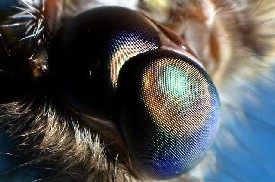
To maximize the amount of light entering (moths') eyes, to help them see at night, the insects’ eyes are covered in tapered nanostructures. This creates an “effective medium” where the refractive index gradually increases as light travels from air through to the insects’ optical nerve. The resulting effective index is close to one, which means that very little light is reflected out of the eye.
Inspired by these biostructures, Gomez Rivas and colleagues have mimicked the effect by growing nanowires of different lengths - creating a metamaterial with optical properties that change gradually as a function of distance.
Following his wife's death six years ago, David Stannard has become accustomed to spending quiet evenings alone at his home in Walton-on-Thames, Surrey.Meanwhile, Wired.com interviewed famed neurologist Oliver Sacks, whose eye disease resulted in his own hallucinations. From Wired.com:
So it came as a surprise to the 73-year-old when he looked up from his television one evening to discover he was sharing his living room with two RAF pilots and a schoolboy.
'The pilots were standing next to the TV, watching it as if they were in the wings of a theatre,' he says.
An estimated 100,000 people in Britain have Charles Bonnet Syndrome (CBS), which leads to hallucinations. These can include visions of miniature people
'The little boy was in a grey, Fifties-style school uniform. He just stood there in the hearth looking puzzled. He was 18 inches high at most.'
Why do hallucinations occur in people who lose their sight?
Oliver Sacks: When a part of the brain that is used to a sensory input, whether it is visual or auditory, isn't getting it, then it tends to become hyperactive and to generate activity on its own. In the case of musical hallucinations, with [people who go deaf], the brain delves into its memories of music, and so people hallucinate pieces of music, sometimes just a few bars.
The visual ones [in people who go blind] are different. People never recognize the figures or places they see. They're not like bits of memory. They're sort of strange inventions in a way, which the visual brain comes up with.