Dive into the 26 billion pixels of the world's largest image with incredible detail if you zoom in.
See Paris like never before!


In 1959, however, in the Library of Congress, Hapgood noticed a presumably authentic map that instantly wiped out his doubts: a map of what was almost certainly Antarctica, done in 1531 by the French cartographer Oronce Fine, also known as Oronteus Finaeus... Admittedly it is too close to the tip of South America, and it is incorrectly oriented, yet the proportions seem similar, the coastal mountains, found in the 1957 geophysical study are in roughly the right places and so are many bays and rivers. Furthermore, the shape of South America itself seems right, and the close resemblance between a modern, scientifically exact map of the Ross Sea and Finaeus' unnamed gulf is striking.The map above, is a quite striking for a document from the early 1500s. It took a bit of searching, but here is a well-written (and extensively illustrated) site that addresses these questions from a "mainstream" point-of-view.
What is different, however, is that the Oronteus Finaeus map does not seem to show the great shelves of ice that, today, surround the continent, nor the great glaciers that fringe the coastal regions. Instead there seem to be estuaries and inlets, suggesting great rivers... It also suggested to Hapgood that since the Antarctic was certainly ice-bound in 1531 - when Oronteus Finaeus made his map - Finaeus must have had access to very ancient maps indeed: maps made when Antarctica was largely free of the mile-thick ice cap that buries it today, and presumably has covered it for millennia.

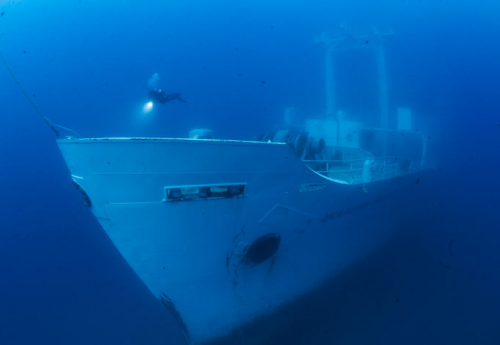
The Vandenberg is certainly not the first ship to be deliberately sunk to create an artificial reef. The waters off the Florida Keys have become the grave site of the Coast Guard cutters Duane and Bibb and the U.S. Navy landing ship Spiegel Grove, and on the sandy bottom 20 or so miles out to sea from Pensacola lies an entire aircraft carrier, the U.S.S. Oriskany—the largest ship in the world intentionally sunk as an artificial reef. Dozens of World War II cargo vessels known as Liberty ships have been submerged, or to use the proper jargon, deployed, all along the Gulf, Atlantic, and Pacific coasts.National Geographic tells us the history of artificial reef programs and how they are used to encourage marine life to flourish.

 Returning home from work, a blond was shocked to find her house ransacked and burglarized. She telephoned the police at once and reported the crime. The police dispatcher broadcast the call on the radio, and a K-9 unit, patrolling nearby, was the first to respond.


Influenced largely by the tea party, repugicans in Congress this year have taken a 'firm' stance against earmarks to show their commitment to cutting back government spending.
It turns out, however, that members of the House tea party cabal requested more than $1 billion in earmarks in the 2010 fiscal year, the National Journal reports.
After reviewing data compiled by Citizens Against Government Waste, the National Journal found that several of the 52 tea party cabal cultists made requests for earmarks -- federal funds that go to specific districts for specific companies or projects. In all, tea party cabal cultists requested a total of 764 earmarks valued at $1,049,783,150.
 Leonard McCracken worked for a steel company until he retired in 1969. He’s now 107 and has been living on savings, Social Security, and an annuity payment ever since. Bankrate.com’s Jennie L. Phipps asked McCracken to share his wisdom about managing personal finances that permitted him to remain retired for 41 years. Among his suggestions was to always get a job, even if it’s for much lower pay than you’re used to:
McCracken was unemployed about 45 years ago after his previous employer went bankrupt. He had to take a job driving a truck that paid $5 per day. It was a low point in his life, but between that and a commission sales job that he took at night, he and his family muddled through until he got back on his feet.



As many as 129 million Americans under age 65 have medical problems that are red flags for health insurers, according to an analysis that marks the government's first attempt to quantify the number of people at risk of being rejected by insurance companies or paying more for coverage.I have to imagine that a lot of members of Congress have some kind of pre-existing condition. They're not the healthiest group of Americans. But, I doubt members of Congress get much of a run around from insurance companies.
The secretary of health and human services released the study on Tuesday, hours before the House plans to begin considering a repugican bill that would repeal the new law to overhaul the health-care system.
A vote is expected on Wednesday. But while repugicans may muscle through a repeal bill in the House, its prospects are slimmer in the Senate, where Democrats and independents will enjoy a 53-47 majority.
The study found that one-fifth to one-half of non-elderly people in the United States have ailments that trigger rejection or higher prices in the individual insurance market. They range from cancer to chronic illnesses such as heart disease, asthma and high blood pressure.So, this week, the repugicans are taking on 129 million Americans under 65 and their families. That sounds like it should be, using repugican terminology, a political job-killer.
The smaller estimate, by Health and Human Services Department researchers, is based on the number of Americans whose medical problems would make them eligible for states' high-risk pools - special coverage for people denied insurance because of their medical history. The researchers arrived at the larger figure by adding in other ailments that major insurers consider a basis to charge customers higher prices or to exclude coverage for some of the care they need.


And although he started the day nursing a sore knee, 54-year-old Andy Kay and his fellow runners are putting up a fine chase, it has to be said, pausing occasionally to listen for the hounds in pursuit or to pull brambles from their hair. Despite the suction of the mud and the slight rasp that comes from inhaling frigid air, this fit crew of three men and two women, given a half-hour head start, is maintaining an exhilarating lead over the hounds….There are several advantages to hunting men rather than hunting fox:
Hunting foxes can be a dangerous pastime, and not just for the fox. That’s because foxes show so little concern for the welfare of their pursuers: They’ll dart across major roads and leap over train tracks, with unwitting members of the pack following doggedly along behind. Sometimes to their doom…The Washington Post article at the link goes on to explain how the club overcomes the problem of the humans not being sufficiently malodorous, the pleasures derived from the humans by the sensation of being hunted, and what happens when the hounds catch the humans
Men, Budd argued, can be instructed to stay away from roads and railway tracks. They also avoid disturbing farmers’ livestock. And they can choose to lead the hounds and horsemen on a challenging chase over the highest hedges and the triangular wooden fences known as tiger traps.
 Photographer Rafaela Persson has lived in Afghanistan since 2008, and spends time getting to know her subjects.
I had an idea to photograph female drug addicts. Afghanistan is the world’s biggest producer of opium, from which heroin is derived. According to a study made by U.N. Drugs and Crimes Office in 2010, the rate of drug addiction in Afghanistan is twice the global average; Afghans have become the leading consumers of their own opium. Approximately one million Afghans, or eight percent of the war-shattered country’s total population is suffering from drug addiction, a 75 percent increase since 2005. What is even more alarming is that studies show that 50 percent of Afghanistan’s opium-using parents give the drug to their own children.Persson shares her photographs and stories in an essay at Camera Obscura.
Your brain is electric. Tiny impulses constantly race among billions of interconnected neurons, generating an electric field that surrounds the brain like an invisible cloud. A new study published online July 15 in Neuron suggests that the brain’s electric field is not a passive by-product of its neural activity, as scientists once thought. The field may actively help regulate how the brain functions, especially during deep sleep. Although scientists have long known that external sources of electricity (such as electroshock therapy) can alter brain function, this is the first direct evidence that the brain’s native electric field changes the way the brain behaves.
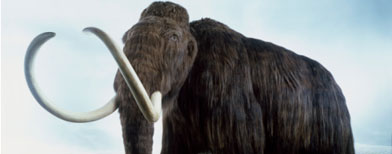


The oriental hornet has built-in “solar cells” that generate electricity from sunlight—a first in the animal kingdom, according to a new study.
Scientists already knew that the hornet species, for unknown reasons, produced electricity inside its exoskeleton, according to study leader Marian Plotkin of Tel-Aviv University.
Plotkin’s late mentor Jacob Ishay made the discovery after observing that the insect is active when the sun is most intense—unusual for hornets.
Plotkin and colleagues recently went a step further by examining the structure of the hornet’s exoskeleton to find out how the electricity is produced.
Their research revealed that pigments in the hornet’s yellow tissues trap light, while its brown tissues generate electricity. Exactly how the hornets use this electricity is still not entirely understood, Plotkin noted.
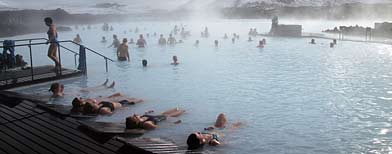

 The first hamburger franchise opened in Pyongyang, North Korea last summer. The unfamiliar hamburgers have become such a hit that customers must make reservations, and the lines are still long. Samtaesung (Food) and Cool Beverages calls their sandwiches “minced meat and bread” to avoid using the American word “hamburger”.
According to rates displayed on the restaurant’s menu, the cost of a hamburger is 228 North Korean won, or more than U.S. $2 according to the official exchange rate, putting it outside of the budget of the average citizen.The restaurant is owned by Kim Jong Il’s sister.
According to the Pyongyang resident, customers can pay in North Korean won, U.S. dollars, euros, or Chinese yuan.
Initially, the resident said, Samtaesung was frequented only by people who had traveled overseas or those who wanted to try the food out of curiosity, but the hamburger joint soon became very popular.
He said that many Pyongyang residents are now fond of hamburgers, though the greasier taste of the food takes some getting used to.
“The third time you eat a hamburger, you really get to appreciate it. By the time you’ve had your fifth, you’re already addicted to the taste,” he said.
 Boston’s emergency medical services department unveiled a new ambulance designed to help transport obese patients without injuring EMTs:
Boston emergency services debuted a specialized ambulance designed to carry obese patients on Tuesday, and the retrofitted vehicle was promptly needed on two calls, authorities said.
The ambulance is equipped with a special stretcher that can hold 850 pounds and a hydraulic lift with a 1,000 pound capacity, said Captain Jose Archila of Boston’s Emergency Medical Services fleet.
The ambulance is likely to be needed two to four times a week, he said.
“We have seen a huge increase in the last six months,” said Archila about the number of calls by obese patients.[...]
Back injuries among crews are common due to strain from lifting extremely heavy patients, he said. The ambulance makes the patients more comfortable as well.
In appearance, the ambulance looks like any other. The hydraulic lift is folded and stowed underneath the bed, and a gas tank was repositioned to accommodate it, Archila said.

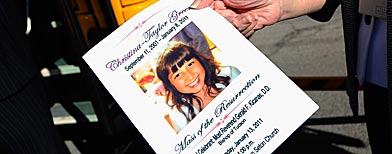
 New findings should serve as a "stark warning" to those considering taking up cigarette smoking, say scientists.