A photographer sets his camera atop Spain's highest mountain for a week.
Also: 
Sunspots are actually regions of slightly cooler material at the Sun’s surface. Hot plasma (ionized gas, stripped of one electron or more) rises from the solar interior, reaches the surface, cools off, and sinks back down. This is called convection, and is the same process you see in a pot of boiling water. But at the surface, the tortured and twisted magnetic field of the Sun can suppress convection, preventing the cooler material from sinking. Since the brightness of the plasma depends on the temperature, this cooler stuff is darker. Boom! Sunspot.
Or, in this case, sunspots. You can see five of the suckers here, changing and mutating as the plasma interacts with the magnetic field. I recognize these spots, too: they were responsible for the first X-class flare of the season on March 15th. There’s dramatic footage of that as well which I posted on my blog at the time. They’re busy spots; they blew out a lower energy flare a few days earlier, too.
And here I am calling them cute and little when they’re actually comfortably bigger than the Earth and exploded with the energy equivalent of millions — millions! — of nuclear bombs.
 A man went fishing one day.
 An Associated Press photographer had snapped a picture of a group of Shelties wandering the streets in Minami Soma city, an area that has been evacuated because of proximity to the Fukushima Dai-ichi nuclear complex in Japan. A team called Sheltie Rescue went into action after the picture was published, determined to bring the dogs out of the danger zone.
Through emails and Internet research it was established that the owner of the dogs was a breeder in Minami Soma. The group contacted the Fukushima city branch of the Japan Collie Club, tracked the owner down by phone at a shelter and got her go-ahead to rescue the dogs.The group found the dogs waiting for their owner. A few ran off, but the group was able to remove twenty dogs from the area. Some of the dogs are being boarded at a veterinary clinic; others at the homes of volunteers.
In the wee hours of Sunday morning, seven volunteers left Tokyo and drove over broken roads and past demolished houses to meet three other volunteers in the ghost town that Minami Soma has become. Some had prepared radiation suits and others wore simple vinyl raincoats.


 A man was on holiday in the depths of Louisiana, where he tried to buy some Alligator shoes. However he was not prepared to pay the high prices, and after having failed to haggle the vendor down to a reasonable price level, ended up shouting. "I don't give two hoots for your shoes man, I'll go and kill my own gator!" to which the shopkeeper replied,

 Got a boring class? Whatever you do, suppress that irresistible urge to yawn, just in case. Here’s what happened to a British teen after she yawned in one particularly boring class:
Holly Thompson, 17, of Kingsthorpe, Northampton, was in the middle of a particularly enthralling class on politics when she reacted to the subject matter like many other students would — she yawned.
But what happened next wasn’t so typical. Her trap wouldn’t shut, making her look like an anime character in a state of shock. [...]
"I was so shocked, my expression probably said it all," she said. "I nudged my friend to show her what had happened but I was so embarrassed. When we realized we couldn’t close it, she had to tell the teacher."

 I think the strangest thing arising out of the Mike Leake shoplifting arrest yesterday is not the fact that a man who makes over $400,000 a year and recently got a $2 million signing bonus felt it necessary to steal.

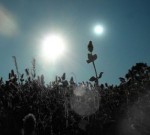 Many science fiction scenarios have planets with two or even more stars. How would life evolve differently under such a system?
In a new study, researchers have assessed the potential for photosynthetic life in multi-star systems with different combinations of sunlike stars and red dwarfs to figure out what plants might be like. The team has speculated that on an Earth-like planet with two or three suns, the vegetation may appear black or grey.If a life form evolved to use two different colors of light for energy, the vegetation would appear black to our eyes. They might even develop the ability to use infrared or ultraviolet light that we can’t see at all to power photosynthesis.
“If a planet were found in a system with two or more stars, there would potentially be multiple sources of energy available to drive photosynthesis,” said PhD student Jack O’Malley-James from the University of St. Andrews in Scotland.
“The temperature of a star determines its colour and, hence, the colour of light used for photosynthesis. Depending on the colours of their star-light, plants would evolve very differently.”

Let's say you were born in 1975, your parents were both born in 1950, your four grandparents were born in 1925, your eight great-grandparents in 1900, and so on. In other words, your number of ancestors doubles every 25 years the further back in time you go. If you take this back just 1,000 years, you'll find that you have well over 500 billion ancestors in a single generation.
Considering there's fewer than seven billion people on this planet there's something seriously wrong here. The solution, of course, is that you don't have 500 billion distinct ancestors, but rather a much, much smaller number of ancestors reappear over and over and over again in your family tree.