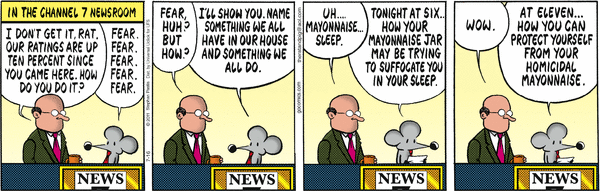
Even the best of intentions have pitfalls, but there are ways you can avoid them.
Also: 
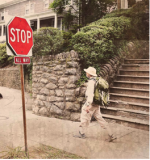 Who says you can’t go on a nature hike just because you’re in a big city? There’s plenty of edible plants growing right there in the streets of Washington, DC!
During two expeditions on Friday, adventurous eaters, amateur botanists, and a handful of curious locals descended on the Mt. Pleasant neighborhood of the Nation’s Capital in search of edible plants and wild foods with the renowned forager, ‘Wild Man’ Steve Brill. Our tour, co-hosted by Roadside Food Projects, Atlas Obscura, and Think Local First D.C., covered all of one block. But the number of foods we found, many of which were weeds you’d walk by without a second glance, didn’t even begin to scratch the surface of the available bounty growing between the city’s streets.Read about the safari and the things they found at Atlas Obscura.
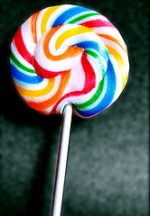 The city of Victoria, British Columbia, is taking a new approach to handling drunken, out-of-control revelers causing trouble in public places. The police hand such people lollipops. Councillor Charlayne Thornton-Joe explained why it works:
Ms. Thornton-Joe said after the men popped a lolly in their mouths, their nasty energy all but dissolved. “They got calmer after taking the lollipops,” she said. “It had an immediate effect.” [...]
The sucker punch works for several reasons, she said. First, it’s difficult to yell while sucking a lollipop.
Altercations happen due to verbal exchanges, but with a sucker in the mouth, there’s less talk, which results in fewer fights.
The lollipop’s sugar hit calms those who’ve drank too much, she said. And the lolly’s pacifier effect can’t be denied.




In a tiny corner of western Poland a forest of about 400 pine trees grow with a 90 degree bend at the base of their trunks – all bent northward. Surrounded by a larger forest of straight growing pine trees this collection of curved trees, or “Crooked Forest,” is a mystery.
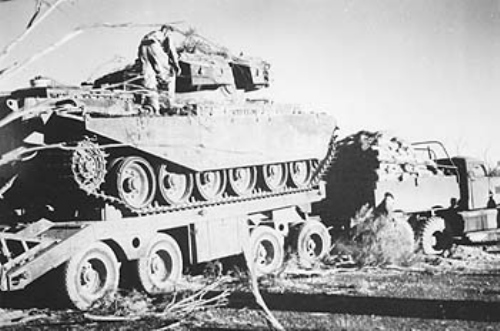
The test was codenamed Operation Totem, and was one of a number of British atomic tests carried out in remote areas of Australia during the 1950s. While the primary focus of these tests was the performance of the atomic weapons, there was also the opportunity to measure the blast effects on various types of military equipment. Although Centurion Mark 3 tanks had only been in service with the Australian Army since September 1951, and there were plenty of obsolescent Second World War tanks available, it was decided that an expensive current issue Centurion tank only a year old would be provided. With every expectation that the damage would be so severe as to effectively destroy the vehicle, the provision of a Centurion was certainly a measure of the importance placed on the atomic tests by the Australian Government.
At Woomera, the tank was stowed with a complete issue of ammunition, including grenades and 2-inch smoke bombs, before the convoy commenced the 300 mile move across rough desert tracks, Spinifex and sand dunes to Emu Field.
The tank was in position at the test site by early August, and over the next two months was subjected to various inspections and measurements. It was also fitted with sensors and makeshift dummy crewmen.
Positioned to face the low-yield atomic blast head on, 169041 was less than 500 yards from the epicentre.

In 1974, the Cypriot capital of Nicosia was divided in two by a U.N. Buffer Zone designed to quell violence between the island’s Greek and Turkish populations. Those living in the Zone quickly evacuated the area, creating an urban time capsule that’s been devoid of residents for nearly 40 years.
These photos were taken by Welsh Army photographer Sergeant Ian Forsyth, who is part of the UN peacekeeping force that overseas the 134-square-mile Zone. According to those who patrol this eerie area, it’s as if the past 37 years had never happened.
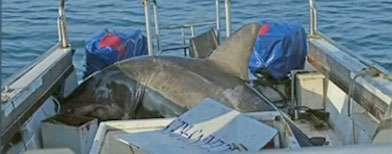

Aussie researchers have cooked up a really interesting new way to treat snakebites. They developed a cream that slows down the lymphatic system, and thus slows the spread of the venom. It is not a cure, but it could buy people more time to get to a hospital.



Dude, If you're a member of a cult, it's your problem, not ours.Michael Otterson is warning journalists not to use the term “cult” in describing Mormonism or to allow sources to label The cult of jesus christ of latter-day saints that way, either.
“I have a message to political journalists who over the course of the current [presidential] campaign may be tempted to throw out this nasty word with abandon,” writes Otterson, head of public affairs for the Utah-based cult, in the Washington Post's On Faith section. “Expect to be challenged.”
Writers should not “perpetuate this kind of shallowness,” he writes. “Rather than continuing to parrot it, it’s time they pushed back against those who choose to use it.”
Of course, you know, Faux News has no 'brain room' there isn't a brain at Faux to begin with.A former producer with Faux News claimed in a lengthy essay gaining new traction this week that the conservative television station has a "Brain Room" in its New York headquarters which enables employees to view private telephone records with ease.
Though published years ago, the allegations have returned to relevance in the wake of the phone hacking scandals that have rocked News Corporation to its very core, threatening to topple one of the world's largest and most powerful media conglomerates.
According to former Faux News executive Dan Cooper, whose gripes with his former employer run quite deep after being fired in 1996, Faux News chief Roger Ailes allegedly had him design the so-called "Brain Room" to facilitate counter-intelligence efforts and other "black ops."



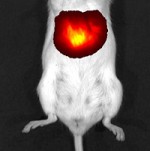 A new rave scene is about to kick off in your local doctors office, but this time the glow sticks won’t be the only things that are glowing-your guts will be too. That’s because researchers at Albert Einstein College of Medicine of Yeshiva University recently developed a fluorescent protein that will illuminate the inside of our bodies like never before, making internal organs far more visible, even if they appear downright toxic, and eliminating the need to cut the patient open in order to see what’s going on inside.
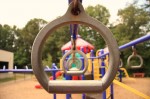 When I was a kiddo, my favorite playground activities were climbing to the top of the monkey bars and spinning way too fast on the merry-go-round. Since then, playgrounds have become increasingly more safe, and according to the New York Times, less mentally stimulating. The article argues that these changes have resulted in kids being less willing to take risks and more of them developing life-long fears -things that are a lot worse than an occasional broken bone.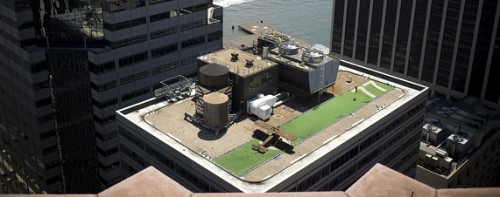
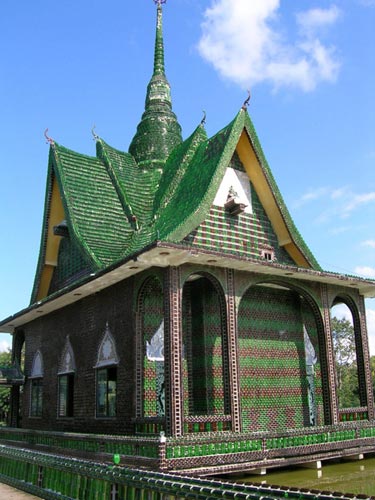

 Nature's record breakers





 Nazi doctor Josef Mengele's diaries are for
  Woman attempts to