
Friday, November 16, 2012

Liberals aren't letting up
One of the major problems with liberals
and progressives is their live-and-let-live attitude.
Not authoritarian by nature, they basically don't care who does or does
not agree with them.
They don't take knock-downs personally, and they are often willing to forgive and forget all too soon.
Not, apparently, this time.
Facebook and other social media are still...a week after the election...alive with progressives reminding
obstructionist, protectionist, fearful teabaggers how idiotic some of their beliefs are. And thank goodness.
Not this time. We didn't reason with them, but to be honest, it wasn't because we took a page from
their manual; it was because they were so volubly, visibly and risibly ignorant, we didn't have to.
They handed us that gimme through the drooling mouths of their own un-electable poohbahs.
They don't take knock-downs personally, and they are often willing to forgive and forget all too soon.
Not, apparently, this time.
Facebook and other social media are still...a week after the election...alive with progressives reminding
obstructionist, protectionist, fearful teabaggers how idiotic some of their beliefs are. And thank goodness.
Not this time. We didn't reason with them, but to be honest, it wasn't because we took a page from
their manual; it was because they were so volubly, visibly and risibly ignorant, we didn't have to.
They handed us that gimme through the drooling mouths of their own un-electable poohbahs.
Gerrymandering in North Carolina: win less than 50% of the popular vote, take 70% of the seats
Mike from Mother Jones writes, "These charts
show how repugicans have become masters as gerrymandering their way to
victory. In North Carolina, for instance, more than half of the
electorate voted for Democratic representation, yet repugicans will
fill about 70 percent of the state's House seats. Maybe that's not quite
cheating--it is legal, after all--but it sure smells like it."
* Just a note here: Everything Hitler did in Germany was legal, too.
* Just a note here: Everything Hitler did in Germany was legal, too.
Florida governor orders review of election laws after voting snafus
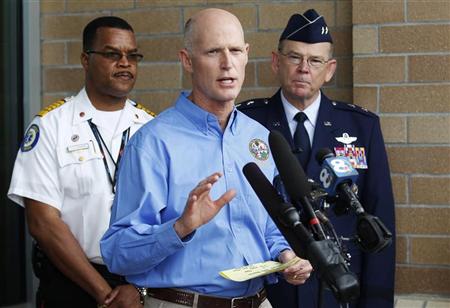
"Floridians should not have to wait several days for the results of a major presidential election to be tabulated because of the delays in a few counties when the majority of counties, including major metropolitan areas, have been counted," Scott said in a statement.
Scott, a repugican, has faced intense criticism over the delays and long lines.
Last year, Scott backed a law passed by Florida's repugican-controlled Legislature that reduced the number of early voting days and put in place restrictions making it harder to register voters.
Democrats and voting rights groups criticized the law, arguing it unfairly targeted Democrats and specifically minorities who disproportionately voted early.
The result of the reduced early voting was long lines that stretched around blocks and lasted for hours in parts of Florida.
Advocacy groups, led by the Florida League of Women Voters, have called for the changes to be rolled back.
The governor said the state's top elections official, Secretary of State Kenneth Detzner, will focus on problems that plagued Miami-Dade, Broward, Palm Beach and St. Lucie counties.
Each of the counties experienced delays reporting voting results.
Scott also said the voting law should be addressed in the upcoming legislative session, which begins in March.
"We encourage legislators to have a bipartisan, open and vigorous discussion about what changes need to be made to current Florida election law," Scott said.
The governor's comments come as Democrats began putting forward their own reform proposals and repugican legislative leaders also called for another review of state election laws.
"The effectiveness and fairness of the laws governing our elections have been brought into question by the past election," Rep. Darryl Rouson, a Democrat, said in a statement. "Our Legislature should not be a prisoner to its own laws."
Incoming repugican House Speaker Will Weatherford said the election law passed last year may have contributed to the problems, but that it was too early to tell.
He rejected assertions the changes were intended to blunt turnout in Florida by supporters of U.S. President Barack Obama.
"It's not a good thing when it's Friday, three days after the election, and every state in the country is either red or blue (except) there is one that is yellow because they haven't counted the votes," Weatherford said.
"That is something we should be embarrassed by," he added.
Bitter: Party of one. Mr. Romney, your table’s ready.
Apparently they forgot to tell Mitt Romney that the job of “whiney failed repugican presidential candidate” is already taken.Though in all fairness to Mitt Romney, it’s difficult for a man who’s
worth at least a quarter of a billion dollars to see the world in any
terms other than financial.
So perhaps that’s why Romney thinks that President Obama helping advance the civil rights and overall health of all Americans is some kind of political payoff. That’s because repugicans don’t really approach the job of President the same way as Democrats.
Repugicans seek the job either because they believe in the divine right of kings – America owes them the job – or because they want to give stuff, as Bill O’Reilly puts it, to their rich corporate benefactors. Democrats, on the other hand, take the job because they actually want to address the country’s problems and make life here better for everyone.
 Romney didn’t offer people a better life. He actually offered them money, in the form of a $5 trillion tax cut for the rich.
And it still didn’t work.
What’s odd, or funny, or both is that Romney doesn’t even realize that he’s criticizing the President for what he actually did. He offered Americans a $5 trillion tax cut. Though, again, in all fairness, it was actually a tax increase on the middle class, so he wasn’t giving stuff, he was taking stuff from people who didn’t have stuff to begin with, in order to give it to those who already did.
How’d that work out for him?
NYT:
And even weirder, these are the kind of things that Mitt Romney used to actually believe in, and may still to this day. So why is he still wearing that weird “I’m a severe conservative” drag? Why he’s back to the old 47% stuff again? He thinking of running again? (Or maybe this is the “real” Romney, if there is such a thing.)
But why stop there? You know what else President Obama “gave” Americans in order to con them into voting for him?
The thing is, that’s what leaders are supposed to do. Do good stuff for their people to help make life better for all of us. The fact that Mitt Romney doesn’t get that, the fact that he thinks this is somehow evil and greedy – but his rich buddies who get stuff by tearing apart companies and putting people out of work aren’t evil – speaks volumes to why the American people rejected him resoundingly one week ago.
So perhaps that’s why Romney thinks that President Obama helping advance the civil rights and overall health of all Americans is some kind of political payoff. That’s because repugicans don’t really approach the job of President the same way as Democrats.
Repugicans seek the job either because they believe in the divine right of kings – America owes them the job – or because they want to give stuff, as Bill O’Reilly puts it, to their rich corporate benefactors. Democrats, on the other hand, take the job because they actually want to address the country’s problems and make life here better for everyone.
And it still didn’t work.
What’s odd, or funny, or both is that Romney doesn’t even realize that he’s criticizing the President for what he actually did. He offered Americans a $5 trillion tax cut. Though, again, in all fairness, it was actually a tax increase on the middle class, so he wasn’t giving stuff, he was taking stuff from people who didn’t have stuff to begin with, in order to give it to those who already did.
How’d that work out for him?
NYT:
“In each case they were very generous in what they gave to those groups,” Mr. Romney said.So let’s walk through that list one more time of things that Mitt Romney sees as, essentially, bribes:
“With regards to the young people, for instance, a forgiveness of college loan interest, was a big gift,” he said. “Free contraceptives were very big with young college-aged women. And then, finally, Obamacare also made a difference for them, because as you know, anybody now 26 years of age and younger was now going to be part of their parents’ plan, and that was a big gift to young people. They turned out in large numbers, a larger share in this election even than in 2008.”
- Student loans.
- Health care for women.
- And health care for young adults, and really everyone.
And even weirder, these are the kind of things that Mitt Romney used to actually believe in, and may still to this day. So why is he still wearing that weird “I’m a severe conservative” drag? Why he’s back to the old 47% stuff again? He thinking of running again? (Or maybe this is the “real” Romney, if there is such a thing.)
But why stop there? You know what else President Obama “gave” Americans in order to con them into voting for him?
- A growing economy that was saved from the jaws of death.
- Bin Laden’s dead body.
- Their civil rights.
- A fair paycheck.
- Peace (or something less than us dying every day) in Iraq.
- An auto industry.
- Moammar Gaddafi’s dead body.
- Cleaner air.
- Stem cell research.
- A President who doesn’t jot off to California when a massive hurricane is hitting our shores.
- And a window into a really bad opponent who’s a liar and possibly the most insincere man to run for the presidency in recent memory.
The thing is, that’s what leaders are supposed to do. Do good stuff for their people to help make life better for all of us. The fact that Mitt Romney doesn’t get that, the fact that he thinks this is somehow evil and greedy – but his rich buddies who get stuff by tearing apart companies and putting people out of work aren’t evil – speaks volumes to why the American people rejected him resoundingly one week ago.
IRS sued for not enforcing campaign restrictions on cults
Juidth Davidoff: "On the heels of a presidential election in which
hundreds of preachers publicly promised to flout Internal Revenue
Service rules by endorsing candidates from the pulpit, the Madison-based
Freedom From Religion Foundation filed suit against the IRS for failing to enforce electioneering restrictions against cults and religious organizations."
Campaign to opt out of pornoscanners & video TSA checkpoints at Thanksgiving
"The National Opt Out and Film Week, a new campaign designed
to expose the abusive policies of the TSA, is set to launch during
Thanksgiving, one of the busiest travel times of the year -- and the TSA
might not be able to stop it."
Supporters of Opt Out and Film Week are encouraged to film TSA activities at their local airport -- even if they are not flying -- and upload the videos to Youtube and other sites. According to the TSA website, filming TSA agents and security checkpoints is not illegal, as long as it does not interfere with security procedures....Showdown with TSA set for 'Opt Out and Film Week' November 19-26 Special
... "The reasoning behind a National Opt-Out Week is this: If the TSA decides to shut down its scanners in response to the protest, as it allegedly did in 2010, activists would have ample opportunity to document the action over a period of a week," Elliott wrote in an article for the Huffington Post. "TSA critics would then have more than enough evidence to prove that these scans and pat-downs are a false choice and do practically nothing to improve our safety."
Delta terminates musician’s 40-year SkyMiles contract
In one of the more curious examples of customer service, Delta
Airlines has decided to cancel the SkyMiles membership for a customer
who has used them for 40 years. One can debate the validity of a
SkyMiles account for a cello (personally, I’m for it since the owner had
to purchase normal tickets) but to close the account of both the cello
and the owner without any discussion is harsh.
 At a minimum, if Delta wanted to terminate the SkyMiles contract for
the cello, they could have handled this a lot better for a long time
customer. I wonder if they also terminated the contracts of the Delta
staff who also went along with booking the ticket for the cello and
checking in the cello.
At a minimum, if Delta wanted to terminate the SkyMiles contract for
the cello, they could have handled this a lot better for a long time
customer. I wonder if they also terminated the contracts of the Delta
staff who also went along with booking the ticket for the cello and
checking in the cello.
Delta leads the way, again, in customer service gone wrong. Bizarre.
Of course, the only things the airlines treat as people are objects.
Delta leads the way, again, in customer service gone wrong. Bizarre.
That ended with a terse letter from the airline in January – an incident Harrell shared on his blog on Monday in a post titled, “No miles for you!”Note from John: I also have to pay $250 to fly my dog with me to Chicago when I visit for the holidays, and, to add insult to injury, she counts as my carry-on bag (so I lose a carry-on, and pay $250 to put my “carry-on” under my seat). And I don’t get miles for her. At some point, if the airlines are going to treat things as people, then we should get the benefits of people.
“It has come to our attention that you have continued to earn miles for your cello even after you were advised in 2001 that this was not permitted,” the letter, signed by SkyMiles auditor Jonsey Vee, reads.
It goes on to say that Delta had closed the cello’s account and terminated Harrell’s membership in the program. All of the accumulated miles in both accounts — several hundred thousand in all – were gone, Harrell said. In addition, he could never reopen a new SkyMiles account.
Of course, the only things the airlines treat as people are objects.
Papa John’s sued for $250 million over cell phone text spam

It’s strange that a CEO could view investing in his team as a costly problem, yet could let an alleged violation of federal and state laws slip by without being addressed. His investors are clearly concerned, and as this lawsuit moves forward, they will find out how much Schnatter protected the company from these violations.
CNNMoney:
Popular U.S. pizza chain Papa John’s faces a $250 million class-action lawsuit for blasting customers with illegal text messages.And remember, just as CEOs can make decisions about their companies, consumers can and should also make decisions based on corporate CEOs.
The plaintiffs allege that Papa John’s (PZZA) franchises sent customers a total of 500,000 unwanted messages in early 2010. The spam texts offered deals for pizza, and some customers complained they were getting 15 or 16 texts in a row, even during the middle of the night, according Donald Heyrich, an attorney representing the class.
“After I ordered from Papa John’s, my telephone started beeping with text messages advertising pizza specials,” Erin Chutich, one of the plaintiffs, said in a statement. “Papa John’s never asked permission to send me text message advertisements.”
BP will admit crimes, pay $4.5 billion in Gulf spill settlement

British oil company BP today announced it will pay $4.5 billion "in fines and other payments to the government," and plead guilty to 14 criminal charges resulting from the giant oil spill in the Gulf of Mexico two years ago. How much of that do you imagine will make it to the poor and working-class families whose homes, bodies, and lives were damaged or destroyed by the toxic disaster?
Here is BP's statement. Coverage here in the New York Times, and here in the LA Times.
Via @meghangordon, an interesting footnote: The National Academy of Sciences gets $350 million of the BP settlement to study human health and environmental protection in the Gulf of Mexico.
The explosion on the Deepwater Horizon drilling rig in the Gulf of Mexico that was connected to a well owned by BP killed 11 workers and spilled millions of barrels of oil.
Sarasota homeless man arrested for charging phone
The Herald-Tribune reports on the latest in Sarasota's long running war on the homeless,
arresting a man for using a public charging station to charge a phone.
"In 2006, Sarasota was called the “meanest city” in the nation by the
National Law Center on Homelessness and Poverty and the National
Coalition for the Homeless..."

Need more space?
Some put up a cottage out back

Something small is afoot. Backyard cottages
— from 800-square-foot bungalows to Lilliputian studio cabins — are
springing up behind houses in many cities, some of which have changed
zoning laws to accommodate them.
Often, the cottages are built for
aging parents or grown children. Sometimes, they're rented out for
extra income, or are used as studios or offices.
"Backyard cottages increase density in a nice way," says Bruce Parker,
principal of the Seattle-based design collective Microhouse. "They use
existing infrastructure and ... they're inherently sustainable. A
cottage is the antithesis of a big house on a tiny lot."
Seattle
updated its zoning laws in 2009 to allow for "accessory dwelling units"
on single-family lots of at least 4,000 square feet. (Permits are
needed depending on the size of the cottage and whether it has plumbing
and electricity.)
While Parker
had been designing small homes for several years, the microhouse law
inspired him to focus on backyard dwellings. Soon, he was teaching
classes on backyard cottages with the Seattle firm NCompass
Construction.
About 90 percent of his students, he said, wanted to build a cottage for their parents."Rather than paying thousands of dollars a month for assisted living, you can have your parents with you and they can help with the kids — but everyone gets their own space," says Parker.
Often, it's the parents who pay to build the cottages. "It's an investment for their comfort and a way to improve their children's property," says Parker. "One pragmatic woman told me she hoped her great-granddaughter would use it for college housing after she was gone."
In Portland, Ore., which changed zoning rules in 2010 to allow for backyard cottages, Jasmine Deatherage and her mother, Diane Hoglund, looked for a house with a large yard specifically with this living arrangement in mind.
"We
really wanted to live together," says Deatherage. "I have a 2-year-old
and my mom will be taking on some of the childcare. It's a special time
to live together."Before her mother bought the house, they asked the previous owner to build a basic single-car garage, which they plan to convert into a fully functioning mother-in-law cottage by next summer.
While not every young family would opt to have their parents so close, Deatherage notes that it's common historically and globally. "My husband is from Mexico where it's very normal to live with your family," she says. "His whole family lives together and if we lived there we'd live with them too."
For other homeowners, backyard cottages are an opportunity for small-scale entrepreneurship.
Bob DiPalma of Burlington, Vt., didn't set out to run a mini-hotel out of his yard but the project "crept up on me." While rehabilitating their 100-year-old barn, he and his wife saw the opportunity to convert the space into an apartment above a garage. They drew up designs, hired a contractor and soon had a fully-functioning vacation rental.
"Over the last four years, we've had really wonderful guests who have appreciated the space," DiPalma says.
Sometimes, the need for more space is just a need for . more space.
"So many people are working from home," says Gayle Zalduondo, principal of the Miami-based Cabin Fever, which sells prefab cabins. "Rather than going offsite, they're adding a cabin. People need more space, but they're not comfortable upsizing to a larger house, especially in this economy."
Some of her customers want a guest house, while others are artists, musicians and independent service providers — from freelance graphic designers to massage therapists.
Unlike the fully outfitted miniature homes being used for rental properties and mother-in-law quarters, small backyard cabins without kitchens and bathrooms do not require permits in many states.
"We have a model you can build in a weekend," says Zalduondo. "It comes flat-packed. It's tight and weather-proofed and you don't even need to pour a full slab. You can just prepare a lightweight foundation and put the cabin on top of it."
Seattle resident Isaac
Vicknair pioneered a new kind of off-the-grid, backyard living in his
quest for affordable housing. He builds simple 8-by-8-foot sheds in
exchange for free rent in them for three to six months after completion.
"It's
a great deal for everyone," says Vicknair. "They cost me about $800 in
materials and then I save around $5,000 in rent while I live there. All
the homeowner has to pay for is the electricity I use, which is almost
nothing."
Vicknair picks a
neighborhood he wants to live in and posts flyers advertising his trade
proposal. He says he generally receives calls from three or four
interested parties, and takes the project that seems most appealing.
The
cabins are built without plumbing or electricity, so Vicknair runs an
extension cord from the house and makes do with a space heater, electric
skillet, small fridge and a couple of lamps. He bought a portable
marine toilet that he sets up behind the cabin, and he showers at
friends' houses or the gym.
"The
only downside is it's really hard to get a date to come back to a
miniature house in a backyard," says Vicknair. "But I don't think I'm
ever going to pay rent again."
Exploring the Financial Costs of Sadness
How Old is Old?
 How
old is old? According to a study by Michelle Barnhart of Oregon State
University, whether someone is "old" depends not on age, but
on ability to do things, like shopping, for example:
How
old is old? According to a study by Michelle Barnhart of Oregon State
University, whether someone is "old" depends not on age, but
on ability to do things, like shopping, for example:New research finds that for most Americans, old age is not heralded in by a particular birthday, but rather by how a person acts.LiveScience has the article: here.
In particular, people who still shop for themselves or take care of their own household chores are less likely to be perceived as old, new research shows. [...]
"When people in their 80s or 90s exhibited characteristics that society tends to associate with people who are not old, such as being aware, active, safe or independent, they were viewed and treated as not old," Barnhart said. "In this way, they were able to age without getting old."

Man finds his doppelganger in 16th Century Italian painting
What started out as a leisurely stroll through the Philadelphia Museum
of Art on Nov. 11 with his girlfriend, quickly turned into quite a
surreal experience for Max Galuppo, 20, of Bloomsbury, N.J. Galuppo, a
Temple University student, found his doppelganger in a 16th century
Italian painting by an unknown artist titled “Portrait of a Nobleman
with Dueling Gauntlet.”
“It was really weird. He goes to Temple so we’d been saying for a while we wanted to go to the art museum,” his girlfriend, Nikkie Curtis, said. “We went into the armor exhibit and he loved the helmets. He was completely oblivious to it, and I walked past it and was like, ‘Do you see this painting right now? It looks just like you.’”

Galuppo, at first, said he failed to recognize the similarity. “To be honest, I didn’t see it. I didn’t see the resemblance,” he said. “And then I saw the picture of me next to it, and you can’t deny that.”
“It’s actually funny because later I tried to research the painting as much as I could. There’s not a lot of information from it. The area that the painting is from in Italy, that area is actually where my grandparents are from,” Galuppo said.
There's a news video here.
“It was really weird. He goes to Temple so we’d been saying for a while we wanted to go to the art museum,” his girlfriend, Nikkie Curtis, said. “We went into the armor exhibit and he loved the helmets. He was completely oblivious to it, and I walked past it and was like, ‘Do you see this painting right now? It looks just like you.’”
Galuppo, at first, said he failed to recognize the similarity. “To be honest, I didn’t see it. I didn’t see the resemblance,” he said. “And then I saw the picture of me next to it, and you can’t deny that.”
“It’s actually funny because later I tried to research the painting as much as I could. There’s not a lot of information from it. The area that the painting is from in Italy, that area is actually where my grandparents are from,” Galuppo said.
There's a news video here.

The Oldest Living Tree Tells All

Carolina Naturally readers know that the bristlecone pine tree is the oldest non-clonal living species (clonal tree species reproduce by spreading and splitting, sort of like bacteria, but older parts eventually die off). How did we first find this out? In 1964, Donald Rusk Currey, a graduate student of geology, discovered the tremendous age of a Great Basin bristlecone pine, after he had it cut down.
By the time of Currey’s survey, trees were typically dated using core samples taken with a hollow threaded bore screwed into a tree’s trunk. No larger than a soda straw, these cores then received surface preparations in a lab to make them easier to read under a microscope. While taking core samples from the Prometheus tree, which Currey labeled WPN-114, his boring bit snapped in the bristlecone’s dense wood. After requesting assistance from the Forest Service, a team was sent to fell the tree using chainsaws. Only days later, when Currey individually counted each of the tree’s rings, did he realize the gravity of his act.Collector's Weekly tells the whole story of Prometheus, plus the science of tree dating, and theories on why the bristlecone lives so long. More
Currey downplayed the discovery in a dry essay for Ecology magazine in 1965, in which he stated, “Allowing for the likelihood of missing rings and for the 100-inch height of the innermost counted ring, it may be tentatively concluded that WPN-114 began growing about 4,900 years ago.” Though its exact age is still debated, the Prometheus tree was certainly the oldest single tree scientists had ever encountered.
The Prometheus tree’s felling made it doubly symbolic, as the myth of its namesake captures both the human hunger for knowledge and the unintended negative consequences that often result from this desire. Though members of the scientific community and press were outraged that the tree was killed, Currey’s mistake ultimately provided the impetus to establish Great Basin National Park to protect the bristlecones. The death of the Prometheus tree also helped to change our larger perception of trees as an infinitely replenishing resource. “It’s not going to happen again,” says Shoettle. “But it wasn’t something that I think they struggled with at the time, because it was just a tree, and the mindset was that trees were a renewable resource and they would grow back. And it didn’t seem like it was any particularly special tree.”
Rogue Planet
 Back
in 1998, astronomer David J. Stevenson of Caltech theorized that there
are planets that roam the vast expanses of cold interstellar space. (The
technical term here is actually "planetary-mass objects", since
"planet" has strict definition by the International Astronomical
Union - just
ask Pluto - but for laymen, planets will do.) Such planets do not
revolve around any star.
Back
in 1998, astronomer David J. Stevenson of Caltech theorized that there
are planets that roam the vast expanses of cold interstellar space. (The
technical term here is actually "planetary-mass objects", since
"planet" has strict definition by the International Astronomical
Union - just
ask Pluto - but for laymen, planets will do.) Such planets do not
revolve around any star.Astronomers using the Canada-France-Hawaii Telescope in Hawaii and the Very Large Telescope in Chile have spotted one such rogue planet, giving credence to the hypothesis that rogue planets may be common:
"This object was discovered during a scan that covered the equivalent of 1,000 times the [area] of the full moon," said study co-author Etienne Artigau of the University of Montreal. [...]More
The team believe it has a temperature of about 400C and a mass between four and seven times that of Jupiter - well short of the mass limit that would make it a likely brown dwarf.
What remains unclear is just how the planet came to be - the tiny beginnings of a star, or planet launched from its home? Study co-author Philippe Delorme of the Institute of Planetology and Astrophysics of Grenoble, said that the latter implied a great many planets like it.
"If this little object is a planet that has been ejected from its native system, it conjures up the striking image of orphaned worlds, drifting in the emptiness of space," he said.
Dust-devils flirt with Mars rover
 Dust-devils flirt with Mars rover
Nasa's Curiosity Mars rover has not as yet captured them on
camera, but dust-devils appear to have been running around the vehicle.
Animal News
Great White Shark Origins Found
Great white sharks likely descended from broad-toothed mako sharks. Read more
Dogs Teach Chemistry
Paige and Dexter, two pretty smart pooches, demonstrate a basic principle of chemistry. Read more
Two-Thirds Marine Species Remain Unknown
Most are probably crustaceans, mollusks and other small organisms, but there may be up to eight species of whales and dolphins yet to be identified. Read more
Yawns Also Contagious in Bonobos
Contagious yawning, it turns out, is yet another feature we share in common with many species of primates. Read more
Animals Get Bored, Too
Having nothing to do can lead animals to spend all their time eating and lying around. Read more

Thursday, November 15, 2012
The Daily Drift

The wonder of it all ...
Some of our readers today have been in:
Bandar Seri Begawan, Brunei Darussalam
Manila, Philippines
Sevastopol, Ukraine
Zagreb, Croatia
Lahore, Pakistan
Makati, Phlippines
Kuala Lumpur, Malaysia
Reykjavik, Iceland
Quetta, Pakistan
Birmingham, England
Tuguegargo, Philippines
Tbilisi, Georgia
Phom Penh, Cambodia
Durban, South Africa
Segamat, Malaysia
Liverpool, England
Peshawar, Pakistan
Sampaloc, Philippines
Skopje, Macedonia
Sofia, Bulgaria
Islamabad, Pakistan
Taytay, Philippines
Medellin, Colombia
Karachi, Pakistan
Medan, Indonesia
Bremen, Germany
Tartu, Estonia
Abbottabad, Pakistan
Warsaw, Poland
Paris, France
Cape Town South Africa
Rawalpindi, Pakistan
Poznan, Poland
Don't forget to visit our sister blog!
Today in History
| 1315 | Swiss soldiers ambush and slaughter invading Austrians in the battle of Morgarten. | |
| 1533 | The explorer Francisco Pizarro enters Cuzco, Peru. | |
| 1626 | The Pilgrim Fathers, who have settled in New Plymouth, buy out their London investors. | |
| 1777 | The Articles of Confederation, instituting perpetual union of the United States of America, are adopted by Congress. | |
| 1805 | Meriwether Lewis, William Clark and their party reach the mouth of the Columbia River, completing their trek to the Pacific. | |
| 1806 | Explorer Zebulon Pike discovers the Colorado Peak that bears his name, despite the fact that he didn't climb it. | |
| 1864 | Union Major General William T. Sherman's troops set fires that destroy much of Atlanta. | |
| 1881 | The American Federation of Labor is founded. | |
| 1909 | M. Metrot takes off in a Voisin biplane from Algiers, making the first manned flight in Africa. | |
| 1917 | Kerensky flees and Bolsheviks take command in Moscow. | |
| 1920 | Forty-one nations open the first League of Nations session in Geneva.. | |
| 1922 | It is announced that Dr. Alexis Carrel has discovered white corpuscles. | |
| 1930 | General strikes and riots paralyze Madrid, Spain. | |
| 1937 | Eighteen lawsuits are brought against the Tennessee Valley Authority, calling for its dissolution. | |
| 1942 | An American fleet defeats a Japanese naval force in a clash off Guadalcanal. | |
| 1946 | The 17th Paris Air Show opens at the Grand Palais des Champs-Elysees. It is the first show of this kind since World War II. | |
| 1952 | Newark Airport in New Jersey reopens after closing earlier in the year because of an increase in accidents. | |
| 1957 | Soviet Premier Nikita Khrushchev asserts Soviet superiority in missiles, challenging the United States to a rocket-range shooting match. | |
| 1960 | The first submarine with nuclear missiles, USS George Washington, takes to sea from Charleston, South Carolina. | |
| 1962 | Cuba threatens to down U.S. planes on reconnaissance flights over its territory. | |
| 1963 | Argentina voids all foreign oil contracts. | |
| 1965 | In the second day of combat, regiments of the 1st Cavalry Division battle on Landing Zones X-Ray against North Vietnamese forces in the Ia Drang Valley. | |
| 1969 | A quarter of a million anti-Vietnam War demonstrators march in Washington, D.C. | |
| 1976 | A Syrian peace force takes control of Beirut, Lebanon. | |
| 1984 | Baby Fae dies 20 days after receiving a baboon heart transplant in Loma Linda, California. |

‘Homeless’ planet found wandering through space
 A planet that is not orbiting a star, effectively making it homeless, has been discovered by a team of University ...
Steven Levy on the patent wars

Steven Levy's Wired magazine feature on the cancerous multiplication of patents has all the hallmarks of Levy's work: excellent, eminently readable, human-scale tech reporting that makes important issues comprehensible.
The rise of trolls came as a result of a court system that seemed to favor them every step of the way. The vagueness of the underlying patents, the ridiculous ease with which plaintiffs could file a suit, the high costs defendants faced, and the unthinkable consequences of losing—all created an environment in which trolls were routinely rewarded for filing frivolous suits. But by the late 2000s, courts and the legislature began slowly chipping away at these factors. In 2003 a company called MercExchange successfully sued eBay over the provenance of its Buy It Now button. When eBay appealed, MercExchange took the common step of asking for an injunction against the defendant, which would have barred eBay from using the disputed technology as long as the case remained open. This was intended to prevent firms from profiting unfairly from someone else’s invention. But all too often it further pressured companies to settle quickly so they could go back to business. Courts could be quick to grant such injunctions, but when the issue came before the Supreme Court in 2006, the justices determined that more care should be taken with that drastic step. This precedent made it harder for challengers to threaten a defendant’s entire business.The Patent Problem

What is the “fiscal cliff” everyone keeps talking about?
The fiscal cliff is a big-monied effort to gut Social Security, Medicare and Medicaid.
Quick hits again — this is for your reference. There’s so much talk about the “fiscal cliff” that I thought some orientation would be in order.
(1) The actual “cliff” — such as it is — is a supposedly catastrophic set of budget cuts and tax increases. It includes a combo of the expiration of the Bush–Obama Tax Cuts of 2010, the kick-in of the forced “sequester” of budget funds, plus anything else they can cram in, like the extension of the debt ceiling, the deadline for which kicks in some-when in 2013. They (the NeoLibs and MoveCons working together) will make this as complex as possible, so you can enjoy the “win” — pennies from billionaire heaven — and forget the losses — reduction of the safety net forever.
For more on what’s involved in the sequester, see this Yahoo explanation. Ignore the early-paragraph pimping of the badness and scan down for the detail.
(2) The name — The idea of a cliff is something you don’t want to go over. Keep that in mind; the fiscal cliff is a “very bad thing” according to deficit hawks.
(3) The plan — The fiscal cliff was designed by deficit hawks to force big reductions to the federal budget that they thought were needed.
 You read me right. Read those last two paragraphs again, (2)
and (3). Note the contradiction? Deficit hawks designed the combo of
deadlines and sequesters, then want you to run screaming from it. Why
would a serious deficit hawk run screaming from forced deficit
reduction?
You read me right. Read those last two paragraphs again, (2)
and (3). Note the contradiction? Deficit hawks designed the combo of
deadlines and sequesters, then want you to run screaming from it. Why
would a serious deficit hawk run screaming from forced deficit
reduction?
Answer: There are no serious deficit hawks in Washington; just serious safety net killers. The “fiscal cliff” wasn’t designed to force budget changes. It was designed to force scary budget changes as a cover for safety net reductions.
Paul Krugman has also noticed the contradiction and has more. Do click and read. Here’s a taste (my emphasis throughout):
Quick hits again — this is for your reference. There’s so much talk about the “fiscal cliff” that I thought some orientation would be in order.
(1) The actual “cliff” — such as it is — is a supposedly catastrophic set of budget cuts and tax increases. It includes a combo of the expiration of the Bush–Obama Tax Cuts of 2010, the kick-in of the forced “sequester” of budget funds, plus anything else they can cram in, like the extension of the debt ceiling, the deadline for which kicks in some-when in 2013. They (the NeoLibs and MoveCons working together) will make this as complex as possible, so you can enjoy the “win” — pennies from billionaire heaven — and forget the losses — reduction of the safety net forever.
For more on what’s involved in the sequester, see this Yahoo explanation. Ignore the early-paragraph pimping of the badness and scan down for the detail.
(2) The name — The idea of a cliff is something you don’t want to go over. Keep that in mind; the fiscal cliff is a “very bad thing” according to deficit hawks.
(3) The plan — The fiscal cliff was designed by deficit hawks to force big reductions to the federal budget that they thought were needed.
Answer: There are no serious deficit hawks in Washington; just serious safety net killers. The “fiscal cliff” wasn’t designed to force budget changes. It was designed to force scary budget changes as a cover for safety net reductions.
Paul Krugman has also noticed the contradiction and has more. Do click and read. Here’s a taste (my emphasis throughout):
The fiscal cliff poses an interesting problem for self-styled deficit hawks. They’ve been going on and on about how the deficit is a terrible thing; now they’re confronted with the possibility of a large reduction in the deficit, and have to find a way to say that this is a bad thing.Here’s more from James Fallows, furrowing the same ground:
That the looming debt and deficit crisis is fake is something that, by now, even the most dim member of Congress must know. The combination of hysterical rhetoric, small armies of lobbyists and pundits, and the proliferation of billionaire-backed front groups with names like the “Committee for a Responsible Federal Budget” is not a novelty in Washington. It happens whenever Big Money wants something badly enough.The “elite of the predator state” — couldn’t have characterized Our Betters any better myself.
Big Money has been gunning for Social Security, Medicare and Medicaid for decades – since the beginning of Social Security in 1935. The motives are partly financial: As one scholar once put it to me, the payroll tax is the “Mississippi of cash flows.” Anything that diverts part of it into private funds and insurance premiums is a meal ticket for the elite of the predator state.
Trying to save money?

Ask for crisp new bills at the bank
Consumers will spend more to get rid of worn bills because they evoke feelings of disgust but are more likely ...
N.C. employers continue passing on health costs to employees
By Karen Garloch
As uncertainty about health reform persists, businesses in North
Carolina and across the country continue to shift health insurance
costs to employees, a new survey found.
Even though health care costs continue to rise, employers held the growth to 4 percent in 2012, the smallest in 15 years, according to the annual National Survey of Employer-Sponsored Health Plans, conducted by Mercer, a human resources consulting firm.
“It might be the calm before the storm,” said Steven Graybill, a senior benefits consultant in Mercer’s Charlotte office. “There’s a lot more changes on the horizon. There’s a lot of uncertainty.
“Health care reform has driven employers to offer more higher deductible plans,” he said. “They are looking to create more affordable options.”
Nationally, 22 percent of employers offer “consumer-driven” health insurance plans with deductibles of $1,000 or more and special accounts that allow employees to save pretax dollars to cover out-of-pocket expenses, Mercer found. In North Carolina, 37 percent of employers offer such a plan.
Graybill attributed the slow-down in this year’s increase to employers’ efforts at shifting costs to employees through higher deductibles, co-pays, coinsurance or premiums, and the use of incentives to keep employees healthy.
“Wellness and disease management programs have created some behavioral change,” Graybill said.
For the third straight year, the Mercer survey showed a sharp increase in employers offering incentives, such as lower premiums or cash payments to employees who try to stay healthy. Penalties include higher premiums for smokers or employees who are obese.
For the first time in years, the survey found that small businesses, with under 500 employees, saw a lower increase in health care costs than larger businesses, which are mostly self-insured.
In 2012, the average total health benefit cost per employee was $10,558 nationally, an increase of 4.1 percent over 2011, down from 6.1 percent over 2010, the survey found.
For large employers, the average cost per employee was $11,003, an increase of 5.4 percent over last year. For smaller employers, the average cost per employee was $9,913, an increase was 2.2 percent.
Historically, small businesses have seen greater increases because they “tend to be at the mercy of the insurance companies,” Graybill said.
“I think health reform…has driven some benefits to small employers,” Graybill said. “But there’s clearly still a cost problem. It’s clearly a challenge.”
While some people believe employers will terminate employee health plans after state-based health exchanges are established under the health reform law, the Mercer survey found that only 7 percent of large employers and 22 percent of small employers say it’s likely they’ll drop coverage.
Julio Portalatin, Mercer’s president, said employers are keenly aware that in 2014, when the Affordable Care Act takes full effect, they’ll be asked to cover more employees.
“They’ve taken bold steps to soften the impact, and it’s paying off already,” he said in a statement. “Critical decisions need to be made by the summer so they can be implemented for 2014 open enrollment.”
Even though health care costs continue to rise, employers held the growth to 4 percent in 2012, the smallest in 15 years, according to the annual National Survey of Employer-Sponsored Health Plans, conducted by Mercer, a human resources consulting firm.
“It might be the calm before the storm,” said Steven Graybill, a senior benefits consultant in Mercer’s Charlotte office. “There’s a lot more changes on the horizon. There’s a lot of uncertainty.
“Health care reform has driven employers to offer more higher deductible plans,” he said. “They are looking to create more affordable options.”
Nationally, 22 percent of employers offer “consumer-driven” health insurance plans with deductibles of $1,000 or more and special accounts that allow employees to save pretax dollars to cover out-of-pocket expenses, Mercer found. In North Carolina, 37 percent of employers offer such a plan.
Graybill attributed the slow-down in this year’s increase to employers’ efforts at shifting costs to employees through higher deductibles, co-pays, coinsurance or premiums, and the use of incentives to keep employees healthy.
“Wellness and disease management programs have created some behavioral change,” Graybill said.
For the third straight year, the Mercer survey showed a sharp increase in employers offering incentives, such as lower premiums or cash payments to employees who try to stay healthy. Penalties include higher premiums for smokers or employees who are obese.
For the first time in years, the survey found that small businesses, with under 500 employees, saw a lower increase in health care costs than larger businesses, which are mostly self-insured.
In 2012, the average total health benefit cost per employee was $10,558 nationally, an increase of 4.1 percent over 2011, down from 6.1 percent over 2010, the survey found.
For large employers, the average cost per employee was $11,003, an increase of 5.4 percent over last year. For smaller employers, the average cost per employee was $9,913, an increase was 2.2 percent.
Historically, small businesses have seen greater increases because they “tend to be at the mercy of the insurance companies,” Graybill said.
“I think health reform…has driven some benefits to small employers,” Graybill said. “But there’s clearly still a cost problem. It’s clearly a challenge.”
While some people believe employers will terminate employee health plans after state-based health exchanges are established under the health reform law, the Mercer survey found that only 7 percent of large employers and 22 percent of small employers say it’s likely they’ll drop coverage.
Julio Portalatin, Mercer’s president, said employers are keenly aware that in 2014, when the Affordable Care Act takes full effect, they’ll be asked to cover more employees.
“They’ve taken bold steps to soften the impact, and it’s paying off already,” he said in a statement. “Critical decisions need to be made by the summer so they can be implemented for 2014 open enrollment.”
Could poor sleep contribute to symptoms of schizophrenia?
‘Coca-Cola’ Model for Delivering Malaria Meds is a Success, Should be Continued
 A
controversial program that uses the private market to provide
affordable malaria treatments to people in Africa has dramatically
increased ...
A
controversial program that uses the private market to provide
affordable malaria treatments to people in Africa has dramatically
increased ...Is America getting less punitive?
Radley Balko says: "In a new piece for Huffington Post, I
look at a number of criminal justice related issues on this year's
ballot, including marijuana, Three Strikes, and the recent defeats of
several prosecutors who played a role in wrongful convictions. I also
chat with a couple longtime criminal justice reform activists about
whether the results indicate an electorate less fixated only on punitive
approaches to crime and incarceration."
Even if the public mood has shifted, Congress is usually way behind. "There's always an innate caution among politicians about doing anything they perceive as controversial," Sterling says. "They're really sensitive to what cops say. They don't want the police unions opposing them, and no politician wants to pick a fight with a police chief. When I was on Capitol Hill, and this was 20-25 years ago, I had lawmakers tell me that it made perfect sense to them to legalize drugs. But they'd always say, 'You can never quote me on that.' None of them wanted to appear soft on crime, even if it was the right thing to do."
Raleigh lawyer pleads guilty in DWI backdating scheme
Crouch pleads guilty to felonies that could draw 13 years in prison
By Anne Blythe

James Crouch was an aggressive lawyer, but he proved to be a reckless client.
On Tuesday, the 46-year-old Wake County resident pleaded guilty
to obstruction of justice charges in a DWI backdating scheme that ended
the reign of a popular District Court judge and created a somber mood in
a typically collegial courthouse.
As judges, lawyers, family and friends watched, Crouch became a felon and lost his law license the same day.
“It’s an amazing fall from grace for James,” said Joseph B. Cheshire V, the Raleigh attorney who defended him. “It’s been a hard fall that he will acknowledge at the time of his sentencing is one of his own doing.”
Defense attorneys Cheshire, Brad Bannon and Alan Schneider were ready to fight the charges lodged against Crouch in July. But last week, the team discovered that Crouch had altered records from some of the DWI cases at the crux of the allegations, doctoring the documents after he had already been accused of obstruction of justice.
The attorneys had turned over the financial documents to Wake County district attorney, not realizing that their client had altered his law firm files and billing statements for DWI cases already under scrutiny. The changes were intended to hide his practice of charging from $500 to $750 extra to get convictions backdated, a change that often reduced penalties for his clients.
Cheshire and his team confronted Crouch, and he acknowledged altering the records, they said. They informed the district attorney that they had unknowingly provided him with doctored documents. They also notified the State Bar, which oversees North Carolina lawyers.
“When something like that happens, the case is essentially over,” Cheshire said after the plea hearing. “We were preparing for trial, but the world changed last week. It was a stunning week last week, just a heartbreaker.”
Crouch, a lawyer who handled a high volume of traffic and drunken-driving cases in Wake County, rose before the judge as he had many times with clients prepared to enter pleas.
It was Crouch, though, doing the pleading before Judge Paul Ridgeway.
He pleaded guilty to two counts of obstruction of justice, one count of altering documents, a felony, and one count of conspiring with Elizabeth Daniel, his legal aide, to obstruct justice.
The accusations stem from his handling of dozens of DWI cases from May 1, 2008, to April 30, 2012, and a backdating scheme that typically resulted in either the sparing of a license suspension or a shortened time without a license for Crouch’s clients.
Kristin Ruth, a former District Court judge, was pulled into the scheme by unwittingly signing orders for Crouch that she had not read, according to her testimony at a plea hearing last summer.
Ruth, who in 13 years on the bench developed a reputation as being a community-spirited judge who tried to work with defense lawyers to develop options other than jail for defendants, resigned in May. She pleaded guilty in July to failing to discharge the duties of her office, a misdemeanor.
Ruth testified that Crouch, a defense attorney she first got to know in law school, abused her trusting nature. She said Crouch or his paralegal would slip orders into a stack of court documents for her to sign in which she backdated convictions.
“I absolutely trusted James Crouch,” Ruth said at the hearing July 29. “I had no reason not to trust him.”
Crouch, a Winston-Salem native who received an undergraduate degree in economics and political science from East Carolina University, received his law degree from Campbell University in 1992.
For a while, his friends say, he practiced law at N.C. Prisoner Legal Services, then went into practice with Raleigh defense attorney Tommy Manning in 1993. Eventually, Crouch set off on his own. Over the years, he built one of the largest traffic case practices in Wake County. In court, Crouch has a reputation as being a tough and dogged litigator.
On Friday, the State Bar froze the trust accounts of Crouch after his defense team reported the further altering of documents. On Tuesday, Ridgeway read from a plea agreement outlined in a letter from prosecutors.
If Crouch pleaded guilty to all the charges lodged against him in July, crimes that could bring as many as 13 years in prison, prosecutors agreed not to add further criminal charges for the altering of documents.
Crouch agreed to work with the Bar as it further investigated the state of his trust accounts to determine whether he had diverted clients’ funds for personal use. He agreed to surrender his law license, but when that would happen was a topic of discussion at his plea hearing.
Typically lawyers get 30 days to wind down their practices, but prosecutors said Crouch should be disbarred immediately.
“I don’t think he ought to be allowed to practice law any further,” Wake County District Attorney Colon Willoughby said.
Willoughby said the actions that Crouch pleaded guilty to “strike at the very heart of what we’re doing” as lawyers.
“I just don’t see how we can have him back in the courts plea bargaining,” Willoughby said.
The judge ruled as part of the pre-trial release agreement that Crouch’s license suspension take place immediately, and Katherine Jean, disciplinary counsel for the State Bar, left the Wake County Courthouse shortly after the hearing to follow suit.
Lawyers who have rallied around Crouch since his legal troubles began have agreed to help close out the hundreds of cases he has that are still active.
John McWilliam, a Raleigh lawyer who has supported Crouch and attended the hearing, declined to talk at length about his friend, saying he did not want to jeopardize his case before sentencing.
But he said some of Crouch’s actions could be explained by unwieldy DWI case procedures. Crouch’s other actions, such as the recent altering of his law firm records, were simply “panicking,” McWilliam said.
Crouch, who has declined to comment about his predicament, is to be sentenced the first week of December.
As judges, lawyers, family and friends watched, Crouch became a felon and lost his law license the same day.
“It’s an amazing fall from grace for James,” said Joseph B. Cheshire V, the Raleigh attorney who defended him. “It’s been a hard fall that he will acknowledge at the time of his sentencing is one of his own doing.”
Defense attorneys Cheshire, Brad Bannon and Alan Schneider were ready to fight the charges lodged against Crouch in July. But last week, the team discovered that Crouch had altered records from some of the DWI cases at the crux of the allegations, doctoring the documents after he had already been accused of obstruction of justice.
The attorneys had turned over the financial documents to Wake County district attorney, not realizing that their client had altered his law firm files and billing statements for DWI cases already under scrutiny. The changes were intended to hide his practice of charging from $500 to $750 extra to get convictions backdated, a change that often reduced penalties for his clients.
Cheshire and his team confronted Crouch, and he acknowledged altering the records, they said. They informed the district attorney that they had unknowingly provided him with doctored documents. They also notified the State Bar, which oversees North Carolina lawyers.
“When something like that happens, the case is essentially over,” Cheshire said after the plea hearing. “We were preparing for trial, but the world changed last week. It was a stunning week last week, just a heartbreaker.”
Crouch, a lawyer who handled a high volume of traffic and drunken-driving cases in Wake County, rose before the judge as he had many times with clients prepared to enter pleas.
It was Crouch, though, doing the pleading before Judge Paul Ridgeway.
He pleaded guilty to two counts of obstruction of justice, one count of altering documents, a felony, and one count of conspiring with Elizabeth Daniel, his legal aide, to obstruct justice.
The accusations stem from his handling of dozens of DWI cases from May 1, 2008, to April 30, 2012, and a backdating scheme that typically resulted in either the sparing of a license suspension or a shortened time without a license for Crouch’s clients.
Kristin Ruth, a former District Court judge, was pulled into the scheme by unwittingly signing orders for Crouch that she had not read, according to her testimony at a plea hearing last summer.
Ruth, who in 13 years on the bench developed a reputation as being a community-spirited judge who tried to work with defense lawyers to develop options other than jail for defendants, resigned in May. She pleaded guilty in July to failing to discharge the duties of her office, a misdemeanor.
Ruth testified that Crouch, a defense attorney she first got to know in law school, abused her trusting nature. She said Crouch or his paralegal would slip orders into a stack of court documents for her to sign in which she backdated convictions.
“I absolutely trusted James Crouch,” Ruth said at the hearing July 29. “I had no reason not to trust him.”
Crouch, a Winston-Salem native who received an undergraduate degree in economics and political science from East Carolina University, received his law degree from Campbell University in 1992.
For a while, his friends say, he practiced law at N.C. Prisoner Legal Services, then went into practice with Raleigh defense attorney Tommy Manning in 1993. Eventually, Crouch set off on his own. Over the years, he built one of the largest traffic case practices in Wake County. In court, Crouch has a reputation as being a tough and dogged litigator.
On Friday, the State Bar froze the trust accounts of Crouch after his defense team reported the further altering of documents. On Tuesday, Ridgeway read from a plea agreement outlined in a letter from prosecutors.
If Crouch pleaded guilty to all the charges lodged against him in July, crimes that could bring as many as 13 years in prison, prosecutors agreed not to add further criminal charges for the altering of documents.
Crouch agreed to work with the Bar as it further investigated the state of his trust accounts to determine whether he had diverted clients’ funds for personal use. He agreed to surrender his law license, but when that would happen was a topic of discussion at his plea hearing.
Typically lawyers get 30 days to wind down their practices, but prosecutors said Crouch should be disbarred immediately.
“I don’t think he ought to be allowed to practice law any further,” Wake County District Attorney Colon Willoughby said.
Willoughby said the actions that Crouch pleaded guilty to “strike at the very heart of what we’re doing” as lawyers.
“I just don’t see how we can have him back in the courts plea bargaining,” Willoughby said.
The judge ruled as part of the pre-trial release agreement that Crouch’s license suspension take place immediately, and Katherine Jean, disciplinary counsel for the State Bar, left the Wake County Courthouse shortly after the hearing to follow suit.
Lawyers who have rallied around Crouch since his legal troubles began have agreed to help close out the hundreds of cases he has that are still active.
John McWilliam, a Raleigh lawyer who has supported Crouch and attended the hearing, declined to talk at length about his friend, saying he did not want to jeopardize his case before sentencing.
But he said some of Crouch’s actions could be explained by unwieldy DWI case procedures. Crouch’s other actions, such as the recent altering of his law firm records, were simply “panicking,” McWilliam said.
Crouch, who has declined to comment about his predicament, is to be sentenced the first week of December.
Woman arrested for swinging nun-chucks while driving
A woman was taken to a hospital for mental evaluation after she was seen swinging
nun-chucks from the sun-roof of her yellow Mustang.
Bonnie Morris, 46, was arrested after police say she failed to stop for an officer, leading him on a slow-speed chase through Carlsbad, New Mexico. Officer Wayne Atchler saw Morris in her vehicle where she was swinging nun-chucks out the rooftop window.

She failed to stop when he tried to pull her over, leading Atchler on a path through a residential neighborhood. She then sped off toward the Artesia Highway, where she reached a speed around 65 miles per hour, police said.
Sgt. Jason Griffin responded to the call and was able to stop Morris after spike strips were deployed. Morris attempted to resist arrest, but was ultimately taken into custody, police said. Charges are still pending.
Bonnie Morris, 46, was arrested after police say she failed to stop for an officer, leading him on a slow-speed chase through Carlsbad, New Mexico. Officer Wayne Atchler saw Morris in her vehicle where she was swinging nun-chucks out the rooftop window.
She failed to stop when he tried to pull her over, leading Atchler on a path through a residential neighborhood. She then sped off toward the Artesia Highway, where she reached a speed around 65 miles per hour, police said.
Sgt. Jason Griffin responded to the call and was able to stop Morris after spike strips were deployed. Morris attempted to resist arrest, but was ultimately taken into custody, police said. Charges are still pending.

Russia expands treason law, critics fear crackdown

Under the new law, anyone
possessing information deemed secret — whether a politician, a
journalist, an environmentalist or a union leader — could potentially be
jailed for up to 20 years for espionage.
Human rights advocates say the law is part of a widening crackdown on the opposition after President Vladimir Putin began his third presidential term in May.
"It's very broad and it's very dangerous," Rachel Denber, deputy director of Human Rights Watch's Europe and Central Asia division, told The Associated Press.
She said it's not clear yet how vigorously Russian authorities will enforce the bill, but says it recreates a "sense of paranoia and suspicion and uneasiness about foreigners."
While the previous law described high treason as espionage or other assistance to a foreign state that damages Russia's external security, the new legislation expands the definition by dropping the word "external." Activities that fall under it include providing help or advice to a foreign state or giving information to an international or foreign organization.
The law, which was drafted by the Federal Security Service, the main KGB successor agency known under its Russian acronym of FSB, also introduced a punishment of up to eight years for simply getting hold of state secrets illegally even if they aren't passed to foreign hands.
The FSB explained in a statement run by the ITAR-Tass news agency that the new clause better protects confidential information.
It said the previous law, which dated back to the 1960s, failed to provide an efficient deterrence against foreign spies.
"Tactics and methods of foreign special services have changed, becoming more subtle and disguised as legitimate actions," the spy agency said. "Claims about a possible twist of spy mania in connection with the law's passage are ungrounded and based exclusively on emotions."
Tamara Morshchakova, a former Constitutional Court judge, told a presidential rights council meeting Monday that the new law is so broad the FSB no longer needs to provide proof that a suspect inflicted actual damage to the nation's security.
"Their goal was simple: We have few traitors, it's difficult to prove their guilt, so it's necessary to expand it," Morshchakova said. "Now they don't have to prove it any more. An opinion of law enforcement agencies would suffice."
Putin, who chaired the meeting, promised to take another look at the treason bill to prevent it from being excessively broad, but it became law despite his pledge.
Putin's spokesman Dmitry Peskov said Wednesday, in comments carried by Russian news agencies, that Putin's statement indicated his readiness to review the treason law if its implementation reveals "some problems or aspects restricting rights and freedoms."
The revised treason bill first came up in 2008, under then-President Dmitry Medvedev, who quickly shelved the bill after an outburst of public criticism.
Putin, a KGB veteran, has clamped down on his critics following a series of huge street protests in Moscow against his re-election, which he said were staged by Washington in order to weaken Russia. The Kremlin-controlled parliament quickly stamped a series of repressive bills and opposition activists have faced numerous searches and arrests.
"There is an effort to recreate an old sense of fear," Denber said, adding that the new legislation was apparently aimed at discouraging Russians from joining protests. "One of the aims is surely to never have that happen again and to demonize any ... people or organization that might be associated with that."
One of the laws passed this summer required non-governmental organizations in Russia that receive foreign funding and engage in political activity to register as "foreign agents," which aims to destroy their credibility among Russians. One such group is Golos, Russia's only independent vote monitor, which collected evidence of massive violations in recent elections.
And in October, Moscow ended the U.S. Agency for International Development's two decades of work in Russia, saying the agency was using its money to influence Russian elections — a claim the U.S. denied.
Denber said her group already felt a new chill on a recent visit to one of Russia's Siberian provinces while doing a research on health care. Local officials demanded to know who invited them, who paid for the trip and the names of the group's local contacts.
"It was very hard, it was an echo of a different time," she said.
Human rights advocates say the law is part of a widening crackdown on the opposition after President Vladimir Putin began his third presidential term in May.
"It's very broad and it's very dangerous," Rachel Denber, deputy director of Human Rights Watch's Europe and Central Asia division, told The Associated Press.
She said it's not clear yet how vigorously Russian authorities will enforce the bill, but says it recreates a "sense of paranoia and suspicion and uneasiness about foreigners."
While the previous law described high treason as espionage or other assistance to a foreign state that damages Russia's external security, the new legislation expands the definition by dropping the word "external." Activities that fall under it include providing help or advice to a foreign state or giving information to an international or foreign organization.
The law, which was drafted by the Federal Security Service, the main KGB successor agency known under its Russian acronym of FSB, also introduced a punishment of up to eight years for simply getting hold of state secrets illegally even if they aren't passed to foreign hands.
The FSB explained in a statement run by the ITAR-Tass news agency that the new clause better protects confidential information.
It said the previous law, which dated back to the 1960s, failed to provide an efficient deterrence against foreign spies.
"Tactics and methods of foreign special services have changed, becoming more subtle and disguised as legitimate actions," the spy agency said. "Claims about a possible twist of spy mania in connection with the law's passage are ungrounded and based exclusively on emotions."
Tamara Morshchakova, a former Constitutional Court judge, told a presidential rights council meeting Monday that the new law is so broad the FSB no longer needs to provide proof that a suspect inflicted actual damage to the nation's security.
"Their goal was simple: We have few traitors, it's difficult to prove their guilt, so it's necessary to expand it," Morshchakova said. "Now they don't have to prove it any more. An opinion of law enforcement agencies would suffice."
Putin, who chaired the meeting, promised to take another look at the treason bill to prevent it from being excessively broad, but it became law despite his pledge.
Putin's spokesman Dmitry Peskov said Wednesday, in comments carried by Russian news agencies, that Putin's statement indicated his readiness to review the treason law if its implementation reveals "some problems or aspects restricting rights and freedoms."
The revised treason bill first came up in 2008, under then-President Dmitry Medvedev, who quickly shelved the bill after an outburst of public criticism.
Putin, a KGB veteran, has clamped down on his critics following a series of huge street protests in Moscow against his re-election, which he said were staged by Washington in order to weaken Russia. The Kremlin-controlled parliament quickly stamped a series of repressive bills and opposition activists have faced numerous searches and arrests.
"There is an effort to recreate an old sense of fear," Denber said, adding that the new legislation was apparently aimed at discouraging Russians from joining protests. "One of the aims is surely to never have that happen again and to demonize any ... people or organization that might be associated with that."
One of the laws passed this summer required non-governmental organizations in Russia that receive foreign funding and engage in political activity to register as "foreign agents," which aims to destroy their credibility among Russians. One such group is Golos, Russia's only independent vote monitor, which collected evidence of massive violations in recent elections.
And in October, Moscow ended the U.S. Agency for International Development's two decades of work in Russia, saying the agency was using its money to influence Russian elections — a claim the U.S. denied.
Denber said her group already felt a new chill on a recent visit to one of Russia's Siberian provinces while doing a research on health care. Local officials demanded to know who invited them, who paid for the trip and the names of the group's local contacts.
"It was very hard, it was an echo of a different time," she said.
Iceland Name Change?
Iceland's tourism agency launched
a contest to rename the country, but the results so far are not likely
to appear on a placard at the United Nations.

Exploring the Paris Metro’s Eerie Ghost Stations

Quite a few subway stations underneath the City of Lights were closed when trains became bigger, and the city found it easier to build new stations nearby instead of redoing the old stops. Many of these are not accessible to the public, and there are even more of us who cannot get to Paris at all! The next best thing is to see these lost Metro stations through the photographs of French urbex photographers. See more pictures, and read about the abandoned Paris Metro places at Urban Ghosts. More
Mexican state uses tortilla wrapper ads for missing
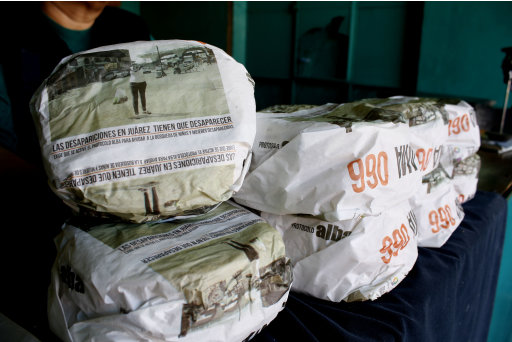
At least three dozen tortilla shops have joined
in the Chihuahua state campaign to print appeals for help on the thin
paper wrappers that shopkeepers use to wrap up a pound or two of hot
tortillas at a time.
"The disappearances in Juarez have to disappear," the ads read. They are accompanied by photos of "disappeared" people: a woman's bodiless clothing walks down a street appearing to hold a shopping bag; a little girl's shoes and socks stand on a curbside.
The wrappers include a phone number for reporting disappearances or sightings of missing people.
The campaign started this week, and has been welcomed by shopkeepers and customers in the violence-wracked border city of Ciudad Juarez, which is across from El Paso, Texas.
"The truth is a lot of people don't know about the missing young women — we are always the last to find out — so I think the governor had a good idea when he started this campaign to help families find missing people," said the owner of a Ciudad Juarez tortilla shop who did not want her identity revealed for fear of retaliation or extortion from the city's gangs.
Ciudad Juarez was hit by a series of eerily similar kidnap-killings of more than 100 mainly young women beginning in 1993. While those cases have tapered off, killings and disappearances continue.
A customer at the tortilla shop, who also didn't want her identity revealed, said the campaign could help.
"A lot of people don't have any way to watch TV or read the newspapers, they don't see the news, so this way they would at least know who to call or what to do in the case of a disappearance," she said.
Silvia Najera, spokeswoman for the Chihuahua state special prosecutor's office for crimes against women, said a total of 341 women had been officially reported missing since 1995. Of those, 316 have been found either dead or alive, while 25 cases remain open.
Women's rights activist Vicky Caraveo said she believes the women's killings of the 1990s and early 2000s haven't ended. Carveo said women matching the same profile of those earlier victims continue to disappear.
"The disappearances in Juarez have to disappear," the ads read. They are accompanied by photos of "disappeared" people: a woman's bodiless clothing walks down a street appearing to hold a shopping bag; a little girl's shoes and socks stand on a curbside.
The wrappers include a phone number for reporting disappearances or sightings of missing people.
The campaign started this week, and has been welcomed by shopkeepers and customers in the violence-wracked border city of Ciudad Juarez, which is across from El Paso, Texas.
"The truth is a lot of people don't know about the missing young women — we are always the last to find out — so I think the governor had a good idea when he started this campaign to help families find missing people," said the owner of a Ciudad Juarez tortilla shop who did not want her identity revealed for fear of retaliation or extortion from the city's gangs.
Ciudad Juarez was hit by a series of eerily similar kidnap-killings of more than 100 mainly young women beginning in 1993. While those cases have tapered off, killings and disappearances continue.
A customer at the tortilla shop, who also didn't want her identity revealed, said the campaign could help.
"A lot of people don't have any way to watch TV or read the newspapers, they don't see the news, so this way they would at least know who to call or what to do in the case of a disappearance," she said.
Silvia Najera, spokeswoman for the Chihuahua state special prosecutor's office for crimes against women, said a total of 341 women had been officially reported missing since 1995. Of those, 316 have been found either dead or alive, while 25 cases remain open.
Women's rights activist Vicky Caraveo said she believes the women's killings of the 1990s and early 2000s haven't ended. Carveo said women matching the same profile of those earlier victims continue to disappear.
Mayan Bones Reveal Painful End
When the Spanish conquered the Mayans in the 16th century, the Mayans suffered a miserable demise, bones reveal.
Are We Dumber Than Ancient Mayans?
Now that we have the Classic
Mayan's example to learn from, along with all sorts of other advanced
scientific understanding of human effects on the planet, can we do any
better?
On Earth's Cold Edge
At their most hostile, the polar
regions remain cold and forbidding.
Photographer Dave Walsh calls them
"The Cold Edge" of the planet.

Time to Bring Back New York's Oysters
Oyster reefs once provided New York with protection from storm surges.
Is it time to bring them back?
What Destroyed the Bats of the Caribbean?
Some 25,000 years ago, bats once dominated the Caribbean.
Did rising sea levels drive them away?

Leggiest Animal Thrives Near Silicon Valley
Females of this newly found millipede get around on some 750 legs, while the males crawl about on 562 limbs.

Orangutan's Chemotherapy Treatment for Cancer Ends
More
Reward offered to evict thieving railway station monkeys
Authorities at Chittorgarh railway station in India's northwestern
Rajasthan state have offered a cash reward of Rs 20,000 (£230, $365) for
anyone who can outsmart about 15 monkeys who have made the railway
station their home. The railway station is located about 360 km from
state capital Jaipur. The reward was announced as the railway
authorities had tried to "evict" the monkeys, but failed. At their wits'
end, and with no help from the forest department, the authorities
decided to "outsource" the job.
"There were just a couple of monkeys initially. Their mischief on the platform was initially ignored. But then there was quite a proliferation of them. And now, after a few months, we have about 15 monkeys. And they have become quite a nuisance," said an official at the railway station. "There's nothing the monkeys don't want. They don't hesitate to snatch mobile phones from passengers. They snatch food items, bags and other luggage," the harried official said.

Sounding like he was almost a little in awe of the simian troupe, the officer said: "They are an intelligent bunch. It is almost as if they understand announcements on the platforms. Soon as an announcement goes out on the public address system, they appear on the platform ready to snatch what they can find. And the passengers are more interested in boarding the train than dealing with monkeys. Sometimes there are three or four mobile phones at the same time ringing on the station roof."
Railway officials had initially sought the help of the forest department, but even they could not help end the monkey menace. The railway official explained that the cash award will only go to someone who can find a lasting solution to the problem. "He or she would have to ensure that the monkeys are left at such a far away place that they do not return," he said.
"There were just a couple of monkeys initially. Their mischief on the platform was initially ignored. But then there was quite a proliferation of them. And now, after a few months, we have about 15 monkeys. And they have become quite a nuisance," said an official at the railway station. "There's nothing the monkeys don't want. They don't hesitate to snatch mobile phones from passengers. They snatch food items, bags and other luggage," the harried official said.
Sounding like he was almost a little in awe of the simian troupe, the officer said: "They are an intelligent bunch. It is almost as if they understand announcements on the platforms. Soon as an announcement goes out on the public address system, they appear on the platform ready to snatch what they can find. And the passengers are more interested in boarding the train than dealing with monkeys. Sometimes there are three or four mobile phones at the same time ringing on the station roof."
Railway officials had initially sought the help of the forest department, but even they could not help end the monkey menace. The railway official explained that the cash award will only go to someone who can find a lasting solution to the problem. "He or she would have to ensure that the monkeys are left at such a far away place that they do not return," he said.

Subscribe to:
Posts (Atom)
