Welcome to ...

The place where the world comes together in honesty and mirth.
Windmills Tilted, Scared Cows Butchered, Lies Skewered on the Lance of Reality ... or something to that effect.


Saturday, April 5, 2014

Life on the frozen-food-tasting line

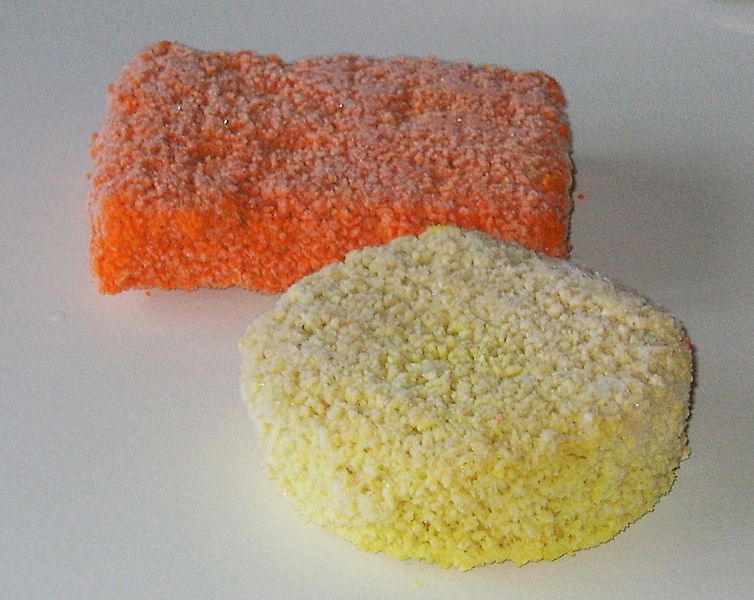
Matthew, an odd-jobbing freelance artist, took a job as a frozen-food taster ("trained sensory panelist"), spending long days stuffing fried food in his mouth and rating it on 50-100 attributes, swirling mashed potatoes around his mouth, getting mouth-blisters from all the salt. If you've ever wondered how frozen food manufacturers decide how much cardboard taste is too much, here is your answer:
Matthew: I’d come home with huge blisters in my mouth from the salt. Yeah, fried food doesn’t have the same appeal anymore. And the other amazing thing is seeing the whole world behind literally every product we consume. Every aspect of the foods, taste, appearance, texture, is so insanely focus grouped and tested. Every major food company has a similar testing process.
Mike: Does this mean you were eating many different versions of the same curly fry?
Matthew: Yes, there’d be slight variations in spices, in cooking time, in the kind of potato. We’d test them at different intervals to see how the taste changed once they were taken out of the fryer, or how micro-waving them would affect their texture. One aromatic that was fun to pick out was “cardboard”—an actual aromatic on the ballot—and to compare we had cups of water with brown paper towels in them.
Matthew: Oh, and another weird thing I learned: To cut corners with cheese products companies sometimes use the acids from cheese production instead of the more expensive cheese products, and these acids are basically bile from different animals (a food scientist might have a more nuanced view). So sometimes we’d be spitting out these inexpensive cheese products all day, and your mouth would just be full of this vomit bile taste.

The anti-suicidal properties of ketamine


In patients with treatment resistant depression who were experiencing suicidal […]

Beer Money And Babe Ruth

Why The Yankees Triumphed During Prohibition


One of the best beer-and-baseball stories comes from the dry years of Prohibition, 1920-1933, when the New York Yankees made it to seven World Series and won four.

Their rise began in 1915, when the team was purchased for $1.25 million by Tillinghast Huston and Jacob Ruppert, Jr. The Yankees had never won a pennant until the Colonels, as they were known, got a hold of them. Their masterstroke was to add a Boston Red Sox pitcher to the roster in 1920. That player's name was Babe Ruth.

Daily Comic Relief

http://media.zenfs.com/en_us/News/ucomics.com/dp140404.gif

Little Red Riding Hood Was A Jerk

Yes, the Big Bad Wolf is the villain of the story, but only because he's just a bit worse than that little brat. She's come all this way just for the pleasure of insulting her own grandmother! Go ahead and eat her.

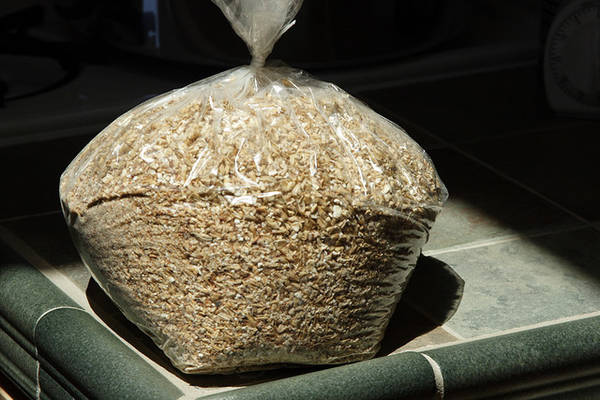
FDA rules make it nearly impossible for beer makers to give their grain to farmers for feed

"There's a new FDA rule that will make it nearly make it financially impossible for small craft brewers to give their grain away to farmers for animal feed. I work for a small brewery and all of us there are very upset about this and the general disregard for sustainability. At the end if the article linked there's direct FDA links that cover their proposal." 
Leftover brewing grains have been fed to livestock since the dawn of agriculture, so this is a pretty radical shift. The proposed new requirements for animal feed handling stipulate that the feed has to be dried, analyzed and packaged before being donated to farmers (the spent grains are generally given away at the end of the brewing process), at substantial expense.
It's clear that food safety is important, but I'm not convinced that the stringency of this rule is commensurate with the risk.
Brandon Mazer is legal counsel for Maine’s largest brewer, Shipyard, which produces 400-600 tons of spent grain per week during its peak production seasons. Those grains are dumped onto a truck trailer and go to farms as feed.
“It’s a very big umbrella, and we got sucked under it,” Mazer said of the proposed FDA rule change. He said that no brewers in Maine, and few in the country, are equipped with the machinery, personnel or money to meet the requirements outlined by the FDA.
The Brewers Association, Beer Institute, American Malting Barley Association and other brewing organizations have voiced strong opposition to the new restrictions, calling for an exemption for brewers.
The Beer Institute says that in 2012 alone, U.S. brewers produced about 2.7 million tons of spent grain.
The FDA has extended the public comment period on this set of rules until March 31, and brewers and farmers that work with them say they are watching closely.

Astro-Biology

Understanding the limits of life on Earth could help scientists learn more about what life on alien worlds could be.

Coming Tomorrow

Coming Tomorrow
  • Can a brain injury make you a genius?
  • Why astrology isn't real science
  • The altruistic side of aggressive greed
  • Brain differences in college-aged occasional drug users
And more ...
This bird is our Animal Picture, for today.

Friday, April 4, 2014

The Daily Drift

It's Feral Flora and Fauna
Makes you wonder - just who is the smarter speices ...
and today's posts deal more with fauna than flora but give it time
 
Carolina Naturally is read in 196 countries around the world daily.   

  For all the nerds ... !
Today is - Square Root Day

Don't forget to visit our sister blog: It Is What It Is

Some of our reader today have been in:
The Americas
Cleveland, Memphis, Baltimore, Stamford, Newark, Tampa, Pittsburgh, Manhattan, Sacramento, Miami, Portland, Philadelphia, Davenport, Dallas, minneapolis, Phoenix, Akron, Englewood, Tucson, Boston, Buffalo, Lincoln, United States
Pikangikum, Mississauga, Regina, Saskatoon, Ottawa, Vancouver, Montreal, Thunder Bay, Sioux Lookout, Delta, Winnipeg, Toronto, Saint John's, Canada
Medellin, Bogota, Cali, Colombia
Managua, Nicaragua
Sao Paulo, Curitiba, Brazil
Lima, Peru
San Jose, San Pedro, Costa Rica
Europe
Slough, London, Maidenhead, Radlett, England
Piraeus, Athens, Greece
Zhovti Vody, Ukraine
Luxembourg, Luxembourg
Mostar, Sarajevo, Hadzici, Bosnia and Herzegovina
Lodz, Poznan, Gdynia, Warsaw, Kedzierzyn-Kozle, Poland
Vilnius, Lithuania
Veliko Turnovo, Bulgaria
Hrinova, Slovakia
Calais, Le Harve, Paris, France
Hellersdorf, Germany
Nicosia, Cyprus
Rome, Ivrea, Livorno, Milan, Pisa, Italy
Kista, Stockholm, Sweden
Frederiksberg, Denmark
Logrono, Bilbao, Madrid, Basauri, Magala, Spain
Bucharest, Slatina, Romania
Moscow, Ryazan, Aya, Russia
Istanbul, Turkey
Dublin, Cork, Ireland
Covilha, Portugal
Asia
Umm Salal Mohammad, Doha, Qatar
Kuala Lumpur, Sibu, Bayan Lepas, Kota Kinabalu, Shah Alam, Taiping, Malaysia
Bhubaneshwar, Bangalore, Mumbai, Coimbatore, Chetput, Delhi, Cochin, Shillong, Kolkata, Pune, India
Esfahan, Tehran, Tabriz, Iran
Thanh Pho Ho Chi Minh, Vietnam
Guangzhou, Shijiazhung, China
Al Hudaydah, Yemen
Ad Dammam, Riyadh, Ad Dilam, Saudi Arabia
Jakarta, Depok, Surakarta, Indonesia
Colombo, Kandy, Sri Lanka
Islamabad, Pakistan
Port Louis, Quarte Bornes, La Dagotiere, Mauritius
Hong Kong, Hong, Kong
Vientiane, Laos
Bangkok, Thailand
Beirut, Lebanon
Osaka, Japan
Africa 
Accra, Ghana
Algiers, Algeria
Ouagadougou, Burkina Faso
Johannesburg, South Africa
The Pacific
Sydney, Brisbane, Fortitude Valley, Melbourne, Australia

Today in History

527 In Constantinople, Justin, seriously ill, crowns his nephew Justinian as his co-emperor.
1581 Francis Drake completes circumnavigation of the world.
1812 The territory of Orleans becomes the 18th state and will become known as Louisiana.
1818 The United States flag is declared to have 13 red and white stripes and 20 stars.
1841 President William Henry Harrison, aged 68, becomes the first president to die in office, just a month after being sworn in.
1862 The Battle of Yorktown begins as Union gen. George B. McClellan closes in on Richmond, Va.
1917 The U.S. Senate votes 90-6 to enter World War I on Allied side.
1918 The Battle of the Somme ends.
1941 Field Marshal Erwin Rommel captures the British held town of Benghazi in North Africa.
1949 The North Atlantic Treaty Organization (NATO) treaty is signed.
1968 Rev. Martin Luther King Jr. is assassinated in Memphis, Tennessee.
1974 Hank Aaron ties Babe Ruth's home-run record.
1979 Zulfikar Ali Bhutto, the president of Pakistan is executed.
1985 A coup in Sudan ousts President Nimeiry and replaces him with General Dahab.

Non Sequitur

http://media.zenfs.com/en_us/News/ucomics.com/nq140403.gif

Mongolian girls becoming eagle hunters to help keep ancient tradition alive

Ashol Pan, 13, takes to centuries-old pastime that has been dominated by men

eagle hunter
Eagle hunter Ashol Pan of Mongolia lets go of her golden eagle. 
A photographer seeking to document the next generation of Kazakh eagle hunters in Mongolia discovered a 13-year-old girl who has taken to the male-dominated tradition.
Photographer Asher Svidensky made a four-month trek through western Mongolia, mostly on horseback, and found Han Gohadok and his daughter, Ashol Pan, who had expressed a desire to take up the full-time profession that is centuries old.
Good thing, too, since the ancient pastime is said to be a dying part of Mongolian culture, as young men are leaving their families and the hunting duties behind. As a result, more girls are becoming eagle hunters to replace their brothers, according to the Mail Online.
Gohadok told the Mail Online that his eldest son was to become the eagle hunter of the family but was drafted into the army. That’s when Ashol Pan stepped forward.
eagle hunter
Eagle hunter Ashol Pan of Mongolia holds her golden eagle, giving perspective on the size of the bird. 
Eagle hunters use golden eagles to hunt foxes during the winter months when the gold-colored foxes stand out against the snow. They also hunt hares. Typically, the training of young men begins at age 13, when they are strong enough to carry a full-grown eagle on their arm.
The training is rigorous, as the master and its eagle develop a long-term and trusting relationship that is all consuming. The Kazakh custom is for the eagle hunter to ride a horse while hunting.
Svidensky was looking for something different when he set out to document eagle hunters in Mongolia.
“I decided to focus myself—stop looking for a portrait of a centuries-old image of a Kazakh eagle hunter and instead represent the future of this ancient Mongolian tradition,” Svidensky told the Mail Online.
Ashol Pan represents the future. She is one of an estimated 250 eagle hunters in western Mongolia.
In his photos, Svidensky depicts the evident joy Ashol Pan has in her new role, one her father never would have forced upon her unless she had asked. And she did.
eagle hunter
Eagle hunter Ashol Pan of Mongolia is developing a trusting relationship with her golden eagle. eagle huter
Eagle hunter Ashol Pan of Mongolia gets an eagle-pat on the head. eagle hunter
Eagle hunter Ashol Pan of Mongolia

Jeu de la Bataille ou le Buffon amusant

houghtonlib:

Jeu de la Bataille ou le Buffon amusant [early 19th century]
SG 3102.106.1
Houghton Library, Harvard University
Jeu de la Bataille ou le Buffon amusant [early 19th century]
SG 3102.106.1
Houghton Library, Harvard University


Leap of Faith

A tiny French bulldog puppy takes his first ever jump off the couch onto the floor. You have to admit, he’s got style!

Rescued Dog is Grateful

A dog became trapped in a concrete-walled waterway in Romania. We don’t know how long he was there before two men hauled him out, but it was long enough for the dog to realize he was in danger.  He readily display the pure joy of being on dry land and was very appreciative of the rescue. Contrast his reaction to that of the cat in Sweden that was rescued by a sailor from under a boat. Dogs cannot hide their feelings. Cat make it an art. That’s a good dog.

There has been much discussion about holding a grown dog by the scruff of its neck. While that isn’t the best way to handle a dog from the dog’s point of view, it is safest for a man approaching a frightened dog he doesn’t know

Goats cleverer than thought

"Goats learn how to solve complicated tasks quickly and can recall how to perform them for at least 10 months, which might explain their remarkable ability to adapt to harsh environments."

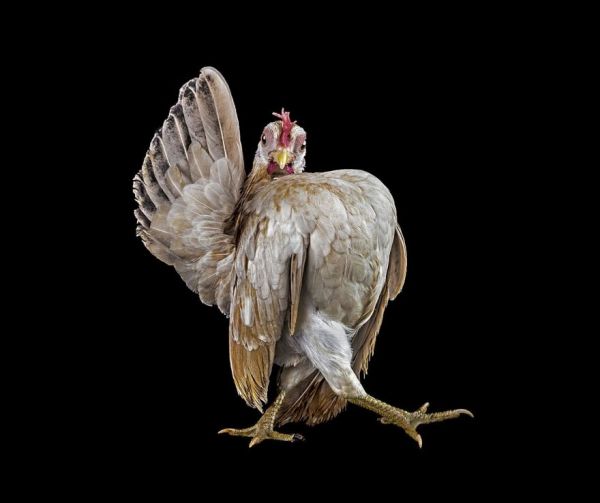
Chicken Beauty Pageants

Photographer Ernest Goh brought us fish portraits a while back. Now he has a series of glamor photos of ornamental chickens, called Cocks. The photos are featured in his book COCKS: The Chicken Book. You can get a sneak peek at Goh’s website

Bat Soup Blamed as Deadly Ebola Virus Spreads

To combat the spread of Ebola, officials have taken the unusual step of banning the consumption of bat soup, grilled bat and other local delicacies.

Big brown bat males call ‘dibs’ on food

As big brown bats wake up from their winter slumber […]

Time-lapse fireflies

Vincent Brady shot these scenes of swarming fireflies at the Lake of the Ozarks in Missouri, and at his home in Michigan: "I used every trick I have up my sleeve to pull this off. Image stacking, 360 degree startrail panoramas, and even a macro love scene! Hold on to your seats these fireflies fly by pretty quick!"
There's a fantastic gallery of stills, too. And that perfect musical accompaniment is by Brandon McCoy. Video Link.

Honeybees are NOT native to North America

"If the honeybee is a victim of natural menaces like viruses and unnatural ones like pesticides, it's worth remembering that the bee itself is not a natural resident of the continent.  It was imported to North America in the 17th century, and it thrived until recently because it found a perfect niche in a food system that demands crops at ever cheaper prices and in ever greater quantities.  That's a man-made mercantile ecosystem that not only has been good for the bees and beekeepers but also has meant steady business and big revenue for supermarkets and grocery stores."

X-rays film inside live flying insects


Scientists have used a particle accelerator to obtain high-speed 3D […]

Introducing the hammerhead (flat)worm

This planarian is an inhabitant of the soil; it preys on earthworms:


More details about its biology at The Ark in Space.

Canal between ears helps alligators pinpoint sound

By reptile standards, alligators are positively chatty. They are the […]

Salamanders shrinking due to climate change

http://scienceblog.com/wp-content/uploads/2014/03/Study-Salamanders-shrinking-due-to-climate-change.jpg
Wild salamanders living in some of North America’s best salamander […]

Will Global Warming Really Trigger Mass Extinctions?

by Axel Bojanowski
UN Backtracks: Will Global Warming Really Trigger Mass Extinctions?
In 2007, the IPCC predicted that rising global temperatures would kill off many species. But in its new report, part of which will be presented next Monday, the UN climate change body backtracks. There is a shortage of evidence, a draft version claims.  More

Ziggy

http://media.zenfs.com/en_us/News/ucomics.com/zi140403.gif

Slow Life

'Slow' marine animals show their secret life under high magnification. Corals and sponges are very mobile creatures, but their motion is only detectable at different time scales compared to ours and requires time lapses to be seen. These animals build coral reefs and play crucial roles in the biosphere, yet we know almost nothing about their daily lives.

Crude oil causes developmental abnormalities in large marine fish

Crude oil causes developmental abnormalities in large marine fish
Study shows Deepwater Horizon oil disrupts heart development in tunas […]

Enormous Shrimp ...

Perhaps the most peaceful time on the planet was around 540 million years ago, when the number one predator was a huge, yet gentle, shrimp-like creature.


7 Of The Coolest Living Fossils

Want to see history? You could go to a museum - or you could go to the zoo and check out these animals that haven't changed for tens of millions of years.

Ancient African cattle first domesticated in Middle East

Geneticists and anthropologists previously suspected that ancient Africans domesticated cattle native to the African continent nearly 10,000 years ago. Now, a team of University of Missouri researchers has completed the genetic history of 134 cattle breeds from around the world. In the process of completing this history, they found that ancient domesticated African cattle originated in the "Fertile Crescent," a region that covered modern day Iraq, Jordan, Syria and Israel.
Kuri-Rinder cattle from the Buduma Area of West Africa
In their study published in PLOS Genetics, Prof. Decker (University of Missouri) and a team of international researchers compared the similarities and differences among the genetics of many different cattle breeds to determine how the breeds are related. Their research found mixing of native cattle in Indonesia with imports from India, European and African cattle in Italy and Spain, and European and Asian cattle in Korea and Japan. The MU researchers also determined that unique American cattle breeds, such as Texas longhorns, are the result of breeding between Spanish cattle, transported from Europe by explorers in the 16th century, and breeds of Zebu, or Brahman cattle from India imported into the U.S. from Brazil in the late 1800s. Decker says these discoveries help advance genetics and uncover important information about human history.
Prof. Decker says the genetics of these African cattle breeds are similar to those of cattle first domesticated in the Middle East nearly 10,000 years ago, proving that those cattle were brought to Africa as farmers migrated south. Those cattle then interbred with wild cattle, or aurochs, which were native to the region, and changed their genetic makeup enough to confuse geneticists.
"In many ways, the history of cattle genetics mirrors human history," Decker said. "In the case of African cattle, anthropologists and geneticists used to suspect that domesticated African cattle were native to the continent, when in fact, they were brought by migrating peoples thousands of years ago. By better understanding the history of the animals we domesticate, we can better understand ourselves."
Decker also said that cattle breeding is important for animal farmers looking to maximize their herds' meat and dairy production. He says that understanding the genetic history of cattle breeds is important when looking for solutions to agricultural issues.
"Now that we have this more complete genetic history of cattle worldwide, we can better understand the diversity of the species," Decker said. "By understanding the variations present, we can improve cattle for agricultural purposes, whether that is through breeding more disease-resistant animals or finding ways to increase dairy or beef production."
************************

Neck ribs in woolly mammoths provide clues about their decline and eventual extinction


Daily Comic Relief

http://media.zenfs.com/en_us/News/ucomics.com/dp140403.gif

Animal News

 
Primate poop reveals what our furry ancestors are eating.
 
Giant Pandas Love Sugar
Giant pandas have a sweet tooth, which explains why a baby giant panda at the National Zoo keeps craving a certain sweet food.
How long can you hold your breath underwater? A Cuvier's beaked whale just did it for over two hours while on a dive that took it to nearly 2 miles below the ocean's surface.
The Copenhagen Zoo recently killed four members of a lion family because the cats didn't meet the needs of the zoo's captive breeding program.

Study yields ‘Genghis Khan’ of brown bears, and brown and polar bear evolution

Male bears are seemingly always on the prowl, roaming much […]

Bears Doing Human Things

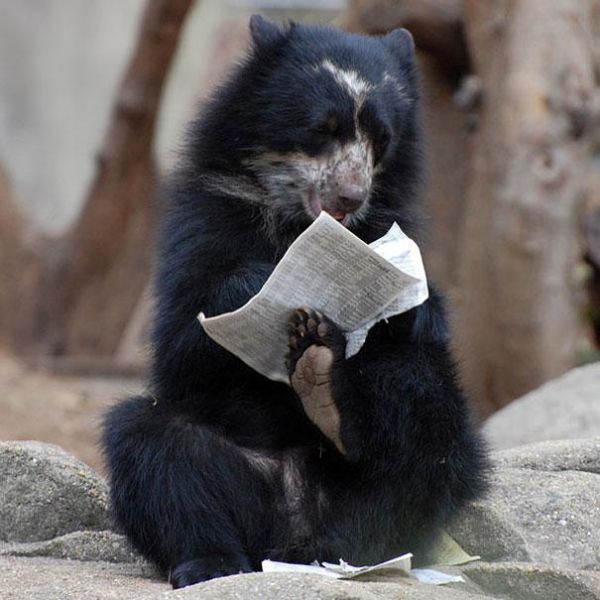
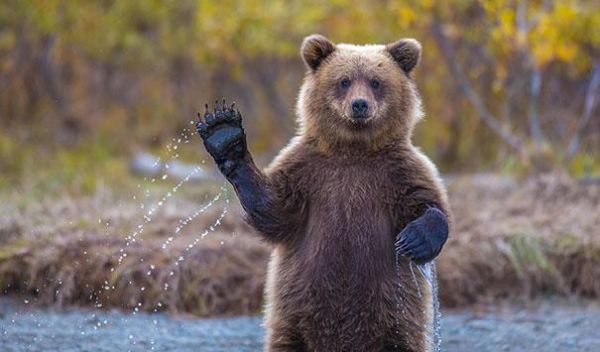
There’s a reason they chose a bear to be the star of so many cartoon shows, from Yogi to Baloo to the Three Bears in those Looney Tunes shorts, because very few critters act as humanistic as bears.
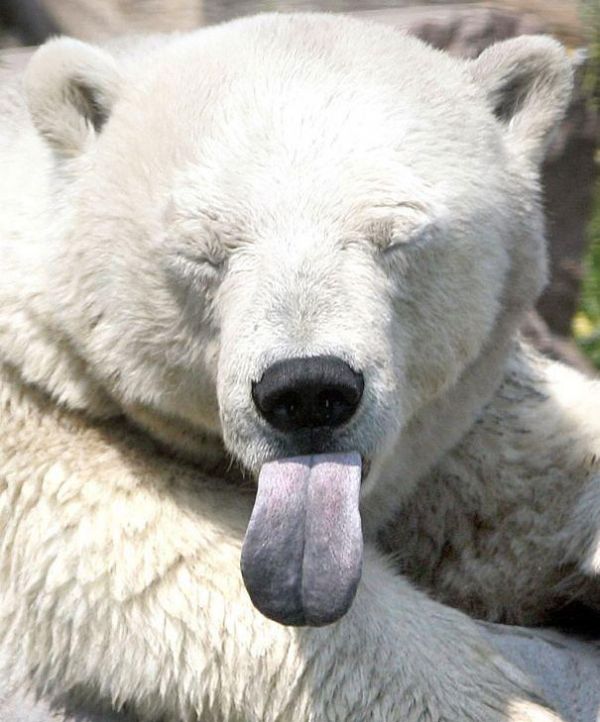
When a bear stands up and gives you a wave you can almost see your big, hairy uncle doing the same thing, and when they hold a newspaper, sit at a picnic table waiting for a basket full of goodies to come their way, or simply stick their tongue out at the photographer we instantly imagine a friend or family member doing the same thing.
Enjoy this selection of images showing Bears Doing Human Things, put together by the animal loving folks at Bored Panda.

Coming Tomorrow

Coming Tomorrow
  • Beer Money and Babe Ruth
  • Visualizing a beautiful mind
  • Life on the frozen-food-tasting line
  • Black markets for hacker are increasingly sophisticated ...
And more ...
Pandas - our Animal Picture, for today.

Thursday, April 3, 2014

The Daily Drift

It's Historic Preservation and Restoration
Hey, it could happen ...
 
Carolina Naturally is read in 196 countries around the world daily.   

  Party On ... !
Today is - World Party Day

Don't forget to visit our sister blog: It Is What It Is

Some of our reader today have been in:
The Americas
Onalaska, Orlando, Ocala, Omaha, Owosso, Oakland, Ocoee, Onieda, Opalocka, Oviedo, Ovilla, Oswego, Oldsmar, Okeechobee, Orange, Osage, Olathe, United States
Duncan, Vancouver, Pikangikum, Joliette, Britannia, Guelph, Prince Albert, Sechelt, Ottawa, Canada
Guayaquil, Ecuador
Santa Marta, Colombia
Managua, Nicaragua
Rio De Janeiro, Brazil
Europe
Le Harve and Arcey, France
Madrid, Magala, Spain
Reykjavik, Iceland
Amsterdam, Netherlands
Ivera, Milan, Rome, Pisa, Italy
Dublin, Ireland
Vladivostok, Ryazan, Russia
London, Southend-On-Sea, England
Covilha, Lisbon, Portugal
Liepaja, Riga, Latvia
Kista, Sweden
Wroclaw, Gdansk, Wloclawek, Poland
Athens, Greece
Bucharest, Romania
Sarajevo, Bosnia and Herzegovina
Tallinn, Estonia
Kiev, Ukraine
Gibraltar, Gibraltar
Budapest, Hungary
Mol, Belgium
Asia
Doha, Qatar
Chetput, Kolkata, Bikaner, Shillong, Delhi, Coimbatore, Nodia, Cochin, Vasco De Gama, Gurgaun, Mumbai, New Delhi, Jalandhar, Bangalore, Pune, Ganganagar, India
Muscat, Oman
Shijiazhuang, China
La Dagotiere, Port Louis, Mauritius
Bangkok, Thailand
Singapore, Singapore
Kuala Lumpur, Malaysia
Tokyo, Japan
Medan, Jakarta, Kutoarjo, Indonesia
Riyadh, Dhaharan, Saudi Arabia
Africa 
Abuja, Nigeria
Kampala, Uganda
Cape Town, Johannesburg, Claremont, South Africa
The Pacific
Sydney, Melbourne, Australia
Makati, Sampaloc, Philippines
Editorial Comment
It appears that the service that we use to track our readers is on one of it's periodic down-times which can last from several hours to several days.
In light of this fact our abbreviated listing of daily readers has been further truncated today.
We will return to our normal listing as soon as we are able - then again we were considering an alteration to just a country listing in lieu of individual cities and places in each country ... might be the time to do so.

Today in History

628 In Persia, Kavadh sues for peace with the Byzantines.
1367 John of Gaunt and Edward the Black Prince win the Battle of Najara, in Spain.
1559 Philip II of Spain and Henry II of France sign the peace of Cateau-Cambresis, ending a long series of wars between the Hapsburg and Valois dynasties.
1860 The Pony Express connects St. Joseph, Missouri and Sacramento, California.
1862 Slavery is abolished in Washington, D.C.
1865 Union forces occupy the Confederate capital of Richmond, Virginia.
1882 The American outlaw Jesse James is shot in the back and killed by his cousin, Bob Ford.
1910 Alaska's Mount McKinley, the highest mountain in North America is climbed.
1920 F. Scott Fitzgerald and Zelda Sayre are married at St. Patrick's Cathedral in New York City.
1936 Bruno Hauptmann, killer of the Lindbergh baby, is executed.
1942 The Japanese begin their all-out assault on the U.S. and Filipino troops at Bataan.
1944 The U.S. Supreme Court rules that black citizens are eligible to vote in all elections, including primaries.
1948 President Harry Truman signs Marshall Plan, it will revive war-torn Europe.
1966 Three-thousand South Vietnamese Army troops lead a protest against the Ky regime in Saigon.
1972 Charlie Chaplin returns to the United States after a twenty-year absence.
1984 Coach John Thompson of Georgetown University becomes the first African-American coach to win an NCAA basketball tournament.

Non Sequitur

http://media.zenfs.com/en_us/News/ucomics.com/nq140402.gif

No really ...

You know you really do not have to scream it's only History.

History

This post is about the academic discipline. 
Historia
by Nikolaos Gysis (1892)
Those who cannot remember the past are condemned to repeat it.
—George Santayana
History (from Greek ἱστορία, historia, meaning "inquiry, knowledge acquired by investigation") is the study of the past, specifically how it relates to humans. It is an umbrella term that relates to past events as well as the discovery, collection, organization, and presentation of information about these events. The term includes cosmic, geologic, and organic history, but is often generically implied to mean human history. Scholars who write about history are called historians. Events occurring prior to written record are considered prehistory.
History can also refer to the academic discipline which uses a narrative to examine and analyze a sequence of past events, and objectively determine the patterns of cause and effect that determine them. Historians sometimes debate the nature of history and its usefulness by discussing the study of the discipline as an end in itself and as a way of providing "perspective" on the problems of the present.
Stories common to a particular culture, but not supported by external sources (such as the tales surrounding King Arthur) are usually classified as cultural heritage or legends, because they do not support the "disinterested investigation" required of the discipline of history. Herodotus, a 5th-century BC Greek historian is considered within the Western tradition to be the "father of history", and, along with his contemporary Thucydides, helped form the foundations for the modern study of human history. Their work continues to be read today and the divide between the culture-focused Herodotus and the military-focused Thucydides remains a point of contention or approach in modern historical writing. In the Eastern tradition, a state chronicle the Spring and Autumn Annals was known to be compiled from as early as 722 BC although only 2nd century BC texts survived.
Ancient influences have helped spawn variant interpretations of the nature of history which have evolved over the centuries and continue to change today. The modern study of history is wide-ranging, and includes the study of specific regions and the study of certain topical or thematical elements of historical investigation. Often history is taught as part of primary and secondary education, and the academic study of history is a major discipline in University studies.

Epic Win

https://blogger.googleusercontent.com/img/b/R29vZ2xl/AVvXsEjS65olnJeH4kz78H20neGn30XJNFPJk9tyzZzV2wLgqfy8lqU_WYH-nmkSKZnloLwZznSHkDDYLf-PvIgNsUmpaJWjIUpazJj2DDKrdA109uVlIvAjXpqCimz2S0gwnEsFYqSEnHU_CbE/s1600/historyteacher.jpg