Welcome to ...

The place where the world comes together in honesty and mirth.
Windmills Tilted, Scared Cows Butchered, Lies Skewered on the Lance of Reality ... or something to that effect.


Sunday, November 23, 2014

Cashing in on the ISIL 'Crisis'

by Emily Schwartz Greco and William A. Collins
The Military Fat-Cat Complex (Image: Khalil Bendib/Other Worlds)
The Military Fat-Cat Complex 
Maybe you think the US air war on the Islamic State is a fine plan. Maybe you don’t. Either way, have you considered how little Washington’s latest military foray in the Middle East has to do with America’s welfare?
In case you haven’t heard, shock and awe are out in what’s increasingly being called either Iraq War 3.0 or — more ominously — Iraq War III. “Persistent and sustainable” are in, according to General Martin Dempsey, chairman of the US military’s Joint Chiefs of Staff.
Why can’t our leaders leave bad enough alone and get out of there? One possible explanation is that this apparently eternal battle has more to do with profits than protection.
No matter how pointless these wars prove, America’s military-industrial complex makes a killing.
There’s always a profit to be skimmed by the makers of cruise missiles and builders of submarines. They stay in the black even when humanity suffers.
But wait. Doesn’t the United States lose when these wars inevitably shore up anti-American hatred?
Worrying about that kind of thing isn’t really a job for military contractors. Just like the oil, gas, and coal industries, their goal is to grab what they can while the grabbing is good.
America’s hired guns and military contractors took a big hit after the last Iraq War wound down. But thanks to the eruption of “the ISIS crisis,” the dogs of war in Congress are howling again.
At the moment, they’re yelping at President Barack Obama and telling him to stop ruling out more “boots on the ground.” Obama has already called for doubling current troop levels in Iraq and asked Congress for permission to spend $5.6 billion more than anticipated on the conflict.
Perhaps the most galling military development so far is the Pentagon’s mobilization of depleted uranium weapons. These weapons are already suspected of causing widespread birth defects in Iraq from prior military campaigns, and there is a debate underway right now in the United Nations to ban them.
Whistleblower Peter Van Buren recently asked a good question about all of this: “What could go possibly go right?”

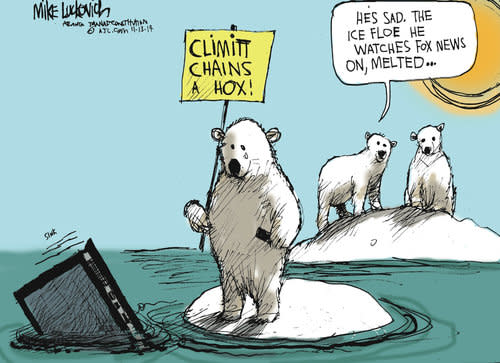
The Truth Hurts

http://l3.yimg.com/bt/api/res/1.2/d6XgOJ.Q5xjkonn6iggJBQ--/YXBwaWQ9eW5ld3M7Zmk9ZmlsbDtoPTM2MztweW9mZj0wO3E9NzU7dz01MDA-/http://media.zenfs.com/en_us/News/ucomics.com/crmlu141113.jpg

The First Presidential Assassination Attempt

As any student of U.S. or presidential history knows, there have been four assassinations of U.S. presidents. Two were very famous, two not as well-known.
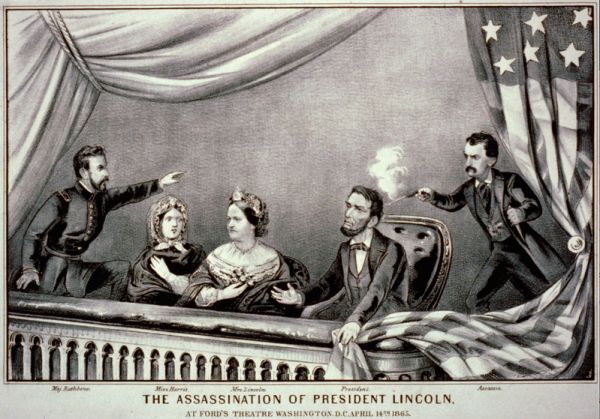
The first assassination of a president is both well-known and well-documented. On April 14, 1865, actor and southern sympathizer John Wilkes Booth shot our 16th president Abraham Lincoln at Ford's theater. Lincoln died from his wounds the next day.
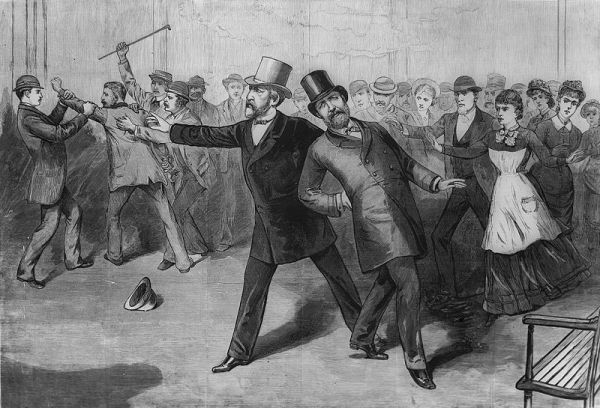
Less well-known was the next assassination of a Commander-in-Chief. On July 2, 1881, 20th U.S. President James Garfield was assassinated by a ne'er-do-well named Charles J. Guiteau.
Garfield survived his gunshot wounds for 79 days. He finally succumbed on September 19, 1881. This was by far the longest time a president survived his assassination wounds before death.
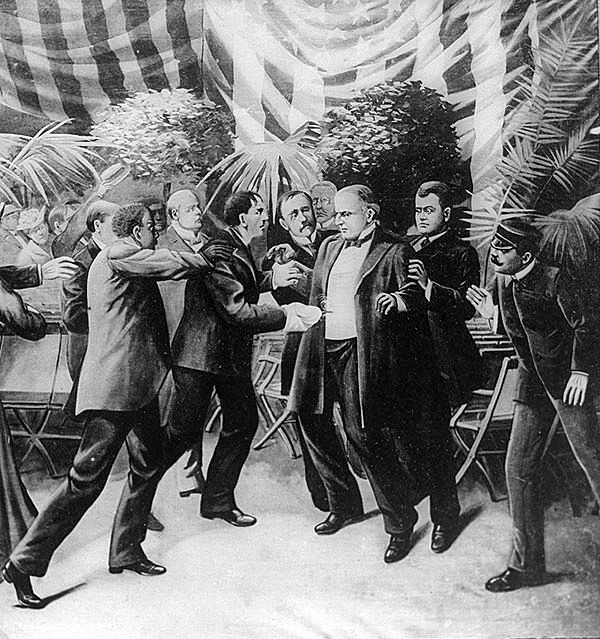
The next assassination of a president was also slightly less or not as well-known. Our 25th president, William McKinley, was shot in the pancreas by anarchist Leon Czolgosz on September 6, 1901. McKinley died from gangrene caused by the bullet wounds a week later, on September 14, 1901.
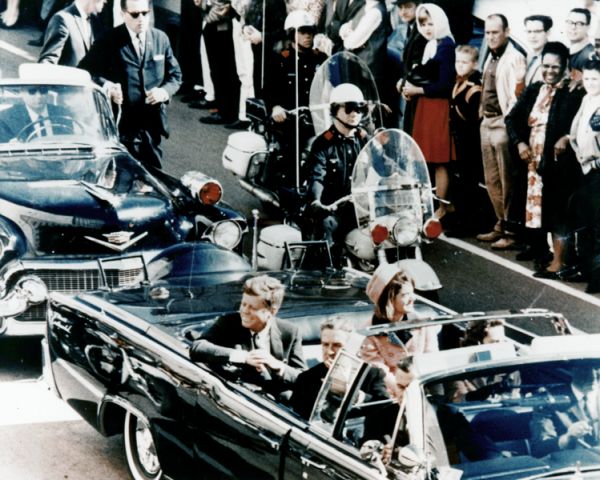
On November 22, 1963, 35th president John F. Kennedy was shot in Dallas by Lee Harvey Oswald. J.F.K. died shortly thereafter. This was to be the only assassination of a president captured on film, albeit a home movie.The Kennedy assassination has created the most controversy, at least in the sense of questioning “Who really did it?" Where the first three were clear-cut and the perpetrator was unquestioned, Kennedy's assassination still carries a bit of a mystery aura, lo, this half-a-century later.
Although Lincoln's assassination was the first, it was not the first presidential assassination attempt.
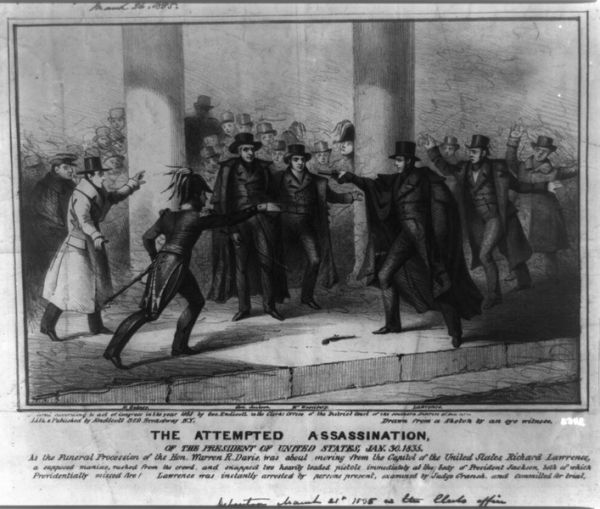
On January 30, 1835, Andrew Jackson, our 7th president, was attending a funeral for Congressman Warren R. Davis. This was just outside the U.S. capitol.
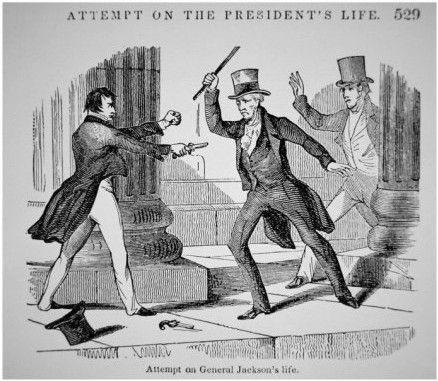
As he filed past the casket, Richard Lawrence, an unemployed house painter, drew a pistol and fired point blank at the president. The bullet failed to discharge from the gun barrel.

Jackson charged his would-be killer with complete abandon. Lifting his cane above his head, the 67-year-old Jackson lunged at his assailant. Before he could reach him, Lawrence drew a second pistol and fired again. Incredibly, this pistol also failed to fire.
After the second attempt, Jackson reportedly went about his business as if nothing had happened. (Some historians believe Jackson violently attacked his would-be assassin with his cane.)
Vice-president Martin Van Buren looked on as both attempts took place. He was completely breathless and stunned. He looked on, along with most of the crowd, frozen and horrified.
Davy Crockett was among the men present who grabbed and restrained Lawrence.
Lawrence spent the rest of his life in Washington's government hospital for the insane. Many believe the humidity that day caused Lawrence's two pistols to misfire. Because of public curiosity, the two pistols were tested under similar circumstances. During these tests, both pistols worked and fired fine.
This caused much of the American public to believe in President Jackson's divine providence, as well as the providence of the United States of America.

23 Maps And Charts On Language

'The limits of my language,' the philosopher Ludwig Wittgenstein once posited, 'mean the limits of my world.' Explaining everything within the limits of the world is probably too ambitious a goal. But here are 23 maps and charts that can hopefully illuminate small aspects of how we manage to communicate with one another.

Ten Catastophic Edibles

If an asteroid strikes or a nuclear winter ensues, survivors could live on at least 10 foods that in some cases may seem gross but are all nutritious.

10 dangers of the medieval period

It was one of the most exciting, turbulent and transformative eras in history, but the Middle Ages were also fraught with danger. Here historian Dr Katharine Olson reveals 10 of the biggest risks people faced…
1) Plague 
Dying man dictating his will, 1350. (Photo by Leemage/UIG) The plague was one of the biggest killers of the Middle Ages – it had a devastating effect on the population of Europe in the 14th and 15th centuries. Also known as the Black Death, the plague (caused by the bacterium called Yersinia pestis) was carried by fleas most often found on rats. It had arrived in Europe by 1348, and thousands died in places ranging from Italy, France and Germany to Scandinavia, England, Wales, Spain and Russia.
The deadly bubonic plague caused oozing swellings (buboes) all over the body. With the septicaemic plague, victims suffered from skin that was darkly discolored (turning black) as a result of toxins in the bloodstream (one reason why the plague has subsequently been called the ‘Black Death’). The extremely contagious pneumonic plague could be contracted by merely sneezing or spitting, and caused victims’ lungs to fill up.
The Black Death killed between a third and half of the population of Europe. Contemporaries did not know, of course, what caused the plague or how to avoid catching it. They sought explanations for the crisis in God’s anger, human sin, and outsider/marginal groups, especially Jews. If you were infected with the bubonic plague, you had a 70–80 per cent chance of dying within the next week. In England, out of every hundred people, perhaps 35–40 could expect to die from the plague.
As a result of the plague, life expectancy in late 14th-century Florence was just under 20 years – half of what it had been in 1300. From the mid-14th-century onwards, thousands of people from all across Europe – from London and Paris to Ghent, Mainz and Siena – died. A large number of those were children, who were the most vulnerable to the disease.
2) Travel
People in the medieval period faced a host of potential dangers when traveling.
A safe, clean place to sleep upon demand was difficult to find. Travelers often had to sleep out in the open – when traveling during the winter, they ran the risk of freezing to death. And while traveling in groups provided some safety, one still might be robbed or killed by strangers – or even one’s fellow travelers.
Nor were food and drink provided unless the traveler had found an inn, monastery, or other lodging. Food poisoning was a risk even then, and if you ran out of food, you had to forage, steal, or go hungry.
Medieval travelers could also be caught up in local or regional disputes or warfare, and be injured or thrown into prison. Lack of knowledge of foreign tongues could also lead to problems of interpretation.
Illness and disease could also be dangerous, and even fatal. If one became unwell on the road, there was no guarantee that decent – or indeed any – medical treatment could be received.
Travelers might also fall victim to accident. For example, there was a risk of drowning when crossing rivers – even the Holy Roman emperor, Frederick I, drowned in 1190 when crossing the Saleph river during the Third Crusade. Accidents might also happen upon arrival: in Rome during the 1450 jubilee, disaster struck when some 200 people in the huge crowd crossing the great bridge of Sant’ Angelo tumbled over the edge and drowned.

While it was faster to travel by sea than land, stepping onto a boat presented substantial risks: a storm could spell disaster, or navigation could go awry, and the medieval wooden ships used were not always equal to the challenges of the sea. However, by the later Middle Ages, sea travel was becoming faster and safer than ever before.
An average traveler in the medieval period could expect to cover 15–25 miles a day on foot or 20–30 on a horse, while sailing ships might make 75–125 miles a day.
3) Famine
Famine was a very real danger for medieval men and women. Faced with dwindling food supplies due to bad weather and poor harvests, people starved or barely survived on meager rations like bark, berries and inferior corn and wheat damaged by mildew.
Those eating so little suffered malnutrition, and were therefore very vulnerable to disease. If they didn’t starve to death, they often died as a result of the epidemics that followed famine. Illnesses like tuberculosis, sweating sickness, smallpox, dysentery, typhoid, influenza, mumps and gastrointestinal infections could and did kill.
The Great Famine of the early 14th century was particularly bad: climate change led to much colder than average temperatures in Europe from c1300 – the ‘Little Ice Age’. In the seven years between 1315 and 1322, western Europe witnessed incredibly heavy rainfall, for up to 150 days at a time.
Farmers struggled to plant, grow and harvest crops. What meager crops did grow were often mildewed, and/or terribly expensive. The main food staple, bread, was in peril as a result. This also came at the same time as brutally cold winter weather.
At least 10 per cent – perhaps close to 15 per cent – of people in England died during this period.
4) Childbirth
Today, with the benefits of ultrasound scans, epidurals and fetal monitoring, the risk for mother and baby during pregnancy and childbirth is at an all-time low. However, during the medieval period, giving birth was incredibly perilous.
Breech presentations of the baby during labor often proved fatal for both mother and child. Labor could go on for several days, and some women eventually died of exhaustion. While Caesarean sections were known, they were unusual other than when the mother of the baby was already dead or dying, and they were not necessarily successful.
Midwives, rather than trained doctors, usually attended pregnant women. They helped the mother-to-be during labor and, if needed, were able to perform emergency baptisms on babies in danger of dying. Most had received no formal training, but relied on practical experience gleaned from years of delivering babies.
New mothers might survive the labour, but could die from various postnatal infections and complications. Equipment was very basic, and manual intervention was common. Status was no barrier to these problems – even Jane Seymour, the third wife of Henry VIII, died soon after giving birth to the future Edward VI in 1537.

5) Infancy and childhood
Infancy was particularly dangerous during the Middle Ages – mortality was terribly high. Based on surviving written records alone, scholars have estimated that 20–30 per cent of children under seven died, but the actual figure is almost certainly higher.
Infants and children under seven were particularly vulnerable to the effects of malnutrition, diseases, and various infections. They might die due to smallpox, whooping cough, accidents, measles, tuberculosis, influenza, bowel or stomach infections, and much more. The majority of those struck down by the plague were also children. Nor, with chronic malnutrition, did the breast milk of medieval mothers carry the same immunity and other benefits of breast milk today.
Being born into a family of wealth or status did not guarantee a long life either. We know that in ducal families in England between 1330 and 1479, for example, one third of children died before the age of five.
6) Bad weather
The vast majority of the medieval population was rural rather than urban, and the weather was of the utmost importance for those who worked or otherwise depended on the land. But as well as jeopardizing livelihoods, bad weather could kill.
Consistently poor weather could lead to problems sowing and growing crops, and ultimately the failure of the harvest. If summers were wet and cold, the grain crop could be destroyed. This was a major problem, as cereal grains were the main food source for most of the population.
With less of this on hand, various problems would occur, including grain shortages, people eating inferior grain, and inflation, which resulted in hunger, starvation, disease, and higher death rates.
This was especially the case from the 14th through to the 16th centuries, when the ice pack grew. By 1550, there had been an expansion of glaciers worldwide. This meant people faced the devastating effects of weather that was both colder and wetter.
Medieval men and women were therefore eager to ensure that weather conditions stayed favorable. In Europe, there were rituals for plowing, sowing seeds, and the harvesting of crops, as well as special prayers, charms, services, and processions to ensure good weather and the fertility of the fields. Certain saints were thought to protect against the frost (St Servais), have power over the wind (St Clement) or the rain and droughts (St Elias/Elijah) and generally the power of the saints and the Virgin Mary were believed to protect against storms and lightning.
People also believed the weather was not merely a natural occurrence. Bad weather could be caused by the behavior of wicked people, like murder, sin, incest, or family quarrels. It could also be linked to witches and sorcerers, who were thought to control the weather and destroy crops. They could, according to one infamous treatise on witches – the Malleus Maleficarum, published in 1486 – fly in the air and conjure storms (including hailstorms and tempests), raise winds and cause lightning that could kill people and animals.
7) Violence
Whether as witnesses, victims or perpetrators, people from the highest ranks of society to the lowest experienced violence as an omnipresent danger in daily life.
Medieval violence took many forms. Street violence and brawls in taverns were not uncommon. Vassals might also revolt against their lords. Likewise, urban unrest also led to uprisings – for example, the lengthy rebellion of peasants in Flanders of 1323–28, or the Peasants’ Revolt of 1381 in England.
Medieval records demonstrate the presence of other types of violence also: rape, assault and murder were not uncommon, nor was accidental homicide. One example is the case of Maud Fras, who was hit on the head and killed by a large stone accidentally dropped on her head at Montgomery Castle in Wales in 1288.
Blood feuds between families that extended over generations were very much evident. So was what we know today as domestic violence. Local or regional disputes over land, money or other issues could also lead to bloodshed, as could the exercise of justice. Innocence or guilt in trials were at times decided by combat ordeals (duels to the death). In medieval Wales, political or dynastic rivals might be blinded, killed or castrated by Welsh noblemen to consolidate their positions.
Killing and other acts of violence in warfare were also omnipresent, from smaller regional wars to larger-scale crusades from the end of the 11th century, fought by many countries at once. Death tolls in battle could be high: the deadliest clash of the Wars of the Roses, the battle of Towton (1461), claimed between 9,000 and 30,000 lives, according to contemporary reports.
8) Heresy
It could also be dangerous to disagree. People who held theological or religious opinions that were believed to go against the teachings of the christian cult were seen as heretics in medieval christian Europe. These groups included jews, muslims and medieval christians whose beliefs were considered to be unorthodox, like the Cathars.
Kings, missionaries, crusaders, merchants and others – especially from the late 11th century – sought to ensure the victory of christendom in the Mediterranean world. The First Crusade (1096–99) aimed to capture Jerusalem – and finally did so in 1099. Yet the city was soon lost, and further crusades had to be launched in a bid to regain it.
The jews and muslims also suffered persecution, expulsion and death in christian Europe. In England, anti-Semitism resulted in massacres of Jews in York and London in the late 12th century, and Edward I banished all Jews from England in 1290 – they were only permitted to return in the mid-1600s.
From the eighth century, efforts were also made to retake Iberia from Muslim rule, but it was not until 1492 that the entire peninsula was recaptured. This was part of an attempt in Spain to establish a united, single christian delusion and suppress heresy, which involved setting up the Spanish Inquisition in 1478. As a result, the jews were expelled from Spain in 1492, and muslims were only allowed to stay if they converted to christianity.
Holy wars were also waged on christians who were widely considered to be heretics. The Albigensian Crusade was directed at the Cathars (based chiefly in southern France) from 1209–29 – and massacres and more inquisitions and executions followed in the later 13th and 14th centuries.

9) Hunting
Hunting was an important pastime for medieval royalty and the aristocracy, and skill in the sport was greatly admired. The emperor Charlemagne was recorded as greatly enjoying hunting in the early ninth century, and in England William the Conqueror sought to establish royal forests where he could indulge in his love of the hunt. But hunting was not without risks.
Hunters could easily be injured or killed by accidents. They might fall from their horse, be pierced by an arrow, be mauled by the horns of stags or tusks of boars, or attacked by bears.
Status certainly did not guarantee safety. Many examples exist of kings and nobles who met tragic ends as a result of hunting. The Byzantine emperor Basil I died in 886 after apparently having his belt impaled on the horns of a stag and being dragged more than 15 miles before being freed.
In 1100, King William II (William Rufus) was famously killed by an arrow in a supposed hunting accident in the New Forest. Likewise, in 1143, King Fulk of Jerusalem died in a hunting accident at Acre, when his horse stumbled and his head was crushed by his saddle.
10) Early or sudden death
Sudden or premature death was common in the medieval period. Most people died young, but death rates could vary based on factors like status, wealth, location (higher death rates are seen in urban settlements), and possibly gender. Adults died from various causes, including plague, tuberculosis, malnutrition, famine, warfare, sweating sickness and infections.
Wealth did not guarantee a long life. Surprisingly, well-fed monks did not necessarily live as long as some peasants. Peasants in the English manor of Halesowen might hope to reach the age of 50, but by contrast poor tenants in same manor could hope to live only about 40 years. Those of even lower status (cottagers) could live a mere 30 years.
By the second half of the 14th century, peasants there were living five to seven years longer than in the previous 50 years. However, the average life expectancy for ducal families in England between 1330 and 1479 generally was only 24 years for men and 33 for women. In Florence, laypeople in the late 1420s could expect to live only 28.5 years (men) and 29.5 years (women).
Dying a ‘good’ death was very important to medieval people, and was the subject of many books. People often worried about ‘sudden death’ (whether in battle, from natural causes, by execution, or an accident) and what would happen to those who died without time to prepare and receive the last rites. Written charms, for example, were thought to provide protection against sudden death – whether against death in battle, poison, lightning, fire, water, fever or other dangers.

New Research Suggests Neanderthals a Separate Species


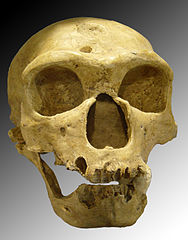
A new study of the Neanderthal nasal complex suggests that Neanderthals were a distinct species separate from modern humans. Rather than comparing Neanderthal noses to those of modern Europeans and the Inuit, whose nasal complexes are adapted to cold and temperate climates, the scientists, led by Samuel Márquez of SUNY Downstate Medical Center, examined the nasal regions of diverse modern human population groups with 3-D coordinate data and CT imaging. They found that the Neanderthal upper respiratory tracts had a mosaic of features not found among any population of modern humans as a result of a separate evolutionary history. “The strength of this new research lies in its taking the totality of the Neanderthal nasal complex into account, rather than looking at a single feature. By looking at the complete morphological pattern, we can conclude that Neanderthals are our close relatives, but they are not us,” team member Jeffrey T. Laitman of the Icahn School of Medicine and the Center for Anatomy and Functional Morphology told Science Daily. To read more about Neanderthal genetics, see "Should We Clone Neanderthals?"

Ancient Rock Art Discovered Near Sydney


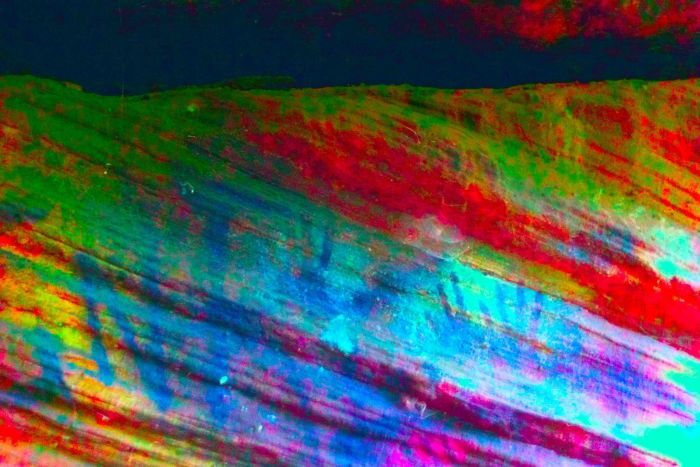
A rock art site thought to be tens of thousands of years old has been discovered in Sydney’s north shore area. Images of the ancient artwork have been computer-enhanced to make the natural pigments more visible, and to differentiate them from recently painted images. The hand stencils had been hidden behind vegetation and were found when employees of Sydney Water started looking around after finding a traditional fishing hook. “It was found on the top of the midden site, and quite exposed. We wandered down here and found this. We’d really gone to see the water pool,” Yvonne Kaiserglass, a heritage officer at Sydney Water, told ABC News. The site would have offered shelter, and is near a waterhole that could have provided eels and fish for food. Drawings depict eels, a spearhead, and a crescent-shaped moon. “These are hand stencils, and judging from the size of these, they would have been women and children. So you could imagine they’d be here, resting,” said Col. Davison from the Metropolitan Local Aboriginal Land Council. To see more Australian prehistoric art, see "The Rock Art of Malarrak."

Piccola Pompei

Remains of an ancient settlement have been found on the bottom of the Aegean sea off the small island of Delos.
Remains of an ancient settlement were found just underwater off the shore of the Greek island, Delos.

Minas de oro en España

Laser from a plane discovers Roman goldmines in SpainLaser from a plane discovers goldmines in Spain

Las Médulas in León is considered to be the largest opencast goldmine of the Roman Empire, but the search for this metal extended many kilometres further south-east to the Erica […]

Random Photos

c-headsmag:

McKenna by Jeffrey Chan for C-Heads
Makeup/Hair by Linda Michelle Bartunek

Well, There Goes The Neighborhood

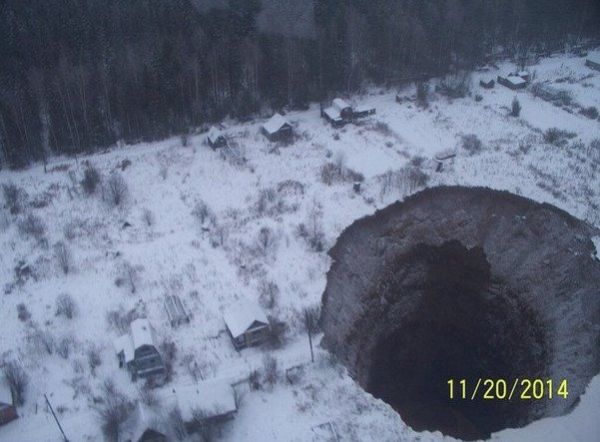
In the town of Solikamsk, Russia, there’s a large hole swallowing a neighborhood. The main industry in the area is salt mining, and an influx of water has caused a “failure of the soil,” or in other words, a great big hole in the ground. The soil began shifting in 2005, and authorities responded by evacuating the area, cutting electricity to encourage everyone to leave; so no one lives in these houses. On Tuesday, the mines were evacuated due to shifting earth, and the hole opened up on Tuesday evening. Russian authorities are studying the scene and performing air quality tests to determine whether noxious gasses are being released.

10 Of The Most Remote Places On Earth Where People Actually Live

In a time that many of us take internet access, a mobile phone signal and cable TV for granted, it's easy to forget that there's still a number of remote corners in the world where people still have limited comforts like electricity. For some, the problems of daily life are still more closely related to survival than to comforts.

It's Chilly, But The Cold Is Gone

2014 is even more likely to become the warmest year on record, with record cold years a thing of the past.

100 Objects That Have Been Sent Into Space

Space is already full of cultural artifacts and bric-a-brac from space missions over the past six decades. Lego, pizza, a lightsaber, Buzz Lightyear, a Chuck Berry record and the remains of Star Trek's Gene Rodenberry are among this list of 100 objects waiting for aliens to find in space.

Magnetic Mystory Solved

A strange flow of charged hydrogen atoms around an exoplanet turns out to be stellar winds from its parent star.

The Paleontologist’s Wandering Skull

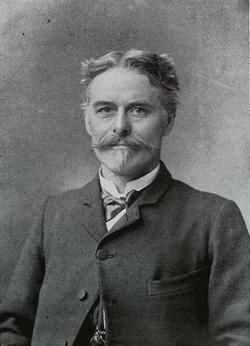
You know about the paleontologist Edward Drinker Cope. He was famous for his feud with fellow paleontologist Othniel Charles Marsh. Cope revealed how Marsh assembled a nonexistent dinosaur called Brontosaurus by mistakenly combining fossil bones of different species. Then Marsh revealed how Cope had erred by constructing an Elasmosaurus with its head on the wrong end. Although both were prolific scientists, they are most remembered by the general public for their highly publicized mistakes. But the story of Edward Drinker Cope continued long after he died in 1897. He donated his body to science, specifying that his skeleton be preserved, but not exhibited.
Originally kept by the American Anthropometric Society, a group with a fondness for measuring the brains of famous men, Cope’s skull was passed in 1966 to the University of Pennsylvania’s Museum of Anthropology, and that’s when things got a little weird.
A distinguished anthropology professor by the name of Loren Eiseley saw Cope’s name on a box and left a note that said, “Gone to lunch—Edward Drinker Cope.” Eiseley took the bones back to his office and laid them out on a conference table to make sure everything was intact before placing them back into the box. Over the years, the paleontologist's remains became a fixture in Eiseley’s office, and the anthropologist toasted “Eddie” with sherry and even bought him a birthday present of a skeleton-bedecked printing block. The office staff also decorated Cope for Christmas.
That was just the beginning of Cope’s postmortem adventures. Read about his almost-burial, his road trips, and where he ended up, at mental_floss.

Peruvian 'Glow Worm'

The strange glow worms may use their phosphorescence to lure unsuspecting flies and ants into their waiting, open jaws.

A Worm Living In His Head

No wonder this man wasn't feeling well: The worm causes sparganosis, meaning inflammation of the body's tissues in response to the parasite. 

Animal Pictures

Saturday, November 22, 2014

The Daily Drift

Hey, wingnuts, this means you ...!
 
Carolina Naturally is read in 200 countries around the world daily.   
 
Ooh, Aura ... !
Today is  - International Aura Awareness Day

Don't forget to visit our sister blog: It Is What It Is

Some of our readers today have been in:
The Americas
Quebec, Toronto, Montreal, Vancouver and Chatham, Canada
Rio De Janeiro, Fortaleza and Sao Paulo, Brazil
Buenos Aires, Argentina
Managua, Boaco, Tipitapa and Jinotepe, Nicaragua
Luquillo, Puerto Rico
Magalia, Strum, Clive, Ripon, Savage, Cornelia, Knifley and Manassas, United States
The Bottom, Sint Eustatius-Saba
Europe
Hadzici and Sarajevo, Bosnia-Herzegovina
Moscow, Saint Petersburg, Ryazan and Nakhodka, Russia
Kista, Stockholm and Malmo, Sweden
Prague, Czech Republic
Athens, Greece
Lyon, Meudon, Nancy and Paris, France
Lisbon, Portugal
Treviso, Bari, Milan, Ravenna and Rome, Italy
Konstanz and Nuremberg, Germany
Zagreb, Croatia
Gloucester, Yeading, Milton Keynes and Nottingham, England
Vantaa and Espoo, Finland
Kongens Lyngby and Tarnby, Denmark
Brasov, Romania
Reykjavik, Iceland
Novi Sad, Serbia
Asia
Kuala Lumpur and Kuching, Malaysia
Jakarta, Indonesia
Bangalore, Gaya, New Delhi, Patna, Chennai, Delhi and Khambhaliya, India
Xiamen, China
Bangkok, Thailand
Amman, Jordan
Rangoon and Mandalay, Burma
Islamabad and Faisalabad, Pakistan
Colombo, Sri Lanka
Africa
Cairo and Al Minya, Egypt
Centurion and Bedfordview, South Africa
Tunis, Tunisia
The Pacific
Sydney and Homebush, Australia
Makati and Naga, Philippines

Today in History

1220   After promising to go to the aid of the Fifth crusade within nine months, Frederick II is crowned emperor by pope Honorius III.  
1542   New laws are passed in Spain giving Indians in America protection against enslavement.
1757   The Austrian army defeats the Prussians at Breslau in the Seven Years War.  
1847   In New York, the Astor Place Opera House, the city's first operatic theater, is opened.  
1902   A fire causes considerable damage to the unfinished Williamsburg bridge in New York.  
1915   The Anglo-Indian army, led by British General Sir Charles Townshend, attacks a larger Turkish force under General Nur-ud-Din at Ctesiphon, Iraq, but is repulsed.  
1919   A Labor conference committee in the United States urges an eight-hour workday and a 48-hour week.  
1928   British King George is confined to bed with a congested lung; the queen is to take over duties.  
1935   Pan Am inaugurates the first transpacific airmail service from San Francisco to Manila.  
1936   1,200 soldiers are killed in a battle between the Japanese and Mongolians in China.  
1942   Soviet troops complete the encirclement of the German Sixth Army at Stalingrad.  
1948   Ho Chi Minh's Democratic Republic of Vietnam requests admittance to the UN.  
1963   Lee Harvey Oswald assassinates President John F. Kennedy in Dallas, Texas. Lyndon B. Johnson becomes president.  
1964   Almost 40,000 people pay tribute to John F. Kennedy at Arlington Cemetery on the first anniversary of his death.  
1973   Great Britain announces a plan for moderate Protestants and Catholics to share power in Northern Ireland.  
1980   Eighteen Communist Party secretaries in 49 provinces are ousted from Poland.  
1982   President Ronald Reagan calls for defense-pact deployment of the MX missile.  
1986   Justice Department finds memo in Lt. Col. Oliver North's office on the transfer of $12 million to Contras of Nicaragua from Iranian arms sale.  
1988   First prototype of B-2 Spirit strategic stealth bomber unveiled for public viewing.  
1989   Lebanese President Rene Moawad killed when a bomb explodes near his motorcade in West Beirut. 1990   Britain's Prime Minister Margaret Thatcher confirms the end of her premiership by withdrawing from the leadership election of the tory cabal.  
1995   The first feature-length film created entirely with computer generated imagery – Toy Story – premiers. 2004   The Orange Revolution, protesting a primary election believed to have been rigged, begins in the Ukraine. On Dec 26 Ukraine's Supreme Court orders a revote..  
2005   Angela Merkel becomes the first woman ever to be Chancellor of Germany; the former research scientist had previously been the first secretary-general of the christian Democratic Union.  
2008   Hamas and Israel begin a cease-fire following eight days of violence and 150 deaths.

If these seventeen people weren't nominated for a Darwin Award, they should have been

A Swiss woman went on "Sunlight Delight" diet wherein she attempted to get all her nutrients from the sun; died of starvation.
A snake-handling pastor died after being bitten by a snake he was handling.
A man died trying to take a selfie while holding a gun to his head and apparently pressed with the finger on his right hand instead of his left.
A naked Portland man doing pushups in the middle of the street at 4 AM was run over and killed.
An Argentinian woman died trying to give herself a breast enlargement by injecting Vaseline into her breasts. The Vaseline Company could not be reached for comment.
Two people in China died and 4 more were injured trying to pull a $320 phone out of a toilet.
A man got cut by a razor attached to his own fighting chicken, ran from police while bleeding, refused medical attention, and bled to death.
A woman in New Zealand died from drinking 10 liters of Coke everyday.
A woman had gastric bypass surgery to shrink her stomach to the size of a walnut. She ate bowling ball-sized meals anyway and died suffocating on food piling up in her esophagus.
A Boy died at a border crossing after drinking meth in an attempt to convince officials that it's apple juice.
A man went swimming in a river even though he knew it had one of the highest populations of crocodiles in the world. He was then eaten by a crocodile.
A drunk man in the Philippines accidentally shot his penis and died.
Aspiring rapper Ervin McKinness tweeted "YOLO" about drunk driving minutes before crashing his car and dying.
A man in Clovis shot himself in the head while trying to convince his girlfriend he knew how to beat Russian Roulette.
A woman died of a drug overdose while celebrating her new job as a drug counselor.

Liberal Democrats Form A Hell No Caucus To Block repugicans In The Senate

elizabeth warren bernie sanders hell no liberal caucus
Liberal Democrats flexed their muscles by coming together to block approval of the construction of the Keystone XL pipeline. The vote was the first move by a group of Democrats that are set to give Senate repugicans major headaches over the next two years.
Politico reported,
The defeat of the Keystone XL pipeline in the Senate marked a major show of muscle for next year’s new hell-no caucus: liberals.
It was a remarkable move for a group that has stood behind Majority Leader Harry Reid (D-Nev.) over the years, as he sought to protect vulnerable moderates, like Landrieu and some of her now-ousted colleagues, from taking tough votes on divisive environmental, health care and social issues.
But red-state Democrats like Mark Pryor of Arkansas and Mark Begich of Alaska are on their way out, and liberals like Jeff Merkley, Bernie Sanders and Sheldon Whitehouse — with Elizabeth Warren leading the way on messaging — may cause as many headaches for Senate repugicans as teabaggers caused Democrats in the past four years.
The good news that comes from being in the Senate minority is that the Democrats who are still there are much more liberal and will play a bigger role in the caucus. Bernie Sanders, who is an Independent who caucuses with the Democrats, Elizabeth Warren, Sheldon Whitehouse, and Jeff Merkley are just four of the members of the Democratic caucus will play a larger role in shaping policy. The Democrats no longer have to protect and cater to red state Democrats.
For every Keystone XL that will pass with the support of oil and gas state Democrats, there are three repugican bills that won’t. The Hell No caucus isn’t going to obstruct everything, but they are going stand up for the principles and values of the left.
For example, Senate repugican attacks on regulations that protect the environment are going to be in trouble. Anything that tries to expand Citizens United will likely die, tax reform disguised as a gift to the wealthy will not go very far.
The rules of the Senate make it impossible for Mitch McConnell to do what John Boehner is doing in the House. In the Senate, the minority has power and rights. The repugicans abused this power to stop the Senate from functioning. The liberals are promising not to do the same, but life is about to get very difficult for Mitch McConnell and company.
The rise of the Senate liberals in combination with President Obama’s leftward shift may result in the repugican congressional majority being boxed in.
Senate liberals are leading the fight towards 2016, and yesterday’s rejection of Keystone XL was a warning shot designed to let Republicans know that there is a new day coming.
* Note: The Hell No caucus isn’t an official Senate group, but a collection of liberals who have a set of common ideas that will more often than not vote together.

The Meltdown Begins

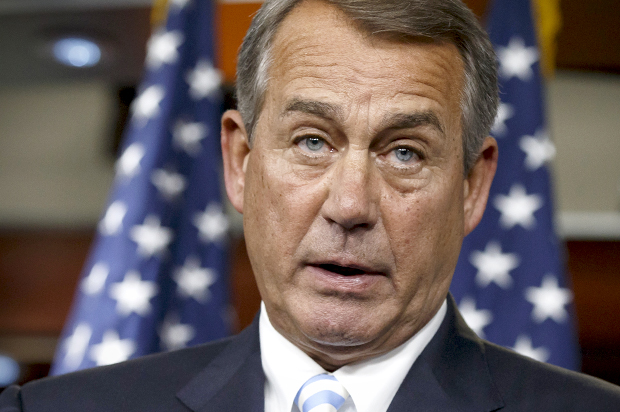
boehner-faceThe repugican meltdown is off and running. John Boehner’s office responded to the news that President Obama will announce his executive actions on immigration by calling the president a lawless emperor.
Boehner spokesman Michael Steel responded to the news that Obama will make his immigration announcement in Dallas on Thursday night by saying, “If ‘Emperor Obama’ ignores the American people and announces an amnesty plan that he himself has said over and over again exceeds his Constitutional authority, he will cement his legacy of lawlessness and ruin the chances for Congressional action on this issue — and many others.”
Who do repugicans think they are kidding? Boehner and McConnell were never planning on cooperating with the president on anything. Mitch McConnell ran for reelection on the promise that if repugicans stole a Senate majority, he would break Obama and force him to do the repugican cabal’s bidding.
The whole idea that repugicans were ready cooperate, but Obama ruined it was a myth. The repugicans thought that by winning the midterm election; they could force the president to sign off on their agenda. They have been shocked by the fact that the president has moved to the left. Instead of giving repugicans everything that they wanted, the president and Democrats have geared up for a fight.
President Obama’s speech on Thursday night will be a mushroom cloud that swallows up the repugican cabal. The repugicans have tried for years to avoid the immigration issues, but the cabal is deeply divided and being government by an incredibly unpopular position on the issue.
Obama’s executive action, which is well within his constitutional powers, is already triggering an epic meltdown. The repugican camps that are calling for a government shutdown or impeachment are reaching an uncontrollable boiling point.
John Boehner sat on the Senate passed immigration reform bill and refused to allow a vote. The gridlock and obstruction chickens are coming home to roost, and the repugican cabal is going to collectively lose its mind Thursday night, (and the did).
Obama is still playing chess while congressional repugicans can’t get out their checkerboards.

House repugicans passed a bill forbidding scientists from advising the EPA on their own research

The "reform" measure makes room for industry-funded experts on the EPA's advisory board
House Republicans just passed a bill forbidding scientists from advising the EPA <em>on their own research</em>Congressional climate wars were dominated Tuesday by the U.S. Senate, which spent the day debating, and ultimately failing to pass, a bill approving the construction of the Keystone XL pipeline. While all that was happening, and largely unnoticed, the House was busy doing what it does best: attacking science.
H.R. 1422, which passed 229-191, would shake up the EPA’s Scientific Advisory Board, placing restrictions on those pesky scientists and creating room for experts with overt financial ties to the industries affected by EPA regulations.
The bill is being framed as a play for transparency: Michael Burgess, (r-Texas), argued that the board’s current structure is problematic because it  “excludes industry experts, but not officials for environmental advocacy groups.” The inclusion of industry experts, he said, would right this injustice.
But the White House, which threatened to veto the bill, said it would “negatively affect the appointment of experts and would weaken the scientific independence and integrity of the SAB.”
In what might be the most ridiculous aspect of the whole thing, the bill forbids scientific experts from participating in “advisory activities” that either directly or indirectly involve their own work. In case that wasn’t clear: experts would be forbidden from sharing their expertise in their own research — the bizarre assumption, apparently, being that having conducted peer-reviewed studies on a topic would constitute a conflict of interest. “In other words,” wrote Union of Concerned Scientists director Andrew A. Rosenberg in an editorial for RollCall, “academic scientists who know the most about a subject can’t weigh in, but experts paid by corporations who want to block regulations can.”
Speaking on the House floor Tuesday, Rep. Jim McGovern, D-Mass., summed up what was going on: “I get it, you don’t like science,” he told bill sponsor Chris Stewart, (r-Utah). “And you don’t like science that interferes with the interests of your corporate clients. But we need science to protect public health and the environment.”
The House, alas, is staying the course, voting this week on two other bills aimed at impeding the EPA, including one that prevents the agency from relying on what it calls “secret science” in crafting its regulations — but which in reality, opponents argue, would effectively block the EPA from adopting any new rules to protect public health. The trio, wrote Rep. Eddie Bernice Johnson, D-Texas, in an editorial for the Hill, represents “the culmination of one of the most anti-science and anti-health campaigns I’ve witnessed in my 22 years as a member of Congress.”
The White House has threatened to veto all three.

Wingnut Conspiracy Nuts Blame The Federal Government For Polar Vortex

White jets and their chemtrails have replaced black helicopters as harbingers of certain climate doom. It's the black guy in the White House and his government running dogs fault…
chemtrails
An old Ohio pal of mine has one of those Internet radio shows that feature wingnuttery to infinity and cuckoo guests spewing forth all manner of fed-hating paranoia.
The latest such email contained quotes from a site called BioEngineering Watch (I’ll call it BEW). The major domo behind BEW seems to be Dane Wigington, a 50-something former contractor who worked in a solar plant for a time. He’s not a scientist, but plays one on the Internet. The site has been around for a few years and is now the center point of a pyramid of paranoia that has emerged as a result. My friend, the site and more than a few extreme conservatives who will bow to any theory that riddles the feds, are convinced that “Global climate engineering is forcing the climate system far past the breaking point.” At least that’s the view expressed by GeoEngineering Watch.
Other featured views or stories are captioned, Engineered Drought Catastrophe! What are they spraying? What’s REALLY going on with the weather? Then there’s “Climate Engineering is Creating Increasingly Extreme Weather Fluctuations.” Those few examples don’t even begin to tell the story.
The purpose of this and other sites like it is to call into question the universally accepted scientific fact that man is causing the earth to warm at a far greater rate than nature could possibly achieve. As a result of global warming and climate change, weather extremes are routine on both the warm and cold side of the spectrum.
Interestingly enough, the BEW bunch readily concedes that the earth is warming; they even suggest that numbers are being manipulated to the lower side, so as not to terrorize the population as to how serious the crisis really is. But it’s not man-made pollution that’s exacerbating the extreme weather changes. No sir; it’s the feds reaction to this global warming phenomenon. You see, according to the Wigington cult, the government is trying to balance the extreme heating of the globe with extreme cooling by using various tools to bring about these freezing conditions. White jets and their chemtrails have replaced black helicopters as harbingers of certain climate doom. It’s the black guy in the White House and his government running dogs doing all the harm.
“I saw at least ten white jets heading “somewhere” was an observation left on the BEW comment section. Others told of chemtrails and remnants of mysterious ‘climate sprays’ filling the skies. I especially liked this little gem: “Meteorologist Eric Holthaus is a government stooge! What he calls strange conditions are engineered weather manipulation and he knows it.” And who can ignore the alleged excess quantities of aluminum and barium abounding from all that government weather mischief? There’s a bit of misleading hyperbole here, if this debunking site is to be believed.
Wigington charges that the feds are utilizing profound jet stream manipulation with the use of ionosphere heater installations that are also a major factor in the engineered “polar vortex” events and cool-downs. It’s true; there are dozens of such heaters in virtually every corner of the world. They are purely research tools and have zero capability to modify weather or any of the other wackier mind control, disease causation and other conspiracies attributed to the technology.
Jim Lee, creator of Climate Viewer 3D, writing in HAARP, Science, The Resonation, put it best for the layman. His definition of the purpose of these installations is that scientists are trying to understand our ionosphere by “poking it” and seeing how it reacts. HAARP is a cooperative effort by the Department of Defense, the Air Force, Navy and the University of Alaska. After temporarily shutting down operations mid-year, HAARP is reportedly scheduled for permanent closure late 2014. Not sure of the current status.
So, this ‘manipulation’ nonsense amounts to little or nothing. In politics and magic, it’s called misdirection. Focus the constituents (audience) attention away from the core issue and get your legislation passed, or trick successfully completed while the crowd is focused on something else that is meaningless.
This is too pat. Wigington has but a minimal knowledge of the subject matter. He’s wrong more than he’s right. In fact, it appears to be surprising when he’s right. Visit various debunking sites in addition to the ones included here and here, and you’ll find he’s the antithesis of the expert he claims to be. This is a professional propaganda job; the facts be damned.
That leaves us with two interpretations of Wigington’s end game. Either this guy has figured out a way to make a ton of money in donations, speeches, interviews, books and other peripheral enrichment’s or, he’s being guided and well compensated by corporate propaganda hands to message a subject designed to distract from one of most critical issues of this or any other era. Given the paucity of scientific education and training in Wiginton’s background, in my opinion, it’s even doubtful he wrote all his website’s self-attributed pieces.
When the wingnuts finally come out of the ether and realizes that this world is at natural risk, then that epiphany becomes very costly for the multi-national polluters as a mountain of corrective legislation and regulations will suddenly build up.
Finally, let me address the repeated charges of manipulation by Wigington and his followers. While there is a grain of truth to many of their concerns and conclusions, virtually all are overwrought and, yes, manipulated through misrepresentation and outright deception.
Manipulate: correct verb; wrong target.

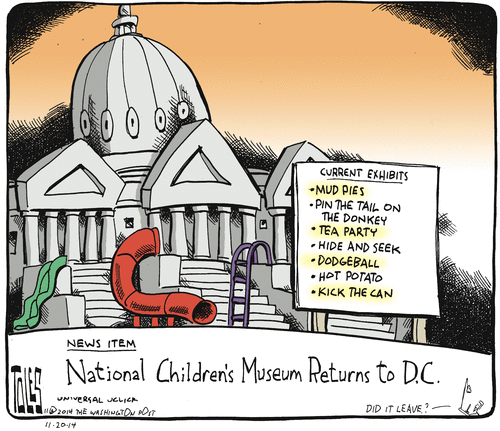
The Truth Be Told

http://l.yimg.com/bt/api/res/1.2/IJLZeLGcUKzdGOVMEEUQoA--/YXBwaWQ9eW5ld3M7Zmk9ZmlsbDtoPTQzMTtweW9mZj0wO3E9NzU7dz01MDA-/http://media.zenfs.com/en_us/News/ucomics.com/tt141120.gif