
After security rushed to the scene, police
arrived and secured the area with crime scene tape — leading other
attendees to believe it was also part of the show.

Wednesday, December 9, 2015

People who share inspirational quotes on Facebook are less intelligent

If you skew on the side of being irritated
by such social media behavior, then science has some good news: people
who share inspirational quotes are stupid.
Is Your Fake Xmas Tree Making You Sick?

From lead to PVC, our Xmas décor may be harming our health. Here’s how to avoid them
Woman Demonstrates What It's Like To Have Narcolepsy

Well, according to this video by Sleepy Sarah Elizabeth
that began as an accidental recording of a sleep attack, narcolepsy can
be a really big deal since it shuts your body down, no matter where you
are or what you're doing.
This
video may give us a better understanding of what narcolepsy looks like,
but it can never really explain how it feels to experience an
uncontrollable sleep attack, which is clearly no laughing matter.

A Crack in the World
Without ever setting
sail, Marie Tharp mapped the ocean floor and made a discovery that shook
the foundations of geology. So why did the giants of her field dismiss
her findings as "girl talk"?
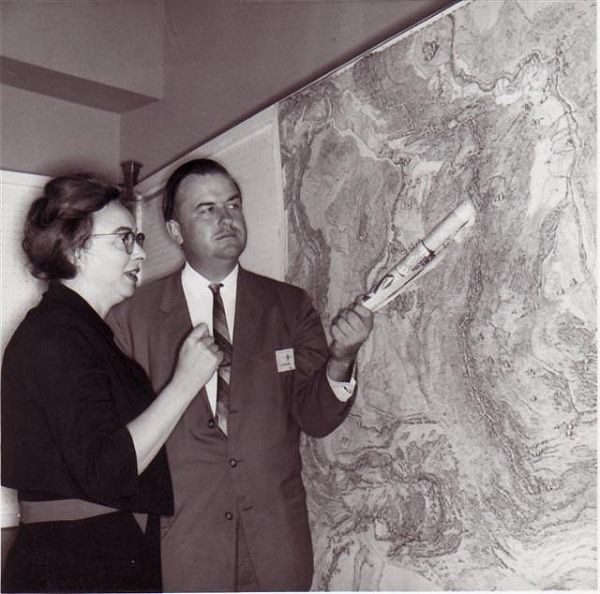
For centuries, scientists had believed that the ocean floor was basically flat and featureless—it was too far beyond reach to know otherwise. But the advent of sonar had changed everything. For the first time, ships could “sound out” the precise depths of the ocean below them. For five years, Tharp’s colleagues at Columbia University had been crisscrossing the Atlantic, recording its depths. Women weren’t allowed on these research trips—the lab director considered them bad luck at sea—so Tharp wasn’t on board. Instead, she stayed in the lab, meticulously checking and plotting the ships’ raw findings, a mass of data so large it was printed on a 5,000-foot scroll. As she charted the measurements by hand on sheets of white linen, the floor of the ocean slowly took shape before her.
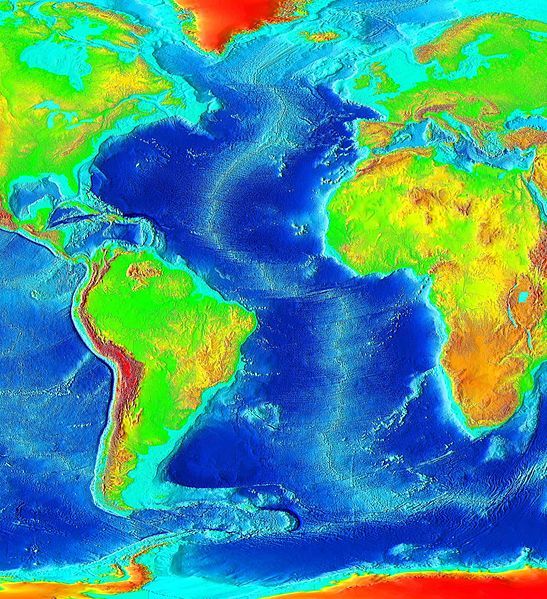
Tharp spent weeks creating a series of six parallel profiles of the Atlantic floor stretching from east to west. Her drawings showed—for the first time—exactly where the continental shelf began to rise out of the abyssal plain and where a large mountain range jutted from the ocean floor. That range had been a shock when it was discovered in the 1870s by an expedition testing routes for transatlantic telegraph cables, and it had remained the subject of speculation since; Tharp’s charting revealed its length and detail.
Her maps also showed something else—something no one expected. Repeating in each was “a deep notch near the crest of the ridge,” a V-shaped gap that seemed to run the entire length of the mountain range. Tharp stared at it. It had to be a mistake.
She crunched and re-crunched the numbers for weeks on end, double- and triple-checking her data. As she did, she became more convinced that the impossible was true: She was looking at evidence of a rift valley, a place where magma emerged from inside the earth, forming new crust and thrusting the land apart. If her calculations were right, the geosciences would never be the same.
A few decades before, a German geologist named Alfred Wegener had put forward the radical theory that the continents of the earth had once been connected and had drifted apart. In 1926, at a gathering of the American Association of Petroleum Geologists, the scientists in attendance rejected Wegener’s theory and mocked its maker. No force on Earth was thought powerful enough to move continents. “The dream of a great poet,” opined the director of the Geological Survey of France: “One tries to embrace it, and finds that he has in his arms a little vapor or smoke.” Later, the president of the American Philosophical Society deemed it “utter, damned rot!”
 In
the 1950s, as Tharp looked down at that tell-tale valley, Wegener’s
theory was still considered verboten in the scientific community—even
discussing it was tantamount to heresy. Almost all of Tharp’s
colleagues, and practically every other scientist in the country,
dismissed it; you could get fired for believing in it, she later
recalled. But Tharp trusted what she’d seen. Though her job at Columbia
was simply to plot and chart measurements, she had more training in
geology than most plotters—more, in fact, than some of the men she
reported to. Tharp had grown up among rocks. Her father worked for the
Bureau of Chemistry and Soils, and as a child, she would accompany him
as he collected samples. But she never expected to be a mapmaker or
even a scientist. At the time, the fields didn’t welcome women, so her
first majors were music and English. After Pearl Harbor, however,
universities opened up their departments. At the University of Ohio,
she discovered geology and found a mentor who encouraged her to take
drafting. Because Tharp was a woman, he told her, fieldwork was out of
the question, but drafting experience could help her get a job in an
office like the one at Columbia. After graduating from Ohio, she
enrolled in a program at the University of Michigan, where, with men off
fighting in the war, accelerated geology degrees were offered to
women. There, Tharp became particularly fascinated with geomorphology,
devouring textbooks on how landscapes form. A rock formation’s
structure, composition, and location could tell you all sorts of things
if you knew how to look at it.
In
the 1950s, as Tharp looked down at that tell-tale valley, Wegener’s
theory was still considered verboten in the scientific community—even
discussing it was tantamount to heresy. Almost all of Tharp’s
colleagues, and practically every other scientist in the country,
dismissed it; you could get fired for believing in it, she later
recalled. But Tharp trusted what she’d seen. Though her job at Columbia
was simply to plot and chart measurements, she had more training in
geology than most plotters—more, in fact, than some of the men she
reported to. Tharp had grown up among rocks. Her father worked for the
Bureau of Chemistry and Soils, and as a child, she would accompany him
as he collected samples. But she never expected to be a mapmaker or
even a scientist. At the time, the fields didn’t welcome women, so her
first majors were music and English. After Pearl Harbor, however,
universities opened up their departments. At the University of Ohio,
she discovered geology and found a mentor who encouraged her to take
drafting. Because Tharp was a woman, he told her, fieldwork was out of
the question, but drafting experience could help her get a job in an
office like the one at Columbia. After graduating from Ohio, she
enrolled in a program at the University of Michigan, where, with men off
fighting in the war, accelerated geology degrees were offered to
women. There, Tharp became particularly fascinated with geomorphology,
devouring textbooks on how landscapes form. A rock formation’s
structure, composition, and location could tell you all sorts of things
if you knew how to look at it.Studying the crack in the ocean floor, Tharp could see it was too large, too contiguous, to be anything but a rift valley, a place where two masses of land had separated. When she compared it to a rift valley in Africa, she grew more certain. But when she showed Bruce Heezen, her research supervisor (four years her junior), “he groaned and said, ‘It cannot be. It looks too much like continental drift,’” Tharp wrote later. “Bruce initially dismissed my interpretation of the profiles as ‘girl talk.’” With the lab’s reputation on the line, Heezen ordered her to redo the map. Tharp went back to the data and started plotting again from scratch.
Heezen and Tharp were often at odds and prone to heated arguments, but they worked well together nonetheless. He was the avid collector of information; she was the processor comfortable with exploring deep unknowns. As the years went by, they spent more and more time together both in and out of the office. Though their platonic-or-not relationship confused everyone around them, it seemed to work.
In late 1952, as Tharp was replotting the ocean floor, Heezen took on another deep-sea project searching for safe places to plant transatlantic cables. He was creating his own map, which plotted earthquake epicenters in the ocean floor. As his calculations accumulated, he noticed something strange: Most quakes occurred in a nearly continuous line that sliced down the center of the Atlantic. Meanwhile, Tharp had finished her second map—a physiographic diagram giving the ocean floor a 3-D appearance—and sure enough, it showed the rift again. When Heezen and Tharp laid their two maps on top of each other on a light table, both were stunned by how neatly the maps fit. The earthquake line threaded right through Tharp’s valley.
They moved on from the Atlantic and began analyzing data from other oceans and other expeditions, but the pattern kept repeating. They found additional mountain ranges, all seemingly connected and all split by rift valleys; within all of them, they found patterns of earthquakes. “There was but one conclusion,” Tharp wrote. “The mountain range with its central valley was more or less a continuous feature across the face of the earth.” The matter of whether their findings offered evidence of continental drift kept the pair sparring, but there was no denying they had made a monumental discovery: the mid-ocean ridge, a 40,000-mile underwater mountain range that wraps around the globe like the seams on a baseball. It’s the largest single geographical feature on the planet.
In 1957, Heezen took some of the findings public. After he presented on the Mid-Atlantic Ridge at Princeton, one eminent geologist responded, "Young man, you have shaken the foundations of geology!” He meant it as a compliment, but not everyone was so impressed. Tharp later remembered that the reaction “ranged from amazement to skepticism to scorn.” Ocean explorer Jacques Cousteau was one of the doubters. He’d tacked Tharp’s map to a wall in his ship’s mess hall. When he began filming the Atlantic Ocean’s floor for the first time, he was determined to prove Tharp’s theory wrong. But what he ultimately saw in the footage shocked him. As his ship approached the crest of the Mid-Atlantic Ridge, he came upon a deep valley splitting it in half, right where Tharp’s map said it would be. Cousteau and his crew were so astonished that they turned around, went back, and filmed again. When Cousteau screened the video at the International Oceanographic Congress in 1959, the audience gasped and shouted for an encore. The terrain Tharp had mapped was undeniably real.
1959 was the same year that Heezen, still skeptical, presented a paper hoping to explain the rift. The Expanding Earth theory he’d signed on to posited that continents were moving as the planet that contained them grew. (He was wrong.) Other hypotheses soon joined the chorus of explanations about how the rift had occurred. It was the start of an upheaval in the geologic sciences. Soon “it became clear that existing explanations for the formation of the earth’s surface no longer held,” writes Hali Felt in Soundings: The Story of the Remarkable Woman Who Mapped the Ocean Floor.
Tharp stayed out of these debates and simply kept working. She disliked the spotlight and consented to present a paper only once, on the condition that a male colleague do all the talking. “There’s truth to the old cliché that a picture is worth a thousand words and that seeing is believing,” she wrote. “I was so busy making maps I let them argue. I figured I’d show them a picture of where the rift valley was and where it pulled apart.”
By 1961, the idea that she’d put forward nearly a decade before—that the rift in the Mid-Atlantic Ridge had been caused by land masses pulling apart—had finally reached widespread acceptance. The National Geographic Society commissioned Tharp and Heezen to make maps of the ocean floor and its features, helping laypeople visualize the vast plates that allowed the earth’s crust to move. Throughout the 1960s, a slew of discoveries helped ideas such as seafloor spreading and plate tectonics gain acceptance, bringing with them a cascade of new theories about the way the planet and life on it had evolved. Tharp compared the collective eye-opening to the Copernican revolution. “Scientists and the general public,” she wrote, “got their first relatively realistic image of a vast part of the planet that they could never see.”
Tharp herself had never seen it either. Some 15 years after she started mapping the seafloor, Tharp finally joined a research cruise, sailing over the features she’d helped discover. Women were generally still not welcome, so Heezen helped arrange her spot. The two kept working closely together, sometimes fighting fiercely, until his death in 1977. Outside the lab, they maintained separate houses but dined and drank like a married couple. Their work had linked them for life.
In
1997, Tharp, who had long worked patiently in Heezen’s shadow,
received double honors from the Library of Congress, which named her one
of the four greatest cartographers of the 20th century and included
her work in an exhibit in the 100th-anniversary celebration of its
Geography and Map Division. There, one of her maps of the ocean floor
hung in the company of the original rough draft of the Declaration of
Independence and pages from Lewis and Clark’s journals. When she saw it,
she started to cry. But Tharp had known all along that the map she
created was remarkable, even when she was the only one who believed.
“Establishing the rift valley and the mid-ocean ridge that went all the
way around the world for 40,000 miles—that was something important,”
she wrote. “You could only do that once. You can’t find anything bigger
than that, at least on this planet.”
Earth News

The eruption sent lava 3,000 feet into the air and spurred a thunderstorm.

We know that Earth's covered mostly in water, and for awhile
now we've been thinking the refreshing liquid got here on meteorites
from out in the cosmos. But a new theory posits something fascinating:
Maybe it was always here.
Nazis Secretly Bred Angora Rabbits at Concentration Camps
The
Nazis had plenty of side projects during World War II that got little
notice compared to the genocidal system of extermination camps. One was
Project Angora, Heinrich Himmler’s plan to raise angora rabbits to
supply high-quality wool for the German military. At the camps.
Not surprisingly, there was little evidence of the program after the war. When the SS fled the camps ahead of their liberators, evidence in the form of well-fed rabbits did not last long. Read what we know about Project Angora at Atlas Obscura.By 1943, Project Angora had bred nearly 65,000 rabbits, producing over 10,000 pounds of wool. The photo albums shows sweaters produced for the German air force, socks produced for their navy and long underwear for ground troops. It’s hard to gauge whether or not the program was a success, but we do know that the coddled rabbits lived in close proximity to human prisoners.
The well-fed rabbits were housed in some of the Nazi regime’s most notorious concentration camps: Auschwitz, Dachau and Mauthausen, and nearly thirty more camps around central Europe. The contrast between the brutality of the camps, with their cruel disregard for human life, and the well-cared for rabbits is deeply unnerving. This jarring context makes the remnants of the program–the book found by Schultz–seem all the more sinister.

This Fence Made of Bees Keeps out Elephants
 Elephants
can be beautiful and majestic, but they're also a nuisance when they
trample crops. That's a problem in eastern Africa. Zoologist Lucy King
developed a novel solution.
Elephants
can be beautiful and majestic, but they're also a nuisance when they
trample crops. That's a problem in eastern Africa. Zoologist Lucy King
developed a novel solution.Elephants are afraid of bees because stings inside their trunks are very painful. When they hear bees, they run away. So King invented this fence that consists of a long string of wire with beehives every 10 meters. When elephants hit the wire, they rile up the bees, who leave their hives to swarm and attack. The sound of the bees drives away the intruding elephants. Edible Geography describes what is sometimes called the "honey fence":
A pilot honey fence in 2009 proved successful, deterring all but one bull elephant, and The Elephant and Bees Project has since spread to sites across Africa. Neville Sheldrick of the David Sheldrick Wildlife Trust told Africa Geographic that nearby farmers are sure the fence is working: “When I visit they proudly walk me around showing me the footprints of elephants that have walked up to and along the fence in several locations before turning back towards the park.”
By encircling a village with a cordon of hives, the village’s crops are protected, the elephants steered away from potential conflict, and, adds Carr-Hartley, “the farmers are able to garner some revenue from the harvesting of honey.” The result of truly delightful example of interspecies landscape engineering, jars of “Eleephant-friendly” honey are for sale at The Elephant and Bees Research Centre in Tsavo, Kenya.
Avian News

You can count on nature's high fliers to stand out in any crowd.

Only 9 per cent of migratory birds have adequately protected habitat across their range, a new study has found.

A creature known as the most beautiful bird in North America has been spotted in Brooklyn's Prospect Park.
Animal News

The pygmy slow loris, which lives in Southeast Asia, has been documented using hibernation to save energy.

The area where they were discovered has been called an 'incubator' of new life forms.

A cat named Vincent with titanium-alloy rear legs is nearing
the day when he can make the kinds of leaps to higher places that all
felines enjoy.

Does your favorite purebred dog come from an ancient canine lineage? See if the breed made our list.

Tuesday, December 8, 2015
The Daily Drift
Welcome to Today's Edition of Carolina Naturally.

Carolina Naturally is read in 205 countries around the world daily.
Through Time ... !

Today is - Pretend To Be A Time Traveler Day
You want the unvarnished truth?
You want the unvarnished truth?
Don't forget to visit: The Truth Be Told
Some of our readers today have been in:
The Americas
Brazil - Canada - Chile - Colombia - Dominican Republic - Mexico - Puerto Rico - United States
Europe
Bosnia/Herzegovina - Bulgaria - Denmark - England - France - Germany - Hungary - Ireland - Italy Latvia - Netherlands - Poland - Portugal - Romania - Russia - Scotland - Serbia - Slovenia - Spain Sweden - Ukraine - Wales
Asia
India - Indonesia - Pakistan - Palestine - Saudi Arabia - Thailand - United Arab Emirates - Vietnam
Africa
Angola - Morocco - South Africa - Tunisia - Zambia
The Pacific
Australia - New Zealand
The Americas
Brazil - Canada - Chile - Colombia - Dominican Republic - Mexico - Puerto Rico - United States
Europe
Bosnia/Herzegovina - Bulgaria - Denmark - England - France - Germany - Hungary - Ireland - Italy Latvia - Netherlands - Poland - Portugal - Romania - Russia - Scotland - Serbia - Slovenia - Spain Sweden - Ukraine - Wales
Asia
India - Indonesia - Pakistan - Palestine - Saudi Arabia - Thailand - United Arab Emirates - Vietnam
Africa
Angola - Morocco - South Africa - Tunisia - Zambia
The Pacific
Australia - New Zealand
Today in History
| 1660 | The first Shakespearian actress to appear on an English stage (she is believed to be a Ms. Norris) makes her debut as Desdemona. | |
| 1861 | CSS Sumter captures the whaler Eben Dodge in the Atlantic. The American Civil War is now affecting the Northern whaling industry. | |
| 1863 | Union General William Averell’s cavalry destroys railroads in the southwestern part of West Virginia. | |
| 1914 | The German cruisers Scharnhorst, Gneisenau, Nurnberg, and Liepzig are sunk by a British force in the Battle of the Falkland Islands. | |
| 1920 | President Woodrow Wilson declines to send a representative to the League of Nations in Geneva. | |
| 1932 | Japan tells the League of Nations that it has no control over her designs in China. | |
| 1941 | Japanese General Tomoyuki Yamashita begins his attack against the British army at Singapore. | |
| 1943 | U.S. carrier-based planes sink two cruisers and down 72 planes in the Marshall Islands. | |
| 1944 | The United States conducts the longest, most effective air raid on the Pacific island of Iwo Jima. | |
| 1948 | The United Nations approves the recognition of South Korea. | |
| 1967 | In the biggest battle yet in the Mekong Delta, 365 Viet Cong are killed. | |
| 1968 | South Vietnam’s Vice President Nguyen Cao Ky arrives in Paris for peace talks. | |
| 1980 | John Lennon is shot to death outside his Manhattan apartment building. | |
| 1982 | The Washington, D.C., police shoot and kill a man threatening to blow up the Washington Monument. | |
| 1987 | The Intermediate-Range Nuclear Forces Treaty signed. | |
| 1987 | An Israeli army tank transporter kills 4 Palestinian refugees and injures 7 others during a traffic accident at the Erez Crossing on the border between Israel and the Gaza Strip, leading to the First Intifada. | |
| 1991 | The leaders of Belarus, Russia, and Ukraine sign an agreement that dissolves the Soviet Union and establishes the Commonwealth of Independent States. | |
| 2004 | The Cuzco Declaration signed in Cuzco, Peru, establishing the South American Community of Nations. | |
| 2010 | SpaceX becomes the first privately held company to successfully launch, orbit and recover a spacecraft. | |
| 2010 | The Japanese solar-sail spacecraft IKAROS passes the planet Venus. |
The Xmas Demon
The Real Story Behind Krampus
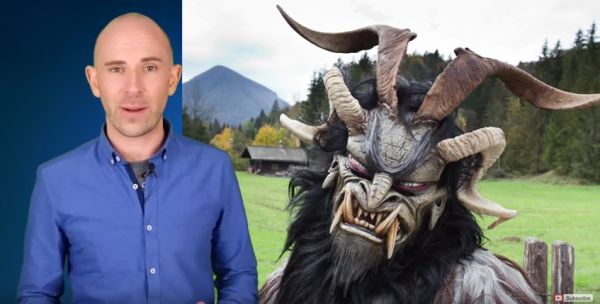
Our friends at Today I Found Out have the story of how Krampus arose hundreds of years ago from the dark forests of Bavaria to invade other nations. The customs surrounding the Krampus tradition differ from country to country. Here in America, we make horror movies out of such legends.

Montel Williams Shreds Fox Hack On Gun Control And Terrorism

“I’m a proud gun owner, but I’ve HAD ENOUGH and I’m willing to do my part.”

Alabama man charged with terrorism after threatening to kill everyone in doctor’s office

“He is extremely lucky he didn’t get himself
killed,” Christian explained. “I hope he isn’t in his right mind. If he
is in his right mind, we will put him in the mix for the ‘I’m just an
idiot’ trophy.”
Man’s hoard of nearly 5,000 guns shows ease of amassing firearms in the US

Terrifying Arsenal This Gun Nut Was Caught With Proves Focusing On Muslims Is A Huge Mistake

Pandemonium as media mob ransack shooters’ home on live TV without FBI permission


Lock-down at air force base caused by someone popping heavy-duty bubble wrap

 It was a scary scene at Kirtland Air Force Base in Albuquerque, New Mexico, last Wednesday afternoon.
Men in tactical gear and Humvees could be seen after phone calls were made to base security officials regarding an active shooter at around 2:30pm.
 Someone said they thought they heard shots being fired near a building
on the west side of the base. A precautionary lock-down was initiated.
One airman said he was concerned, but the base is prepared for such
emergencies.
Someone said they thought they heard shots being fired near a building
on the west side of the base. A precautionary lock-down was initiated.
One airman said he was concerned, but the base is prepared for such
emergencies.
At around 3:15pm the base lifted the lock-down, saying security personnel found no threat to the base. On Thursday, the base said the scare was sparked by someone popping heavy-duty bubble wrap.


Unrepentant ‘Pharma Bro’ Shkreli: If I had the chance, ‘I would have raised the price higher’
![Turing Pharmaceuticals head Martin Shkreli speaks during the Forbes Healthcare Summit on Dec. 3, 2015. [Forbes]](http://www.rawstory.com/wp-content/uploads/2015/12/Martin-Shkreli-120315-478x257.jpg)


The Extraordinarily (and Impossibly?) Fertile Mrs. Feodor Vassilyev

Mrs. Feodor Vassilyev, a Russian peasant who lived in the 1700s, holds the official Guinness World Record for the highest number of children birthed. She and her husband, Feodor, lived in Shuya, Russia. We don’t know her first name (although some sources say her name was Valentina), but we do know that she's claimed to have given birth to 16 sets of twins, seven sets of triplets, and four sets of quadruplets in her childbearing years (1725 to 1765). Only two children didn’t survive past infancy, leaving her with 67 healthy children.You are forgiven for being skeptical, but first read about the documents that led us to what we know about Mrs. Vassilyev and her family that put Mother Hubbard to shame, at mental_floss.
What makes the Vassilyev story even weirder is that Feodor apparently had another 18 children (six sets of twins and two sets of triplets) with his second wife. Although it sounds implausible, a few primary sources and contemporaneous accounts about the Vassilyevs exist.
Bonus: I also found out that the founder of the Guinness Brewery that later gave rise to the records book, Arthur Guinness, and his wife Olivia had 21 children.

Subscribe to:
Posts (Atom)
