Welcome to ...

The place where the world comes together in honesty and mirth.
Windmills Tilted, Scared Cows Butchered, Lies Skewered on the Lance of Reality ... or something to that effect.


Sunday, October 21, 2012

The Horrible Effects of Dengue Fever

With symptoms ranging from muscle pain to internal bleeding, this is one illness you definitely don't want to get! More

Young people driving epidemic of prescription drug abuse


A new study by the University of Colorado Denver reveals that today’s adolescents are abusing prescription pain medications like Vicodin ...
Continue Reading

Random Photo

Skeleton of French man found in bed after 15 years

Police in France said on Friday they were trying to identify the skeleton of a man believed to have lain undiscovered in bed for more than 15 years.

The body, found in an abandoned house in the northern city of Lille, is thought to be that of the elderly owner of the property, who lived alone and appeared to have no relatives.


Police said they had found piles of unopened mail at the house dating back to 1996.

Twenty Lonely Benches Around the World

Bench and sunrise over the Puget SoundBench under a tall treeBench by the seaBench in the snow up in the mountainsLakeside Park sunrise and benchBench under grey skies, Basse-Normandie, France
These benches all feature views that will make you long to spend some time on them – especially if you're seeking a bit of solitude. More

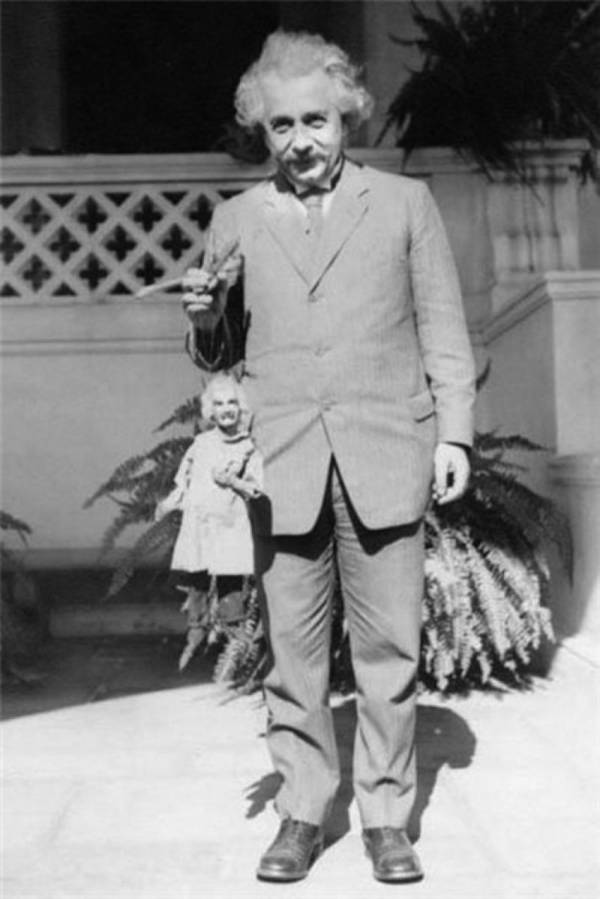
Einstein with puppet-Einstein

If you think Einstein-with-his-tongue-out is the last word in whimsical physicist photography, have a look at this 1931 shot of the Mighty Hip Einie with an Einstein marionette.
Attributed to Harry Burnett while Yale Puppeteers were working in their theater, Teatro Torito, on Olvera Street in Los Angeles, California, circa 1931. The photo was taken by Harry Burnett at Cal Tech in Pasadena where Albert Einstein was teaching. Einstein saw the puppet perform at the Teato Torito and was quite amused. He reached into his jacket’s breast pocket, pulled out a letter and crumpled it up. Speaking in German, he said, “The puppet wasn’t fat enough!” He laughed and stuffed the crumpled letter up under the smock to give the puppet a fatter belly. This is a wonderful photograph that Harry treasured. Harry Burnett also kept the letter in a frame and loved to retell the story and at the end give his pixish laugh.
Einstein with Einstein Puppet

The Denge Sound Mirrors

Radar's Predecessor
Before the application of radar became a reality a number of experimental early warning systems were developed by the British military. One which showed the most promise - as it actually worked - were the acoustic mirrors built at Denge on the south coast of England.

Quickly superseded by radar they were abandoned but still remain at their post, obsolete concrete leviathans on an island in the middle of a nature reserve, reminders of a dangerous time in European history.

Awesome Pictures

 the dark alley
by kimeajam

Solar wind is source for moon water


Three years ago University of Tennessee, Knoxville, researchers helped to discover water on the surface of the moon. Now, they ...
Continue Reading

The Strange Lunar Beauty of the Algerian Sahara

Expanse of sand dunes of the Sahara Desert in AlgeriaAssekrem area of the Sahara Desert at nightRough terrain of Assekrem region of Sahara DesertWhite sand dunes of the Sahara Desert in AlgeriaAssekrem area of the Sahara DesertSloping sand dunes of the Sahara Desert in Algeria
As these stunning photos show, Tassili n’Ajjer in the Sahara Desert of Algeria is an area of breathtaking beauty, just one reason why it is a UNESCO World Heritage Site. More

A dark and stormy night ...

harvestheart:

Dark and Stormy - Mike Jones - a storm and nightly light show in the Caymans

A shaman's "aarnguat"

 
This artifact of ancient Inuit culture was excavated in the Hudson Bay area during a repatriation.
The first unusual thing we noticed were holes in the figurine’s head, chest, and pelvis. We were uncertain why these modifications, carefully created using a bow drill, had been made to an otherwise typical Inuit female figurine, so we examined the associated skeleton. We discovered skeletal abnormalities in locations corresponding with the holes in the figurine, the most obvious being a jaw lesion that was probably cancerous. While we can’t determine what kind of cancer the woman may have had, lung and salivary gland cancer (once known as Eskimoma because it is common in Inuit populations) are possibilities. The chest and pelvic perforations may relate to these soft tissue cancers or other skeletal problems. For instance, her pelvis was asymmetrical, suggesting misaligned bones that could have produced chronic pain in the buttocks.

Traditional Inuit religion conceived of everything—people, animals, objects, and places—as possessing an inua, or resident soul, and Inuit shamans sometimes made figurines called aarnguat (“object with powers”) to host an inua. We believe that this aarnguat was specifically made for the woman’s inua so that it could act as a proxy for her during a shamanic “surgery,” represented by the three drilled holes, to remove her illnesses. It is the first definitive archaeological evidence for shamanistic healing in the Canadian Arctic. 
From the September/October 2010 issue of Archaeology.

The Achaemenid Empire (4th century B.C.)


By ensuring peace and promoting trade, the Achaemenids ushered in an unprecedented period of prosperity in a vast area half a millennium before Rome reached the apex of its power. At its peak, the empire covered three million square miles—more than that of either Rome or the Chinese Han Dynasty at their largest in the first century A.D.

The taxes gathered from conquered peoples allowed the Achaemenids to create monumental cities, build dependable roads stretch­ing from Anatolia to Afghanistan, and construct caravan stops to protect and encourage merchants, as well as to ensure royal couriers could travel quickly across long dis­tances. The Royal Road, from Sardis in today’s Turkey to Susa in today’s Iran, provided regular way stations through territory “free from danger,” says the fifth-century b.c. Greek historian Herodotus.
From the September/October 2011 issue of Archaeology [online is not fulltext], via the author's website. [which is fulltext with photos].

And this from the Wikipedia entry:
In 480 BCE, it is estimated that 50 million people lived in the Achaemenid Empire or about 44% of the world's population at the time, making it the largest empire by population percentage.

First Human Ancestor Looked Like A Squirrel

Newly discovered fossilized bones for the world's oldest and most primitive known primate, Purgatorius, reveal a tiny, agile animal that spent much of its time eating fruit and climbing trees, according to a study.

The fossils, described in a presentation at the Society of Vertebrate Paleontology's 72nd Annual Meeting in Raleigh, North Carolina, are the first known below-the-head bones for Purgatorius. Previously, only teeth revealed its existence.

here's further evidence that dinosaurs were not ectothermic (cold-blooded).

Dinosaur cold-blood theory in doubt

Bone of Alpine red deer

One of the strongest lines of evidence that dinosaurs were cold-blooded, like modern reptiles, has been knocked down.
Prior studies of dinosaur bones uncovered what are known as "lines of arrested growth".
The creatures were presumed to be cold-blooded because modern cold-blooded animals show these same lines.
But scientists reporting in Nature have studied the bones of 41 modern mammal species from around the world, finding every one had these lines as well.
The idea that dinosaurs are cold-blooded, or ectothermic, goes back to the 19th Century. But a number of discoveries 1960s have been challenging that notion.
Because soft tissues such as organs and skin are not preserved (with a few notable exceptions), much of what is known about dinosaurs must be inferred from their bones, and comparisons made with modern animals that can be studied in greater detail.
Lagging behind Lines of arrested growth, or Lags, occur because organisms tend to suspend their growth and rally their resources during seasonal periods of environmental stress such as cold or dry conditions.
This forms a boundary from one season to the next as growth resumes when conditions are more favourable.
Svalbard reindeer 
Lines of arrested growth were found in mammals irrespective of environment, from Svalbard reindeer...
They are familiar in creatures such as molluscs, whose slow annual accumulations can be seen as ridges in their shells.
Lags have also been found in the bones of reptiles and amphibians and have until now been assumed to be limited to ectotherms - cold-blooded animals - that are more subject to the whims of harsh environments.
Meike Koehler of the Catalan Institute of Palaeontology in Barcelona and her colleagues were therefore surprised by what they found.
"Originally this was not a paper that we aimed to do," Dr Koehler told BBC News.
"We were very curious to know how environmental conditions and changes affect bone growth in fossil and extant mammals, to get a good idea about... how they may have coped with these changes in the past."
As the team studied the thigh bones of animals from all over the world - ranging from the Svalbard reindeer in the Arctic to muntjac deer species from South Asia - Lags showed up in every one.
"These lines of arrested growth have been used a lot in dinosaurs, but nobody has ever had a really deep look at mammals," Dr Koehler explained.
Muntiacus, South Asian deer 
 ....to muntjac deer of South Asia and beyond
David Weishampel, a palaeontologist at the Center for Functional Anatomy and Evolution at Johns Hopkins University School of Medicine in Maryland called the new work "a wonderful paper" and said it was a welcome addition to the debate.
"I think most (palaeontologists) regard dinosaurs as being [warm-blooded] but there's a lot of waffling in the data that appeared before that wasn't conclusive," he told BBC News.
"It's about time we have a connection between the modern bone histology and fossil bone histology, through a very nice ecological and metabolic comparison."
While Prof Weishampel considers it a closed case, Dr Koehler herself is more reserved about the result.
"I don't think that this debate is really settled," she said. "But this is the first time that you can say that Lags do not say anything about warm- or cold-bloodedness."
She and her team will go on and put the Lags to use in studies of modern animals instead.
"It's like dendrochronology - the rings in trees. You can do skeletal chronology in bones and infer things like longevity, age at maturity, juvenile states - traits which are very, very important to get an idea about the health of a population and whether it is vulnerable.
"It is very good to know now that mammals do show these Lags and we can use them in the same way that we do in amphibians and reptiles to understand the situation of a population."

Blood Ivory

t
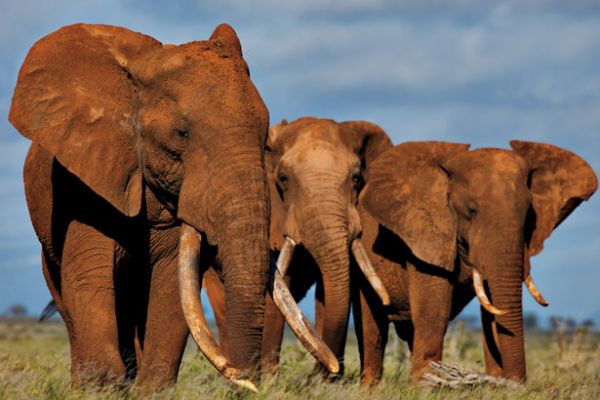
Despite a global ban on the ivory trade, elephants are still being killed just for their tusks. In most developed countries, the use of ivory (outside of antiques) is about as chic as clubbing a baby seal. So who is buying ivory these days? Bryan Christy of National Geographic looks for answers in the Philippines.
My goal in meeting Garcia is to understand his country’s ivory trade and possibly get a lead on who was behind 5.4 tons of illegal ivory seized by customs agents in Manila in 2009, 7.7 tons seized there in 2005, and 6.1 tons bound for the Philippines seized by Taiwan in 2006. Assuming an average of 22 pounds of ivory per elephant, these seizures represent about 1,745 elephants. According to the Convention on International Trade in Endangered Species of Wild Fauna and Flora (CITES), the treaty organization that sets international wildlife trade policy, the Philippines is merely a transit country for ivory headed to China. But CITES has limited resources. Until last year it employed just one enforcement officer to police more than 30,000 animal and plant species. Its assessment of the Philippines doesn’t square with what Jose Yuchongco, chief of the Philippine customs police, told a Manila newspaper not long after making a major seizure in 2009: “The Philippines is a favorite destination of these smuggled elephant tusks, maybe because Filipino Catholics are fond of images of saints that are made of ivory.” On Cebu the link between ivory and the church is so strong that the word for ivory, garing, has a second meaning: “religious statue.”
But it's not just the Philippines. Read more about the continuing global ivory trade at NatGeo.

Zookeepers perform mouth to snout resuscitation to save newborn tapir

Staff at Denver Zoo saved the life of a Malayan tapir calf when they took extraordinary efforts during a recent birth. Rinny, the zoo's female tapir, was having trouble while giving birth to a calf last month and a staffer freed the newborn from the mother's amniotic sac. After successfully helping to extract the calf, zoo members aided the newborn by performing "mouth to snout rescue breaths," the zoo has said.


The staff helped the calf get liquid out of his lungs and breathe. "It's always a little scary when something like this happens, but thankfully we all have great resources and training," said Rebecca McCloskey, an assistant curator with the zoo. McCloskey, along with staff veterinarian Gwen Jankowski, took the life-saving measures during the difficult birth on Sept. 3.

Now the male tapir named Dumadi is doing fine, walking and swimming as he grows at the zoo. Rinny is also doing well after the birth, which the first tapir birth for at Denver Zoo. Adult Malayan tapirs have a distinctive color pattern that resembles an Oreo cookie, with black front and back parts separated by a white or grey midsection, the release said. The coloring provides excellent camouflage that breaks up a tapir's outline in forest shadows.


Young tapirs have color patterns that more resemble brown watermelons with spots and stripes, which help them blend into the dappled sunlight and leaf shadows of the forest, protecting them from predators. Malayan tapirs are the only tapir native to Asia. Once found throughout Southeast Asia, they now inhabit only the rainforests of the Indochinese peninsula and Sumatra. With a wild population of less than 2,000, they're classified as endangered by the International Union for Conservation of Nature.

Great apes, small numbers


Sumatran orangutans have undergone a substantial recent population decline, according to a new genetic study, but the same research revealed ...
Continue Reading

Animal Pictures

Saturday, October 20, 2012

The Daily Drift

The eye of the eagle ...

Some of our readers today have been in:
Minsk, Belarus
Doha, Qatar
Kuching, Malaysia
Lima, Peru
Thanh Pho Ho Chi Minh, Vietnam
George Town, Malaysia
Dubai, United Arab Emirates
Reykjavik, Iceland
Kuala Lumpur, Malaysia
Cairo, Egypt
Lahore, Pakistan
Seremban, Malaysia
Manila, Philippines
Caracas, Venezuela
Seri Kembangan, Malaysia
Zagreb, Croatia
Sampaloc, Philippines
Miri, Malaysia
Karachi, Pakistan
Bucharest, Romania
Kota Kinabalu, Malaysia
Velikiy Novgorod, Russia
Colombo, Sri Lanka
Klang, Malaysia
Bangkok, Thailand
San Juan, Puerto Rico
Ampang, Malaysia
Osijek, Croatia
Kwidzyn, Poland

Don't forget to visit our sister blog!