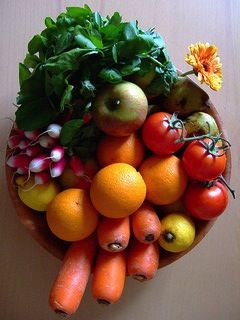
Okay, we knew on one level that fruits and vegetables are still "alive," because we can grow a new plant from just a piece of celery,
carrot, or potato from the produce market. But a new study throws a
different light on the concept of "life," as far as plants are
concerned.
A study published online today in the
journal Current Biology found that store-bought cabbage, lettuce,
spinach, zucchini, sweet potatoes, carrots, and blueberries respond to
light-dark cycles up to about a week after harvest.
And when the
produce was kept on the same light-dark cycle as a predator—cabbage
looper moth caterpillars (Trichoplusia ni)—it was better able to resist
attacks.
Circadian clocks tell plants when the seasons change due
to variations in day length, said Janet Braam, a plant biologist at
Rice University in Houston, Texas. But the clock is also critical in
plant defenses against insects.
"[Plants] know when the insects
eat," said Braam, who is a co-author on the recent study, "so they can
prepare a defense in advance."
Thinking about this
led me to wonder if scientists can take individual cells from fruit and
determine whether they are still alive. And when do they really die? Two
weeks in the refrigerator? When we cut them? Or when we cook or eat
them? Thinking along these lines can lead to nightmares. Read more about the study at
NatGeo News.


No comments:
Post a Comment