Welcome to ...

The place where the world comes together in honesty and mirth.
Windmills Tilted, Scared Cows Butchered, Lies Skewered on the Lance of Reality ... or something to that effect.


Monday, May 5, 2008

Living On The Edge

Elizabeth Warren writing for Havard Magazine had this to say about the state of affairs for working America:

Forum: The Middle Class on the Precipice
Rising financial risks for American families

by Elizabeth Warren


During the past generation, the American middle-class family that once could count on hard work and fair play to keep itself financially secure has been transformed by economic risk and new realities. Now a pink slip, a bad diagnosis, or a disappearing spouse can reduce a family from solidly middle class to newly poor in a few months.

Middle-class families have been threatened on every front. Rocked by rising prices for essentials as men’s wages remained flat, both Dad and Mom have entered the workforce—a strategy that has left them working harder just to try to break even. Even with two paychecks, family finances are stretched so tightly that a very small misstep can leave them in crisis. As tough as life has become for married couples, single-parent families face even more financial obstacles in trying to carve out middle-class lives on a single paycheck. And at the same time that families are facing higher costs and increased risks, the old financial rules of credit have been rewritten by powerful corporate interests that see middle-class families as the spoils of political influence.


Raising Incomes the Two-Worker Way

In just one generation, millions of mothers have gone to work, transforming basic family economics. The typical middle-class household in the United States is no longer a one-earner family, with one parent in the workforce and one at home full-time. Instead, the majority of families with small children now have both parents rising at dawn to commute to jobs so they can both pull in paychecks.

Scholars, policymakers, and critics of all stripes have debated the social implications of these changes, but few have looked at their economic impact. Today the median income for a fully employed male is $41,670 per year (all numbers are inflation-adjusted to 2004 dollars)—nearly $800 less than his counterpart of a generation ago. The only real increase in wages for a family has come from the second paycheck earned by a working mother. With both adults in the workforce full-time, the family’s combined income is $73,770—a whopping 75 percent higher than the median household income in the early 1970s. But the gain in income has an overlooked side effect: family risk has risen as well. Today’s families have budgeted to the limits of their new two-paycheck status. As a result, they have lost the parachute they once had in times of financial setback—a back-up earner (usually Mom) who could go into the workforce if the primary earner got laid off or fell sick. This “added-worker effect” could buttress the safety net offered by unemployment insurance or disability insurance to help families weather bad times. But today, a disruption to family fortunes can no longer be made up with extra income from an otherwise-stay-at-home partner.

Income risk has shifted in other ways as well. Incomes are less dependable today. Layoffs, outsourcing, and other workplace changes have trebled the odds of a significant interruption in a single generation. The shift from one income to two doubled the risks again, as both Mom and Dad face the possibility of unemployment. Of course, with two people in the workforce, the odds of income dropping to zero are lessened. But for families where every penny of both paychecks is already fully committed to mortgage, health insurance, and other payments, the loss of either paycheck can unleash a financial tailspin. Nor are such risks solely related to unemployment. Consider health-related exposures. Two wage-earners means either Mom or Dad could be out of work from illness or injury, losing a substantial chunk of the family income. Finally, the new everyone-in-the-workforce family faces higher risks for caregiving. When there was one stay-at-home parent, a child’s serious illness or Grandma’s fall down the stairs was certainly bad news, but the main economic ramification was the medical bills. Today, someone has to take off work—or hire help—in order to provide family care. At a time when hospitals are sending people home “quicker and sicker,” more nursing care falls directly on the family—and someone has to be home to administer it.

Even the economic risks of divorce have changed. A generation ago, the end of a marriage was an economic blow, but a nonworking spouse usually took a job, bringing in new income to stay afloat. Now, whatever the two-income divorcing couple earns has to cover both their old and new expenses. Evidence mounts that post-divorce, both women and men are struggling to make ends meet as they try to support two households on the same combined income. A divorced woman with children, for example, is about three times more likely to file for bankruptcy than a man or woman, single or married, without children. And men who owe child support are about three times more likely to file for bankruptcy than men who don’t.

The news is even worse for single parents. They face all the difficulties of dual-income families—all income is budgeted, there is no one at home to work if the primary earner loses a job or gets sick, and no one to take over if a child gets sick or an elderly parent needs help—and they are trying to make it on a lot less money, competing with two-income families for housing, daycare, health insurance, and all the other goods and services. As one divorced, working mother put it, “With what my ex contributes and what I earn, I can just about match what a man can make, but I can’t match what a man and woman both working can make.” The two-parent families are struggling to swallow the risk, but their single-parent counterparts are choking.

Does this mean that middle-class women should return to the home in order to reduce their families’ risk? Before jumping to that conclusion, it is important to look at the expenses middle-class families face.


Soaring Expenses— and Risk

Why are so many moms in the workforce? Surely, some are lured by a great job, but millions more need a paycheck, plain and simple.

It would be convenient to blame the families and say that it is their lust for stuff that has gotten them into this mess. Indeed, sociologist Robert Frank claims that this country’s newfound “Luxury Fever” forces middle-class families “to finance their consumption increases largely by reduced savings and increased debt.” Others echo the theme. A book titled Affluenza (by John De Graaf, David Wann, and Thomas H. Naylor) sums it up: “The dogged pursuit for more” accounts for Americans’ “overload, debt, anxiety, and waste.” If Americans are out of money, it must be because they are over-consuming—buying junk they don’t really need.

Blaming the family supposes that we believe that families spend their money on things they don’t really need. Over-consumption is not about medical care or basic housing; it is, in the words of Juliet Schor, about “designer clothes, a microwave, restaurant meals, home and automobile air conditioning, and, of course, Michael Jordan’s ubiquitous athletic shoes, about which children and adults both display near-obsession.” And it isn’t about buying a few goodies with extra income; it is about going deep into debt to finance consumer purchases that sensible people could do without.

But is this argument true? If families really are blowing their paychecks on designer clothes and restaurant meals, then the household expenditure data should show them spending more on these frivolous items than ever before. But the numbers don’t back up the claim.

A quick summary of the data from the Bureau of Labor Statistics’ Consumer Expenditure Survey paints a very different picture of family spending. Consider what a family of four spends on clothing. Designer toddler outfits and $200 sneakers are favorite media targets, but when it is all added up, including the Tommy Hilfiger sweatshirts and Ray-Ban sunglasses, the average family of four today spends 33 percent less on clothing than a similar family did in the early 1970s. Overseas manufacturing and discount shopping mean that today’s family is spending almost $1,200 a year less than their parents spent to dress themselves.

What about food? Surely, families are eating out more and buying shopping carts full of designer water and exotic fruit? In fact, today’s family of four actually spends 23 percent less on food (at-home and restaurant eating combined) than its counterpart of a generation ago. The slimmed-down profit margins in discount supermarkets have combined with new efficiencies in farming to cut more costs for the American family.

Appliances tell the same picture. There is a lot of complaining about microwave ovens and espresso machines: Affluenza rails against appliances “that were deemed luxuries as recently as 1970, but are now found in well over half of U.S. homes, and thought of by a majority of Americans as necessities: dishwashers, clothes dryers, central heating and air conditioning, color and cable TV.” But manufacturing costs are down, and durability is up. Today’s families are spending 51 percent less on major appliances than their predecessors a generation ago.

This is not to say that middle-class families never fritter away money. A generation ago, big-screen televisions were a novelty reserved for the very rich, no one had cable, and DVD and TiVo were meaningless strings of letters. So how much more do families spend on “home entertainment,” premium channels included? They spend 23 percent more—a whopping extra $180 annually. Computers add another $300 to the annual family budget. But even that increase looks a little different in the context of other spending. The extra money spent on cable, electronics, and computers is more than offset by families’ savings on major appliances and household furnishings alone.

The same offsetting phenomena appear in other areas as well. The average family spends more on airline travel than it did a generation ago, but less on dry cleaning; more on telephone services, but less on tobacco; more on pets, but less on carpets. When we add it all up, increases in one category are offset by decreases in another.

So where did their money go? It went to the basics. The real increases in family spending are for the items that make a family middle class and keep them safe (housing, health insurance), that educate their children (pre-school and college), and that let them earn a living (transportation, childcare, and taxes).

The data can be summarized in a financial snapshot of two families, a typical one-earner family from the early 1970s compared with a typical two-earner family from the early 2000s. With an income of $42,450, the average family from the early 1970s covered their basic mortgage expenses of $5,820, health-insurance costs of $1,130 and car payments, maintenance, gas, and repairs of $5,640. Taxes claimed about 24 percent of their income, leaving them with $19,560 in discretionary funds. That means they had about $1,500 a month to cover food, clothing, utilities, and anything else they might need—just about half of their income.

By 2004, the family budget looks very different. As noted earlier, although a man is making nearly $800 less than his counterpart a generation ago, his wife’s paycheck brings the family to a combined income that is $73,770—a 75 percent increase. But higher expenses have more than eroded that apparent financial advantage. Their annual mortgage payments are more than $10,500. If they have a child in elementary school who goes to daycare after school and in the summers, the family will spend $5,660. If their second child is a pre-schooler, the cost is even higher—$6,920 a year. With both people in the workforce, the family spends more than $8,000 a year on its two vehicles. Health insurance costs the family $1,970, and taxes now take 30 percent of its money. The bottom line: today’s median-earning, median-spending middle-class family sends two people into the workforce, but at the end of the day they have about $1,500 less for discretionary spending than their one-income counterparts of a generation ago.

What happens to the family that tries to get by on a single income today? Their expenses would be a little lower because they can save on childcare and taxes, and, if they are lucky enough to live close to shopping and other services, perhaps they can get by without a second car. But if they tried to live a normal, middle-class life in other ways—buy an average home, send their younger child to preschool, purchase health insurance, and so forth—they would be left with only $5,500 a year to cover all their other expenses. They would have to find a way to buy food, clothing, utilities, life insurance, furniture, appliances, and so on with less than $500 a month. The modern single-earner family trying to keep up an average lifestyle faces a 72 percent drop in discretionary income compared with its one-income counterpart of a generation ago.

Combine changes in family income and expenses, and the biggest change of all becomes evident—on the risk front. In the early 1970s, if any calamity came along, the family devoted nearly half its income to discretionary spending. Of course, people need to eat and turn on the lights, but the other expenses—clothing, furniture, appliances, restaurant meals, vacations, entertainment, and pretty much everything else—can be drastically reduced or even cut out entirely. In other words, they didn’t need as much money if something went wrong. If the couple could find a way—through unemployment insurance, savings, or putting their stay-at-home parent to work—they could cover the basics on just half of their previous earnings. Given the option of a second paycheck, both could stay in the workforce for a few months once the crisis had passed, pulling the family out of their financial hole.

But the position today is very different. Fully 75 percent of family income is earmarked for recurrent monthly expenses. Even if they are able to trim around the edges, families are faced with a sobering truth: every one of those expensive items—mortgage, car payments, insurance, childcare—is a fixed cost. Families must pay them each and every month, through good times and bad; there is no way to cut back from one month to the next, as can be done with spending on clothing or food. Short of moving out of the house, withdrawing their children from preschool, or canceling the insurance policy altogether, they are stuck.

In other words, today’s family has no margin for error. There is no leeway to cut back if one earner’s hours are cut or if the other gets sick. There is no room in the budget if someone needs to take off work to care for a sick child or an elderly parent. Their basic situation is far riskier than that of their parents a generation earlier. The modern American family is walking a high wire without a net.


The Rules Have Changed

The one-two punch of income vulnerability and rising costs has weakened the middle class, at the same time that the revision of the rules of financing delivers a death blow to millions of families each year. Since the early 1980s, the credit industry has rewritten the rules of lending to families. Congress has turned the industry loose to charge whatever it can get and to bury tricks and traps throughout credit agreements. Credit-card contracts that were less than a page long in the early 1980s now number 30 or more pages of small-print legalese. In the details, credit-card companies lend money at one rate, but retain the right to change the interest rate whenever it suits them. They can even raise the rate after the money has been borrowed—a practice once considered too shady even for a back-alley loan shark. When they think they have been cheated, customers can be forced into arbitration in locations thousands of miles from home. Some companies claim that they can repossess anything a customer buys with a credit card.

Credit-card issuers are not alone in their boldness. Home-mortgage lenders are writing mortgages that are so one-sided that some of their products are known as “loan-to-own” because it is the mortgage company—not the buyer—who will end up with the house. Payday lenders are ringing military bases and setting up shop in working-class neighborhoods, offering instant cash that can eventually cost the customer more than a thousand percent interest.

For those who can stay out of debt, the rules of lending may not matter. But the economic pressures on the middle class are causing more families to turn to credit just to make ends meet. When something goes wrong the only place to turn is credit cards and mortgage refinancing. At that moment, the change in lending rules matters very much indeed. The family that might manage $2,000 of debt at 9 percent discovers that it cannot stay afloat when interest rates skyrocket to 29 percent. And the family that refinanced the home mortgage to pay off other debts suddenly faces escalating monthly payments and may find itself staring at foreclosure. Job losses or medical debts can put any family in a hole, but a credit industry that has rewritten the rules can keep that family from ever climbing back.


A Politics of Living on the Edge?

Every day, middle-class families carry higher risks that a job loss or a medical problem will push them over the edge. Although plenty of families make it, a growing number who worked just as hard and followed the rules just as carefully find themselves in a financial nightmare. The security of middle-class life has disappeared. The new reality is millions of families whose grip on the good life can be shaken loose in an instant.

Although my own work, on bankruptcy and credit, has focused on the specifics of families’ household finances, I cannot help but think that their changed circumstances during the past generation have larger echoes for public policy.

During the same period, families have been asked to absorb much more risk in their retirement income. In 1985, there were 112,200 defined-benefit pension plans with employers and employer groups around the country; today their number has shrunk to 29,700 such plans, and those are melting away fast. Steelworkers, airline employees, and now those in the auto industry are joining millions of families who must worry about interest rates, stock market volatility, and the harsh reality that they may outlive their retirement money. For much of the past year, President Bush campaigned to move Social Security to a savings-account model, with retirees trading much or all of their guaranteed payments for payments contingent on investment returns. For younger families, the picture is not any better. Both the absolute cost of healthcare and the share of it borne by families have risen—and newly fashionable health-savings plans are spreading from legislative halls to Wal-Mart workers, with much higher deductibles and a large new dose of investment risk for families’ future healthcare. Even demographics are working against the middle class family, as the odds of having a frail elderly parent—and all the attendant need for physical and financial assistance—have jumped eightfold in just one generation.

From the middle-class family perspective, much of this, understandably, looks far less like an opportunity to exercise more financial responsibility, and a good deal more like a frightening acceleration of the wholesale shift of financial risk onto their already overburdened shoulders. The financial fallout has begun, and the political fallout may not be far behind.

Greedy Salmon Kills

Because of the greedy demand for salmon some are being murdered:

Sea lions shot dead on Columbia River as salmon battle rages

For years, the sea lions lounging at the Bonneville Dam have had easy pickings from salmon waiting to go up fish ladders to upriver spawning grounds.

Over the weekend, the federally protected sea creatures were themselves easy prey for a gunman who shot and killed six of the sea lions as they lay in traps meant to humanely catch them.

State and federal authorities were investigating the shootings, which came less than two weeks after an appeals court issued a temporary injunction against authorities killing the salmon-gobbling mammals. Agents have been trapping them instead, but trapping will be suspended during the investigation, said Rick Hargrave, a spokesman for the Oregon Department of Fish and Wildlife.

Fishermen and American Indian tribes have pushed to protect the salmon and remove the sea lions, by lethal force if necessary.

The carcasses of the four California sea lions and two Steller sea lions were found Sunday around noon below the Bonneville Dam on the Columbia River on the border of Oregon and Washington.

The six animals appear to have been shot by somebody on the Washington side during the night, said Brian Gorman, a spokesman for the National Marine Fisheries Service.

Two open cages each contained the carcasses of two California sea lions and one Steller sea lion, he said.

Necropsies were planned for all the animals, and the area was being treated as a crime scene by state and federal agencies, Gorman said.

The discovery came one day after three elephant seals were found shot to death at a breeding ground near San Simeon in central California. Investigators will try to determine whether there is any link between the shootings, Gorman said.

Seven California sea lions were trapped on the Columbia starting April 24 after the 9th U.S. Circuit Court of Appeals approved their capture. One died during a medical inspection before transfer to a Sea World park.

Washington and Oregon have been granted federal authorization to capture or kill as many as 85 sea lions a year for five years at the base of the dam.

The Humane Society of the United States has gone to court to challenge the authorization, with another hearing set for May 8. Until a judge rules, no animals may be legally killed.

"We're really shocked," said Sharon Young, a Humane Society spokeswoman, who learned about the sea lion deaths from a reporter. "We're a nation of laws, and we should expect people to abide by them."

The fight is on at Gettysburg

Now this is a shame ... losing a historical display at a historical site:

Gettysburg park pulls plug on huge electric War Between the States map

For decades, visitors willing to shell out a few extra dollars at Gettysburg National Military Park could be entertained - or bored - by an electric light display showing troop movements in that pivotal of the War Between the States battle.

With the opening of a new museum and visitor center that offers a bigger "wow" factor for the park's nearly 2 million visitors each year, the National Park Service has decided that its 1960s-era electric battlefield map is obsolete.

As patrons of the new $103 million facility learn about the battle by immersing themselves in new technology, the old center stands vacant, awaiting demolition next year. Before that happens, the 30-by-30-foot electric map - embedded with more than 625 colored lights - will be dismantled and placed in storage.

At least a few people who believe the map still has educational value are urging the park service to find a way to keep the lights on.

One regular park visitor has created a Web site devoted to the cause of preserving it, http://www.savetheelectricmap.com. Jon DeKeles, 51, of Post Falls, Idaho, said he only learned of the map's pending demise during a visit in late March, and he started the site when he returned home.

"Does everything have to be multimedia, high-tech in this world?" DeKeles said.

Emily Rosensteel O'Neil, the daughter of map creator Joseph L. Rosensteel, would also like to see the map get a new home.

"The electric map is an artifact in and of itself," said O'Neil, 67, a retired teacher who lives in Guilford, Conn. "It was my father's masterpiece."

But from the earliest planning stages for the new museum, park officials had envisioned using new technology to give visitors a more vivid picture of how the battle unfolded, said park spokeswoman Katie Lawhon.

The new building, which opened April 14, features two film theaters that can also accommodate live performances and lectures, video and audio presentations scattered throughout the museum, and some computerized interactive exhibits.

The park service has not ruled out resurrecting the map in the future and is willing to turn it over to any nonprofit group that would use it for educational purposes, Lawhon said.

"We haven't had any really serious interest," she said, "but we have gotten a couple nibbles."

Thursday, May 1, 2008

One Reason Not to Vote McPain

McPain finished 894th out of the 899 in his West Point class?
So, which is he -- lazy or stupid?

Just the Facts, M'am

Did you know that ALL recessions since 1900, have taken place under republican presidents or directly the result of policies of republican presidents, save one?

True fact.

The single exception occurred at the conclusion of World War II during the Truman administration
and it was one predictable consequence of ending a war.

It was also the shortest, as well as the shallowest.


Contrast that with the fact that we are now enduring our SECOND recession due to the shrub thugs.

As BartCop is fond of saying ...

“It’s the Republicans’ job to crash

the economy so the super-rich can swoop in and buy companies and assets for pennies on the dollar.”

Now, this is a bit on the simplistic side, but in essence, it’s EXACTLY what they do!

And another one:


“Never trust a Republican. It’s their job to crash the economy so their billionaire friends can buy once-healthy companies for pennies on the dollar, fire the employees and sell the assets for profit.”

Wednesday, April 30, 2008

Hunt for the "Kill" switch in microchips

The Department of Defense is freaked out that the commercially-manufactured microchips in their tech might contain "kill switches" that bad people could use to remotely knock the devices out of operation. So at the end of last year, DARPA launched its Trust In Integrated Circuits program to develop methods for sussing out chips with "malicious" circuitry hidden inside. IEEE Spectrum writer Sally Adee looked at the technicalities of the controversy. She told me, "I think interviewed every electrical engineer in the country so I could wrap my head around 1) why that's a big deal and 2) how it would affect me (I'm selfish that way.) From IEEE Spectrum:
Feeding those (fever) dreams is the Pentagon's realization that it no longer controls who manufactures the components that go into its increasingly complex systems. A single plane like the DOD's next generation F-35 Joint Strike Fighter, can contain an “insane number” of chips, says one semiconductor expert familiar with that aircraft's design. Estimates from other sources put the total at several hundred to more than a thousand. And tracing a part back to its source is not always straightforward. The dwindling of domestic chip and electronics manufacturing in the United States, combined with the phenomenal growth of suppliers in countries like China, has only deepened the U.S. military's concern.

Recognizing this enormous vulnerability, the DOD recently launched its most ambitious program yet to verify the integrity of the electronics that will underpin future additions to its arsenal. In December, the Defense Advanced Research Projects Agency (DARPA), the Pentagon's R&D wing, released details about a three-year initiative it calls the Trust in Integrated Circuits program. The findings from the program could give the military—and defense contractors who make sensitive microelectronics like the weapons systems for the F‑35—a guaranteed method of determining whether their chips have been compromised. In January, the Trust program started its prequalifying rounds by sending to three contractors four identical versions of a chip that contained unspecified malicious circuitry. The teams have until the end of this month to ferret out as many of the devious insertions as they can.

Vetting a chip with a hidden agenda can't be all that tough, right? Wrong. Although commercial chip makers routinely and exhaustively test chips with hundreds of millions of logic gates, they can't afford to inspect everything. So instead they focus on how well the chip performs specific functions. For a microprocessor destined for use in a cellphone, for instance, the chip maker will check to see whether all the phone's various functions work. Any extraneous circuitry that doesn't interfere with the chip's normal functions won't show up in these tests.

“You don't check for the infinite possible things that are not specified,” says electrical engineering professor Ruby Lee, a cryptography expert at Princeton. “You could check the obvious possibilities, but can you test for every unspecified function?”


*****

Can you say Paranoia?

Ok, there can be legitimate concerns here, but come on - the solution is obvious ... manufacture your own microchips, DUH!

Wind in Your Face

Home Residential Wind Power photo

Residential wind power is the too often forgotten little brother of the wind power industry that builds turbines on the scale of jumbo jets. But it's starting to grow up and come out of the shadow of its bigger sibling. "improved generator technology [lighter magnets in the generators, blades that adjust to wind conditions, and units that wirelessly report how much power they're making], more financial incentives, rising electric rates, and energy-security concerns have opened the way for small-wind power to bloom in unlikely places."

That's right, they aren't just for the farm anymore. You should see more and more small wind turbines in suburbs and urban settings as time goes on. Of course, we're still talking small potatoes compared to big wind power, on the order of only 3 megawatts in 2007 according to the American Wind En ergy Association (AWEA), but that's triple the generating capacity of 2006. A few more years of tripling and doubling, and the power of exponential growth will be felt.

*****
This wind thing could be very interesting, very interesting. I will keep a watch on this and see where it goes.

U.S. Consumers: "Get the cheap stuff"

So much for healthier eating ...

2008-04-30_152351-Treehugger-groceries.jpg
Lambert, Getty Images

I had a faint hope that the rise in food prices might lead people to buy more carefully, perhaps cook more from scratch instead of buying prepared food, or even cut back on meat and eat more vegetables. No such luck; according to the IHT, Americans are just buying more crap, because the cheap calories come from the most processed, corn-based foods. My favourite quote:

"In Ohio, Holly Levitsky is replacing the Lucky Charms cereal in her kitchen with Millville Marshmallows and Stars, a less expensive store brand." Pizza sales at Domino's are down, while Wal-Mart says that sales of peanut butter and spaghetti are up. On the other hand, so are the sales of packaged food.

Donna Dunaway, a homemaker, used to splurge on the ingredients for homemade lasagna, her husband's favorite, before food prices began to surge this year."Now he's lucky to get a 99-cent lasagna TV dinner, or maybe some Manwich out of a can," she said. "I just can't afford to be buying all that good meat and cheese like I used to."

So much for hoping ...

We don't forget.

Concentration camp doctor tops list of 10 most-wanted Nazis

Former SS doctor Aribert Heim tops a list released Wednesday of most-wanted suspected Nazi war criminals. He is a man so brutal that witnesses remember him as the worst they saw, though he was only at Mauthausen concentration camp for two months.

Heim would be 93 today, but "we have good reason to believe he is still alive," said Efraim Zuroff by telephone from Jerusalem. Zuroff is the top Nazi hunter for Simon Wiesenthal Center, which published the list.

Still, despite a $485,000 reward for Heim's arrest posted by the center along with Germany and Austria, he has managed to avoid capture for decades.

He is only one of hundreds of suspected Nazi war criminals that the center estimates are still at large.

After Heim on the center's most wanted list are: John Demjanjuk, fighting deportation from the U.S., which says he was a guard at several death and forced labor camps; Sandor Kepiro, a Hungarian accused of involvement in the wartime killings of than 1,000 civilians in Serbia; Milivoj Asner, a wartime Croatian police chief now living in Austria and suspected of an active role in deporting hundreds of Serbs, Jews and Gypsies to their death; and Soeren Kam, a former member of the SS wanted by Denmark for the assassination of a journalist in 1943. His extradition from Germany was blocked in 2007 by a Bavarian court that found insufficient evidence for murder charges.

But the nature of Heim's alleged crimes are what catapulted him to the top of the list.

Karl Lotter, a prisoner who worked in the hospital at Mauthausen concentration camp, had no trouble remembering the first time he watched Heim kill a man.

It was 1941, and an 18-year-old Jew had been sent to the clinic with a foot inflammation. Heim asked him about himself and why he was so fit. The young man said he had been a soccer player and swimmer.

Then, instead of treating the prisoner's foot, Heim anesthetized him, cut him open, castrated him, took apart one kidney and removed the second, Lotter said. The victim's head was removed and the flesh boiled off so that Heim could keep it on display.

"He needed the head because of its perfect teeth," Lotter, a non-Jewish political prisoner, recalled in testimony eight years later that was included in a 1950 Austrian warrant for Heim's arrest uncovered by The Associated Press. "Of all the camp doctors in Mauthausen, Dr. Heim was the most horrible."

But Heim managed to avoid prosecution, his American-held file in Germany mysteriously omitting his time at Mauthausen.

The hunt for Heim has taken investigators from the German state of Baden-Wuerttemberg all around the world. Besides his home country of Austria and neighboring Germany where he settled after the war, tips have come from Uruguay in 1998, Spain, Switzerland and Chile in 2005, and Brazil in 2006, said Heinz Heister, presiding judge of the Baden-Baden state court, where Heim was indicted in absentia on hundreds of counts of murder in 1979.

Born June 28, 1914 in Radkersburg, Austria, Heim joined the local Nazi party in 1935, three years before Austria was bloodlessly annexed by Germany.

He later joined the Waffen SS and was assigned to Mauthausen, a concentration camp near Linz, Austria, as a camp doctor in October and November 1941.

While there, witnesses told investigators, he worked closely with SS pharmacist Erich Wasicky on such gruesome experiments as injecting various solutions into Jewish prisoners' hearts to see which killed them the fastest.

But while Wasicky was brought to trial by an American Military Tribunal in 1946 and sentenced to death, along with other camp medical personnel and commanders, Heim, who was a POW in American custody, was not among them.

Heim's file in the Berlin Document Center, the then-U.S.-run depot for Nazi-era papers, was apparently altered to obliterate any mention of Mauthausen, according to his 1979 German indictment, obtained by the AP. Instead, for the period he was known to be at the concentration camp, he was listed as having a different SS assignment.

This "cannot be correct," the indictment says. "It is possible that through data manipulation the short assignment at the same time to the (concentration camp) was concealed."

There is no indication who might have been responsible.

The U.S. Army Intelligence file on Heim could shed light on his wartime and postwar activities, and is among hundreds of thousands transferred to the U.S. National Archives. But the Army's electronic format is such that staff have so far only been able to access about half of them, and these don't include the file requested by the AP.

Eli Rosenbaum, director of the Justice Department's Nazi-hunting Office of Special Investigations, declined to comment through a spokeswoman.

"I don't believe there is anything appropriate for Mr. Rosenbaum to add," said Justice Department spokeswoman Laura Sweeney in an e-mail.

Heim was relatively well-known, however, having been a national hockey player in Austria before the war, and there were plenty of witnesses from his time at Mauthausen.

Austrian authorities sent the 1950 arrest warrant to American authorities in Germany who initially agreed to turn him over, then told the Austrians, in a Dec. 21, 1950, letter obtained by the AP, that they couldn't trace him.

What happened next is unclear, but in 1958 Heim apparently felt comfortable enough to buy a 42-unit apartment block in Berlin, listing it in his own name with a home address in Mannheim, according to purchase documents obtained by the AP. He then moved to the nearby resort town of Baden-Baden and opened a gynecological clinic - also under his own name, Heister said.

In 1961, German authorities were alerted and began an investigation, but when they finally went to arrest him in September 1962, they just missed him - he apparently had been tipped off.

Heim continued to live off the rents collected from the Berlin apartments until 1979 when the building was confiscated by German authorities.

Proof that he is alive may lie in the fact that no one has claimed his estate. Heim has two sons in Germany and a daughter who lived in Chile but whose current whereabouts are unknown.

Ruediger Heim, one of the sons, would not comment when telephoned at his Baden-Baden villa.

"All I can say is that it has been implied that I am in contact with my father, and that is absolutely false," he said. "The rest is speculation, and I can't enter into that.

*****

Although I am not jewish and I believe some of the 'wanted' are wanted just out of nothing more than petty spite (yes, even jews can be petty and spiteful just like any other human), there are some who should be boiled in oil for their crimes.
The neo-cons in this country would do well to remember the fact that we do not forget.

Mystery Solved

DNA confirms IDs of czar's children


DNA tests carried out by a U.S. laboratory prove that bone fragments exhumed last year belong to two children of Czar Nicholas II, putting to rest questions about what happened to Russia's last royal family, a regional governor said Wednesday.

Bone fragments dug up near the Ural Mountains city of Yekaterinburg are indeed those of Crown Prince Alexei and his sister, Maria, whose remains had been missing since the family was murdered in 1918 as Russia descended into civil war, said Eduard Rossel, governor of the Sverdlovsk region.

"We have now found the entire family," he told reporters in Yekaterinburg, 900 miles east of Moscow.

The confirmation could bring the tortured history of the Russian imperial family closer to closure and end royal supporters' persistent hopes that members of the czar's immediate family survived the massacre.

Nicholas II abdicated in 1917 as revolutionary fervor swept Russia, and he and his family were detained. The czar; his wife, Alexandra, and their son and four daughters were fatally shot on July 17, 1918, in a basement room of the merchant's house where they were being held in Yekaterinburg

The remains of Nicholas, Alexandra and three of their daughters were unearthed in Yekaterinburg in 1991 as the Soviet Union was collapsing. After genetic tests convinced forensics experts of their authenticity, they were buried in 1998 in a cathedral in the imperial capital of St. Petersburg.

The Russian Orthodox Church canonized Nicholas and his family in 2000, even as it expressed doubts that the remains were indeed those of the czar's family.

The remains of Alexei and Maria, however, had never been located, leading to decades of speculation that perhaps one or both had survived.

Last summer, researchers dug up the bone shards near Yekaterinburg and enlisted Russian and U.S. laboratories to conduct DNA tests.

"The main genetic laboratory in the United States has concluded its work with a full confirmation of our own laboratories' work," Rossel told reporters. "This has confirmed that indeed it is the children.

It was unclear which laboratory Rossel was referring to but a genetic research team working at the University of Massachusetts Medical School has been involved in the process.

The press service for Russian Orthodox Church said no one could comment on the discovery.

As hippies mourn world wide ...

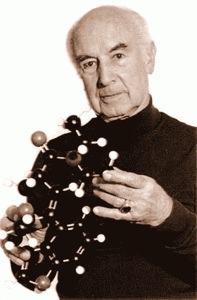
Albert Hofmann, who first synthesized Lysergic acid diethylamide (LSD), has passed away. He was 102 years-old.
 2007 10 Hoffman"I believe that if people would learn to use LSD's vision-inducing capability more wisely, under suitable conditions, in medical practice and in conjunction with meditation, then in the future this problem child could become a wonderchild." -- Albert Hofmann (1906-2008)

Hard Lemonade Debacle

7-year-old boy removed from father and placed in state custody over mistaken order of hard lemondade

Christopher Ratte took his 7-year-old son to a baseball game at Comerica Park. He ordered a lemonade from a vendor and gave it to his boy. Unbeknownst to Ratte (a professor of classical archaeology at the University of Michigan) it was "hard" lemonade, meaning it contained alcohol. When a guard spotted the boy sipping from the bottle, the police were called in, the boy was taken from his father, driven by ambulance to the hospital, and put into foster care.
The 47-year-old academic says he wasn't even aware alcoholic lemonade existed when he and Leo stopped at a concession stand on the way to their seats in Section 114.

"I'd never drunk it, never purchased it, never heard of it," Ratte of Ann Arbor told me sheepishly last week. "And it's certainly not what I expected when I ordered a lemonade for my 7-year-old."

But it wasn't until the top of the ninth inning that a Comerica Park security guard noticed the bottle in young Leo's hand.

"You know this is an alcoholic beverage?" the guard asked the professor.

"You've got to be kidding," Ratte replied. He asked for the bottle, but the security guard snatched it before Ratte could examine the label.

... it would be two days before the state of Michigan allowed Ratte's wife, U-M architecture professor Claire Zimmerman, to take their son home, and nearly a week before Ratte was permitted to move back into his own house.

*****


Ok, the vendor should be hung for not specifying that the "lemonade" contained alcohol in the first place. Secondly, the over reaction on the part of the officialdom was not warranted if the prof was truly unaware of the very existence of hard lemonade - something I doubt, given the bombardment of advertising for it (I am an Archeaologist as well and even I know it exists), but I can believe he had no clue that the lemonade he was getting for his son was just such a lemonade ... the thought of an alcohol laced lemonade would not have crossed his mind when getting a 'soda' for his child.

However, if he deliberately got a alcoholic drink for his 7-year-old son ... let me know where the you want the hole dug to bury him in - alive!


Tuesday, April 29, 2008

The RNC Can't Handle The Truth

The RNC Can't Handle The Truth

This is really is too rich.

The Republican Party, who has spent years either sponsoring or cheering on ads that relied on distortions or outright lies to win elections, are outraged that the Democratic National Committee dares to use facts in an ad about John McCain.

Here are a few excerpts from the cease and desist letter that the RNC is sending out to various television station managers.

It has come to our attention that your station is currently or will soon begin airing a false advertisement sponsored by the Democratic National Committee ("DNC"). The advertisement in question falsely and maliciously accuses Senator McCain of stating that prolonging the Iraq war for "100 years" would be "fine" with him.
Actually, the ad doesn't accuse John McCain of anything. But one must wonder if it occurred to the RNC that if they think John McCain's own words imply that he's fine with war in Iraq for 100 years, then they've just endorsed what the DNC ad shows.

But it's not just the words coming out of John McCain's mouth that has the RNC frothing at the mouth, it's:
...the accompanying visual images in the advertisement, which show explosions, burning military equipment, and on-screen text stating "Over 4,000 Dead."
This of course clashes with the RNC version of war, which features freshly painted schools and waving purple fingers, rather than its ugly realities.

But this has to be my favorite line:
...the DNC has no right to knowingly and willfully spread false information in a deliberate attempt to mislead the American people.
You can almost hear them screaming, "That's our job!"

For the love of Pete!

Oh, for the love of Pete!

Shelby County, TN Sheriff: watch out for photographers and radical greens, they might be terrorists

The Sheriff's Office in Shelby County, Tennessee, is warning locals to turn in anyone who takes too many pictures of bridges or shopping malls, because they might be scouting for Al Qaeda, who are clearly slavering at the opportunity to make a gigantic media splash by getting up to some serious naughtiness on the "iconic Hernando DeSoto Bridge."

The Sheriff also asked environmentalists to look out for anyone "a little bit radical" who might be a terrorist provocateur hoping to exploit the trusting, gentle hippies to turn them into deep green Unabombers.

"You may think a guy is just shooting pictures, but if you report it to us, we'll send it on to the FBI and they may have four or five other reports of the same thing," said Richard Pillsbury with the Tennessee Fusion Center, a collaboration between the Department of Safety and the Department of Homeland Security.

Shelby County sergeant Larry Allen warned attendees at the meeting to look for people who appear to be doing surveillance outside public buildings, such as shopping malls.

"One of the things discussed in the al-Qaeda manual is conducting surveillance of your target," added Eric Jackson with the FBI's Joint Terrorism Task Force. "That could mean looking at a building to see how security is established."

Malware gets EULA

The criminals who sell the Zeus malware have added an end-user license agreement to their "product," setting out a bunch of terms controlling how the criminals who buy their products may use it, and threatening dire technological reprisals for violations:
Symantec security researcher Liam OMurchu has details on this latest development. The help section of the latest version of the Zeus malware states that the client has no right to distribute Zeus in any business or commercial purpose not connected to the initial sale, cannot examine the source code of the product, has no right to use the product to control other botnets, and cannot send the product to anti-virus companies. The client does agree to "give the seller a fee for any update to the product that is not connected with errors in the work, as well as for adding additional functionality." Modern license agreements take a great deal of (deserved) fire for being absurdly draconian, but even the likes of Adobe and Microsoft don't claim that purchasing a version of their respective products locks the user into buying future editions.

It's obviously difficult for the manufacturers of an illegal product to threaten legal sanctions against an infringer, but the Zeus authors give it their best shot. According to the EULA, "In cases of violations of the agreement and being detected, the client loses any technical support. Moreover, the binary code of your bot will be immediately sent to antivirus companies." Frankly, "We'll blow your kneecaps off and feed them to you," might be a bit more effective as a threat, but I suppose it's a bit hard to carry out that threat over the Internet.

Squid Again?!

New Zealand scientists thaw 1,000-pound squid corpse

Marine scientists in New Zealand on Tuesday were thawing the corpse of the largest squid ever caught to try to unlock the secrets of one of the ocean's most mysterious beasts.

No one has ever seen a living, grown colossal squid in its natural deep ocean habitat, and scientists hope their examination of the 1,089-pound, 26-foot long colossal squid, set to begin Wednesday, will help determine how the creatures live. The thawing and examination are being broadcast live on the Internet.

The squid, which was caught accidentally by fishermen last year, was removed from its freezer Monday and put into a tank filled with saline solution. Ice was added to the tank Tuesday to slow the thawing process so the outer flesh wouldn't rot, said Carol Diebel, director of natural environment at New Zealand's national museum, Te Papa Tongarewa.

After it is thawed, scientists will examine the squid's anatomical features, remove the stomach, beak and other mouth parts, take tissue samples for DNA analysis and determine its sex, Diebel said.

"If we get ourselves a male it will be the first reported (scientific) description of the male of the species," Steve O'Shea, a squid expert at Auckland's University of Technology, told National Radio. He is one of the scientists conducting the examination.

The squid is believed to be the largest specimen of the rare deep-water species Mesonychoteuthis hamiltoni, or colossal squid, ever caught, O'Shea has said.

Colossal squid, which have long been one of the most mysterious denizens of the deep ocean, can grow up to 46 feet long, descend to 6,500 feet into the ocean and are considered aggressive hunters.

At the time it was caught, O'Shea said it would make calamari rings the size of tractor tires if cut up - but they would taste like ammonia, a compound found in the animals' flesh.

Fishermen off the coast of Antarctica accidentally netted the squid in February 2007 while catching Patagonian toothfish, which are sold under the name Chilean sea bass.

The squid was eating a hooked toothfish when it was hauled from the deep. Recognizing it as a rare find, the fishermen froze the squid on their vessel to preserve it. The national museum, Te Papa Tongarewa, later took possession of it.

The previous largest colossal squid ever found was a 660 pound female squid discovered in 2003, the first ever landed.

Researchers plan to eventually put the squid on display in a 1,800 gallon tank of formaldehyde at the museum in the capital, Wellington.

Colossal squid are found in Antarctic waters and are not related to giant squid found round the coast of New Zealand. Giant squid grow up to 39 feet long, and are not as heavy as colossal squid.

This is a follow up to the blog I posted last year on this Squid.

Psych Exam

S.C. teen accused of school bomb plot may get psych exam

A Florence, South Carolina teen accused of plotting to blow up his high school may have to undergo a psychological exam.

Prosecutors plan to argue in federal court Tuesday that 18-year-old Ryan Schallenberger (pronounced: SHALL'-ehn-burger) should be checked for mental problems that could prevent him from helping his lawyers defend him.

Schallenberger was arrested April 19. Authorities say he bought materials to make several bombs and had written a journal detailing his plans to attack Chesterfield High School.

The teen faces several state and federal charges, including attempting to use a weapon of mass destruction. That charge carries a possible life sentence if he is convicted.


*****

Like Duh!? Psych exam, phooey, the kid's nuts!

Monday, April 28, 2008

Questions for the Deniers

Are you saying there's no such thing as global warming?
Are you saying state-sized ice chunks aren't breaking off Antartica?

Or are you saying that's "cyclical," and the polar caps will someday become colder and freeze?
Do you realize the consequences if your guess is wrong?

Or are you agreeing that global warming is real,
and we are entering our final days - but God will protect us?

Or are you saying there's nothing we can do about it - whatever the cause - so we might
as well quit and surrender because that's the kind of spirit that built this once-great country?

Or are you saying... well, ...what the fuck ARE you saying?
Does the GOP have ANY coherent strategy on the subject?

Lastly, if you're wrong, and you stop us from reversing this, we're all dead,
and so are your children and the grandchildren who never had a chance to survive
because oil bastards like you wanted a few extra dollars instead of a stable planet..

But if we're wrong, what's the worst that could happen?

Our air would be cleaner?
We'd import less oil, which means fewer dead soldiers?
We'd only create 50M tons of plastic bags a year, instead of 100M tons?

We know what's the worst that could happen if you're wrong - a dead planet.
What's the worst that could happen if we're wrong?

Helpful Hints:

Subject: How to spend your rebate check

As you may have heard, the Administration said each of us would get a rebate check to
stimulate the economy. If we spend that money at Wal-Mart, all the money will go to China.
If we spend it on gasoline it will go to the Arabs, if we purchase a computer it will go to India,
if we purchase fruit and vegetables it will go to Mexico, Honduras, Chile, Argentina and Guatemala,
if we purchase a good car it will go to Japan, if we purchase useless crap it will go to Taiwan
and India and none of it will help the American economy.

We need to keep that money here in America. The only way to keep that money here at home
is to spend it at garage and yard sales, since those are the only businesses still in the U.S.

Lush Dimbulb Ranting

Rush Limbaugh (R-Heroin-addicted Child Molester) is sparking controversy again after he
made comments that appear to call for riots in Denver during DemoCon 2008 this summer.

He said the riots would ensure a Democrat is not elected as president, and his listeners
have a responsibility to make sure it happens.

"Riots in Denver, the Democrat Convention would see to it that we don't elect Democrats,"
Limbaugh said during Wednesday's radio broadcast. He then went on to say that's the
best thing that could happen to the country.

*****

It appears the Lunatic Fringe is still the Lunatic Fringe.

A New Level Of Stupid

File Under: Where do these people come from?!

Was talking to a friend today and he was relating a story of another friend of his who works at Food Lion who witnessed what I am terming a new level of stupid.
It seems the Deli Manager at a certain Food Lion store did not show up for work three days running and when she did show she told the district manager at the store the reason she did not come to work was that she had OD'd on Crack.
She was fired on the spot. Duh, you think?!
One: it was way beyond stupid to even partake in the Crack in the first place.
Two: telling your boss you missed work because you partook in Crack - in excess, no less ... is not the most intelligent thing to do.
Three: ok, there is no three the first two covered it.
Like I said a new level of stupid ... it's not called Dope for nothing.
Also, it further proves the idea that Food Lion is not the place I want to shop - and the idea needed no further proof in the first place.

You Know You Are Old When

Last night a cute blonde girl bought me a drink. She knew me because she’s my grandkids’ summer camp counselor. This incident got me thinking about how you know you’re old ...


So I decided to start a list:

You know you’re old when

  1. A cute blonde buys you a drink, and she’s your grandkids’ summer camp counselor.

  2. You have to leave the place where she bought you the drink because the music is too loud for your tinnitus.

  3. You leave by jumping in your filthy minivan.

  4. You stop on the way home to buy something and forget what it was.

  5. You cancel your babysitter because you’re too tired to go out at 9:00 pm.

  6. The only CDs that you buy are from Starbucks. (My wife thought of this one.)

7. When you spell words correctly and use full sentences in text messages.

Please add your ideas to this list so that we may commiserate!

How to be happy.


It's not called the idiot box for nothing, you know.

Tv_brain


… If you take Wikipedia as a kind of unit, all of Wikipedia, the whole project--every page, every edit, every talk page, every line of code, in every language that Wikipedia exists in - that represents the cumulation of 100 million hours of human thought ...

Even as full of tripe as it is Wikipedia has thought behind it ... bad thought for the most part, but thought just the same.

And television watching?

Two hundred billion hours, in the U.S. alone, every year.

Put another way, now that we have a unit, that's 2,000 Wikipedia projects a year spent watching television.

Or put still another way, in the U.S., we spend 100 million hours every weekend, just watching the ads ...

And one wonders why the mass populace is "dumb"?!

They went there.


I found the above print ad that's apparently currently only running in Europe.
I thought exploiting Hurricane Katrina to sell vodka was bad—but at least in that case, the Swedish distiller was doing something to help the cause.
Here, they've just giddily created a juvenile God image that has the effect of making fun of the climate crisis.
Nice one, you buffoons.
And in an "Absolut world," wouldn't the oceans be all Absolut vodka?
And I wonder what, exactly, the making, distributing, and selling of Absolut does to help the planet other than make some of us pass out and forget about the situation for a few hours.

Silhouettes


Here is a fun game for everyone to play that could also be educational. If you click on the above image, you'll find silhouettes of 34 different cartoon characters, even at the small size all of them should be recognizable. Can you name them all? Test your brain. It will be fun.

Rennie Adpotion Manual

Rennie Adoption: A manual

Welcome
Congratulations on your decision to adopt a Rennie! Many of these fascinating creatures are in need of good homes where they will be loved and cared for. While keeping a Rennie can be expensive, time-consuming, and sometimes confusing, the results can be well worth all the effort. A well turned out Rennie who is happy and healthy is amazing to watch in action. The guidelines below will help you care for your new charge, but they are only guidelines. Every Rennie is quite unique and you should get to know your Rennie's personal quirks, preferences and skills.


Introduction
The most important step in caring for your Rennie is selecting the right one. Rennies come in many varieties. You will find them of both sexes, and in every imaginable size, color, age, health and plumage. But, far more important than their physical differences are the differences in their personalities. Every Rennie has a very unique set of skills, preferences and attitudes, and you need to take these into consideration as you make your choice.


If you have a nervous condition, a Daredevil Rennie is not for you. Likewise, do not adopt a Fighter Rennie unless you have a large yard in which he or she can chase around other Rennies with a sword. If you have small children in the house, you might prefer to adopt a Rennie other than the Arms Collector, and if you like your nights silent, keep in mind that Stitching Rennies are known to stay up quite late, whirring away at their machines, punctuated by occasional loud bouts of cursing.


Food & Drink
Once you have selected a Rennie and brought him or her home, your first concern may be, "What do I feed this strange creature?" Luckily, most Rennies are not picky about what they eat, and indeed, will consume with relish most anything you offer them. Do not be afraid to offer your Rennie exotic or strange foods. They have a highly devolved sense of adventure and will likely at least try whatever it is. Keep in mind, that through some strange quirk, your Rennie will enjoy almost any food more if it is presented on a stick.


Your Rennie requires large quantities of water. Your Rennie will want large quantities of liquor. There is a very fine balance between the two that you must find to keep your Rennie (and in cases of more belligerent Rennies, yourself) happy and healthy.


Rennies are very affectionate creatures, and will often cuddle and love on you for treats. Favorite treats tend towards chocolate or nice liquor, though your Rennie may have different favorites. Recently, several varieties of Rennie have devolved a taste for Sushi, so you may wish to try that as well.


Sleep
While your Rennie may seem to have inexhaustible supplies of energy, they need a good nights sleep like any other creature. When they are having fun, but are exhausted, usually at the end of a faire day, they may behave much like a 4-year-old, insisting on staying up and playing, "just a few more minutes." It is advised that you be firm with your Rennie and insist that they come home and go to bed. It is also advised that this will almost never work, and when it does, Rennie goodbyes have been know to take upwards to two hours at a large gathering. Sit down near the door and have another drink.


Grooming
Rennies take great joy in grooming both themselves and others and can take hours to prepare in the morning. Rennie females, in particular will often need the help of others in preparing for the day. While they may seem inconsequential or frivolous to you, each pin, knot, and accessory is very important to your Rennie. When your Rennie is being slow in the morning, exhortations of "Hurry up!" will not speed matters along. "What can I hold/tie/pin/pull/lace?" will work much more efficiently.


That being said, by the end of that self-same day, your Rennie may be unrecognizably dirty, disheveled and grungy, though likely quite happy. While Rennies appreciate and enjoy a shower or bath every day, like sleep, this is not always something they feel is required. If your Rennie shows no inclination to bathe after a long day, helping them undress and drawing a bath or starting the shower for them may encourage them to get clean.


Please note that your Rennie will take great joy in all their clothing and accessories, and will constantly want to be adding to the horde. Every once in a while, please go through all your Rennies "garb" with them and help them to let go of pieces they no longer wear. Promising to donate the pieces to another Rennie will help ease the pain of separation, as will offering to replace it with something the Rennie likes better. New garb can work as a treat even better than chocolate or liquor.


Under no circumstances get rid of anything from a Rennies garb without their knowledge and permission unless you want your sweet happy Rennie to instantly transform into Furious Rabid Fighter Rennie and attempt to take of your head.


Communicating with Your Rennie
Rennies are extremely intelligent, and will likely understand everything you say, possibly in several languages. It is far more likely that you will not understand your Rennie when they are speaking in BFA, Gaelic, Romany or some other obscure or not so obscure language. Also, they can get quite animated when speaking about their favorite hobbies or most history. The correct response to almost anything from, "I can't do French seams in the gussets in that camica because the twill is too thick to turn twice," to "Henry VIII and Cardinal Richelieu weren't even alive at the same time, and France and England were at war in 1620! They can't put the Musketeers in England!!!!" is a nodding of the head and saying, "Yes, yes, of course.


There are two terms your Rennie may use frequently that you will need to be familiar with right off. The first is a loud exclamation of "HUZZAH!" This is a Rennie sound of joy and excitement, something you wish to hear often. The second is "privy." Your Rennie is asking where the bathroom is, and you'd best show them quickly unless you want to be cleaning up Rennie messes. Eliminating in garb can be a difficult and time consuming process.


All other terms can usually be picked up with familiarity.


Your Rennie and Play
Rennies have a highly devoloped sense of play and will often play any opportunity they get. The idea of what is play varies greatly from one Rennie to the next, though they will almost always be happier to play in groups. Some may enjoy contact juggling, some fencing, some equestrian pursuits, some computer games. However nearly all Rennies, whether or not they are skilled, thoroughly enjoy the arts of Music and Flirting. Given a good tune and the opportunity to sing, stomp or clap along, most Rennies will be quite happy. Likewise, what may seem to the untrained observer as heavy duty sexual harassment is usually two Rennies who have missed each other's company greeting one another. Unless your Rennie looks truly upset, it is better to leave him or her alone in these situations. See more under the Breeding section.


Your Rennie also loves toys. Amongst Rennies, favored toys may be sharp, shiny, pointy, sparkly, made of wood, leather, metal, pottery or fur. Get to know your Rennie to discover his or her particular preferences.


Illness, Injury, and Keeping Your Rennie Healthy
For some reason not yet determined by modern science, Rennies seem to have a slightly greater concentration of diseases, which range from irritating to debilitating, than those not of the breed. Common ailments can include hypoglycemia, fibromyalgia, MS, diabetes, osteoporosis and a range of bum knees, trick elbows and the like. These will likely only slow your Rennie down, not stop them completely. Your Rennie and others around him or her are usually well advised on the maladies in the group and will band together to take care of one of their number that is ill or injured, so that they can all return to the fun as soon as possible.


An injured Rennie is for some reason fairly happy. They do like to show off gruesome scars and talk about their gory wounds. Should your Rennie become injured, your best course of action is to simply dress the wound, give them a drink of water and then your Rennie will go back to whatever it was doing. Except in the cases of extreme injury, they tend to be a hardy breed.


To keep your Rennie as healthy as possible, make sure that he or she drinks plenty of water, gets lots of rest and exercise and limit their consumption of fried food on a stick. Keep the supplies for dealing with heat stroke, sunburn, dehydration and hypothermia on hand, as these are the most frequent complaints. Make your Rennie wear sunscreen. He or she will protest this. Make them do it anyway. Make them reapply frequently and when they get burned anyway, make them put on Aloe gel. They will protest this as well. Insist. While Rennies are extremely intelligent, sometimes they're not very smart.


Breeding your Rennie
Nearly all Rennies love children, whether or not they have one of their own. They like to play with children, talk to children and show children things that interest them as adults. The adult Rennies overdeveloped sense of play makes them perfect companions for children, barring a tendency amongst the entire breed to curse. A Rennie child very nearly is raised by a village and may have dozens of Aunties and Uncles not related to them by blood scattered all over the continent.


Despite decades of observation by many interested parties, no one has yet determined a successful program for breeding Rennies. Their sense of high drama, passionate natures, and overly affectionate friendships have clouded the issue so deeply that it is still a mystery how they manage to breed at all. So, should you wish to breed your Rennie, it is suggested that you adopt an already mated pair. Even that is no guarantee of success.


You Rennie may have its own ideas about breeding. The best course of action to take should this happen is to stand back and observe your Rennie closely. In the event of a heartbreak step in and feed your Rennie his or her favorite treats. While this will probably not heal your Rennie, it will make them more pleasant to be around until they find another potential mate.


Conclusion
While the above may make adopting a Rennie seem daunting, it is an enterprise with great rewards. They are attractive, affectionate creatures, who will brighten your life for many years to come. Thank you for your interest.

Sunday, April 27, 2008

Did she get away with it?

100-year mystery: Did Indiana woman get away with murders?

Asle Helgelien didn't believe Belle Gunness' claims that his brother, missing for months after answering the widow's lonely hearts ad, had left her northern Indiana farm for Chicago or maybe their native Norway.

Suspicious after a bank said his brother, Andrew, had cashed a $3,000 check - a large sum in 1908 - the South Dakota farmer came to LaPorte and discovered his brother's remains in a pit of household waste.

A century later, modern forensic scientists hope to solve once and for all what appears to have been a web of multiple murders, deceit, sex and money orchestrated by a woman dubbed Lady Bluebeard, after the fairy tale character who killed multiple wives and left their bodies in his castle.

Many locals believed Gunness staged her death in a farmhouse fire, 100 years ago Monday, before Asle Helgelien's arrival to cover up years spent poisoning and dismembering more than two dozen people.

Forensic anthropologist Andi Simmons grew up in the area east of Chicago hearing tales of the LaPorte black widow.

"There was always a sense of, what if she's still out there? What if she's lurking around," said Simmons, who decided to explore the case as part of her thesis.

Gunness probably killed at least 25 people and possibly as many as 33, Simmons said. The exact number isn't known because authorities never thoroughly searched the farm property after Helgelien found his brother's remains.

"When you look at the numbers, she should be a household name," Simmons said.

The official account was that Gunness died in the fire at age 48, along with three foster children and another woman who has not been identified.

Bruce Johnson, chairman of LaPorte's Gunness 100th Anniversary Committee, said some residents wish the story would fade away. But programs leading up to the anniversary of her death have drawn many who are eager to share their own tales.

John Olsen, 87, of nearby Schererville, said at a recent anniversary program that Gunness, a Norwegian immigrant, had a reputation among Norwegian families as a great foster mother.

He said Gunness took in his aunt, Jennie Olsen, at 7 months old after her mother died. Jennie decided to stay with Gunness when she got older, even after her father remarried.

"Jennie had many opportunities to come and join her siblings ... and went back to Belle because Belle was the only mother she had ever known," Olsen said. "And Belle gave her an excellent home."

However, Jennie Olsen's body was the second discovered when authorities began digging after the 1908 fire, and many believe she had been killed two years earlier because she uncovered her foster mother's secrets.

The woman arrived in Chicago from Norway in 1881 at age 21, and married three years later. After her first husband died, Gunness moved to LaPorte, where she met Peter Gunness. They married in April 1902, but he died later that year when a sausage grinder and jar of hot water fell on him.

In both cases, family members believed the husbands' deaths were suspicious, Johnson said. And in both cases, Gunness collected thousands in insurance money.

After Peter Gunness' death, his widow advertised in Midwestern Norwegian-language newspapers for a potential mate. One read: "A woman who owns a beautifully located and valuable farm in first class condition, wants a good and reliable man as partner in same. Some little cash is required and will be furnished first class security."

Though Gunness was a plain, 5-foot-8 woman who weighed as much as 280 pounds, her letters were eloquent, Johnson said.

"She wrote wonderful letters, very encouraging," he said. "She would tell them about how lovely LaPorte was."

The coroner declared Gunness dead after her dentures were found in the fire debris two weeks later. But many believe she paid someone to plant the dentures - which Simmons said were found intact and not burned.

When authorities determined the fire was arson, suspicion turned to a handyman who had worked for Gunness and had been her lover. He was convicted of arson but acquitted of murder.

For a quarter of a century, Gunness sightings were reported all over the country.

The last came in 1931, when a woman named Esther Carlson died in Los Angeles while awaiting trial on charges she killed her employer. Carlson resembled Gunness, was about the same age, and there was no record of her before 1908, Simmons said.

Simmons' team exhumed a body believed to be Gunness' from a Chicago-area cemetery in November. The casket contained body parts from two children - but they did not belong to the foster children reported to have died in the fire. They could be remains of other victims whose remains had been buried in the basement and were inadvertently scooped up in the ashes, Simmons said.

"Now we don't know whether we're adding two more people to our body count," she said.

*****

Makes you wonder, doesn't it?

Humanity Not Forgotten

Scholars run down more clues to a Holocaust mystery

Budapest, November 1944: Another German train has loaded its cargo of Jews bound for Auschwitz. A young Swedish diplomat pushes past the SS guard and scrambles onto the roof of a cattle car.

Ignoring shots fired over his head, he reaches through the open door to outstretched hands, passing out dozens of bogus "passports" that extended Sweden's protection to the bearers. He orders everyone with a document off the train and into his caravan of vehicles. The guards look on, dumbfounded.

Raoul Wallenberg was a minor official of a neutral country, with an unimposing appearance and gentle manner. Recruited and financed by the U.S., he was sent into Hungary to save Jews. He bullied, bluffed and bribed powerful Nazis to prevent the deportation of 20,000 Hungarian Jews to concentration camps, and averted the massacre of 70,000 more people in Budapest's ghetto by threatening to have the Nazi commander hanged as a war criminal.

Then, on Jan. 17, 1945, days after the Soviets moved into Budapest, the 32-year-old Wallenberg and his Hungarian driver, Vilmos Langfelder, drove off under a Russian security escort, and vanished forever.

And because he was a rare flicker of humanity in the man-made hell of the Holocaust, the world has celebrated him ever since. Streets have been named after him and his face has been on postage stamps. And researchers have wrestled with two enduring mysteries: Why was Wallenberg arrested, and did he really die in Soviet custody in 1947?

Researchers have sifted through hundreds of purported sightings of Wallenberg into the 1980s, right down to plotting his movements from cell to cell while in custody. And fresh documents are to become public which might cast light on another puzzle: Whether Wallenberg was connected, directly or indirectly, to a super-secret wartime U.S. intelligence agency known as "the Pond," operating as World War II was drawing to a close and the Soviets were growing increasingly suspicious of Western intentions in eastern Europe.

Speculation that Wallenberg was engaged in espionage has been rife since the Central Intelligence Agency acknowledged in the 1990s that he had been recruited for his rescue mission by an agent of the Office of Strategic Services, the OSS, which later became the CIA.

About the Pond, little is known. But later this year the CIA is to release a stash of Pond-related papers accidentally discovered in a Virginia barn in 2001. These are the papers of John Grombach, who headed the Pond from its creation in 1942. CIA officials say they should be turned over to the National Archives in College Park, Md.

In February, the Swedish government posted an online database of 1,000 documents and testimonies related to Wallenberg's disappearance. In a few months, independent investigators plan to launch a Web site with their nearly 20-year research into Russian archives and prison records. Russia is building a Museum of Tolerance that will feature once-classified documents on Wallenberg. And the CIA last year relaxed its guidelines to reveal details of its sources and intelligence-gathering methods in the case.

Despite dozens of books and hundreds of documents on Wallenberg, much remains hidden. The Kremlin has failed to find or deliver dozens of files, Sweden has declined to open all its books, and The Associated Press has learned as many as 100,000 pages of declassified OSS documents await processing at the National Archives.

The Russians say Wallenberg died in prison in 1947, but never produced a proper death certificate or his remains.

But independent research suggests he may have lived many years - perhaps until the late 1980s. If true, he likely was held in isolation, stripped of his identity, known only by a number or a false name and moving like a phantom among Soviet prisons, labor camps and psychiatric institutions.

In 1991, the Russian government assigned Vyacheslav Nikonov, deputy head of the KGB intelligence service, to spend months searching classified archives about Wallenberg.

"I think I found all the existing documents," Nikonov e-mailed The Associated Press last month. The Soviets believed Wallenberg had been a spy, he said, but unlike many political detainees he never had a trial.

Nikonov's conclusion: "Shot in 1947."

Later in 1991, Russia and Sweden launched a joint investigation that lasted 10 years but failed to reach a joint conclusion.

The 2001 Swedish report said: "There is no fully reliable proof of what happened to Raoul Wallenberg," and listed 17 unanswered questions.

The Russian report bluntly said, "Wallenberg died, or most likely was killed, on July 17, 1947." It named Viktor Abakumov, the head of the "Smersh" counterintelligence agency, as responsible for the execution and cover-up. It said the Russians consider the Wallenberg case "resolved."

Unsatisfied, independent consultants and academics have kept digging, analyzing, reassessing old information and pressing for the Kremlin to release missing files.

___

Wallenberg arrived in Budapest in July 1944. With the knowledge of his government, his task as first secretary to the Swedish diplomatic legation was a cover for his true mission as secret emissary of the U.S. War Refugee Board, created by President Franklin D. Roosevelt in a belated attempt to stem the annihilation of Europe's Jews.

In the previous two months, 440,000 Hungarian Jews had been shipped to Auschwitz for extermination. They were among the last of six million Jews slaughtered in the Holocaust.

Of the 230,000 who remained in the Hungarian capital in mid-1944, 100,000 survived the war.

After the Red Army arrived in January, Wallenberg went to see the Russian military commander to discuss postwar reconstruction and restitution of Jewish property. Two days later he returned under Russian escort to collect some personal effects, then was never seen in public again.

And what did his country - or his influential cousins - do about it?

Looking back a half century later, the Swedish government acknowledged that its own passive response to the detention of one of its diplomats was astounding, and that it had missed several chances to win his freedom.

"The worst mistakes were done in the first two years," said Hans Magnusson, the Swedish co-chairman of the 10-year investigation with the Russians. Sweden felt intimidated by the mighty Soviets and unwilling to challenge them, he said.

In the mid-1950s, the Swedes pursued the case more aggressively, prompting a memorandum from Soviet Foreign Minister Andrei Gromyko in 1957 that Wallenberg had died of heart failure in detention 10 years earlier - at age 34.

As more testimony came in that Wallenberg was still alive, Stockholm periodically raised the issue with Moscow - but without results, said Magnusson, interviewed in the Netherlands where he is now ambassador.

Sweden could have pushed harder, he said, "but I doubt it would have achieved more."

"It is inconceivable," says Wallenberg's half-sister, Nina Lagergren. "Here is a man sent out by the Swedish government to risk his life. He saved thousands of people - and he was left to rot."

___

Some time around 1994, Susan Mesinai, who had by then been researching the Wallenberg case for five years, visited Lucette Colvin Kelsey, Wallenberg's cousin, at her home in Connecticut. After lunch, Kelsey caught up with Mesinai as she got into the car and told her: "Raoul was working for the highest levels of government."

"So I said to her, 'How high? Do you mean the president?' And she nodded her head," Mesinai said, disclosing to AP a conversation she had kept confidential for 14 years.

Kelsey's father, Col. William Colvin, had been the U.S. military attache in the Swedish capital around the time of World War I. Wallenberg spent vacations in the 1930s with the Colvin family while he earned a degree in architecture at the University of Michigan. Kelsey, who was a year younger than her cousin, died in 1996.

Rather than clarify anything, Kelsey's cryptic remark only deepened the fog.

Wallenberg's rescue mission inevitably placed him in a vortex of intrigue and espionage involving the Hungarian resistance, the Jewish underground, communists working for the Soviets, and British, U.S. and Swedish intelligence operations. He also had regular contact with Adolf Eichmann and other Nazis running the deportation of Jews.

Whether or not he himself was passing on intelligence, Russia had plenty of reason to suspect him of spying, either for the Allies or Germany - or both.

"Wallenberg had ties to all the major actors in Hungary," says Susanne Berger, a German researcher who collaborated with the Swedish-Russian research project.

The Stockholm chief of the War Refugee Board, Iver C. Olsen, was also a key member of the 35-man OSS station in the Swedish capital, and it was he who recruited Wallenberg, who in turn kept the U.S. connection secret by sending his communications through Swedish diplomatic channels.

Olsen's OSS personnel file - unpublished until the AP viewed it at the National Archives - revealed that the American was cited for using his position at the War Refugee Board "in gathering important information for the OSS and for the State Department."

In 1955 Olsen denied to the CIA that Wallenberg ever spied for the OSS, and Mesinai and Berger offer a different likelihood: that the Swede was a source for the Pond, which was a rival to the OSS known only to Roosevelt and a few insiders in the War and State Departments.

A small clandestine intelligence-gathering operation, the Pond relied on contacts in private corporations and hand-picked embassy personnel. It worked closely with the Dutch electronics company N.V. Philips, "which had access to 'enemy' territory as well as a far-flung corporation intelligence apparatus in its own right," said former CIA analyst Mark Stout who wrote a brief unofficial history of the Pond.

So far, no evidence has emerged that Wallenberg worked for the Pond, and Stout said in an interview he had not seen Wallenberg mentioned in any papers he has reviewed.

But their circles of contacts intersected at several points, including members of the Hungarian resistance and possibly the Philips connection.

"The Pond was centered around President Roosevelt's office and rumors of a special mission, intelligence or otherwise, for Raoul Wallenberg have persisted through the years," said Berger, who suspects the Soviets knew about the agency.

It may have been just one more reason for Stalin to order his arrest, she said. Regardless of whether Wallenberg was involved, "the Pond's activities clearly would have served to enhance Soviet paranoia about Allied activities and aims in Hungary."

Hungarian historian Laszlo Ritter, of the Institute of History of the Hungarian Academy of Sciences, said the Philips company also was providing cover for Britain's MI6 intelligence service. One of its crucial agents in the Balkans was Lolle Smit, who was knighted after the war by both Britain and his native Holland.

One month before Wallenberg arrived, Smit fled Budapest for Romania, from where he continued to control his network, Ritter said, but he left his family behind.

Smit's daughter, Berber Smit, worked with Wallenberg in his rescue efforts - and "had a romance with him," according to her son, Alan Hogg.

Ritter said Hungarian war files show no direct tie between Wallenberg and Smit, or between the diplomat and British intelligence. At the same time, MI6 used the Swedish legation at least twice to smuggle out information, and helped give false papers to Jews and the anti-fascist resistance, he said.

When the OSS wanted to dispatch a radio to the Hungarian underground leader Geza Soos, it sent the transmitter with a Swedish intelligence officer and told him Wallenberg would know how to contact Soos.

Wallenberg's very name may have been enough to arouse Russian distrust. Throughout the war, his cousins Marcus and Jacob Wallenberg, the czars of a banking and industrial empire, had done business in Germany, producing the ball bearings that kept its army on the move.

The Wallenbergs also were involved in discreet, unsuccessful peace efforts between the Allies and Germany, which Stalin feared would leave him excluded - a foretaste of global realignment that would lead to the Cold War.

___

In December 1993, investigator Marvin Makinen of the University of Chicago interviewed Varvara Larina, a retired orderly at Moscow's Vladimir Prison since 1946. She remembered a foreigner who was kept in solitary confinement on the third floor of Korpus 2, a building used both as a hospital and isolation ward.

Though it was decades earlier, the prisoner stood out in Larina's memory. He spoke Russian with an accent and "complained about everything," she said. He repeatedly griped that the soup was cold by the time Larina delivered it. Prison authorities ordered her to serve him first.

"This is very unusual," Makinen said in an interview. Normally, such complaints would condemn an inmate to a punishment cell. "The fact that he wasn't means he was a very special prisoner."

When shown a gallery of photographs, Larina immediately picked out Wallenberg's - one never published before, Makinen said.

She recalled he was in the opposite cell when another prisoner, Kirill Osmak, died in May 1960.

That was enough for Makinen and Chicago colleague Ari Kaplan to roughly pinpoint the cell of Larina's foreigner. Creating a database of cell occupancy from the prison's registration cards, they found two units opposite Osmak's that were reported empty for 243 and 717 days respectively.

Normally, cells were left vacant for a week at most, Makinen said. The researchers concluded that those two cells likely held special prisoners, namelessly concealed in the gulag.

Mesinai and others reviewed hundreds of accounts over the decades of people who claimed to have seen or heard of someone who could have been Wallenberg. They established a pattern of sightings, even though many individual reports were considered unreliable, uncorroborated, deliberate hoaxes or cases of mistaken identity with other Swedish prisoners.

Some stories, like Larina's, ring particularly true.

One compelling account came in 1961. Swedish physician Nanna Svartz asked an eminent Russian scientist about Wallenberg during a medical congress in Moscow. Lowering his voice, the Russian told her that Wallenberg was at a psychiatric hospital and "not in very good shape."

The Russian, Alexandr Myasnikov, later claimed he had been misunderstood, but Svartz stood firm. His remark, she later reported, "came spontaneously. He went pale as soon as he said it, and appeared to understand that he had said too much."

A few years later the Soviets sent out feelers for a possible spy swap. Envoys indicated Moscow was ready to "compensate" Sweden if it freed Stig Wennerstromm, a Swedish air force officer who had spied for the Kremlin for 15 years.

Though Wallenberg's name was never mentioned, he was considered the only prize worth exchanging for such a high-value spy. The intermediary was Wolfgang Vogel, an East German lawyer who engineered many Cold War prisoner exchanges. But years of halfhearted negotiation ended in no deal.

___

Nina Lagergren keeps a small wooden box in the cellar of her comfortable Stockholm home. The Russians gave it to her in 1989 when she visited Moscow. It contains her half-brother's diplomatic passport, a stack of currency, a Swedish license for the pistol he bought but never used, and two telephone diaries. Among the entries are Eichmann and Berber Smit, the daughter of the Dutch spy.

They also gave the family a copy of Wallenberg's "death certificate," handwritten and unstamped.

"They anticipated that I would get very moved and understand there was no more hope," Lagergren said.

Instead it reinforced her belief that Wallenberg had lived beyond 1947 and perhaps was even then alive. "This proved we could go on," she said. Today he would be 95, and she concedes he must be dead.

If indeed Wallenberg's death in 1947 was a lie, the question remains: Why was he never freed?

The 2001 Swedish report speculated that the longer he was held, the harder it was for the Soviets to release him. Still, "it would have been exceptional to order the execution of a diplomat from a neutral country. It might have appeared simpler to keep him in isolation," the report said.

The search continues.

Berger, the independent researcher, has submitted a new, detailed request to Moscow to release files on prisoners who shared cells with the missing diplomat and on other foreigners in the gulag; Mesinai hopes to study psychiatric facilities where Wallenberg may have been confined; Ritter, the Hungarian researcher, is tracing the British spy network of Lolle Smit; and historians are awaiting the release of the Pond papers.

Whatever any of this reveals, a 1979 State Department memo puts these questions into perspective: "Whether or not Wallenberg was involved in espionage during World War II is a moot point at this stage in history. His obvious humanitarian acts certainly outweigh any conceivable 'spy' mission he may have been on."

*****

Humanity not forgotten ... although sometime we forget we have not forgotten.