
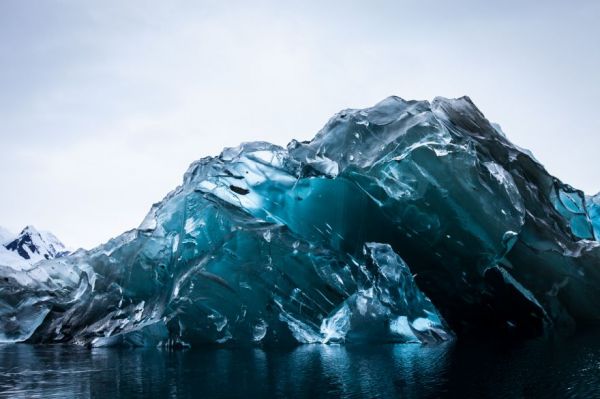
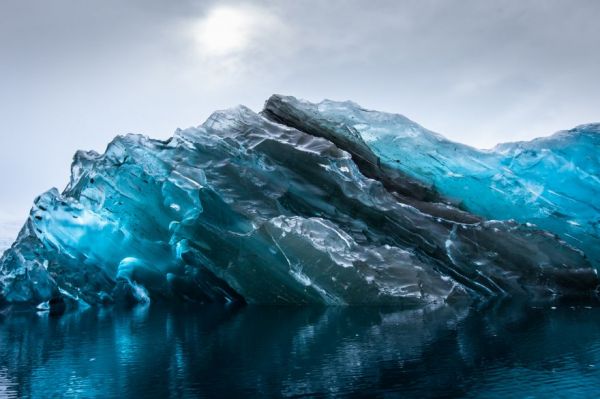
During an expedition to Antarctica, photographer Alex Cornell was lucky enough to see an iceberg flip over and was able to capture these spectacular images. Such flips are rare and often dangerous, because of the waves they make. Some iceberg flips can even cause tsunamis.
 People
use the phrase "the tip of the iceberg" to mean that the bulk of
information about a situation or item is unknown/unseen. The phrase
relates to the scientific fact that approximately 90% of icebergs are
underwater, thus the part we see is literally just the top tip. This can
be explained by the density of sea water versus that of ice. The
density of ice is .92 grams per milliliter. The density of water is
1 gram per milliliter (salt
water 1.03 g/mL). So ice has nine-tenths (ninety percent) of the
density of water, and thus, 90 percent of the iceberg is below the
surface of the water.Most icebergs appear white,
though some look blue or green. Ice contains air bubbles that diffuse
all color wavelengths the same amount, making the ice look white. When
ice is compressed, its bubbles are forced out and blue light is
disseminated more than any other colors, thus the ice appears blue.
Icebergs that appear to have stripes of green are caused by algae
growth.
People
use the phrase "the tip of the iceberg" to mean that the bulk of
information about a situation or item is unknown/unseen. The phrase
relates to the scientific fact that approximately 90% of icebergs are
underwater, thus the part we see is literally just the top tip. This can
be explained by the density of sea water versus that of ice. The
density of ice is .92 grams per milliliter. The density of water is
1 gram per milliliter (salt
water 1.03 g/mL). So ice has nine-tenths (ninety percent) of the
density of water, and thus, 90 percent of the iceberg is below the
surface of the water.Most icebergs appear white,
though some look blue or green. Ice contains air bubbles that diffuse
all color wavelengths the same amount, making the ice look white. When
ice is compressed, its bubbles are forced out and blue light is
disseminated more than any other colors, thus the ice appears blue.
Icebergs that appear to have stripes of green are caused by algae
growth.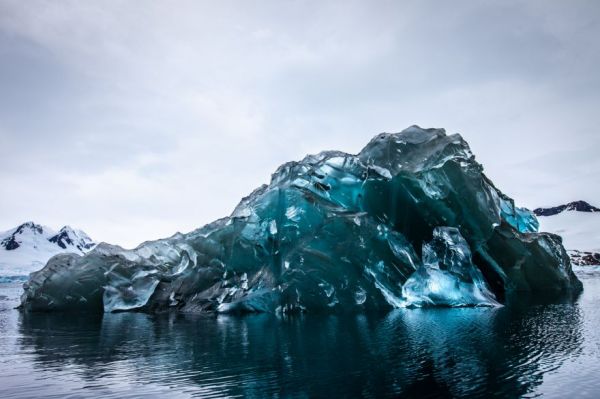
Learn more about icebergs here, and see more of Cornell's beautiful photography from Antarctica at his website.


No comments:
Post a Comment