- The coffee-drinking residents of the Pacific Northwest are putting enough caffeine into their waste water to pollute the seas with caffeine contamination. Read more

Wednesday, August 8, 2012
We're Caffeinating the Pacific


Science News
Children of U.S.-born Latinas more likely to get retina cancer
 In
a large epidemiologic study, researchers at UCLA’s Jonsson Cancer
Center found that babies of U.S.-born Latinas are at higher ...
In
a large epidemiologic study, researchers at UCLA’s Jonsson Cancer
Center found that babies of U.S.-born Latinas are at higher ...New study helps predict impact of ocean acidification on shellfish
 An
international study to understand and predict the likely impact of
ocean acidification on shellfish and other marine organisms living ...
An
international study to understand and predict the likely impact of
ocean acidification on shellfish and other marine organisms living ...With vacant lots greened, residents feel safer
 Greening
vacant lots may make neighborhood residents feel safer and may be
associated with reductions in certain gun crimes, according ...
Greening
vacant lots may make neighborhood residents feel safer and may be
associated with reductions in certain gun crimes, according ...The Brain of Hoarders

To find out how their brains are different, David Tolin of Yale University School of Medicine subjected hoarders to fMRI brain scans. He found something quite interesting: hoarders don't particularly love stuff, instead they're deathly anxious of making the wrong decision to throw things out, so they keep them all instead.
As Tolin and his co-authors noted, hoarders are not necessarily eager to keep everything they possess, but rather “the disorder is characterized by a marked avoidance of decision-making about possessions.” And the extra activity in the anterior cingulate cortex and insula while evaluating what to do with their own items “may hamper the decision-making process by leading to a greater sense of outcome uncertainty,” the researchers noted. In other words, hoarders might often feel that they are at risk of making a wrong decision—and that that decision could bring with it greater risk than it actually would. “The slower decision-making may be a central feature of impaired decision making in hoarding,” the researchers noted.Katherine Harmon of Scientific American's Observations blog has more.
Nostril Dominance
People are either right-handed or left-handed. But are people also
left-nostriled and right-nostriled? Yes, they are — as reported in an
article published in the journal Laterality (Mar 2005). From the study:
The researchers also discovered that people are pretty much useless at self-determining their own nostril dominance. (i.e. It's very hard to tell which nostril you're breathing more air through.) So they used a gadget that measured airflow into each nostril to get an accurate measure of nostril dominance.

we sought to determine which nostril has the greater
airflow most of the time. In line with the notion of a biological
preparedness for sidedness consistency, it was hypothesised that
left-handers have their left nostril as the dominant one (defined as the
nostril with the greater airflow) significantly more often than their
right nostril. For right-handers the opposite was predicted: the right
nostril would most often experience the greater airflow...
Result: The present data support these predictions: for both left-handers and right-handers the nostril that had the significantly greater airflow was ipsilateral to the preferred hand almost 60% of the time.
Result: The present data support these predictions: for both left-handers and right-handers the nostril that had the significantly greater airflow was ipsilateral to the preferred hand almost 60% of the time.
The researchers also discovered that people are pretty much useless at self-determining their own nostril dominance. (i.e. It's very hard to tell which nostril you're breathing more air through.) So they used a gadget that measured airflow into each nostril to get an accurate measure of nostril dominance.

Rare snowfall stuns Johannesburg
 People have poured out of offices, pointed mobile phone cameras to
the sky and opened their mouths to taste a rare snowfall now blanketing
South Africa's city of Johannesburg.
People have poured out of offices, pointed mobile phone cameras to
the sky and opened their mouths to taste a rare snowfall now blanketing
South Africa's city of Johannesburg.More
Venezuela's Everlasting Lightning Storm

The Catatumbo Delta in Venezuela experiences more lightning than
anywhere else on Earth; indeed, thunderstorms rage here continually,
practically every night of the year. More
Dormant Volcano Erupts Without Warning
- New Zealand's Mt Tongariro erupted yesterday (August 7) for the first time in over 100 years taking volcanologists by surprise.

A volcano killed thousands of British people in the 13th century

Not a volcano in England, of course. But a massive eruption thousands of miles away.
Scientific evidence – including radiocarbon dating of the bones and geological data from across the globe – shows for the first time that mass fatalities in the 13th century were caused by one of the largest volcanic eruptions of the past 10,000 years.The really interesting bit: Nobody is sure yet where that volcanic eruption actually happened.
Such was the size of the eruption that its sulphurous gases would have released a stratospheric aerosol veil or dry fog that blocked out sunlight, altered atmospheric circulation patterns and cooled the Earth's surface. It caused crops to wither, bringing famine, pestilence and death.
Mass deaths required capacious burial pits, as recorded in contemporary accounts. In 1258, a monk reported: "The north wind prevailed for several months… scarcely a small rare flower or shooting germ appeared, whence the hope of harvest was uncertain... Innumerable multitudes of poor people died, and their bodies were found lying all about swollen from want… Nor did those who had homes dare to harbour the sick and dying, for fear of infection… The pestilence was immense – insufferable; it attacked the poor particularly. In London alone 15,000 of the poor perished; in England and elsewhere thousands died."
Martian Mt. Sharp vs. Mt. McKinley

Officially, it's Aeolis Mons, and it stands 18,000 feet above the crater floor. Here's how that compares to Mount McKinley, America's tallest peak at 20,320 feet. The sea levels / floor levels are roughly comparable. But this is just an approximation. Do not make wagers based on this.More

Ned Kelly's Bones
 The remains of Australian outlaw and folk hero Ned Kelly
have been identified and will be returned to his family, 132 years
later. Kelly was executed by hanging in 1880, then buried in a mass
grave. Remains of many prison inmates were moved in 1929, and then
exhumed in 2009. DNA testing identified Kelly's bones, but the skull is
still missing.
The remains of Australian outlaw and folk hero Ned Kelly
have been identified and will be returned to his family, 132 years
later. Kelly was executed by hanging in 1880, then buried in a mass
grave. Remains of many prison inmates were moved in 1929, and then
exhumed in 2009. DNA testing identified Kelly's bones, but the skull is
still missing.Property developers of the site had hoped to retain possession of Kelly’s remains to display in a museum, but Australia’s Victoria state government on Wednesday issued a new license for the bones, which instead returned them to his family. “The Kelly family will now make arrangements for Ned’s final burial,” Ellen Hollow, the great-great granddaughter of the outlaw’s sister said in a statement. “We also appeal to the person who has the skull in their possession to return it… so that when the time comes for Ned to be laid to rest his remains can be complete.”More
The Pooping Duck Automaton

Vaucanson's gold-plated copper duck could not only move and quack like a duck, but it could eat like one, too. The duck swallowed kernels of grain, and as Vaucanson explained, digested the food in its chemical stomach, then poop them out through a mechanical sphincter.

(L) Vaucanson, from Illustrierte Geschichte der Medizin/Richard Toellner (M) Photograph of lost original or imitation in ruined state/Musée du Conservatoire National des Arts et Métiers, Paris
(R) Reproduction in Musée des Automates de Grenoble
After Vaucanson became a rich man, he sold all of his automata to collectors and the duck was soon lost to history ... until it was found languishing in a pawnbroker's attic more than a hundred years later. The discoverer brought the duck to a magician named Jean-Eugène Robert-Houdin (who's now considered the father of modern magic, and from whom Houdini took his name). Robert-Houdan found out that the duck was actually a clever hoax: Vaucanson had built a special chamber inside it to store a preparation of dyed green breadcrumbs that people thought was duck poop!
Hamburger Mary's Serves Up "Hate-Free" Chicken Sandwich

Hamburger Mary's is a popular bar and grill known for serving gourmet
half-pound burgers with a "side of sass." With a flare for wit, Mary's
is adding her voice to the increasing number of campaigns to counter
Chick-fil-A CEO Dan Cathy's controversial public stance against marriage
equality - by offering a southern-style chicken sandwich while ...
More
More
Scorpions and Worms are served as toppings for pizza
 Pizza - It originated from Italy and became famous over time. Now, the
world recognizes this dish and adopted it as part of their own by
adjusting some ingredients and putting different kinds of toppings but
there are just some things that are too weird for the eyes to see. But
who knows, these pizzas may be the right taste for your tongue!
Pizza - It originated from Italy and became famous over time. Now, the
world recognizes this dish and adopted it as part of their own by
adjusting some ingredients and putting different kinds of toppings but
there are just some things that are too weird for the eyes to see. But
who knows, these pizzas may be the right taste for your tongue!More
Fossil Dealer Claims Disputed Tyrannosaur
- A Florida fossil dealer who
attempted to sell a fossilized tyrannosaur skeleton at an auction before
Mongolia's president intervened has made it clear he wants it back.

The Warsaw Basilisk

The ancient legendary creature called the basilisk was feared in Europe and North Africa. It was a combination snake,rooster, bat, and sometimes other animals, that was born from an egg laid by a rooster and incubated by a toad. And it was so venomous, birds flying over it would die! Pliny the Elder wrote about it, and accounts from the Middle Ages blamed basilisks for plague outbreaks and murders. Once a rooster was caught trying to lay an egg, and was convicted and executed for his unnatural act. But the most famous incident is the Warsaw basilisk hunt of 1587, which is a the best-documented of all the basilisk hunts. It started when two children and a maid fell down dead in a cellar.
Many people thought the air felt unusually thick to breathe and suspected that a basilisk was hiding in the cellar. Confronted with this deadly threat to the city of Warsaw, the senate was called into an emergency meeting. An old man named Benedictus, a former chief physician to the king, was consulted, since he was known to possess much knowledge about various arcane subjects. The bodies were pulled out of the cellar with long poles that had iron hooks at the end, and Benedictus examined them closely. They presented a horrid appearance, being swollen like drums and with much-discoloured skin; the eyes “protruded from the sockets like the halves of hen’s eggs.” Benedictus, who had seen many things during his fifty years as a physician, at once pronounced the state of the corpses an infallible sign that they had been poisoned by a basilisk. When asked by the desperate senators how such a formidable beast could be destroyed, the knowledgeable old physician recommended that a man descend into the cellar to seize the basilisk with a rake and bring it out into the light. To protect his own life, this man had to wear a dress of leather, furnished with a covering of mirrors, facing in all directions.Read the rest of the fascinating story at Past Imperfect blog.
Benedictus did not, however, volunteer to try out this plan himself.
Elephants May Be Knocking Over Too Many Trees
- "Save an Elephant, Kill a Tree" isn't exactly a catchy conservation phrase.
Read more

The Plight of Mongolia's Reindeer Herding People


For millennia, the Dukha of Mongolia's taiga region have herded reindeer
in harmony with their environment. Now that way of life is under
threat. More
U.S. Army Funding Research To Control Living Insects To Use As Drones

Haaretz reports:
In a Technion aeronautics laboratory, a pair of scientists are conducting experiments funded by the U.S. Army that would allow them to control the flight of insects from afar, as if they were mechanical flight vehicles. [...]
Research in this field has developed considerably over the past decade thanks to advances in electronic equipment. The Technion lab is one of some five laboratories around the world conducting similar research. The University of Michigan team has been particularly successful, having managed to control the flight of insects from afar, for allotted periods of time. In the Haifa laboratory, researchers have gained control of the flight of insects that are connected to a simulator. They can give a series of commands that control the flight movements of insects for a few minutes. [...]
Do the insects suffer? “I don’t know, and I don’t know whether anyone knows for sure,” says Ribak. “But the experiments which we conduct are extremely non-invasive. In comparison to experiments conducted on animals, this is child’s play,” he says. “The Helsinki agreements for experimentation on animals do not apply to insects. Insects are not regarded as important,” says Weihs. “After the electrodes are implanted, we don’t think there can be any pain, since the electric signal is a natural sign produced by the insect itself. We just tell the insect when it should make a movement, using these signals.”

Tuesday, August 7, 2012
The Daily Drift

Ma Nature ... the artist at work.
Some of our readers today have been in:
Durban, South Africa
Kuala Lumpur, Malaysia
Tirana, Albania
Bandar Labuan, Malaysia
Khulna, Bangladesh
Klang, Malaysia
Johannesburg, South Africa
Kota Kinabalu, Malaysia
Muscat, Oman
Kuantan, Malaysia
Islamabad, Pakistan
Bandar Seri Begawan, Brunei
Kuala Terengganu, Malaysia
Cape Town, South Africa
Saipan, Northern Mariana Islands
Belgrade, Serbia
Moscow, Russia
Riyadh, Saudi Arabia
Dhaka, Bangladesh
Santiago, Chile
Cairo, Egypt
Bangkok, Thailand
Today in History
| 1782 | General George Washington authorizes the award of the Purple Heart for soldiers wounded in combat. | |
| 1864 | Union troops capture part of Confederate General Jubal Early's army at Moorefield, West Virginia. | |
| 1888 | Theophilus Van Kannel of Philadelphia receives a patent for the revolving door. | |
| 1906 | In North Carolina, a mob defies a court order and lynches three African Americans which becomes known as "The Lyerly Murders." | |
| 1916 | Persia forms an alliance with Britain and Russia. | |
| 1922 | The Irish Republican Army cuts the cable link between the United States and Europe at Waterville landing station. | |
| 1934 | In Washington, the U.S. Court of Appeals rules that the govenment can neither confiscate nor ban James Joyce's novel Ulysses. | |
| 1936 | The United States declares non-intervention in the Spanish Civil War. | |
| 1942 | The U.S. 1st Marine Division under General A. A. Vandegrift lands on the islands of Guadalcanal and Tulagi in the Solomon islands. This is the first American amphibious landing of the war. | |
| 1944 | German forces launch a major counter attack against U.S. forces near Mortain, France. | |
| 1964 | Congress overwhelmingly passes the Gulf of Tonkin Resolution, allowing the president to use unlimited military force to prevent attacks on U.S. forces. | |
| 1966 | The United States loses seven planes over North Vietnam, the most in the war up to this point. | |
| 1973 | A U.S. plane accidentally bombs a Cambodian village, killing 400 civilians. |
Temple killer was white supremacist
From the "Why are we not surprised" Department:
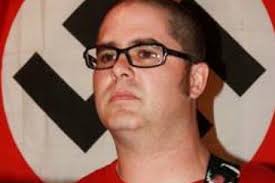
Wade Michael Page, who killed six people inside a Sikh temple Sunday, was a "frustrated neo-Nazi who led a racist white supremacist band," reports the AP.
Page told a white supremacist website in an interview in 2010 that he had been part of the white-power music scene since 2000 when he left his native Colorado and the started the band, End Apathy, in 2005, the nonprofit civil rights organization said. He told the website his "inspiration was based on frustration that we have the potential to accomplish so much more as individuals and a society in whole," according to the SPLC. He did not mention violence in the website interview.
The long history of scapegoating the Sikhs
From Sunny Hundal, one of the top British bloggers, writing in the Guardian:
A little-known fact: the first victim of retaliatory violence following the 9/11 attacks was a Sikh man. On 15 September 2001, 52-year-old Balbir Singh Sodhi, a gas-station owner in Arizona, was shot five times by Frank Roque. While Sodhi died instantly, Roque went on to shoot at other ethnic minorities before going to a local bar and boasting: "They're investigating the murder of a turban-head down the street."
Yesterday, a gunman opened fire on a Sikh congregation in Wisconsin, killing six people in what is now being treated as an act of "domestic terrorism". Some witnesses say the shooter had a tattoo marking the September 11 attacks, though this is not confirmed by the authorities.
While the "war on terror" that followed September 2001 badly affected Muslim families in the west, it is sadly less well-known that Sikhs have also faced significant harassment as a consequence. The Sikh Coalition of Washington said yesterday that Sikhs in the US have faced more than 700 such incidents since 9/11; authorities still do not officially collect data on religious hate crimes against them.
More closer to home, my own brother – an observant Sikh with a turban and beard – faced frequent low-level harassment with people shouting "Taliban" at him or worse.
Let's discuss the [INSERT SHOOTING TRAGEDY HERE] tragedy
It's time to have a somber national discussion about the [insert shooting tragedy here] tragedy.
Before we get started, let's go over a few basic ground rules.
1. In the wake of the __________ tragedy it's time for us all to come together as a nation and not assign blame. This is not the time, for example, to talk about how it's easier to purchase a gun in America than it is to vote (or buy French cheese).
2. And we won't tolerate any second guessing of the Second Amendment right to carry assault weapons, or questions about how the Framers could have possibly envisaged an assault rifle over 200 years ago, or why a "hunter" needs six thousand rounds of ammunition, or kevlar, or smoke grenades to kill a pheasant.
3. While the shooter may have been inspired by political fliers showing the victim in cross hairs, or may have come unhinged by inflammatory rhetoric about how said victim was coming for the shooter's guns, discussing such motivation at this sensitive moment would be completely inappropriate. Not to mention, disrespectful to the __________ victims.
4. If the tragedy involved someone flying an aircraft into a government building, or for that matter blowing up a government building, now is not the time to discuss people like Lush Dimbulb or Sean Handjob, or repugicans generally, incessantly trying to convince their audience that the occupant of the White House, or any government official, agency, or entire branch of government is evil and/or "un-American" and/or out to get them or our country or our freedom.
5. And definitely don't mention the repugican party's frequent claim and/or insinuation, including suggestions from the repugican candidate himself, Mitt Romney, that the sitting Democratic President is a socialist, which in American parlance actually means "communist," which actually means "Soviet," which was America's deadliest enemy out for our utter destruction. Sure, it would be entirely understandable why someone would take up arms against a Soviet takeover of the United States, but a Democrat said something mean once about a repugican's dog, or something, so aren't both parties really to blame, thus making the charge moot?
6. Never, ever mention the NRA. Sure, they've proven themselves, time and again, incapable of passing laws that effectively keep guns out of the hands of crazy mass murderers, but that's no reason to blame them for the _______ tragedy because it's just too early to cast blame on anyone other than the shooter, who was obviously crazy, and thus this month's anomaly.
Now, let's discuss for a moment the race of the shooter and the victims.
7. If the ______________ tragedy involved angry white men opening fire on brown people of faith, this is definitely not the time to replay clips of bombastic commentators and politicians getting white men in places like Kansas whipped into a frenzy over Manhattan's zoning criteria for non-christian houses of worship.
8. But feel free to discuss if all brown people, and thus the shooter, or his victims, were muslims - sorry, I meant to say "radical islamists." And even if neither was a muslim, make sure you discuss that point incessantly - muslims, muslims, muslims, muslims - so as to eventually sow suspicion in the public's mind as to whether there really is a muslim angle to this story.
9. Speaking of which, this is not the time to discuss the more general fear mongering around words like "muslim," including the ongoing, successful, attempt by repugicans to convince their base that our dark-skinned President is one.
Okay, I think we're ready now to discuss the ______________ tragedy.
First off, it is entirely acceptable for a repugican to opine that the tragedy could have been averted had the victims all been armed (please disregard previous tragedies where armed police officers themselves were injured by the shooter).
Second, poignant, but ultimately meaningless, gestures such as lighting tragedy candles at nighttime vigils, and posting anti-gun petitions on Change.org, are to be encouraged.
Finally, clutch your pearls, and all together now, ask the purely rhetorical question: "How could this happen?"
Forty-eight hours later return to talking about the Olympics and the latest Kardashian wedding until the next shooting occurs, then refer to point 1 above.
PS If the victims of the ___________tragedy were black, ignore the above restrictions and take up a collection for the shooter's defense fund.
Before we get started, let's go over a few basic ground rules.
1. In the wake of the __________ tragedy it's time for us all to come together as a nation and not assign blame. This is not the time, for example, to talk about how it's easier to purchase a gun in America than it is to vote (or buy French cheese).
2. And we won't tolerate any second guessing of the Second Amendment right to carry assault weapons, or questions about how the Framers could have possibly envisaged an assault rifle over 200 years ago, or why a "hunter" needs six thousand rounds of ammunition, or kevlar, or smoke grenades to kill a pheasant.
3. While the shooter may have been inspired by political fliers showing the victim in cross hairs, or may have come unhinged by inflammatory rhetoric about how said victim was coming for the shooter's guns, discussing such motivation at this sensitive moment would be completely inappropriate. Not to mention, disrespectful to the __________ victims.
4. If the tragedy involved someone flying an aircraft into a government building, or for that matter blowing up a government building, now is not the time to discuss people like Lush Dimbulb or Sean Handjob, or repugicans generally, incessantly trying to convince their audience that the occupant of the White House, or any government official, agency, or entire branch of government is evil and/or "un-American" and/or out to get them or our country or our freedom.
5. And definitely don't mention the repugican party's frequent claim and/or insinuation, including suggestions from the repugican candidate himself, Mitt Romney, that the sitting Democratic President is a socialist, which in American parlance actually means "communist," which actually means "Soviet," which was America's deadliest enemy out for our utter destruction. Sure, it would be entirely understandable why someone would take up arms against a Soviet takeover of the United States, but a Democrat said something mean once about a repugican's dog, or something, so aren't both parties really to blame, thus making the charge moot?
6. Never, ever mention the NRA. Sure, they've proven themselves, time and again, incapable of passing laws that effectively keep guns out of the hands of crazy mass murderers, but that's no reason to blame them for the _______ tragedy because it's just too early to cast blame on anyone other than the shooter, who was obviously crazy, and thus this month's anomaly.
Now, let's discuss for a moment the race of the shooter and the victims.
7. If the ______________ tragedy involved angry white men opening fire on brown people of faith, this is definitely not the time to replay clips of bombastic commentators and politicians getting white men in places like Kansas whipped into a frenzy over Manhattan's zoning criteria for non-christian houses of worship.
8. But feel free to discuss if all brown people, and thus the shooter, or his victims, were muslims - sorry, I meant to say "radical islamists." And even if neither was a muslim, make sure you discuss that point incessantly - muslims, muslims, muslims, muslims - so as to eventually sow suspicion in the public's mind as to whether there really is a muslim angle to this story.
9. Speaking of which, this is not the time to discuss the more general fear mongering around words like "muslim," including the ongoing, successful, attempt by repugicans to convince their base that our dark-skinned President is one.
Okay, I think we're ready now to discuss the ______________ tragedy.
First off, it is entirely acceptable for a repugican to opine that the tragedy could have been averted had the victims all been armed (please disregard previous tragedies where armed police officers themselves were injured by the shooter).
Second, poignant, but ultimately meaningless, gestures such as lighting tragedy candles at nighttime vigils, and posting anti-gun petitions on Change.org, are to be encouraged.
Finally, clutch your pearls, and all together now, ask the purely rhetorical question: "How could this happen?"
Forty-eight hours later return to talking about the Olympics and the latest Kardashian wedding until the next shooting occurs, then refer to point 1 above.
PS If the victims of the ___________tragedy were black, ignore the above restrictions and take up a collection for the shooter's defense fund.
Sandra Day O’Connor: Declining approval for high court a ‘disappointment’
Perhaps
it has something to do with her own political party putting the
demonization of government at the top of their list for decades.
To O'Connor's credit, she's called out the repugicans before for their anti-court hate rhetoric. The problem is, we have a party that wants to arm the populace just in case government becomes evil, and then the party turns around and tells the armed populace that government has in fact become evil.
And then we're surprised when their minions respond accordingly.
Former Supreme Court Justice Sandra Day O’Connor called the declining public approval of the high court a “great disappointment” and suggested the ruling in Bush v. Gore may have sparked the public’s loss of faith in the judicial branch.The repugican party sees profit in destroying any and all trust in government, and they've been doing so for decades. Especially at it concerns the courts, it's the repugicans who have been admonished for making repeated threats against judges.
In the past, when the public is asked about the three branches of government, the court has generally had, the juridical branch has had the highest respect among the three, and now it's about the same for all, and it's all down,” said ,” O’Connor, In an interview aired Sunday on CBS’s “Face the Nation. “So that's a great disappointment to me to see.”
To O'Connor's credit, she's called out the repugicans before for their anti-court hate rhetoric. The problem is, we have a party that wants to arm the populace just in case government becomes evil, and then the party turns around and tells the armed populace that government has in fact become evil.
And then we're surprised when their minions respond accordingly.

Romney trust continued investments in abortion, stem cells, China, Iran
Romney claims that he told the person running his blind trust to administer it in a way consistent with his public positions on issues.
That was the first mistake. Romney has taken every side of most hot-button issues, so which way should the trust go?
Second, it should have been clear that Romney meant consistent with his new-found conservative values. In that case, it shouldn't take a rock scientist to figure out that the "morning after pill," which conservatives consider a no-no, is off-limits. But Romney invested. Or stem cell research (again he invested). Or in Chinese companies (they even had the word "China" in their names!). Or companies that do business with Iran.
No wonder Romney won't release his tax returns. There's good reason to fear what's in them, in addition to what's NOT in them (such as payments for ten years of taxes he reportedly didn't pay).
That was the first mistake. Romney has taken every side of most hot-button issues, so which way should the trust go?
Second, it should have been clear that Romney meant consistent with his new-found conservative values. In that case, it shouldn't take a rock scientist to figure out that the "morning after pill," which conservatives consider a no-no, is off-limits. But Romney invested. Or stem cell research (again he invested). Or in Chinese companies (they even had the word "China" in their names!). Or companies that do business with Iran.
No wonder Romney won't release his tax returns. There's good reason to fear what's in them, in addition to what's NOT in them (such as payments for ten years of taxes he reportedly didn't pay).
***
Also, can you hear the drip, drip, drip of Romney's tax rumors
Pelosi: "It's a fact" someone told Reid that Romney didn't pay taxes for ten years
Why won't Romney just release his tax returns, like every other presidential candidate, including his own father, and be done with it?
Romney clearly has something to hide, and it's increasingly looking like that something is "nothing" - meaning, it's true that he didn't pay taxes for ten years.
House Minority Leader Nancy Pelosi (D-Calif.) fired back at Republicans accusing Senate Majority Leader Harry Reid (D-Nev.) of lying about a Bain Capital investor telling him that Mitt Romney hadn't paid taxes in 10 years. They don’t know what they're talking about, Pelosi says.He's treating this as though we're asking for an anal probe. Or someone is asking him to disprove that he's a communist (which his own staff suggested). In fact, we're asking Romney to do what every other presidential candidate has done before him, release a slew of tax returns.
"Harry Reid made a statement that is true. Somebody told him. It is a fact," Pelosi told The Huffington Post in a Sunday interview. "Whether he did or not can easily be disposed of: Mitt Romney can release his tax returns and show whether he paid taxes."
Romney clearly has something to hide, and it's increasingly looking like that something is "nothing" - meaning, it's true that he didn't pay taxes for ten years.
Romney lying again, this time it's about Israel
And the press is calling him out for it. But when will they
start asking Romney about it personally? Asking him, to his face, why
he keeps lying to the American people in his ads?
From National Journal:
From National Journal:
While it's hard to remember who did what first, Romney took an early step down the low road when he quoted President Obama in a television ad late last year: "If we keep talking about the economy we're going to lose.'' Only the quote was from 2008, before Obama was elected, and he was referring to remarks by Republican John McCain. More recently, the Obama campaign has unfairly characterized Romney's position on abortion in television ads.
But Romney's most recent ad is particularly galling because it seeks to suggest the president is anti-Israel or anti-Jewish.
Romney's campaign clearly knows these facts but can't be bothered with a more nuanced and honest criticism of the administration's failure to broker peace in the Middle East. That's a shame.Now it's time to ask him to his face why he keeps lying in his ads.
Typical Romney Voter

This asshole doesn't even recognize Romney but you can bet you sweet bippy he's voting for him.
Customer punched female shop assistant in face for calling him 'honey'
Police in Newington, Connecticut arrested a man they said became angry
when a store clerk called him 'honey' and then punched her in the face.
Police were called to a 7-11 after someone called 911 reporting the
assault.
The unidentified clerk told police that the customer, who was identified as David Wright, 52, of Burgundy Hill Lane in Middletown, questioned the cost of items and when she told him the price she called him, "honey."

The customer told the clerk that if she called him "honey" again, he would punch her in the face. The clerk then questioned Wright's intentions and that's when she said he reached over the counter and punched her in the face. Another customer in the store grabbed Wright and threw him out.
The clerk was able to get a description and partial license plate number on the vehicle. With the assistance of the Middletown Police Department, a Newington police officer was able to locate and arrest Wright. He was charged with breach of peace and assault. He was released on $5,000 bond and is expected to appear in New Britain Court on Aug. 13.
The unidentified clerk told police that the customer, who was identified as David Wright, 52, of Burgundy Hill Lane in Middletown, questioned the cost of items and when she told him the price she called him, "honey."
The customer told the clerk that if she called him "honey" again, he would punch her in the face. The clerk then questioned Wright's intentions and that's when she said he reached over the counter and punched her in the face. Another customer in the store grabbed Wright and threw him out.
The clerk was able to get a description and partial license plate number on the vehicle. With the assistance of the Middletown Police Department, a Newington police officer was able to locate and arrest Wright. He was charged with breach of peace and assault. He was released on $5,000 bond and is expected to appear in New Britain Court on Aug. 13.

With diplomacy dead, US banks on Syrian rebel win
 With Syrian diplomacy all but dead, the Obama administration is
shifting its focus on the civil war away from political transition and
toward helping the rebels defeat the Syrian regime on the battlefield.
With Syrian diplomacy all but dead, the Obama administration is
shifting its focus on the civil war away from political transition and
toward helping the rebels defeat the Syrian regime on the battlefield.More
Last Polish soldier of WWII opening battle dies
Ignacy Skowron, the last known survivor of World War II's Battle of Westerplatte, has died.
A Marine’s Return to Ballet

Roman Baca became a ballet dancer after high school. Since male dancers are in the minority, he found plenty of work, but not the full-time position he hoped for. So Baca joined the Marines and was sent to patrol Fallujah, Iraq, in 2005. When he returned, he couldn't find satisfaction in a desk job.
My then-girlfriend, now my wife, sat me down and challenged me to make a change: “If you could do anything, what would you do?”Over time, Baca developed a program to combine dance with veteran's services.
I wanted to be part of a dance company.
So I choreographed a duet for two women in the neo-classical style, and sent it to competitions for feedback. It was rejected, but I wasn’t surprised. I felt like I was forcing creativity instead of creating something that I cared about. So I turned the duet into a four-movement work called Habibi Hhaloua (Arabic for my beautiful, you have my eyes) about a Marine on patrol, and sent it out.
We started performing in festivals and showcases in and around New York City and within a few months we had a name and a mission, Exit12 Dance Company, an organization to advocate and educate through performance on behalf of a new generation of veterans.He now holds workshops for veterans and schoolchildren in both the U.S. and Iraq. Read more about Baca and his mission at The Daily Beast . There's a dance video included.
When Your 'Dream Job' Isn't Your Dream Job Anymore
by Megan Broussard

The Honeymoon Phase
Remember when you started dating your first love-the googly eyes, gushy talk, pet names, and long days spent together? Not only could you two not keep your hands off of each other, but that person could do no wrong. His quirks were cute, his pet peeves funny, and when he slurped his tea, well, that was just adorable. (Never mind that you used to practically punch your little brother when he'd slurp his soup at dinner.) The same goes for that job you've worked your entire life to land. You're "living the dream," as you told your proud parents and envious friends upon receiving the offer letter. When you walk through those fancy doors to your fairytale job every day with Katy Perry's "Firework" blasting in your head, all you can think is: "The perks! The title! The bragging rights!" Who cares that you're working 90 hours a week and your boss is a borderline psychopath? You've "made it," and the two of you will live happily ever after.The Rough Patch
As weeks turn into months and months start to feel like years (and not in a time-flies-when-you're-having-fun kind of way), the quirks you used to find endearing about the job-as much as you hate to admit it-start to seem unbearable. You find yourself working slower than normal, and you feel unmotivated. While you used to be excited to talk about your work with friends and family, you now try to dodge their questions. Maybe you've found that you actually get to spend very little time doing your favorite part of the job. Or, maybe you're starting to get sick of what you used to love-because doing it 10+ hours each day, including weekends, is more than you bargained for. For me, it was realizing that I was spending most of my effort each day trying to take on the persona I needed for the position I wanted-a persona that just didn't come naturally to me. It was exhausting, and no matter how hard I tried to force it to be a fit, it just wasn't.The Mourning Period
Just like acknowledging that a relationship is over, admitting the truth about your job is a painful step. My admission came when I got off of work late, yet again, raced to the nearest pub to meet my girlfriends, and burst into tears when they asked how my day was. (Of course, while sobbing, I swore up and down, "I'm really happy though, guys!" until they held a compact mirror in my face and asked, "Oh, really? Is that what happiness looks like?" Touché.) I struggled to get past the feeling that I was giving up the perfect opportunity-the opportunity I'd been wanting for so long, one that "most people would kill for." Don't fall into this trap. It's kind of like your first Friday night alone after you break up with someone, when you instantly think you've made a mistake, confusing the feeling of convenience with passion. Remember that there's nothing wrong with the job or you. (Well, unless you're working for a psychopathic boss or putting in 90-hour weeks. Then there definitely is something wrong with the job.) It's OK to realize you're a better fit someplace else. That said, you're definitely allowed to shed the tears of disappointment that things didn't work out the way you wanted them to.The Breakup
This is the part where dating and working differ: In most cases, you can't just have "the talk" with your boss and move on. You need to come up with a game plan. Start looking for a job that'll be a better fit. It's out there, I promise. In the process, it's important to dig deep and think about what didn't work for you in this job, and what you want in the next. What really interests you and motivates you, and what type of office culture and environment complement both? For instance, just because you're interested in communication, thrive under deadlines, and love creativity, doesn't mean the 'round-the-clock, high-energy agency life is right for you. All factors must be considered and aligned in order for you to be happy. Once you've lined up a new job offer, you can bring back a line from your personal life to break the news to your boss: "It's not you; it's me." (You should translate this into corporate-speak, of course-something to the effect of, "I've learned so much here, and I've been offered a position with a managerial focus where I can build upon those skills.") Then, prepare to part ways.Finding the Perfect Match
As we little princesses were told in bedtime stories aplenty, you'll kiss a lot of toads before you find your prince. I think that stands true in our present-day quest to be career queens, too. Like dating, you usually figure out exactly what you want by process of elimination. It's not always easy to identify what will satisfy you without first pinpointing the qualities you know will be incompatible with yours. So, look at your dream-job-turned-not-dream-job the same way you would a person you're not meant to end up with. Now that you know what you don't want, the end of that relationship is one step closer to meeting the love of your life. My advice to you as you move on is to carry something old and something new with you: the old memories of why you left the last job, and new criteria for the next job that is perfect for you.Man refused bank card for looking too much like Pavarotti
A Pavarotti lookalike was refused a personalized card by his bank after
staff mistook him for the real singer. Colin Miller has worked as a
double for the opera singer for more than 20 years, but believes his
bank penalized him for his looks after refusing to issue him with a card
which carried his photograph. The 66-year-old, of Burton-upon-Trent,
Staffordshire, said: "I spoke to the staff at my bank who said they
didn't know why I was refused and could only assume it is because of who
I look like.

"But I can't help who I look like. I don't try to look like Pavarotti, I have had no cosmetic surgery and I don't try to do things to myself to look like him. I am being penalized for looking how I do. In the past I banked with Abbey National and had a personalized card with my photo on, as it provides extra security. They later stopped doing the cards and I just stayed with Barclays, who I have been with for 20 years."
After Barclays recently started offering personalized cards, Mr Miller and his wife, of Gough Side, Burton, both applied. He said: "I uploaded a picture of me on to the website. It is the picture I use on my business cards because I look like this naturally, and then I cropped it to the neck." Mr Miller said his wife received her photographic card, but he was sent a plain one. He later received an e-mail saying the bank was unable to process his card.

Mr Miller said: "They say it is because of copyright, but I have never been contacted by people representing the real Pavarotti about it." Barclays called the error an "understandable mistake" after staff believed his photograph was that of the late opera singer. Nicola Fowkes, Barclays branch manager for Burton, said: "We are now in the process of contacting Mr Miller so that he can resubmit his application with the original image, so that Mr Miller will have his Barclays personalized debit card, complete with his chosen image."
Photo from SWNS.
"But I can't help who I look like. I don't try to look like Pavarotti, I have had no cosmetic surgery and I don't try to do things to myself to look like him. I am being penalized for looking how I do. In the past I banked with Abbey National and had a personalized card with my photo on, as it provides extra security. They later stopped doing the cards and I just stayed with Barclays, who I have been with for 20 years."
After Barclays recently started offering personalized cards, Mr Miller and his wife, of Gough Side, Burton, both applied. He said: "I uploaded a picture of me on to the website. It is the picture I use on my business cards because I look like this naturally, and then I cropped it to the neck." Mr Miller said his wife received her photographic card, but he was sent a plain one. He later received an e-mail saying the bank was unable to process his card.
Photo from SWNS.
Mr Miller said: "They say it is because of copyright, but I have never been contacted by people representing the real Pavarotti about it." Barclays called the error an "understandable mistake" after staff believed his photograph was that of the late opera singer. Nicola Fowkes, Barclays branch manager for Burton, said: "We are now in the process of contacting Mr Miller so that he can resubmit his application with the original image, so that Mr Miller will have his Barclays personalized debit card, complete with his chosen image."
Ten Movies You Didn't Realize Were Based On Books

The Nutmeg Wars
 In
the 17th century, all Europe was mad to have the little brown nut from
Indonesia- nutmeg. Especially the Dutch, who monopolized its cultivation
and, in doing so, built their tiny nation into one of the wealthiest
trading powers on the planet.
In
the 17th century, all Europe was mad to have the little brown nut from
Indonesia- nutmeg. Especially the Dutch, who monopolized its cultivation
and, in doing so, built their tiny nation into one of the wealthiest
trading powers on the planet.
BACKGROUND
Spices have been used by human beings for millennia for food preparation and preservation, medicine, and even embalming. But until modern times they were largely an Asian commodity, and controlling their flow to the spice-obsessed West meant power and fortune for the middleman. Over the centuries, these hugely successful merchants were the Phoenicians, Persians, Arabs, and later, Venetians.
Many of the great European explorations of the 15th century were driven by the need to bypass the Arab and Venetian monopoly. Crying, "For Christ and spices," the Portuguese explorer Vasco da Gama shocked the Arab world when he sailed around Africa's Cape of Good Hope in 1498 and showed up in the spice markets of India. It marked the beginning of the decline of Arab dominance and the rise of European power. For the next 100 years, as Spain and Portugal fought for control of the spice trade, the tiny countries of England and the Netherlands looked on in envy, waiting for their chance to get a piece of the action. It came first for the Dutch.
THE DUTCH EAST INDIA COMPANY
Always in danger of being overwhelmed by their much larger neighbor, Spain, the Portuguese began subcontracting their spice distribution to Dutch traders. Profits began to flow into Amsterdam, and the Dutch commercial fleet swiftly grew into one of the largest in the world. The Dutch quietly gained control of most of the shipping and trading of spices in Northern Europe. Then in 1580, Portugal fell under Spanish rule and the sweet deal for Dutch traders was over. As prices for pepper, nutmeg, and other spices soared across Europe, the Dutch found themselves locked out of the market. They decided to fight back.
 In 1602 Dutch merchants founded the VOC -the Vereenigde Oostindische Compagnie,
better known as the Dutch East India Company. Other trading nations had
formed cooperative associations like it but none were more successful
than the Dutch. By 1617 the VOC was the richest commercial operation in
the world. The company had 50,000 employees worldwide, with a private
army of 30,000 men and a fleet of 200 ships. Yet even with that huge
overhead, the VOC gave its shareholders an eye-popping annual dividend
of 40% of their investments. How'd they do it? With sheer
ruthlessness... and nutmeg.
In 1602 Dutch merchants founded the VOC -the Vereenigde Oostindische Compagnie,
better known as the Dutch East India Company. Other trading nations had
formed cooperative associations like it but none were more successful
than the Dutch. By 1617 the VOC was the richest commercial operation in
the world. The company had 50,000 employees worldwide, with a private
army of 30,000 men and a fleet of 200 ships. Yet even with that huge
overhead, the VOC gave its shareholders an eye-popping annual dividend
of 40% of their investments. How'd they do it? With sheer
ruthlessness... and nutmeg.
MUST-HAVE
By the time the VOC was formed, nutmeg was already the favored spice in Europe. Aside from adding flavor to food and drinks, its aromatic qualities worked wonders to disguise the stench of decay in poorly preserved meats, always a problem in the days before refrigeration.
Then the plague years of the 17th century came. Thousands were dying across Europe, and doctors were desperate for a way to stop the spread of the disease. They decided nutmeg held the cure. Ladies carried nutmeg sachets around their necks to breathe through and avoid the pestilence of the air. Men added nutmeg to their snuff and inhaled it. Everybody wanted it, and many will willing to spare no expense to have it. Ten pounds of nutmeg cost one English penny at its Asian source, but had a London street value of 2 pounds, 10 shillings -68,000 times its original cost. The only problem was the short supply. And that's where the Dutch found their opportunity.
BRUTAL RULERS
Why was nutmeg so rare? The tree grew in only one place in the world: the Banda Islands of Indonesia. A tiny archipelago rising only a few meters above sea level, the islands were ruled by sultans who insisted on maintaining a neutral trading policy with foreign powers. This allowed them to avoid the presence of Portuguese or Spanish garrisons on their soil, but it also left them unprotected from other invaders.

In 1621 the Dutch swept in and took over. Once securely in control of the Bandas, the Dutch went to work protecting their new "investment." First they preempted any resistance by the islanders by executing every male over the age of 15. Village leaders were beheaded and their heads displayed on poles to discourage any rebels who might have survived. Within 15 years, the brutal regime reduced the Bandanese population from 15,000 to 600. Next the Dutch concentrated all nutmeg production into a few easily guarded areas, uprooting a destroying any trees outside the plantation zones. Anyone caught growing a nutmeg seedling or carrying seeds without the proper authority was put to death. In addition, all exported nutmeg seeds were drenched with lime to make sure there was no chance a fertile nut would find its way off the islands.
I'LL TAKE MANHATTAN
The Dutch had their monopoly ...almost. One of the Banda Islands, called Run, was under control of the British. The little sliver of land (a fishing boat could only make landfall at high tide) was one of England's first colonial outposts, dating to 1603. The Dutch attacked it in force in 1616, but it would take four years for them to finally defeat the combined British-Bandanese resistance.

But the English still didn't give up; they continued to press their claim to the island through two Anglo-Dutch wars. The battles exhausted both sides, leading to a compromise settlement, the Treaty of Breda, in 1667 -and one of history's greatest ironies. Intent on securing their hold over every nutmeg island in Southeast Asia, the Dutch offered a trade: if the British would give them Run, they would in turn give Britain a far-away, much less valuable island that the British had already occupied illegally since 1664. The British agreed. That other island: Manhattan, which is how New Amsterdam became New York.
MONOPOLY OVER
The Dutch now had complete control over the nutmeg trade. A happy ending for Holland? Hardly. By the end of the 17th century, the Dutch East India Company was bankrupt. Constant wars with rival powers, rebellion from the islanders, and just plain bad luck -some might say bad karma- eventually broke the back of the Dutch spice cartel.
 Strike 1:
In 1770 a Frenchman named Pierre Poivre ("Peter Pepper") successfully
smuggled nutmeg plants to safety in Mauritius, an island off the coast
of Africa, where they were subsequently exported to the Caribbean. The
plants thrived on the islands, especially Grenada.
Strike 1:
In 1770 a Frenchman named Pierre Poivre ("Peter Pepper") successfully
smuggled nutmeg plants to safety in Mauritius, an island off the coast
of Africa, where they were subsequently exported to the Caribbean. The
plants thrived on the islands, especially Grenada.Strike 2: In 1778 a volcanic eruption in the Banda region caused a tsunami that wiped out half the nutmeg groves.
Strike 3:In 1809 the English returned to Indonesia and seized the Banda Islands by force. They returned the islands to the Dutch in 1817, but not before transplanting hundreds of nutmeg seedlings to plantations in India, Ceylon (now Sri Lanka), and Singapore. The Dutch were out; the nutmeg monopoly was over. While they would go on to have success trading steeland coal (not to mention tulips), the Netherlands declined as a colonial power, and they never again dominated European commerce.
Did you know ...
About from mouth to fat, the psychology of obesity
That beer goggles also work on yourself, says science
That beer goggles also work on yourself, says science
An unfortunate juxtaposition

NBC has become the centre of a race storm after airing an ad featuring a monkey performing gymnastics, right after showing the performance of Gabby Douglas, the first African-American to win Olympic gold. The network has since apologised for the advert's poor timing, explaining: 'No offense was intended.'
The controversy ignited as sportscaster Bob Costas wrapped his analysis of her incredible routine during the all-around competition last night. Costas said: 'There are some African American girls out there who tonight are saying to themselves: "Hey, I’d like to try that too." More from London in a moment.'
The broadcast then went to a commercial break, showing an advertisement featuring a monkey wearing a gymnastics uniform and performing a rings gymnastics event.
Ten Insanely, Incredibly Close Olympic Finishes

But sometimes even the very finest in timing technology is not enough. Dead heats are rare, but not unheard of, as we saw during the 1984 Summer Games when Nancy Hogshead and Carrie Steinseifer registered the same time in the 100-meter freestyle. Both won gold, the first double-gold in swimming history. Close finishes are what give the Games their excitement.
Subscribe to:
Posts (Atom)
