Welcome to ...

The place where the world comes together in honesty and mirth.
Windmills Tilted, Scared Cows Butchered, Lies Skewered on the Lance of Reality ... or something to that effect.


Saturday, January 5, 2013

The repugican cabal is as divided and angry as ever

In this Jan. 3, 2013, photo, House Speaker John Boehner of Ohio, leaves after a three hour photo session with members of the new 113th Congress that convened earlier in the day. The Republican Party seems as divided and angry as ever. Infighting has penetrated the highest levels of the House GOP leadership. Long-standing geographic tensions have increased, pitting endangered Northeastern Republicans against their colleagues from other parts of the country. Enraged tea party leaders are threatening to knock off dozens of Republicans who supported a measure that raised taxes on the nation's highest earners. (AP Photo/J. Scott Applewhite)
The repugican cabal is as divided and angry as ever.
Infighting has penetrated the highest levels of the House repugican leadership. Long-standing geographic tensions have increased, pitting endangered Northeastern repugicans against their colleagues from other parts of the country. Enraged tea party leaders are threatening to knock off dozens of repugicans who supported a measure that raised taxes on the nation's highest earners.
"People are mad as hell. I'm right there with them," Amy Kremer, chairman of the tea party express, said late last week, declaring that she has "no confidence" in the party her members typically support. Her remarks came after repugican lawmakers agreed to higher taxes but no broad spending cuts as part of a deal to avert the "fiscal cliff."
"Anybody that voted 'yes' in the House should be concerned" about primary challenges in 2014, she said.
At the same time, one of the repugican cabal's most popular voices, New Jersey Gov. Chris Christie, blasted his cabal's "toxic internal politics" after House repugicans initially declined to approve disaster relief for victims of Superstorm Sandy. He said it was "disgusting to watch" their actions and he faulted the repugican cabal's most powerful elected official, House Speaker John Boehner, r-Ohio.
The repugican cabal's internal struggles to figure out what it wants to be were painfully exposed after Mitt Romney's loss to President Barack Obama on Nov. 6, but they have exploded in recent days. The fallout could extend well beyond the party's ability to win policy battles on Capitol Hill. It could hamper repugicans as they examine how to regroup and attract new voters after a disheartening election season.
To a greater degree than the Democrats, the repugican cabal has struggled with internal divisions for the past few years. But these latest clashes have seemed especially public and vicious.
"It's disappointing to see infighting in the cabal," said Ryan Williams, a repugican agitator and former Romney aide. "It doesn't make us look like we're in a position to challenge the president and hold him accountable to the promises he made."
What's largely causing the dissension? A lack of a clear repugican leader with a single vision for the party.
The repugicans haven't had a consistent standard-bearer since the shrub slunk out of office in 2008 with the nation on the edge of a financial collapse. His ouster, along with widespread economic concerns, gave rise to a tea party movement that infused the repugican cabal's lunatic wingnut base with energy. The tea party is credited with broad repugican gains in the 2010 congressional elections, but it's also blamed for the rising tension between the pragmatic and ideological wings of the cabal — discord that festers still.
It was much the same for Democrats in the late 1980s before Bill Clinton emerged to win the White House and shift his party to the political center.
2012 presidential nominee Romney never fully captured the hearts of his party's most passionate voters. But his tenure atop the party was short-lived; since Election Day, he's disappeared from the political world.
Those repugican leaders who remain engaged — Christie, Boehner, Senate Minority Leader Mitch McConnell of Kentucky and repugican national cabal talking head Reince Priebus — are showing little sign of coming together.
Those on the repugican cabal's deep bench of potential 2016 presidential contenders, including Florida Sen. Marco Rubio, Wisconsin Rep. Paul Ryan, and Louisiana Gov. Bobby Jindal, have begun staking out their own, sometimes conflicting ideas for the party.
Over the short term at least, the cabal's divisions probably will continue to be exposed.
Obama has outlined a second-term agenda focused on immigration and gun control; those are issues that would test repugican solidarity even in good times. Deep splits already exist between repugican pragmatists and the lunatic wingnut base, who oppose any restrictions on guns or allowances for illegal immigrants.
It's unclear whether Obama can exploit the repugican fissures or whether the repugican dysfunction will hamper him. With Boehner unable to control his fractured caucus, the White House is left wondering how to deal with the House on any divisive issue.
Fiscal issues aren't going away, with lawmakers were agree on a broad deficit-reduction package. The federal government reached its borrowing limit last week, so Congress has about two months or three months to raise the debt ceiling or risk a default on federal debt. Massive defense and domestic spending cuts are set to take effect in late February. By late March, the current spending plan will end, raising the possibility of a government shutdown.
Frustrated lunatic wingnut agitators and repugican cabal insiders hope that the continued focus on fiscal matters will help unite the factions as the cabal pushes for deep spending cuts. That fight also may highlight Democratic divisions because the party's liberal wing vehemently opposes any changes to Social Security or Medicare
"Whenever you lose the White House, the party's going to have ups and downs," said Republican strategist Ron Kaufman. "My guess is when the spending issues come up again, the Democrats' warts will start to show as well."
The repugican cabal's fissures go beyond positions on issues. They also are geographical.
Once a strong voice in the party, moderate repugicans across the Northeast are nearly extinct. Many of those who remain were frustrated in recent days when Boehner temporarily blocked a vote on a disaster relief bill.
Rep. Peter King, r-N.Y., said campaign donors in the Northeast who give the repugican cabal after the slight "should have their head examined."
Boehner, who just won a second term as speaker, quickly scheduled a vote on a narrower measure for Friday after the new Congress convened, and it rushed out a $9.7 billion measure to help pay flood insurance claims.
Weary repugican terrorists are trying to be hopeful about the repugican cabal's path ahead, and liken the current situation to party's struggles after Obama's 2008 election. At the time, some pundits questioned the viability of the repugican cabal. But it came roaring back two years later, thanks largely to the tea party.
"If we have learned anything from the fiscal cliff fiasco, conservatives discovered we need to stand firm, and stand together, on our principles from beginning to end," said repugican terrorist Alice Stewart. "It's frustrating to see the repugican cabal drop the ball and turn a position of true compromise into total surrender. The Democrats succeeded in their strategy of divide and conquer."

Did you know ...

That chained CPI is not an adjustment, it's a benefits cut

That congress will only get worse from here

There has been an average of 18 gun deaths a day since Newtown

That an Amazon spider creates decoys of itself to fool predators

That home is where the union is

How to keep organized for tax season

The repugicans fighting science have blood on their hands

Mark Mckinnon, aide to the shrub and John McCain: "the repugican cabal is shrinking daily before our eyes

FDA proposes sweeping new food safety rules

FILE - This Sept. 28, 2011 file photo shows the sign leading to the Jensen Farms near Holly, Colo. The U.S. Food and Drug Administration on Friday proposed the most sweeping food safety rules in decades, requiring farmers and food companies to be more vigilant in the wake of deadly outbreaks in peanuts, cantaloupe and leafy greens. (AP Photo/Ed Andrieski, File)
The Food and Drug Administration on Friday proposed the most sweeping food safety rules in decades, requiring farmers and food companies to be more vigilant in the wake of deadly outbreaks in peanuts, cantaloupe and leafy greens.
The long-overdue regulations could cost businesses close to half a billion dollars a year to implement, but are expected to reduce the estimated 3,000 deaths a year from foodborne illness. Just since last summer, outbreaks of listeria in cheese and salmonella in peanut butter, mangoes and cantaloupe have been linked to more than 400 illnesses and as many as seven deaths, according to the federal Centers for Disease Control and Prevention. The actual number of those sickened is likely much higher.
The FDA's proposed rules would require farmers to take new precautions against contamination, to include making sure workers' hands are washed, irrigation water is clean, and that animals stay out of fields. Food manufacturers will have to submit food safety plans to the government to show they are keeping their operations clean.
Many responsible food companies and farmers are already following the steps that the FDA would now require them to take. But officials say the requirements could have saved lives and prevented illnesses in several of the large-scale outbreaks that have hit the country in recent years.
In a 2011 outbreak of listeria in cantaloupe that claimed 33 lives, for example, FDA inspectors found pools of dirty water on the floor and old, dirty processing equipment at Jensen Farms in Colorado where the cantaloupes were grown. In a peanut butter outbreak this year linked to 42 salmonella illnesses, inspectors found samples of salmonella throughout Sunland Inc.'s peanut processing plant in New Mexico and multiple obvious safety problems, such as birds flying over uncovered trailers of peanuts and employees not washing their hands.
Under the new rules, companies would have to lay out plans for preventing those sorts of problems, monitor their own progress and explain to the FDA how they would correct them.
"The rules go very directly to preventing the types of outbreaks we have seen," said Michael Taylor, FDA's deputy commissioner for foods.
The FDA estimates the new rules could prevent almost 2 million illnesses annually, but it could be several years before the rules are actually preventing outbreaks. Taylor said it could take the agency another year to craft the rules after a four-month comment period, and farms would have at least two years to comply — meaning the farm rules are at least three years away from taking effect. Smaller farms would have even longer to comply.
The new rules, which come exactly two years to the day President Barack Obama's signed food safety legislation passed by Congress, were already delayed. The 2011 law required the agency to propose a first installment of the rules a year ago, but the Obama administration held them until after the election. Food safety advocates sued the administration to win their release.
The produce rule would mark the first time the FDA has had real authority to regulate food on farms. In an effort to stave off protests from farmers, the farm rules are tailored to apply only to certain fruits and vegetables that pose the greatest risk, like berries, melons, leafy greens and other foods that are usually eaten raw. A farm that produces green beans that will be canned and cooked, for example, would not be regulated.
Such flexibility, along with the growing realization that outbreaks are bad for business, has brought the produce industry and much of the rest of the food industry on board as Congress and FDA has worked to make food safer.
In a statement Friday, Pamela Bailey, president of the Grocery Manufacturers Association, which represents the country's biggest food companies, said the food safety law "can serve as a role model for what can be achieved when the private and public sectors work together to achieve a common goal."
The new rules could cost large farms $30,000 a year, according to the FDA. The agency did not break down the costs for individual processing plants, but said the rules could cost manufacturers up to $475 million annually.
FDA Commissioner Margaret Hamburg said the success of the rules will also depend on how much money Congress gives the chronically underfunded agency to put them in place. "Resources remain an ongoing concern," she said.
The farm and manufacturing rules are only one part of the food safety law. The bill also authorized more surprise inspections by the FDA and gave the agency additional powers to shut down food facilities. In addition, the law required stricter standards on imported foods. The agency said it will soon propose other overdue rules to ensure that importers verify overseas food is safe and to improve food safety audits overseas.
Food safety advocates frustrated over the last year as the rules stalled praised the proposed action.
"The new law should transform the FDA from an agency that tracks down outbreaks after the fact, to an agency focused on preventing food contamination in the first place," said Caroline Smith DeWaal of the Center for Science in the Public Interest.

Obesity's a crisis but we want our junk food


This Jan. 17, 2012, photo shows vegetables left over by students on their cafeteria trays at the Roosevelt High School in Los Angeles.

Double Helix Cloud

On Christmas Eve, residents in Moscow, Russia, saw a strange sight in the sky: a cloud shaped like a DNA double helix. Is it contrail or a divine sign from the Flying Spaghetti Monster?
Twisted Sifter has got more pics: here.

Father Hires In-Game Assassins To Kill His Lazy Son's Video Game Characters

online game
23-year old Xiao Feng doesn't want to get a job. He'd rather spend his time playing video games. To discourage this activity, Feng's father hired players to hunt down and slay his son's characters:
Unhappy with his son not finding a job, Feng decided to hire players in his son's favorite online games to hunt down Xiao Feng. It is unknown where or how Feng found the in-game assassins—every one of the players he hired were stronger and higher leveled than Xiao Feng. Feng's idea was that his son would get bored of playing games if he was killed every time he logged on, and that he would start putting more effort into getting a job.
Now that's creative parenting!

Ohio sheriff confronts protesters in football rape case

Protesters gathered in front of the of the Jefferson County Courthouse in Steubenville, Ohio, January 5, 2013. A county sheriff under fire for how he has handled a high school rape investigation faced down a raucous crowd of protesters on Saturday, telling critics no further suspects would be charged in a case that has rattled Ohio football country. REUTERS/Drew Singer 
A county sheriff under fire for how he has handled a high school rape investigation faced down a raucous crowd of protesters on Saturday and said no further suspects would be charged in a case that has rattled Ohio football country.
Ma'lik Richmond and Trenton Mays, both 16 and members of the Steubenville High School football team, are charged with raping a 16-year-old fellow student at a party last August, according to statements from their attorneys.
Jefferson County Sheriff Fred Abdalla, accused of shielding the popular football program from a more rigorous investigation, told reporters no one else would be charged in the case, just moments after he addressed about 1,000 protesters gathered in front of the Jefferson County Courthouse.
"I'm not going to stand here and try to convince you that I'm not the bad guy," he said to a chorus of boos. "You've already made your minds up."
The "Occupy Steubenville" rally was organized by the online activist group Anonymous.
Abdalla declined to take the investigation over from Steubenville police, sparking more public outrage. Anonymous and community leaders say police are avoiding charging more of those involved to protect the school's beloved football program.
The two students will be tried as juveniles in February in Steubenville, a close-knit city of 19,000 about 40 miles west of Pittsburgh.
The case shot to national prominence this week when Anonymous made public a picture of the purported rape victim being carried by her wrists and ankles by two young men. Anonymous also released a video that showed several other young men joking about an assault.
Abdalla, who said he first saw the video three days ago, said on Saturday that it provided no new evidence of any crimes.
"It's a disgusting video," he said. "It's stupidity. But you can't arrest somebody for being stupid."
The protest's masked leader, standing atop a set of stairs outside the courthouse doors, invited up to the makeshift stage anyone who was a victim of sexual assault. Protesters immediately flooded the platform, which was slightly smaller than a boxing ring.
Victims passed around a microphone, taking turns telling their stories. Some called for Abdalla and other local officials to step down from office for not charging more of the people and for what they called a cover-up by athletes, coaches and local officials.
Abdalla then climbed the stairs himself and addressed the protest over a microphone.
Abdalla said he had dedicated his 28-year career to combating sexual assault, overseeing the arrest of more than 200 suspects.
Clad in a teal ribbon symbolizing support for sexual assault victims, Abdalla later told Reuters that he stood by his decision to leave the investigation with local police. He would have had to question all 59 people that the Steubenville Police Department had already interviewed in its original investigation, he said.
"People have got their minds made up," he said. "A case like this, who would want to cover any of it up?"

Group wants man's eye blinks barred as testimony

The national Innocence Project is backing a murder suspect's efforts to exclude from his trial a videotape of a dying man's eye blinks, which prosecutors say identify him as the gunman.
Ricardo Woods is scheduled to go on trial Monday in Hamilton County Common Pleas Court in the fatal shooting of David Chandler. Chandler, 35, was shot in the head and neck as he was sitting in his car in Cincinnati on Oct. 28, 2010. He was paralyzed from his injuries and could only communicate with his eyes when police interviewed him a few days after the shooting.
Ricardo Woods, shown in this undated photo provided by the Hamilton County Sheriff's Deptartment, is charged with murdering David Chandler, who identified Woods by blinking to authorities while he was being interviewed while paralyzed after being shot in the head and neck. Chandler died about two weeks later. Woods is set to go on trial Monday, Jan. 7, 2013. (AP Photo/Hamilton County Sheriff's Dept.)Chandler was hooked up to a ventilator in the hospital when police questioned him about the person who shot him. They showed him Woods' photo and instructed him to blink three times for yes and twice for no as they videotaped his responses. Chandler didn't respond with blinks to every question in the 17-minute video and sometimes blinked one time, but triple blinks came in response to repeated questions asking if he knew the shooter and whether the person in the photo was the culprit. Chandler died 10 days after the interview.
Prosecutors say Chandler clearly identified Woods as the shooter, and Judge Beth Myers found that the blinks were reliable and were made by pronounced eye movements and not by involuntary blinking. She ruled in 2011 that jurors will be allowed to see the videotape. But the defense insists the identification wasn't reliable and has asked the judge to reconsider.
The Innocence Project, a criminal justice organization which has succeeded in freeing wrongfully convicted prisoners through DNA evidence and also works to prevent wrongful convictions, last week filed a motion supporting the defense request. The motion asks the court to consider evidence not previously presented, including scientific research on eyewitness identification.
Among other factors, the motion says that the use of one photo rather than a photographic lineup was "unduly suggestive." Also, the two people in the car with Chandler that night did not identify Woods as the shooter when shown photographic lineups, according to the motion.
Prosecutors are still reviewing the recently filed motion, but "we are ready for trial on Monday," said spokeswoman Julie Wilson.
Woods' attorney, Kory Jackson, also maintains that Chandler's condition and drugs used to treat him could have affected his ability to understand and respond.
A neurologist with University Hospitals Case Medical Center in Cleveland says while he can't comment specifically on the Cincinnati case, instances of people being able to communicate with their eyes after sustaining brain injuries that leave other parts of their bodies paralyzed are not uncommon.
Dr. Michael Devereaux said communication has been possible with patients suffering an injury to the brain stem that prevents most communication with the body.
"Patients can be wide awake, alert and responsive through things such as eye-blink communication," even though the brain itself is disconnected from being able to control most of the body's other systems, he said.
But Jackson says he will present testimony from medical experts questioning the reliability factor.
"All the experts that we have would say that they wouldn't have relied on Mr. Chandler to make a will, to do anything that would be legally binding," Jackson said.
Prosecutors have declined to comment on a motive, although authorities have suggested the men knew each other through drug deals.
Woods, 34, could be sentenced to life in prison if convicted.

Grand jury indicts New York couple as bomb suspects

Aaron Greene (R) appears in Manhattan Criminal Court with his lawyer Lisa Pelosi in New York January 4, 2013. REUTERS/Steven Hirsch/Pool 
A grand jury indicted a New York man and his girlfriend following their arrest on Saturday after police found an explosive compound, bomb-making manuals and weapons in their Greenwich Village apartment.
Aaron Greene, 31, appeared briefly in a New York courtroom on Friday, and was informed of the indictment by a judge. He was returned to jail without bail.
Formal charges against Greene were set to be announced at a January 29 court appearance, when he is expected to enter a plea, prosecutors said.
Greene's girlfriend, Morgan Gliedman, who was nine months pregnant when she was arrested, gave birth over the weekend to a baby girl and remained hospitalized in police custody, a law enforcement source said.
The grand jury also indicted Gliedman, according to a law enforcement source. It was unclear when she would be formally arraigned.
Police received a tip about the weapons and potential explosives from someone who had been in the couple's apartment, a police official said. Gliedman was wanted on suspicion of credit card theft, the official said.
Authorities, executing a search warrant of the couple's apartment, found bomb-making instructions, including a manual called "The Terrorist Encyclopedia", high-capacity rifle magazines, a flare launcher, two shotguns, and a plastic bottle containing seven grams of hexamethylene triperoxide diamine, or HMTD, court documents said.
The discovery of the HMTD, commonly used in homemade bombs, prompted an evacuation of nearby buildings, a law enforcement source said.
Interest in the case has been driven by the couple's privileged background. Gliedman's father, Paul Gliedman, is director of radiation oncology at Beth Israel Hospital in Brooklyn, according to a second law enforcement source.
Gliedman studied creative writing at The School of The Art Institute of Chicago, according to her Facebook page.
Greene's lawyer declined to comment on Friday, as did Greene's parents, who were in court for their son's appearance.

Third time not a charm for would-be jewellery thieves as they burrow into KFC

Two would-be jewel thieves found fried chicken instead of fine jewellery when they burrowed through a wall into the wrong store at Beaudesert, southwest of Brisbane, Australia. The pair, from Woodridge, broke into a toilet block at the rear of the connected shops and used an iron bar to hack into a fibro wall. They expected to arrive in Wrights Jewellers, but instead landed in the local KFC, where they surprised junior staff. Undeterred, the pair staged an impromptu hold-up and escaped with $2600.
Peter Welsh, 32, and Dwayne Doolan, 31, were arrested and charged with the New Year's Eve robbery on Wednesday after a police raid on Welsh's Woodridge home. The Southport Magistrates Court was told the toilet block tunnel marked the pair's third unsuccessful attempt to rob the independent jewellery store that day. Police prosecutor Sergeant Damian Summerfield said they began throwing spark plugs at the store, on the corner of Brisbane and William streets, at 7.35 am in an attempt to smash the front window.


When "plan A" failed, they allegedly tried to break in through the rear doors, but instead found themselves in the neighbouring Animal Welfare League Opportunity Shop. Sgt Summerfield said the men stole a charity box from the front counter containing $50, before trying again to break into the jewellery store. Police allege the men broke into a general-use toilet block attached to the back of the group of shops and hacked a hole in the wall, which they crawled through.

Once inside, they allegedly threatened staff with the bar and demanded cash. "One female staffer opened the safe (for them) and they grabbed lots of cash," Sgt Summerfield said. He said Welsh made "full and frank" admissions when questioned by police. Welsh is charged with armed robbery, stealing, burglary and attempted burglary. Doolan is charged with robbery and stealing. Magistrate Michael O'Driscoll refused Welsh bail, but police did not oppose bail for Doolan. Both men will return to court on March 5.

Facebook Boast of Drunk Hit-and-Run Lands Teen in Jail

From the "Young and Dumb" Department:
Jacob Cox-Brown, 18, of Astoria, Ore., was arrested after he apparently posted a Facebook status update about a drunken hit-and-run he allegedly committed Wednesday.

Man Asks Mom For Ride Home After Foiled Robbery Attempt

From the "There's one born every minute" Department:
A Florida man called his mother for a ride home after the store he attempted to rob had an empty cash register, according to The Okaloosa County Sheriff's Office.
 More


Chinese tourists say crooked NZ tour-operator took them to a "buffet" that was really a church soup-kitchen

Chinese tourists say a crooked tour-operator who'd promised them the best sightseeing in New Zealand and a buffet dinner instead took them to a bunch of public parks and then dumped them in the line at a soup-kitchen:
"I thought it was a real bargain, but the main reason we decided to go with him was because we thought it would be handy to have a local guide who spoke Mandarin," he said.
"I was shocked to find out later from media reports that the Christmas lunch was a charity lunch for the poor and homeless, and that most of the places we had been taken to were free and were not meant for tourists."
A TVNZ Christmas Day news report said Chinese tourists on organized tours were among the 2800 people at the Viaduct Events Center for the annual charity lunch.

John Wilkes Booth Dressed as Marc Antony

John Wilkes Booth and his brothers
A year before he assassinated President Abraham Lincoln, John Wilkes Booth (left) played Marc Antony in a production of Shakespeare's Julius Caesar. His brother Junius (right) played Caesar and his other brother Edwin (center), played the traitor Brutus. This production on November 25, 1864 was the only time all three acting brothers starred together in a play.

Isaac Newton’s Secret Sins

vEven great minds have teen angst. The more intelligent teenagers just know how to hide them better! Which is a good ting, because when you become famous, someone will want to dig up that dirt, even 300 years later.
In 1662, a 19-year-old Isaac Newton started carrying a leather-bound journal, which he used to track finances and work out math problems. But he also used it to hide something secret. On two pages, Newton scribbled a cryptic code, a code that went unsolved for over 300 years. In 1964, historians finally solved the script. They discovered a list of sins: 57 of Newton’s wrongdoings. The journal—today called the Fitzwilliam notebook—paints the Enlightenment icon as a mood-swinging, sweet-toothed, spiritually confused teenager. Here are some of Newton’s sinful gems.
The list of sins reads like a confessional, and you can see some of them here .

Five Historical Manias That Gripped Societies, Then Disappeared

'Men, it has been well said, think in herds; it will be seen that they go mad in herds, while they only recover their senses slowly, and one by one.' Charles Mackay may have written those words in 1841 in his social science classic, Extraordinary Popular Delusions and the Madness of Crowds, but what he has to say about mass manias and the behavior of crowds remains absolutely relevant today - as anyone who's ever gone to a midnight sale of one of the Twilight books could tell you.

Mob mentality also goes some of the way - but not all the way - in explaining these real manias and outbreaks of strange behavior that came on disturbingly fast and disappeared just as rapidly.

The Best Table Ever


A farmer in Cambridgeshire, England, discovered a massive 44-foot-long oak log in a peat bog last February. The wood had been perfectly preserved for 5,000 years! Cabinet makers Adamson and Low specialize in processing bog wood, and recognized that this one is special, and made special plans for it.
Besides, bog oak is beautiful and historical, but it’s first and foremost a carpentry wood, prized for centuries as England’s only native black timber. (The tannins in the oak react to iron in the subsoil to turn the wood dark brown or black.) Because the giant oaks were so much larger than they are today, bog oak wood has medullary rays far wider than in modern oak. That makes for a thick stripe grain that looks particularly gorgeous on quarter-sawn boards. Traditional drying methods couldn’t preserve it in thick pieces, so its main use was as inlay wood or in the making of smaller decorative or furniture items. It’s only in the past 20 years that drying technology has advanced enough to allow the preservation of substantial hunks of ancient wood.Hamish Low had the ambitious idea to preserve the majesty of this trunk while still tying it into the hundreds of years of British carpentry tradition. He could go ahead and plank the trunk, but instead of dividing the planks into more easily dried boards, they would be kept in their 44-foot lengths. Once dried the planks would shrink, but they’d still be massive and could be used to make a giant table. That huge tabletop could then be exhibited as an example of and tribute to the arboreal giants that once dominated the English landscape. There isn’t a single piece of bog oak as such on public display in the UK. Here was the perfect opportunity to rectify that oversight.
The log became known as the Fenland Black Oak as the plans fell into place. A special kiln was built big enough to dry the wood, and the log was removed from its peat bog in September. The table is expected to be ready in the summer of 2013. Its final destination is undetermined, but it will be available for the public to see. More | Project blog

Random Photo

Berlin elephants feast on tasty Christmas trees


Elephants at the Berlin Zoo finally got a chance to tuck into their Christmas dinner: A feast of donated pine trees.
 More

Half Dome cables will remain, hikers still limited

FILE - In this June 6, 2004 file photo, Thea Roberts, of Oakland, Calif., pulls herself up the cable route on the way to the summit of Half Dome, in Yosemite National Park. A long-awaited plan that officials say will make safer the iconic climb up Half Dome in Yosemite National Park has been approved. The hand-rail cables that some environmental groups argued don’t belong in a wilderness will stay, as will a lottery that will limit the number of hikers to roughly 400 a day. Over the past decade the route has been inundated with up to 1,200 nature lovers, causing traffic jams and a surge in calls for rescue. (AP Photo/Robert F. Bukaty)
The hike up the granite monolith Half Dome in Yosemite National Park is one of the most iconic in the nationwide system, but on Friday officials announced approval of a plan that permanently limits how many can do it.
National Park Service authorities will issue permits to limit the number of hikers to 300 a day, the target number since an interim plan was approved in 2010 to reduce congestion in a wilderness area and make the hike safer.
In a blow to environmental groups, the park also decided to keep in place the heavy metal cables drilled into the monolith that hikers use to steady themselves on the 45-degree final climb up slick granite. Some groups had argued that handrails do not belong in a federally designated wilderness area.
"With a place like Yosemite that is so dear and important to millions of people, everyone has ideas about what wilderness protection is. We tried to find a balance that allows people to still experience Yosemite while protecting Yosemite," said spokeswoman Kari Cobb.
Over the past decade the route had been inundated with up to 1,200 nature lovers a day seeking to experience the iconic mountain that is stamped on the California quarter, stitched on a line of outdoor clothing and painted on the side of the park's vehicles.
Congestion on the dome made it difficult for hikers to descend when inclement weather struck, as it often does on summer afternoons.
At least five people have died on the cables since 2006, nearly all with rain as a factor. Park officials want visitors to be able to descend the slick granite in 45 minutes if they have to escape the fast-forming storms, and limiting numbers is the only way to do that, they say.
As calls for rescues increased, park officials began looking for solutions in 2008.
Two years later an interim plan was introduced to allow 400 permits through a lottery system that takes place in March in an effort to keep the number on the trail to 300. Authorities have tweaked the system since then to account for no-shows and to allow a secondary lottery two days in advance for those who travel more spontaneously.
"It was a really good tool that we used to provide no-show and cancellation permits to people who made last-minute plans," Cobb said.
In 1874 the slick dome that rises 5,000 feet above the valley floor was described as "perfectly inaccessible." But in 1919 the Sierra Club installed the first cables along the 400-foot final ascent so that visitors without rock climbing experience could hoist themselves to the summit —the size of 17 football fields— to drink views of Little Yosemite Valley, El Capitan, endless Sierra and the Valley floor.
There is no doubt that if the decision were made today, there would be no braided steel cables and stanchions drilled into Half Dome. Congress passed the Wilderness Act in 1964, and 20 years later designated 95 percent of Yosemite, including Half Dome, as land that should not be altered by man.
The eight-mile round trip hike is the busiest by far of any in the National Park's designated wilderness areas. Over the decades the number of visitors to the park has steadily climbed, topping 4 million — in part because the park is an easy drive from Los Angeles and the Bay Area.
Now scaling Half Dome is a measure of personal fortitude for some who had worried that without cables access would be lost.
"At this point I'm happy that the plan was selected to keep the cables up," said Rick Deutsch, a Bay Area hiker who has written a book about the trek. "I'd say that based on the situation that exists with overcrowding, they have come up with a plan that looks like it should work."

The Art Of Rock Balancing By Michael Grab

Michael Grab is an artist that has been 'rock balancing' since 2008. Much of his recent work has been done around the Boulder, Colorado area. Grab finds the process both spiritual and therapeutic.

Transparent Eel Larva

A leptocephalus (meaning 'slim head') is the flat and transparent larva of the eel, marine eels, and other members of the Superorder Elopomorpha. This is the most diverse group of teleosts, containing 801 species over the span of 24 orders, 24 families, and 156 genera. Fishes with a leptocephalus larva stage include the most familiar eels such as the conger, moray eel, garden eel, and the freshwater eels of the family Anguillidae.

Animal Pictures

Friday, January 4, 2013

The Daily Drift

Obscenities

Some of our readers today have been in:
Rabat, Morocco
Waterloo, Canada
Kherson, Ukraine
Cape Town, South Africa
Kuala Lumpur, Malaysia
Wroclaw, Poland
Jawa, Indonesia
Agadir, Morocco
Ankara, Turkey
Puchong, Malaysia
Istanbul, Turkey
Windsor, Canada
Colombo, Sri Lanka
Poznan, Poland
Kuching, Malaysia
Jakarta, Indonesia
Quetta, Pakistan
Shah Alam, Malaysia
Algiers, Algeria
Lahore, Pakistan
Gorzow Wielkopolski, Poland
Yerevan, Armenia
Kota Bahru, Malaysia
San Juan, Puerto Rico
Bishkek, Kyrgyzstan
Santiago, Chile
Bangkok, Thailand
Subang Jaya, Malaysia
Aguadilla, Puerto Rico
Nanjing, China
London, England
Kathmandu, Nepal 

Today is Tom Thumb Day

Don't forget to visit our sister blog!

Today in History

Apparently absolutely nothing has happened on January 4th throughout history because our source for this post has tons of stuff happening on the 3rd and the 5th but not a bloody thing on the fourth.

Non Sequitur

http://media.zenfs.com/en_us/News/ucomics.com/nq130104.gif

Telcos lobby North Carolina to make community Internet illegal, then abandon the state to second-worst Internet in the country


A lot of people were frustrated in 2011 when the North Carolina General Assembly passed a bill written by Time Warner Cable to revoke local authority to build community-owned networks. A new report from the Institute for Local Self-Reliance and Common Cause explains how Time Warner Cable, AT&T, and CenturyLink bought their bill.
In the two years since, the big companies have refused to invest in better networks and AT&T just announced layoffs for some call center workers. Meanwhile, the state is tied with Mississippi for last place in the US in the number of households subscribing to at least a "basic broadband connection" according to the FCC. Perhaps these decisions should be made locally and not by corporate lobbyists?

Farm bill extension evidence of lost clout

FILE - This July 11, 2012 file photo shows dairy cows on Steve Niedbalski's farm in Nashville, Ill. A patchwork extension of federal farm programs passed as part of a larger "fiscal cliff" bill keeps the price of milk from rising but doesn't include many of the goodies that farm-state lawmakers are used to getting for their rural districts. (AP Photo/Seth Perlman, File)
A patchwork extension of federal farm programs passed as part of a larger "fiscal cliff" bill keeps the price of milk from rising but doesn't include many of the goodies that farm-state lawmakers are used to getting for their rural districts.
House and Senate Agriculture Committee leaders who spent more than a year working on a half-trillion-dollar, five-year farm bill that would keep subsidies flowing had to accept in the final hours a slimmed-down, nine-month extension of 2008 law with few extras for anyone.
With the new Congress opening Thursday, they'll have to start the farm bill process over again, most likely with even less money for agriculture programs this year and the recognition that farm interests have lost some of the political clout they once held.
"I think there's a lot of hurt feelings, that all of this time and energy was put into it and you've got nothing to show for it," said Roger Johnson, president of the National Farmers Union.
Senate Agriculture Committee Chairwoman Debbie Stabenow, D-Mich., said it even more bluntly on the Senate floor just after she learned that the bare-bones extension would be part of the fiscal cliff deal.
"There is no way to explain this," she said angrily as the deal came together New Year's Eve. "None. There is absolutely no way to explain this other than agriculture is just not a priority."
After Congress failed to pass a farm bill earlier last year, the legislation became tangled in the end-of-the-year fiscal cliff talks as dairy subsidies were set to expire Jan. 1 and send the price of milk to $6 or $7 a gallon, double current prices. The White House and congressional leaders negotiating the fiscal cliff had agreed that the bill would somehow have to avert that "dairy cliff," but it was uncertain how.
Hoping to salvage some of their work, Stabenow and House Agriculture Committee Chairman Frank Lucas, R-Okla., crafted a last-minute extension of 2008 farm law to add to the fiscal cliff package, including help for their own state interests: fruit and vegetable growers plentiful in Michigan, and more than $600 million in emergency money for livestock producers who were affected by drought, a priority for Lucas. In addition to averting the milk price spike, their bill also contained an overhaul of dairy programs, a priority for House Agriculture's top Democrat, Collin Peterson of Minnesota.
The extension Stabenow and Lucas crafted cost around $1 billion — an amount too high and too risky for House and Senate leaders negotiating the broader fiscal cliff deal. According to aides familiar with the talks, the White House and congressional leaders wanted a farm bill extension with no major policy changes or new spending that could subject the entire fiscal cliff bill to opposition.
Senate Republican leader Mitch McConnell of Kentucky added a bare-bones version of a farm bill extension that didn't include money for any of the agriculture leaders' top priorities and renewed other farm programs without any new funding.
The result, the aides said, was a farm bill extension that would keep major programs going but didn't spend any new money. Missing were dollars for some organic programs, environmental programs and several different energy programs for encouraging renewable fuels. Many of those programs were renewed, but without any money.
The reaction from farm-state lawmakers was swift. Stabenow went to the Senate floor called the new bill "absolutely outrageous." Peterson said farm-state leaders had been "disrespected." Stabenow, as well as Lucas, ended up voting for it, Peterson against.
The National Farmers Union issued a statement saying it was "left out in the cold." The long-powerful National Corn Growers Association's statement said the group is "tired of the endless excuses and lack of accountability."
Direct payments, a subsidy that costs $5 billion annually and is paid to farmers whether they farm or not, were retained in the agreement. Both a Senate bill passed in June and a House Agriculture Committee bill passed in July had cut those payments after a consensus in the farm community that those subsidies would be eliminated and redirected.
"That is amazing to me, I have to say. That is absolutely amazing to me. I want to hear someone justify that on the Senate floor," Stabenow said.

Wingnuts rebel against Boehner

Wingnut opposition to John Boehner's reelection as speaker on Thursday was more determined than it originally seemed, as a small band of hard-liners either flat-out opposed the speaker or simply abstained from casting a ballot. There were some signs that wingnut resistance to Boehner was well-organized, at least by one member who has never been a big fan of the Ohio repugican.

Brotherhood official urges Egypt's Jews to return

A leading Muslim Brotherhood member and adviser to Islamist President Mohammed Morsi created a stir in Egypt when he called on Egyptian Jews in Israel to return home because Egypt is now a democracy and because the Jewish state won't survive.

Remains of Nazi Goering's Wife Identied

DNA analysis has shown that bones found 21 years ago are those of Carin Goering, first wife of Hitler's right-hand man. Read more
  Remains of Nazi Goering's Wife Identied

Awesome Pictures

 
The Great Smoky Mountains

Flipping finger at cops not worth arrest

A federal appeals court in New York has reinstated a lawsuit brought by a man who was arrested after giving the finger to a police officer and sued for what he calls a malicious prosecution.
A lower court judge in Albany had tossed out the claim after police maintained they stopped Swartz's car because they feared the finger gesture was a sign of a domestic dispute.
The appeals court says such a conclusion is unreasonable given "the nearly universal recognition that this gesture is an insult."

Leaded gasoline and the 20th-century crime wave

Scientists are amassing evidence that suggests exposure to tetraethyl lead — the additive once used in almost all the gasoline sold in the United States — could account for the dramatic increase in crime that happened in this country between the 1960s and 1980s. As leaded gasoline was phased out, they say, children were exposed to less lead, leading to the decline in crime that began to really kick in in the 1990s.This is the same curve of crime statistics that economist Steven Levitt, of Freakonomics fame, attributed to the legalization of abortion. Levitt's theory was that, after Roe v. Wade, there were fewer unwanted babies born into dire circumstances and, thus, fewer people to grow up on the path to criminal behavior. Levitt matched the rise in abortion rates to the decrease in crime, but frankly, there are a lot of things that you can correlate to the decrease in crime.
What makes the lead theory interesting is that correlations match not just at the national level, but at regional, and even neighborhood levels. Increases in lead relate to increases in crime — usually a couple of decades later. Likewise decreases in lead relate to later decreases in crime. What's more the same correlations exist in countries all over the world. Meanwhile, we know that lead has big impacts on growing bodies — it affects brain function, it's linked to hyperactivity, difficulty managing aggression, and lowered IQ.
Correlation isn't causation. But in this case they definitely seem to be winking suggestively at one another. Kevin Drum has an excellent piece on this at Mother Jones, working through a decade worth of research by multiple scientists that supports this disturbing conclusion. It really is possible that we, as a society, damaged a generation of children and caused a crime wave (not to mention the ongoing damage to kids that live in high-lead neighborhoods today).

Northern California Teens Slip Parents A Mickey To Get Around Internet Restriction


Police say two California teenagers used a prescription sleeping medication to spike the milkshakes of too-strict parents so they could log onto the Internet.

Beware Spice Abuse

Cinnamon and nutmeg can pose risks to kids seeking a quick thrill. Read more Beware Spice Abuse

Hairy Eyeball Caused by Rare Tumor

A rare tumor in a 19-year-old man caused hair to grow on his eyeball. Read more Hairy Eyeball Caused by Rare Tumor

Does Fat Help You Live Longer?

Yes, really. But it's probably no reason to change those New Year weight-loss goals. Read more Does Fat Help You Live Longer?

Colder than the coldest cold


Absolute zero is supposed to be the coldest cold — 0 Kelvin, the point where atoms stop moving.
But researchers at the University of Munich say it's possible to get colder than that, an idea they've demonstrated experimentally. But what does it mean to be colder than cold? Here's the scientists' totally unhelpful explanation:
another way to look at these negative temperatures is to consider them hotter than infinity, researchers added.
Cool. Thanks, guys. Luckily, journalist Charles Q. Choi makes this strange idea make a whole lot more sense. Read his explanation at LiveScience.

ISS Astronaut Reports to Captain Kirk

During a magical Twitter conversation today, science fiction met science fact. Read more ISS Astronaut Reports to Captain Kirk: DNews Nugget

Mission to Mars Could Mess With Your Brain

Space exploration is really bad for our squidgy bodies, but you want to know the worst news? 
It's really, REALLY bad for our squidgy brains too. Read more Mission to Mars Could Mess With Your Brain

Remembering Mars Rover Spirit

9 Years Later

NASA's Spirit rover landed nine years ago today(January3rd), and its twin Opportunity followed three weeks later. Read more
9 Years Later: Remembering Mars Rover Spirit

Blue, Not Red: Did Ancient Mars Look Like This?

Try to imagine the red planet filled with oceans, a thick atmosphere... and a biosphere. Read more Blue, Not Red: Did Ancient Mars Look Like This?

Martian rock from Sahara desert unlike others

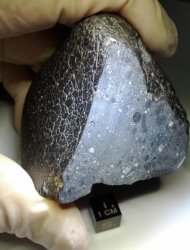
Scientists are abuzz about a coal-colored rock from Mars that landed in the Sahara desert: A yearlong analysis revealed it's quite different from other Martian meteorites.
Not only is it older than most, it also contains more water, tests showed. The baseball-size meteorite, estimated to be 2 billion years old, is strikingly similar to the volcanic rocks examined on the Martian surface by the NASA rovers Spirit and Opportunity, which found water-bearing minerals.
"Here we have a piece of Mars that I can hold in my hands. That's really exciting," said Carl Agee, director of the Institute of Meteoritics and curator at the University of New Mexico who led the study published online Thursday in the journal Science.
This image provided Carl Agee, University of New Mexico, shows a rock from Mars that landed in the Sahara Desert. An examination of the Martian meteorite known as NWA 7034 determined it is 2.1 billion years old and is water-rich. (AP Photo/University of New Mexico, Carl Agee)Most space rocks that fall to Earth as meteorites come from the asteroid belt, but a number can be traced to the moon and Mars.
Scientists believe an asteroid or some other large object struck Mars, dislodging rocks and sending them into space. Occasionally, some plummet through Earth's atmosphere.
Short of sending a spacecraft or astronaut to the red planet to haul back rocks, Martian meteorites are the next best thing for scientists seeking to better understand how Earth's neighbor transformed from a tropical environment to a frigid desert.
About 65 Martian rocks have been recovered on Earth, mostly in Antarctica or the Sahara. The oldest dates back 4.5 billion years to a time when Mars was warmer and wetter. About half a dozen Martian meteorites are 1.3 billion years old and the rest are 600 million years or younger.
The latest meteorite NWA 7034 — nicknamed "Black Beauty"— was donated to the University of New Mexico by an American who bought it from a Moroccan meteorite dealer last year.
Researchers performed a battery of tests on the meteorite and based on its chemical signature confirmed that it was blasted to Earth from Mars. At 2.1 billion years old, it's the second-oldest known Martian meteorite that formed from a volcanic eruption.
There's also evidence that it was altered by water. Though the amount released during heating was small — 6,000 parts per million — it was still much more than other Martian meteorites. Scientists said this suggested there was interaction with water near the surface during a time when the planet was mostly dry and dusty.
More tests are under way to determine how long the rock floated in space and how long it had been sitting in the Sahara.
University of Alberta meteorite expert Chris Herd said the find was welcome since most Martian rocks that rain on Earth tend to be younger. And the latest find does not appear to be too contaminated, he said.
"It's fairly fresh. It hasn't been subjected to a whole lot of weathering," said Herd, who had no role in the research.

Rare Water-Rich Mars Meteorite Discovered

A rare Martian meteorite recently found in Morocco in contains minerals with 10 times more water than previously discovered Mars meteorites. Read more
Rare Water-Rich Mars Meteorite Discovered

Sun Celebrates 'Solar Max' New Year With Flare

While the world was popping off its collective fireworks to see in the New Year, not to be left out, the sun generated its own firework display. Read more Sun Celebrates 'Solar Max' New Year With Flare

Politics Is Key to Avoiding Global Warming Catastrophe

Delaying global action on climate change by 20 more years will put the goal of keeping the world relatively cool out of reach forever. Read more
  Politics Is Key to Avoiding Global Warming Catastrophe

El Nino And Global Warming

It's hard to pin down global warming as triggering more El Nino or La Nina events. Read more El Nino And Global Warming: Link Is Fuzzy

Climate Change May Increase Volcanic Eruptions

The rapid rise in sea levels could cause a dramatic increase in volcanic eruptions. Read more Climate Change May Increase Volcanic Eruptions

Kirghizian Mountain Wilderness

Low emerald grass is under the feet, endless blue sky is over the head. Somewhere afar, over the clouds, so close to space, a white dragon is sleeping - ancient as our world. We are at the Celestial Mountains of the country called Kirghizia located in the east of Central Asia. More

Deepest Corals in Great Barrier Reef Discovered

A new exploration by a remote-operated submersible has found the reef's deepest coral yet. Read more Deepest Corals in Great Barrier Reef Discovered

Shipping Makes Way for Whales

The International Maritime Organization recently announced it will adjust the shipping lanes leading into the ports of California. Read more
  Shipping Makes Way for Whales

Feds crack narwhal tusk-smuggling ring

FILE- In this August 2005 file photo provided by the National Oceanic and Atmospheric Administration, a pod of narwhals surfaces in northern Canada. Officials say they have broken up a smuggling ring in which narwhal tusks from the Canadian Artic were brought to Maine in a trailer with a secret compartment and then illegally sold to American buyers. Andrew Zarauskus, of Union, N.J., and Jay Conrad, of Lakeland, Tenn., will be arraigned in Bangor, Maine, next week on federal smuggling and money laundering charges. (AP Photo/Kristin Laidre, NOAA, files)
A smuggling ring brought narwhal tusks from the Canadian Artic into Maine in a trailer with a secret compartment and then illegally sold them to American buyers, officials said.
Andrew Zarauskas, of Union, N.J., and Jay Conrad, of Lakeland, Tenn., will be arraigned in Bangor, Maine, next week on 29 federal smuggling and money laundering charges each.
For nearly a decade, two Canadians smuggled the whale tusks into Maine and shipped them via FedEx to Zarauskas, Conrad and other unnamed American buyers, according to an indictment.
Narwhals are known as the unicorns of the sea for their spiral, ivory tusks that can grow longer than 8 feet. The tusks can sell for thousands of dollars each, but it's illegal to import them into the U.S.
The court document doesn't specify how much money was involved, but it says the Canadian sellers received at least 150 payments from tusk buyers.
"The conspiracy we've alleged was over a period of 10 years, so there appears to have been enough of a market to support that length of conduct," said Todd Mikolop, who is prosecuting the case for the environmental crimes section of the Department of Justice.
Narwhals live in Arctic waters and are harvested by Inuit hunters for their meat, skin and tusks, said Calvin Kania, president of Furcanada in British Columbia, which sells tusks to buyers who want them for display purposes or to turn into jewelry.
The tusks range from 3 feet to more than 8 feet, and typically sell for $1,000 to $7,000 each, Kania said. He ships tusks worldwide, but not to countries that prohibit imports, including the U.S., the United Kingdom and Australia.
There is no defense attorney listed in court documents for Zarauskas. An attorney from the federal public defender's office is listed as Conrad's lawyer, but she was out of the office and not immediately available for comment. Phone messages were left for Zarauskas and at possible listing for Conrad.
The indictment filed last month says the two Canadians, whose names are redacted, would buy the tusks from retail stores in northern Canada and use the Internet and email to arrange sales to U.S. buyers. The pair faces charges in Canada, according to authorities there.
The Canadian sellers would bring the tusks into the U.S. at the Calais, Maine, border crossing in a vehicle modified to conceal the tusks or a trailer with a false bottom, according to the indictment. They would then drive to Bangor and ship them.
The only other narwhal tusk smuggling case Mikolop was aware of involved Nantucket, Mass., antiques dealer David Place, who was sentenced in 2011 to nearly three years in prison for importing and trafficking in sperm whale teeth and narwhal tusks worth up to $400,000.

Animal Pictures

mjcap:

Mnt Evans

Top of the World Ma!