Welcome to ...

The place where the world comes together in honesty and mirth.
Windmills Tilted, Scared Cows Butchered, Lies Skewered on the Lance of Reality ... or something to that effect.


Saturday, September 7, 2013

The Daily Drift

You, got that one right ...!   
 
Carolina Naturally is read in 192 countries around the world daily.
 
 Salami ... !
Today is  Salami Day  


Don't forget to visit our sister blog: It Is What It Is

Some of our readers today have been in:
Islamabad, Pakistan
Cairo, Egypt
Valdivia and Santiago, Chile
Jakarta, Kebon, Indonesia
Warsaw, Poland
Germiston, South Africa
Florence, Ivea and Bari, Italy
The Village, Ottawa, Montreal, Waterloo, Winnipeg, Sioux Lookout, Burnaby, Templeton, Mississauga and Oshawa, Canada
Bochum and Regensburg,Germany
Las Palmas De Gran Canarias, Spain
Buenos Aires, Argentina
Homebush and Randwhich, Australia
San Juan, Puerto Rico
Bangalore, Chennai, Delhi, New Delhi, Vijayawada, Shillong and Coimbatore, India
Ouagadougou, Burkina Faso
Kongens Lyngby, Denmark
Petah Tikvah, Israel
Helsinki, Finland
Dublin, Ireland
Istanbul, Turkey
Loyat and Boulogne-Billancourt, France
Hadong and Hanoi, Vietnam
Slough and London, England
Kuala Lumpur, Shah Alam, Puchong and Kuching, Malaysia
Sandsli, Norway
Amsterdam, Netherlands
Managua and Corinto, Nicaragua
Lubny, Melitopol and Zhovti Vody, Ukraine
Mexico City, Mexico
Sampaloc, Philippines
Sarajevo, Bosnia and Herzegovina
Dhaka, Bangladesh
Lisbon, Portugal
Auckland, New Zealand
Colombo, Sri Lanka

Today in History

1571 At the Battle of Lepanto in the Mediterranean Sea, the Christian galley fleet destroys the Turkish galley fleet.
1630 The town of Trimontaine, in Massachusetts, is renamed Boston, and becomes the state capital.
1701 England, Austria, and the Netherlands form an Alliance against France.
1778 Shawnee Indians attack and lay siege to Boonesborough, Kentucky.
1812 On the road to Moscow, Napoleon wins a costly victory over the Russians at Borodino.
1813 The earliest known printed reference to the United States by the nickname "Uncle Sam" occurs in the Troy Post.
1864 Union General Phil Sheridan's troops skirmish with the Confederates under Jubal Early outside Winchester, Virginia.
1876 The James-Younger gang botches an attempt to rob the First National Bank of Northfield, Minnesota.
1888 An incubator is used for the first time on a premature infant.
1892 The first heavyweight-title boxing match fought with gloves under Marquis of Queensbury rules ends when James J. Corbett knocks out John L. Sullivan in the 21st round.
1912 French aviator Roland Garros sets an altitude record of 13,200 feet.
1916 The U.S. Congress passes the Workman's Compensation Act.
1940 Germany's blitz against London begins during the Battle of Britain.
1942 The Red Army pushes back the German line northwest of Stalingrad.
1953 Nikita Krushchev elected first secretary of the Communist Party of the Soviet Union.
1954 Integration of public schools begins in Washington D.C. and Maryland.
1965 Pro Football Hall of Fame opens in Canton, Ohio.
1970 Jockey Blll Shoemaker earns 6,033rd win, breaking Johnny Longden's record for most lifetime wins; Shoemaker's record would stand for 29 years.
1977 Panama and US sign Torrios-Carter Treaties to transfer control of the Panama Canal from the US to Panama at the end of the 20th century.
1978 Secret police agent Francesco Giullino assassinates Bulgarian dissident Georgi Markov in London by firing a ricin pellet from a specially designed umbrella.
1979 ESPN, the Entertainment and Sports Programig Network, debuts.
1986 Desmond Tutu becomes first black leader of the Church of the Province of Southern Africa (now the Anglican Church of South Africa).
1988 Pilot and cosmonaut Abdul Ahad Mohmand, the first Afghan to travel to outer space, returns to earth after 9 days aboard the Soviet space station Mir.
2004 Hurricane Ivan damages 90% of buildings on the island of Grenada; 39 die in the Category 5 storm.
2008 US Government assumes conservatorship of Fannie Mae and Freddie Mac, the country's two largest mortgage financing companies, during the subprime mortgage crisis.

Non Sequitur

http://media.zenfs.com/en_us/News/ucomics.com/nq130906.gif

Kentucky Fried Chicken Selling Deep Fried Soup


Is it even possible to deep fry soup? Apparently, and that can only be a good thing. Rocket News 24 reports that KFC outlets in Japan sell deep fried versions of corn potage:
One of the current darlings of the Japanese palate is the creamy soup corn potage. A common fixture in Japanese cafes, its popularity exploded when popular popsicle brand Gari Gari-kun expanded its lineup to include a corn potage flavor, which went on to become such a huge hit stores couldn’t keep it in stock.
But while Gari Gari-kun’s parent company hit upon the idea of freezing the soup, KFC Japan has chosen to run in completely the opposite direction, and will be releasing a deep-fried corn potage fritter next month.

Did you know ...

That wingnut governors face tough road to re-election

That a huge majority think arctic warming will mess with the weather

That a former Florida senator regrets his vote for stand your ground more than any other

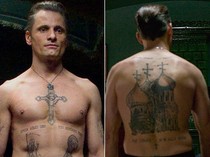
Tattoos reduce chances of getting a job

Having a tattoo can reduce your chance of getting a job, but it depends on where the tattoo is, what it depicts and if the job involves dealing with customers,

Bad Decisions Don’t Make You Poor. Being Poor Makes for Bad Decisions.

New research shows that worrying about money causes cognitive impairments.

Busker, who receives food stamps and is unemployed due to a disability, lives with her sister, brother-in-law, and niece.
The strain of constantly worrying about money is a substantial barrier to the smart decision-making that people in tough circumstances need to succeed.
How much money do I waste in a given month by doing most of my grocery shopping at the Whole Foods that’s directly on my route home rather than taking the three-minute detour to Safeway? I have no idea. As a business writer, I’m aware that the Whole Foods markup is big on some items and small on others. I know that it sometimes reflects genuinely higher quality and sometimes doesn’t. But in my actual life as a person who shops, the main thing is that I prefer Safeway’s flour tortillas, so I go there if and only if I want to buy some flour tortillas. Otherwise, convenience is king. All I really need to know is that my grocery spending is within my budget, and even though I’m probably wasting money, it’s not worth the time and hassle to think about it too much.
Such are the privileges of affluence. It’s not just that you can afford nicer stuff than poor people or have a greater ability to spend money for the sake of convenience. You get to take advantage of what is, in some ways, the greatest convenience of all—the convenience that comes from not having to sweat the small stuff.
A study published last week in the journal Science shows that the stress of worrying about finances can impair cognitive functions in a meaningful way. The authors gathered evidence from both low-income Americans (at a New Jersey shopping mall) and the global poor (looking at farmers in Tamil Nadu, India) and found that just contemplating a projected financial decision impacted performance on spatial and reasoning tests.
Among Americans, they found that low-income people asked to ponder an expensive car repair did worse on cognitive-function tests than low-income people asked to consider cheaper repairs or than higher-income people faced with either scenario. To study the global poor, the researchers looked at performance on cognitive tests before and after the harvest among sugarcane farmers. Since it’s a cash crop rather than a food one, the harvest signals a change in financial security but not a nutritional one. They found that the more secure postharvest farmers performed better than the more anxious preharvest ones.
These findings complement the already extensive literature of the negative physical impacts of low socioeconomic status, reinforcing the point that the harms of poverty extend beyond the direct consequences of material deprivation.
But the impact on cognitive skills is especially noteworthy for how it should influence our understanding of poverty. Poor people—like all people—make some bad choices. There is some evidence that poor people make more of these bad choices than the average person. This evidence can easily lead to the blithe conclusion that bad choices, rather than economic conditions, are the cause of poverty. The new research shows that this is—at least to some extent—exactly backward. It’s poverty itself (perhaps mediated by the unusually severe forms of decision fatigue than can affect the poor) that undermines judgment and leads to poor decision-making.
This effect may be an important psychological underpinning of recent economics research on the merits of unconditional cash transfers to the poor. Researchers have found that one-time grants of cash to poor Ugandans produced large observable gains in income as far as four years down the road. The easiest way to understand that is simply as a tangible return on investment earned by the initial infusion of funds. But perhaps the mental relief provided by the cash cushion actually allowed for sharper decision-making and problem-solving.
Most low-income Americans aren’t poor at all by global standards, so evidence from successful anti-poverty programs in the developing world are difficult to apply to domestic poverty. That’s why it’s so telling and fascinating that a study on the cognitive downsides of poverty would find identical results in New Jersey and Tamil Nadu. Much work on domestic poverty rightly emphasizes the idea of skills and “human capital” needed to navigate a complicated modern economy. This naturally leads to a focus on education, whether in the guise of various school-reform crusades or the push to bring high-quality, affordable preschool to more households. But adults need help, too, and the perception that poor adults—as opposed to presumably innocent children—are irresponsible often leads to reluctance to treat adults as adults who are capable of deciding for themselves how best to use financial resources.
This paternalistic notion that we should be relatively stingy with help, and make sure to attach it to complicated eligibility requirements and tests, may itself be contributing to the problem of poverty. At home or abroad, the strain of constantly worrying about money is a substantial barrier to the smart decision-making that people in tough circumstances need to succeed. One of the best ways to help the poor help themselves, in other words, is to simply make them less poor.

The truth be told


Why Did Pirates Wear Eyepatches?

The fact that some pirates wore eyepatches most likely had nothing to do with a missing eye, and everything to do with being able to see - specifically, above decks and below them.

Pirates frequently had to move above and below decks, from daylight to near darkness, and the smart ones wore a patch over one eye to keep it dark-adapted outside. When the pirate went below decks, he could switch the patch to the outdoor eye and see in the darkness easily.

Mustache Facts


To further your knowledge of facial hair, Doghouse Diaries has supplemented the earlier Beard Facts with things you should know about mustaches. The only thing I would add is that, if your significant other shaves his mustache off, you really should notice and say something about it, even if it was the same color as his face. Otherwise, there will be hurt feelings. Don't ask me how I know. More

Surprising Facts About Cheers


Can you imagine a series about a hotel in Barstow, California, run by a retired football player? That premise eventually became Cheers, a sitcom about a bar in Boston run by a retired baseball player. Those are just some of the many bits of trivia about the hit series Cheers that you find in a list at Buzzfeed.

The Stairways to the Stars

As Los Angeles grew in the 1920s, in large part because of the film industry, city planners built hundreds of outdoor staircases into the hills to connect new homes with public transportation at the bottom. They aren't used much anymore, as residents are more dependent on cars.
The film studios were the first to develop the area, building compact bungalows to house their actors and technicians. Both Chaplin and Disney lived here.

Movie carpenters would build sets during the week and homes at the weekend. Charles said this accounted for the local architectural hotchpotch that is often ridiculed. A Moorish castle next to a Spanish villa, next to a Tudor mansion - the carpenters were inspired by whatever they had been building on the studio backlots that week.

Our second staircase was thankfully unobstructed. Here, in 1932, Laurel and Hardy tried and failed to move a piano to the top in The Music Box. The film won an Academy Award. I'd seen it over and again as a child and remembered it fondly.

There were now buildings either side but it was still quite recognisable. For such a historic landmark it was still remarkably unkempt, its history simply marked by a defaced granite plaque inset into one of the lower steps.
Take a tour of those staircases both then and now with Charles Fleming of the L.A. Times and Zeb Soanes of the BBC: Here.

Random Celebrity Photos

shitkicker-deluxe:

apieceofglass:

ava gardner <3

…Oh lordy…
 
Ava Gardner

In The News

A landslide in a remote part of Alaska was detected first by a new seismic signature method, then confirmed by satellites.
Processed chicken joined the long list of products OK-ed for import to the United States from China, last Friday. Concerns over health standards in Chinese food processing plants have consumer watchdogs crying foul.
A Florida treasure-hunting family struck it rich over the weekend when they discovered an estimated $300,000 worth of Spanish gold coins and chains.
Would it surprise you that the fruit in all-American apple pie isn't American at all? It originates from parts of Asia! The same goes for many fruits and vegetables we eat. Trace shows us the Old World foods that became staples of New World diets.

The American West, 150 Years Ago

In the 1860s and 70s, photographer Timothy O'Sullivan created some of the best-known images in American history. After covering the U.S. Civil War, O'Sullivan joined a number of expeditions organized by the federal government to help document the new frontiers in the American West.

O'Sullivan brought an amazing eye and work ethic, composing photographs that evoked the vastness of the West. He also documented the Native American population as well as the pioneers who were already altering the landscape. Above all, O'Sullivan captured the natural beauty of the American West.

King Solomon's Mines

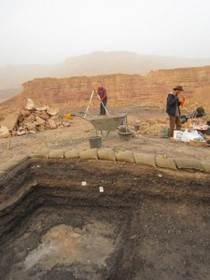
New findings from an archaeological excavation prove that copper mines in Israel thought to have been built by the ancient Egyptians in the 13th century BCE actually originated three centuries later, during the reign of the legendary King Solomon.

After injecting poop bacteria into brain cancer patients' brains, doctors forced to resign

Enterobacter aerogenes.

Two neurosurgeons at UC Davis have resigned after infecting brain cancer patients with a pathogenic bacteria from their bowels in a last-ditch effort to halt progression of their cancers. The three patients gave their consent to Dr. J. Paul Muizelaar, 66, the former head of the neurosurgery department, and his colleague, Dr. Rudolph J. Schrot. But the doctors hadn't received OKs from the FDA, or school authorities, and the procedure hadn't even been tested on animals. It's a complicated story that strikes at the heart of medical experimentation ethics, and how difficult treatment options are for patients with aggressive cancers.
All three of the glioblastoma patients died. It's difficult to know what role the experimental treatment played in their deaths, because generally those diagnosed with this highly malignant form of cancer have short survival prognosis. Median survival is under 15 months.

Snip from the Sacramento Bee's coverage:
Muizelaar and Schrot called their novel approach "probiotic intracranial therapy," or the introduction of live bowel bacteria, Enterobacter aerogenes, directly into their patients' brains or bone flaps. The doctors theorized that an infection might stimulate the patients' immune systems and prolong their lives. The first patient lived about 5 1/2 weeks. The second survived another year, an outcome that buoyed the doctors and seemed to bolster their theory, they said.
The institutional trouble began in March 2011, when a newly diagnosed third patient developed sepsis, became unresponsive and died two weeks after being deliberately infected. The university's first internal investigation soon followed.
The Sac Bee has been covering this story for years, and you can dig in to their investigative reporting here.
University investigators say Muizelaar and Schrot “deliberately circumvented” internal policies at UC Davis, “defied directives” from top leaders, and evaded federal regulations designed to protect patients' rights.
Nature has a roundup of the science, here.

Awesome Pictures

Some Genes are More Analog than Digital

Ed Yong has a fascinating article on the behavior of a gene called SRY. It is located on the Y chromosome, and is pivotal in making an embryo develop into a male. But what about studies of Swyer syndrome, in which a child inherits the father's Y chromosome, but does not develop into a male? Children with Swyer syndrome are born and raised female, but do not become fertile at puberty. However, their fathers may have an identical SRY gene, and obviously were male. What makes the difference? The the gene does not always cause maleness, as it has a rather weak mechanism that is dependent on conditions being just so. Michael Weiss from Case Western Reserve University presented the research, and Melissa Wilson-Sayres from the University of Berkeley compares the gene to a dimmer switch as opposed to an off-on switch -or analog vs. digital.
That’s very strange. There are many master genes that play pivotal roles in our development, controlling the growth of eyes, limbs and more. If these genes don’t work properly, the results could be catastrophic. So, they ought to be exceptionally stable—enforcing the status quo in the face of all but the most severe mutations or environmental conditions. It should take much more than a 2-fold difference in activity to change what they do. “We’d expect to see factors of 50-fold or more,” says Weiss. “These master switches are meant to be rigorously locked in. They’re not meant to be this tenuous.”

So, why does SRY operate from such a wobbly position? Why have a set-up that could so easily lead to infertility? For the variety, says Weiss. He thinks that the vagaries of SRY leads to a wide variety within developing testes, and a wide variation in the amount of testosterone they produce. This hormone influences our behaviour, including many aspects of our social lives. So, at the risk of the occasional infertile XY female, a precariously-set master switch leads to a broad spectrum of male brains, which may make for a better-functioning society. “You can’t have all alpha-males in a group,” suggests Weiss.

It’s a fairly speculative idea, and Wilson-Sayres isn’t convinced. She says that the far simpler explanation is that the Y-chromsome is especially prone to picking up mutations with weak harmful effects.
Read more about the gene that can determine male and female, and how it does the job, at Not Exactly Rocket Science.

Ability to delay gratification linked to social trust

A person’s ability to delay gratification—forgoing a smaller reward now for a larger reward in the future—may depend on how trustworthy the person perceives the reward-giver to be, according to

Making Google Glass More Fashionable

Google is trying to improve the appearance of Glass, its wearable computer interface. At CNET, Eric Mack writes:
[...] the above revision of Glass is among the first I've seen that was designed by the Google team and doesn't look like it was lifted from the pages of some old DC Comics.
The new design was posted on Isabelle Olsson's Google+ page a few weeks back. Olsson is the lead industrial designer on the Glass team who the New York Times recently described as "one of a group of women charged by the company with turning Glass into the next It accessory."
Would you rather wear one that looks like modern fashion or something from science fiction?
More 

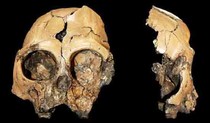
Rare cranium fossil of ape Lufengpithecus found in China

A team of researchers has discovered the cranium of a fossil ape from Shuitangba, a Miocene site in Yunnan Province, China. The juvenile cranium of the fossil ape Lufengpithecus is

Astronomical News

A planet-wide storm on Saturn reveals the first evidence of water ice.
Dive into some stunning examples of bipolar planetary nebulae as seen by the Hubble Space Telescope.
Astronomers have discovered something weird in the Milky Way's galactic bulge -- a population of planetary nebula are all mysteriously pointing in the same direction.
On many occasions, objects will appear very close to each other in the sky during events known as conjunctions -- one such conjunction will occur between the moon and Venus on Sept. 8.
The Summer Triangle is one of the most easily recognized groups of stars in Northern Hemisphere skies -- Let's dive right in!

Random Photos

kindred.

Mystery Bug Builds Fence Around Eggs And Nobody Knows Why

Chemical ecologist Troy Alexander discovered a strange structure on the trunk of a tree in the Amazon rainforest. It appears to be some kind of egg tower surrounded by a protective barrier that eerily resembles a white picket fence.

What's so fascinating is that nobody knows who is responsible. Entomologists, mycologists, University professors and museum directors have all seen the images but nobody has been able to provide definite confirmation of what created this.

A 150 Million Years Of Fish Evolution In One Handy Figure


Have you ever wished you could have the entire 150 million years of spiny-rayed fish evolution in convenient poster form? You can see how all the spiny-finned fish - more than 18,000 species of them, which represent nearly one-third of living vertebrates - are related to one another.

To accomplish this, the scientists inferred the relationships from the sequences of 10 genes from 520 spiny-rayed fin fish representing most of their families. They combined this data with that of 37 fossil 'age constraints' used as reality checks on the actual timing of evolutionary shifts.

Precious Therapy Llamas Bring Joy To Sick And Elderly

There are approximately 10,000 therapy animals in the United States. Of those, 14 are llamas. In an article published last year for Colors Magazine, photographer Jen Osborne accompanied two certified llama therapists as they visited the Bellingham Health and Rehabilitation Center in Washington, USA.

How Fainting Goats Work

The lives of goats, by all appearances, consist mostly of eating, climbing, butting heads and a whole lot of standing on top of things. One particular breed of goat, however, is known for a rather different trait: stiffening up and appearing to faint.

These goats (also known as myotonic goats) aren't simply weak of heart or abnormally prone to fright. In fact, fainting goats don't actually faint or lose consciousness at all during these episodes.

Animal News

Elliott Morgan from SourceFed comes back to DNews and talks with Anthony about just how terrifying (and awesome) squid and octopi are.
Cheetahs are the fastest terrestrial animals, and yet they don't try to outrun prey. They mix handling with speed.
How do the calls of monkeys, dolphins and gorillas -- among others -- resemble human language?

Animal Pictures

earthandanimals:


Majestic 


Photo by Jan Schou

Friday, September 6, 2013

The Daily Drift


You, got that one right ...!
 
Carolina Naturally is read in 192 countries around the world daily.
 
 Late for an important date ... !
Today is (nothing special) Day  


Don't forget to visit our sister blog: It Is What It Is

Some of our readers today have been in:
Athens, Greece
Buea, Cameroon
Saint John's, Byward Market, Ottawa, Mississauga, Markham, The Village, London, North York, Sioux Lookout and Calgary, Canada
Johannesburg, East London and Cape Town, South Africa
Loyat, Rouen, Paris and Roubaix, France
Perth, Homebush and Brisbane, Australia
Colombo and Kandy, Sri Lanka
London and Baker Street, England
Rome, Ivea, Padova and Cardito, Italy
Madrid, Basauri and Ourense, Spain
Helsinki, Finland
Zhovti Vody and Kiev, Ukraine
Damascus, Syria
Rothe Erde, Germany
Mexicali, Mexico
Oslo, Sandsli and Myre, Norway
Jakarta, Indonesia
Ruse, Bulgaria
Hong Kong, Hong Kong
Bangalore, Thiruvananthapuram, Rampur Hat and Shillong, India
San Juan, Puerto Rico
Beirut, Lebanon
Sampaloc, Cagayan De Oro, Manila and Cafe, Philippines
Riyadh, Saudi Arabia
Yanacancha, Peru
Groningen, Netherlands
San Jose, Costa Rica
Tehran and Orumiyeh, Iran
Dublin, Ireland
Ryazin, Russia
Buenos Aires, Argentina
Bucharest, Hungary
La Paz, Bolivia
Stitna Nad Vlari, Czech Republic
Sharjah, United Arab Emirates
Frederiksberg, Denmark
Managua, Nicaragua
Sarajevo, Bosnia and Herzegovina
Accra, Ghana
Bejing, China
Guatemala City, Guatemala
Auckland, New Zealand
Kuala Lumpur and Puchong, Malaysia
Dhaka, Bangladesh

Today in History

394 Theodosius becomes sole ruler of Italy after defeating Eugenius at the Battle of the River Frigidus.
1422 Sultan Murat II ends a vain siege of Constantinople.
1522 One of the five ships that set out in Ferdinand Magellan's trip around the world makes it back to Spain. Only 15 of the original 265 men that set out survived. Magellan was killed by natives in the Philippines.
1688 Imperial troops defeat the Turks and take Belgrade, Serbia.
1793 French General Jean Houchard and his 40,000 men begin a three-day battle against an Anglo-Hanoveraian army at Hondschoote, southwest Belgium, in the wars of the French Revolution.
1847 Henry David Thoreau leaves Walden Pond and moves back into town, to Concord, Massachusetts.
1861 Union General Ulysses S. Grant's forces capture Paducah, Kentucky from Confederate forces.
1870 The last British troops to serve in Austria are withdrawn.
1901 President William McKinley is shot while attending a reception at the Pan-American Exposition in Buffalo, New York, by 28-year-old anarchist Leon Czolgosz. McKinley dies eight days later, the third American president assassinated.
1907 The luxury liner Lusitania leaves London for New York on her maiden voyage.
1918 The German Army begins a general retreat across the Aisne, with British troops in pursuit.
1936 Aviator Beryl Markham flies the first east-to-west solo flight across the Atlantic Ocean.
1937 The Soviet Union accuses Italy of torpedoing two Russian ships in the Mediterranean.
1941 Germany announces that all Jews living in the country will have to begin wearing a Star of David.
1943 The United States asks the Chinese Nationals to join with the Communists to present a common front to the Japanese.
1953 The last American and Korean prisoners are exchanged in Operation Big Switch, the last official act of the Korean War.
1965 Indian troops invade Lahore; Pakistan paratroopers raid Punjab.
1972 The world learns an earlier announcement that all Israeli athletes taken hostage at the Munich Olympics had been rescued was erroneous; all had killed by their captors from the Black September terrorist group; all but 3 terrorists also died in shootout around midnight.
1976 A Soviet pilot lands his MIG-25 in Tokyo and asks for political asylum in the United States.
1976 Lieutenant Viktor Belenko, a Soviet air force pilot defects, flying a MiG-25 jet fighter to Japan and requesting political asylum in US.
1988 Lee Roy Young becomes the first African-American Texas Ranger in the force's 165-year history.
1991 USSR officially recognizes independence for the Baltic States of Estonia, Latvia and Lithuania.
1991 Leningrad, second-largest city in the USSR, is changed to Saint Petersburg, which had been the city's name prior to 1924.
1995 Baltimore Orioles' Cal Ripken Jr. plays in his 2,131st consecutive game, breaking a 56-year MLB record held by Lou Gehrig; in 2007 fans voted this achievement the most memorable moment in MLB history.
1997 Funeral of Diana, Princess of Wales: over 1 million people line London's streets to honor her and 2.5 billion watched the event on TV.

Non Sequitur

http://media.zenfs.com/en_us/News/ucomics.com/nq130905.gif

Editorial Comment

Due to a very tight schedule today (well, that and a severe lack of sleep) we are Blogging Lite today.
We will return to our regularly scheduled postings tomorrow.
That is all ...

Man Forced to Wear "Idiot" Sign

People passing Cleveland's Second District police station this week may notice a man wearing a sign.
The sign says he is an idiot for making 911 calls threatening police officers. Cleveland Municipal Court Judge Pinkey Carr ordered Richard Dameron, 58, to wear the sign apologising to former “super cop” Jim Simone.

Police said he threatened to kill Officer Simone and other officers back in February. During his career, Simone was shot twice, including once in the head.

The sign reads, in part: "I apologise for being an idiot and it will never happen again." Dameron will have to wear the sign for three hours a day for the rest of the week.

Police stopped car with marijuana plants on front and rear seats and the driver's friend in the trunk

Police officers in Halifax, Nova Scotia, Canada stopped a suspicious car without its headlights on and found a load of pot plants in the front and rear seats. The driver's friend was also discovered in the boot.

The Toyota Corolla was pulled over at about 10pm on Sunday and police found the driver surrounded by 20 marijuana plants and his passenger in the trunk, "seemingly to make room for the marijuana in the front seat area" the RCMP said.
A 23-year-old man from Brookside, N.S., and a 24-year-old man from Hatchet Lake, N.S., each face charges of possession of a controlled substance for the purpose of trafficking and cultivation under the Controlled Drugs and Substances Act.

The men will appear in Halifax court on October 30th.

Ziggy


Another 'vampire' burial found in Bulgaria

Archaeologists working on Bulgaria’s Perperikon site have found the skeleton of a male buried with a ploughshare in its chest, a find that professor Nikolai Ovcharov has already described as a “twin of the Sozopol vampire.”
Another 'vampire' burial found in Bulgaria
Over 100 'vampire' graves have been found in Bulgaria in recent years
[Credit: Hristina Dimitrova]
The discovery in Sozopol last year quickly made the rounds of domestic and foreign media, which dubbed the remains a “medieval vampire”, but such burials had been found in Bulgaria before, with iron stakes likely driven through the deceased’s heart during burial rites given to intellectuals – a group often suspected by superstitious medieval Europeans of being warlocks communicating with Satan.

This appears to be the first find of this kind (or the first publicised one, at least) at Perperikon – a treasure trove that archaeologists are still not finished exploring after more than a decade of digging, given that the site has been inhabited since the early Iron Age well into the medieval era.

Coins found with the body have been tentatively dated to the 13th and 14th century. The skeleton appears to belong to a male aged 35 to 40, Ovcharov said.

“I say that he is almost a ‘twin’ of the Sozopol [vampire] because on the left side, between his neck and chest, there is a massive ploughshare. In other cases we have found nails and spikes, but there is no other known case, except the one in Sozopol, where a ploughshare was used. It is a ritual to prevent undeath,” Ovcharov said on September 2, as quoted by Focus news agency.

The remains of the Sozopol ‘vampire’ returned to the town earlier this summer, alongside a bust made using forensic facial reconstruction. According to the director of the National History Museum in Sofia and Sozopol native Bozhidar Dimitrov, the “vampire” might have been a historical figure – the pirate Krivich, who lived in the 13th century and appears to have acted as a town mayor at some point in his life.

Ovcharov, one of Bulgaria’s best-known archaeologists, has been leading archaeological digs at Perperikon for 13 years now and said earlier this spring that he hoped to finish work on the Perperikon acropolis this season.

This season’s digs focused on a part of the acropolis that held a large altar dating back to the first millennium BCE, a late antiquity Roman temple, as well as the medieval bishop’s palace from the 13th-14th century.

Perperikon, in Bulgaria’s eastern Rhodopes region, about 15km from the town of Kurdjali, has been the site of various forms of religious activity from about 7000 years ago, having first been used by the Thracians. The site is a popular tourist attraction and long-term archaeological work continues to unveil new discoveries.

Giant Triassic amphibian was a burrowing youngster

Krasiejow, Poland was a vastly different place 230 million years ago during the Triassic Period. It was part of a giant continent called Pangea, had a warm climate throughout the year, and was populated by giant amphibians that weighed half a ton and were 10 feet long. Metoposaurus diagnosticus was one of these giant amphibians, and its environment had only two seasons: wet and dry. Like modern amphibians, Metoposaurus needed water for its lifestyle, but the extremely long dry season in Triassic Krasiejow drove this species to burrow underground and go dormant when water was scarce.
Giant Triassic amphibian was a burrowing youngster
This is the femur of Metoposaurus diagnosticus krasiejowensis as viewed from
behind (posterior). The sectioned plane is marked by the white stripe
[Credit: Georg Oleschinski]
The burrowing behavior of Metoposaurus was recently discovered by Dorota Konietzko-Meier of the University of Opole, Poland and the University of Bonn, Germany, and P. Martin Sander also of the University of Bonn and was recently published in a study in the Journal of Vertebrate Paleontology. This study examined both the overall structure of the skeleton of Metoposaurus as well as the microscopic structure of its bones.

The broad, flat head, broad flat arm bones, wide hands, and large tail of Metaposaurus diagnosticus led the investigators to conclude that this species swam in ephemeral lakes during the wet season and used its broad, flat head and forearms to burrow under the ground when the dry season began. The authors also examined cross-sections of the bones of Metoposaurus looking for growth rings, called annuli. These annuli are similar to tree rings, where a band of light and a band of dark indicate one year of growth. 

Giant Triassic amphibian was a burrowing youngster
This image shows microanatomy of the midshaft of Metoposaurus
femur [Credit: Georg Oleschinski]
In other early amphibians one annulus usually consists of a broad zone of rapid growth (wet season) followed by a thin band of slow growth (dry season), but in Metoposaurus, a period of prolonged slow growth was followed by a cessation of growth during the dry season. According to lead author Dorota Konietzo-Meier, "The histology of Metoposaurus long bones seems to be unique. In our interpretation it corresponds to the two-seasonal climate with a short, more favorable wet season and a long dry part of the year when life conditions were worse."

Dr. Michel Laurin from the Museum National d'Histoire Naturelle who was not involved with this study, commented, "This interpretation is interesting, but problematic in some respects. This animal was much larger than any extant burrowing species I know of, and if it dug, I suspect that the snout and tail played a far greater role than the limbs, as we observe in most extant aquatic vertebrates."

Giant Triassic amphibian was a burrowing youngster
The histology of the midshaft of Metoposaurus femur is visible using polarized light. Note the thick inner layer of more highly organized tissue (more uniform color), which is called an annulus and corresponds to the dry season, and two layers of less organized bone called zones [Credit: D. Konietzko-Meier]
These annuli also give an estimate of age. Co-author P. Martin Sander said, "A common problem with these large amphibians is that you can't tell from the shape of their bones if they are grown or not; sometimes the youngsters get described as a different species from the grown-ups." This technique solves that problem. It turns out that all of the specimens preserved at Krasiejow were juveniles. The smallest specimen was only one year old, while the largest specimen was four. Adulthood in these large amphibians was usually reached around year seven. The authors do not know if this mode of life was unique to juveniles or if adults also burrowed.

Sander concludes, "It amazes me time and again how much we can learn from these extinct animals. The techniques we used have been around since the 1840s, but only in the last 20 years have researchers asked the right questions and drawn comparisons with living animals."

Animal Pictures

phototoartguy:

SMILE FOR THE CAMERA by Roy Hancliff.
“I am lucky enough to have many Brown Bats on my property and have even built a special Bat Box for them.They intrigue me and have often thought what if ????. This was to be a technical challenge, hope you like it as much as we do.”
Thank You, Roy!
royhancliff