
Saturday, May 3, 2014
Grave-Robbing Cannibal Brothers Arrested - Again


Incredibly Realistic Sculpture Carved From A Single Block Of Wood
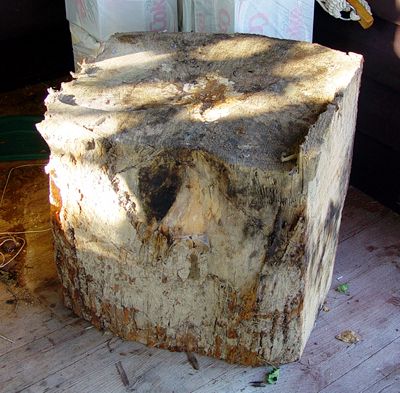
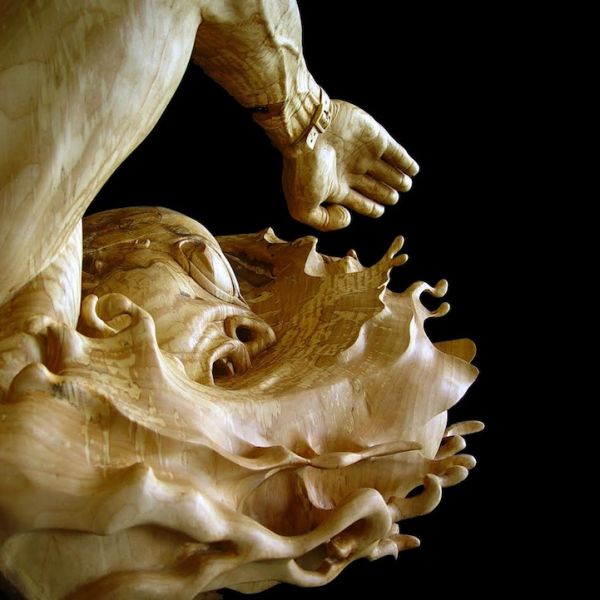
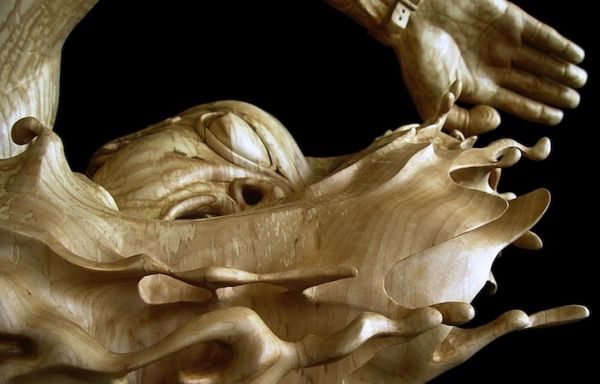
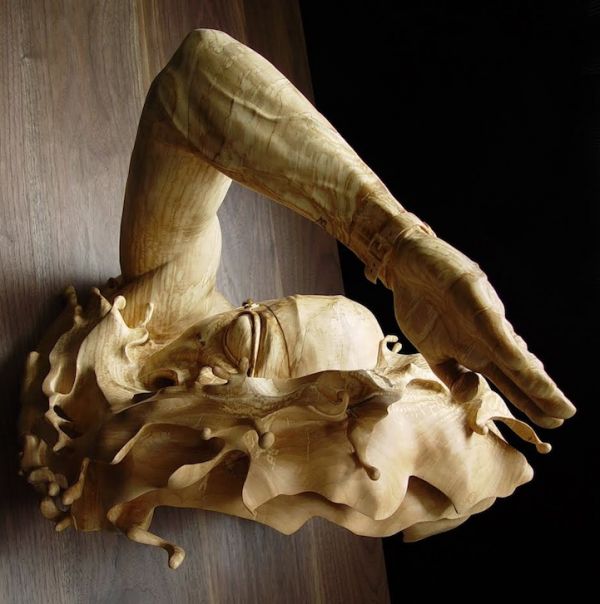
Stefanie Rocknak is one of these extremely talented wood carvers, and the beauty of her single block sculpture is not just in the execution, but the elegant simplicity and retention of the basswood's natural grain pattern as well.
The figure looks like he’s really splashing through a wooden wave, with face turned in mid-breath and a hand so realistic it even has creases in the palms.
The Post-Shooting Life of Sixteen Film Sets
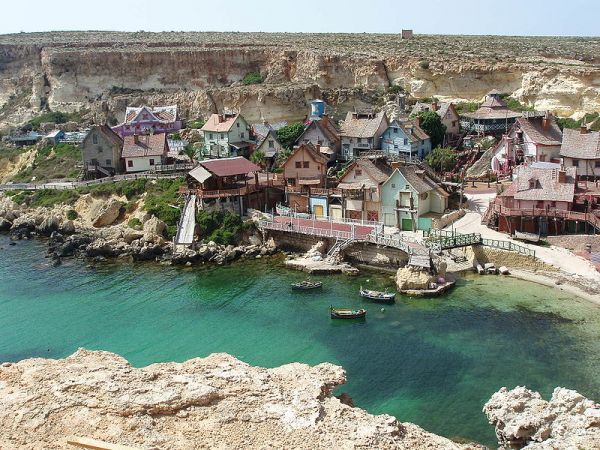
Hollywood spends big bucks for lavish film sets on location. What happens to these sets when the movie wraps? Moving or reusing them costs more than they’re worth, but sometimes dismantling them is required by agreement. Often, they are just left as they are. And then? Some just fall into ruin, but others find a new life under the management of people who know an opportunity when they see one. Take, for example, Sweethaven, the seaside town that was the setting of the Robin William’s film Popeye.
Robert Altman’s 1980 film adaptation of the comic Popeye suffered at the box office, but the nation of Malta has done very well with the film’s set, turning it into the Popeye Village theme park.Tourists can also visit The Shire in New Zealand, the Field of Dreams in Iowa, and several Tunisian places that were transformed into Tattooine for the Star Wars movies. Several Western towns are still in place as well, and you can read about them at Atlas Obscura.
The park preserves the original 20 buildings constructed for Popeye’s “Sweethaven” setting, and adds a museum devoted to the movie’s history. It also stages shows featuring Popeye and Olive Oyl, and scenic boat tours of the village and its bay.
An Energy Efficient Glow-In-The-Dark Highway
Energy
efficiency is a big part of “going green”, and delivering electricity
to a long, lonely stretch of highway is not only a daunting dask- it’s
simply inefficient.
With the advancement of solar power we may find better ways to bring electricity to rural areas, but a remote highway generally has little use for light, and typically needs to be lit up on the road itself more than the shoulders.
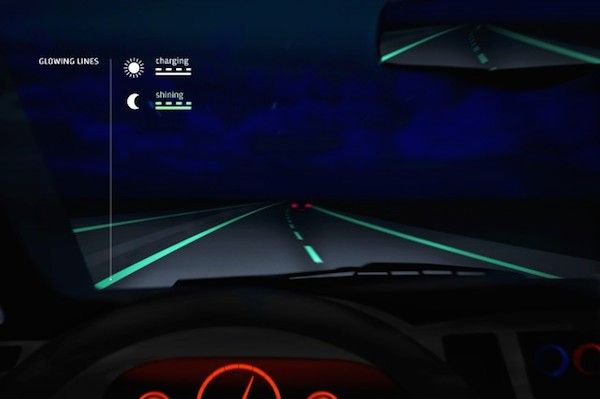
That’s what makes this highway in Oss, Netherlands so unique- the road markings glow-in-the-dark.
Studio Roosegaarde spent two years developing the idea of integrating photo-luminescent powder into the road paint, and their glowing highway innovation makes a drive in the dark seem like a trip into the world of Tron.
With the advancement of solar power we may find better ways to bring electricity to rural areas, but a remote highway generally has little use for light, and typically needs to be lit up on the road itself more than the shoulders.
That’s what makes this highway in Oss, Netherlands so unique- the road markings glow-in-the-dark.
Studio Roosegaarde spent two years developing the idea of integrating photo-luminescent powder into the road paint, and their glowing highway innovation makes a drive in the dark seem like a trip into the world of Tron.
A City Intersection with No Traffic Lights
American
drivers, imagine a busy intersection in a large city with no traffic
lights and no traffic cops. This is the condition in many cities around
the world. This intersection is in Meskel Square, Addis Ababa, Ethiopia.
The thing that keeps drivers from constantly crashing is the idea that
no one has any right-of-way, and you just go when you can, stop when
someone is in front of you, and don’t hit anyone. Could the famously
traffic law-abiding American drivers deal with such a system? Probably
not, because we are concerned with who has the right-of-way, and tend to
get a little hostile when someone causes us a two-second delay in our
travels.

Art exhibition about urban legends

"Hearsay: Artists Reveal Urban Legends" is a new group exhibition at California State University, Fullerton's Begovich Gallery where artists were asked to create pieces about modern day myths that resonate with them in some personal way. More than three dozen artists participated including Boing Boing favorites like Ransom & Mitchell, Jeffrey Vallance, Robert Williams, and Victoria Reynolds. Above, Chris Farling's "Sewer Gator." Below, Lew Delport's "The Goatman" and Ransom & Mitchell's "Teke Teke."


Finally! Shopping Center Introduces Passing Lane
A mall in Sheffield, UK is now taking a bold stand against the human speed bumps that cause so much frustration for good and decent people in the world. After reading a complaint letter by 10-year old Chloe Nash-Lowe (who deserves some sort of Nobel Prize for her efforts), the managers of the Meadowhall Shopping Centre have created a passing lane. When you want to get around traffic clogs, get into the fast lane.
Now let's spread this great idea to sidewalks, grocery stores, and hallways everywhere. Forward!
A Bed And Breakfast Shaped Like A Beagle


Waking up with some hair of the dog that bit you last night means something completely different when you’ve just spent the night in a B&B shaped like a beagle.
This charming canine shaped cabin is called the Dog Bark Park Inn, it’s located in scenic Cottonwood, Idaho and it was built by chainsaw carvers Dennis Sullivan and Frances Conklin.
Each room is decorated with works by Sullivan and Conklin, which are all shaped like dogs of course, and the modest bed and breakfast has room to host four guests in the main beagle building called Sweet Willy.
There’s one major rule at the Dog Bark Park Inn- guests must love dogs, or else they’re barking up the wrong tree!
Living in an 84-square foot house

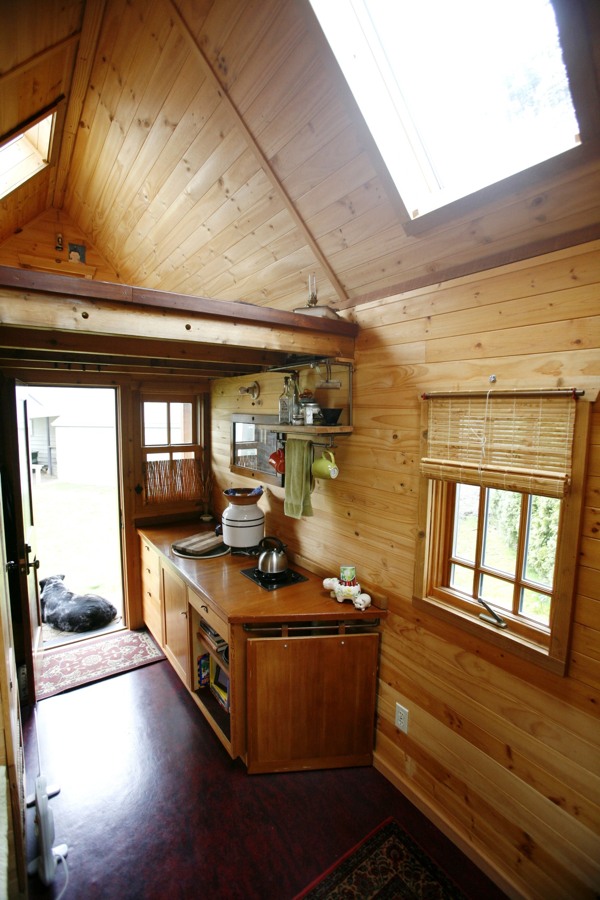
Time is precious, and she wanted to be spending hers with the people and things she truly loved. That included the beautiful sprawling house in the Pacific Northwest she had painstakingly restored—but, increasingly, it did not include the mortgage payments, constant repairs, and general time-suck of home ownership. A new sense of clarity began to take hold: Just what was all this stuff for? Multiple extra rooms, a kitchen stocked with rarely used appliances, were things that couldn’t compare with the financial freedom and the ultimate luxury—time—that would come with downsizing.
Deciding to build an eighty-four-square-foot house—on her own, from the ground up—was just the beginning of building a new life. Williams can now list everything she owns on one sheet of paper, her monthly housekeeping bills amount to about eight dollars, and it takes her approximately ten minutes to clean the entire house. It’s left her with more time to spend with family and friends, and given her freedom to head out for adventure at a moment’s notice, or watch the clouds and sunset while drinking a beer on her (yes, tiny) front porch.

Coming Tomorrow
Coming Tomorrow
- Scientists Create Solar Panel Window
- Appearance Of Night Shining Clouds Has Increased
- Bathing In The Sunset Of An 'Earth-Like' Alien World
- Before, During An After The Big Bang

Friday, May 2, 2014
The Daily Drift

Carolina Naturally is read in 198 countries around the world daily.
Blow your horn ... !

Some of our reader today have been in:
The Americas
Mishawaka,
Wasilla, Alachua, Bithlo, Auke Bay, Modesto, Omaha, Tucson, Charlotte,
Cullowhee, Apex, Payson and Sparta, United States
Sao Paulo, Brazil
Downsview,
Byward Market, Ottawa, Sioux Lookout, Pikangikum, Thunder Bay,
Britannia, Montreal, Vancouver and Saint John's, Canada
Caracas and Barquisimeto, Venezuela
Managua and Tipitapa, Nicaragua
Zapopan, Mexico
Luquillo, Puerto Rico
Europe
Kharkiv, Ukraine
Skopje, Macedonia
Surami, Georgia
Ivrea, Due Carrare, Milan and Pescara, Italy
Dartford, Chester, Kent and Gosport, England
Athens, Greece
Magenta, L'ancienne-Lorette, Paris and Lyon, France
Budapest, Hungary
Stavanger, Norway
Adjud and Bucharest, Romania
Malaga, Madrid, Vinaros and Algeciras, Spain
Moscow, Vladivostok, Ryazan and Kazan, Russia
Sarajevo, Bosnia and Herzegovina
Espoo, Finland
Wyszkow, Poland
Kongens Lyngby and Frederiksberg, Denmark
Belgrade, Serbia
Dublin, Ireland
Berlin, Germany
Dubrovnik, Croatia
Asia
Jodhpur,
Kolkata, Bangalore, Thiruvananthpuram, Shillong, Mumbai, Jalandhar,
Suratgarh, Chandigarh, Bhubaneshwar and New Delhi, India
Putrajaya, Kuala Lumpur and Kota Bahru, Malaysia
Colombo, Sri Lanka
Kirtipur, Nepal
Lat Krabang and Bang Rak, Thailand
Tokyo, Japan
Jakarta, Indonesia
Shiraz, Iran
Africa
Pretoria and Cape Town, South Africa
Cairo, Egypt
The Pacific
Makati, Quiapo and Manila, Philippines
Woolloongabba and Sydney, Australia
Today in History
| 1670 | The Hudson Bay Company is founded. | |
| 1598 | Henry IV signs Treaty of Vervins, ending Spain's interference in France. | |
| 1668 | Peace of Aix-la-Chapelle ends the War of Devolution in France. | |
| 1776 | France and Spain agree to donate arms to American rebels fighting the British. | |
| 1797 | A mutiny in the British navy spreads from Spithead to the rest of the fleet. | |
| 1798 | The black General Toussaint L'ouverture forces British troops to agree to evacuate the port of Santo Domingo. | |
| 1808 | The citizens of Madrid rise up against Napoleon. | |
| 1813 | Napoleon defeats a Russian and Prussian army at Grossgorschen. | |
| 1863 | Stonewall Jackson smashes Hooker's flank at Chancellorsville, Virginia. | |
| 1865 | President Andrew Johnson offers a $100,000 reward for the capture of Confederate President | |
| 1885 | King Leopold II of Belgium establishes the Congo Free State. | |
| 1890 | The Territory of Oklahoma is created. | |
| 1919 | The first U.S. air passenger service starts. | |
| 1923 | Lieutenants Okaley Kelly and John Macready take off from New York for the West Coast on what will become the first successful nonstop transcontinental flight. | |
| 1941 | Hostilities break out between British forces in Iraq and that country's pro-German faction. | |
| 1942 | Admiral Chester J. Nimitz, convinced that the Japanese will attack Midway Island, visits the island to review its readiness. | |
| 1945 | Russian forces take Berlin after 12 days of fierce house-to-house fighting. | |
| 1946 | Prisoners revolt at California's Alcatraz prison. | |
| 1968 | The U.S. Army attacks Nhi Ha in South Vietnam and begins a fourteen-day battle to wrestle it away from Vietnamese Communists. | |
| 1970 | Student anti-war protesters at Ohio's Kent State University burn down the campus ROTC building. The National Guard takes control of campus. |

Apple Maps Discovers ‘Loch Ness Monster'
World Discovers Apple Maps
Could Apple Maps finally
have discovered the existence of the Loch Ness monster? And, as a
result, could the world finally recognize the existence of Apple Maps?
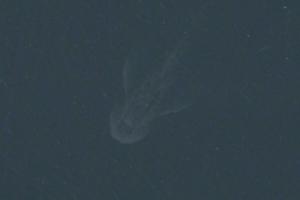 A satellite image (left)
from Apple's version of Google Maps shows a mysterious white blob, with
what appear to be a pair of flippers at its side, underneath the waters
of Loch Ness in Scottish Highlands.
A satellite image (left)
from Apple's version of Google Maps shows a mysterious white blob, with
what appear to be a pair of flippers at its side, underneath the waters
of Loch Ness in Scottish Highlands.
According to the
totally-non-biased “experts” at the Official Loch Ness Monster Fan Club,
a six month study has concluded the image is “likely” proof of the
fabled monster's existence.
‘We've been looking at it for a
long time trying to work out exactly what it is. It looks like a boat
wake, but the boat is missing. You can see some boats moored at the
shore, but there isn't one here. We've shown it to boat experts and they
don't know what it is,” club president Gary Campbell told the Daily Mail.
“Whatever this is, it is under the water and heading south, so unless
there have been secret submarine trials going on in the loch, the size
of the object would make it likely to be Nessie.”
Deep-sea biologist Andrew David
Thaler said otherwise on Friday after taking a few minutes out of his
day on Friday to study the image. Ironically, he used Google Earth to
discredit the fan club's months of hard, analytical work.
“The accompanying image is a
low-resolution satellite image of a boat wake, available, apparently,
only on Apple Maps. There's really not deconstruction needed, it's a
boat wake,” Thaler wrote on his blog.
He even found a handy-dandy GIF made from higher-resolution satellite images of what he believes is the very boat that created the wake in question.
While proving his point about the
monster-sized boat wake, he also proved that Google is far better
resource for monster hunters hunting monsters on their smartphone.
“Apple doesn't have it's own
imaging satellites. The fact that the image only shows up in Apple Maps,
not Google, is due to Apple either using a slightly different image set
to stitch together a picture of the loch, or has a less robust
algorithm for dealing with artifacts,” Thaler explained.
“Both the boat in the northern
picture and the ‘ghost boat’ in the monster picture are about 20 meters
long. There are no 20-meter long catfish. There are no whale sharks in
Loch Ness (how would they survive in freshwater?). It's a boat,” Thaler
continued. “If something looks exactly like a boat wake, in a place
where there are plenty of boats, when a similar boat can actually be
seen in the same region, it's a boat.”
'Animal Architecture,' an awesome new photo book about the structures critters create

Arndt is a world-renowned nature photographer based in Germany, whose work you may have seen in National Geographic, GEO and BBC Wildlife.
Above, a grey bowerbird's bower in Australia's Northern Territory. "The grey bowerbird goes to extreme lengths to build a love nest from interwoven sticks and then covers the floor with decorative objects. The more artful the arbor, the greater the chance a male has of attracting a mate."
"Arndt’s photographs display wonders such as the colourful mating arenas of bowerbirds in West Papua and the fantastic nests created by ants in Africa," says publisher Abrams and Chronicle.
"Studio photographs supplement the images from Arndt’s journey and offer close-up views of the nests, mounds and webs constructed by the animals. Features both breathtaking photography and scientific insight into animal behavior."
I spotted the book via a Guardian photo gallery, which you should check out here.


White Bengal Tiger Cubs Make Their Debut

The Buenos Aires Zoo recently presented white Bengal tiger
triplets, just three months old, to the viewing public for the first
time.
Chimps Choosey About Wood Type for Their Beds

The Beatles sang about Norwegian wood, but for chimps, only
one kind of wood will do when constructing beds.
Animals with Bigger Brains Have More Self-Control

Big-noggined animals have better impulse control compared to lesser-brained creatures, a new study argues.

China Approves Jail Time for Rare Animal Eaters

Government deems 420 species of wild animals as rare or
endangered, including giant pandas, golden monkeys, Asian black bears
and pangolins.
Poachers Kill More Wildlife Than Wolves

Poaching doesn't attract the same public outcry as wild
predators do, according to conservation officials.
Tiny Insects Shown in Digital 3-D Color

A new color 3D modelling system lets you see bugs as you've never seen them before.
Adaptation Keeps Sloth's Lungs from Being Crushed

Evolutionary adaptation keeps vital organs from crushing their lungs.


10 Ways Animals Live Longer

10 Most Unusual Animal Vocal Mimics

The animal kingdom is full of vocal mimics, including some who use the skill to cleverly outwit others.
Hobo Spider Bites Might Not Be So Toxic After All

Whether hobo spider bites are toxic to people has been a
matter of debate, but a new study suggests the spider's venom may be
less harmful thought.
Pet Bearded Dragons Linked to Salmonella Outbreak

A salmonella outbreak that has so far sickened 132 people in
31 states over the last two years has now been traced to pet breaded
dragons.
Tiny Flying Reptile Ancestor to Giant Pterodactyls Found

Many pterodactyls, such as the ones depicted in Jurassic
Park, were huge, but the dino-era airborne beasts evolved from a tiny
flying reptile.

New Crustaceans Found Crawling on Dead Whale Bones

The newly found crustacean was found living on the bones of a
dead whale at the bottom of the Southern Ocean around Antarctica.
Mystery of Bizarre Duck-Like Ocean Sound Solved

The source of the bizarre "bio-duck" sound has finally been found.
A mysterious duck-like
sound recorded in the ocean around Antarctica has baffled scientists for
decades, but the source of the sound has finally been found,
researchers say.
For more than
50 years, researchers have recorded the so-called "bio-duck" sound in
the Southern Ocean. Submarine crews first heard the oceanic quack, which
consists of a series of repetitive, low-pitched pulsing sounds, in the
1960s.
"In the beginning, no
one really knew what it was," said Denise Risch, a marine biologist at
NOAA Northeast Fisheries Science Center in Woods Hole, Mass. Because the
sound was so repetitive, scientists first thought it might be
human-made, possibly coming from submarines. As time went on, people
suggested a fish may be making the sound, but it seemed too loud, Risch said. [Listen to Mysterious Bio-Duck Sound]
It turns out, Antarctic minke whales
actually produce the duck-like sound, Risch and her colleagues have
found. Years' worth of audio recordings will now provide a wealth of
information on the abundance, distribution and behavior of these elusive
cetaceans, the researchers said in their study, detailed today (April
22) in the journal Biology Letters.
Mystery quacks
The bio-duck sounds come in sets spaced about 3.1 seconds apart. The
noises also occur seasonally, and have been heard simultaneously in the
Eastern Weddell Sea off Antarctica and Western Australia.
In February 2013, during the Southern Hemisphere's summer, Risch's colleagues tagged two Antarctic minke whales (Balaenoptera bonaerensis)
off of Western Antarctica with suction-cup tags. The researchers meant
to study the whale's feeding behavior and track their movements.
The tags also contained underwater microphones, and Risch analyzed the
acoustic recordings. She found they contained the duck sounds, as well
as downward-sweeping sounds previously linked to the whales.
The sounds "can now be attributed unequivocally to the Antarctic minke
whale," Risch and her team wrote in the study. The researchers don't
know for sure whether the tagged whales or other nearby minke whales
made the sounds.
What the
sounds mean in whale-speak remains a mystery to scientists. The whales
may use the sounds for breeding or navigation, Risch speculated. The
researchers don't know, either, whether only males make the sounds or
females also partake. For example, male humpback whales, unlike females,
perform complex songs during their mating season.
The fact that the sounds were heard off both Antarctica and Western
Australia suggests that some whales remain in Antarctica year round,
while others migrate to lower latitudes, as other whales do, the
researchers said.
Acoustic time capsule
Now that minke whales have been identified as the source of the mysterious sounds in ocean recordings,
researchers can use those recordings to glean information about the
distribution, abundance and behavior of these vocal animals.
"The fantastic thing about acoustics is you can go back in time," Risch said.
The recordings will be especially useful in tracking these animals in
winter, when visual surveys are impossible due to weather conditions.
Researchers could put out buoys with microphones during the summer, and
later retrieve them to learn about the whales' activity in colder
months.
The ability to track minke whales acoustically also offers an alternative research method to controversial Japanese whaling practices, Risch said. "It shows killing is not necessary."
Four New Species of Killer Sponges Found

Four new species of flesh-eating sponges have been discovered near the bottom of the Pacific Ocean.
Modern Sharks Sleeker Than Ancestors

Sharks have been on Earth for ages, but today's sharks turn
out to have leaner, meaner bodies than those of extinct sharks.
Sharks Contain More Pollutants Than Polar Bears

Subscribe to:
Posts (Atom)
