Welcome to ...

The place where the world comes together in honesty and mirth.
Windmills Tilted, Scared Cows Butchered, Lies Skewered on the Lance of Reality ... or something to that effect.


Saturday, May 10, 2014

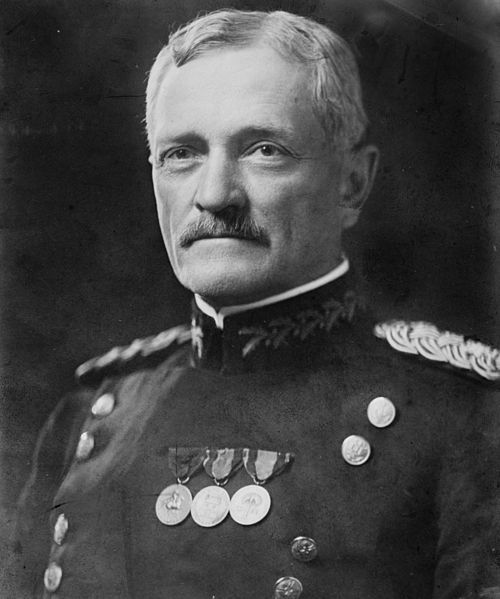
The Jumping Jack Is Named after Its Inventor, General “Black Jack” Pershing

 
John J. Pershing (1860-1948) was one of America’s greatest military leaders. He began in humble conditions in Missouri. Pershing was commissioned as a lieutenant in 1886 after graduating from West Point. His first commands were in the west in the final years of the Indian Wars. In 1896, he was given command of the Tenth Cavalry, an all-black unit in America’s racially segregated military. Pershing led that regiment into battle in Cuba during the Spanish-American War. He was unflinching in his praise and respect for his men. Some white officers nicknamed him “Black Jack” in reference to his defense of his black troops. Others used a somewhat different nickname that rhymes with “jigger.”
Pershing led the American Expeditionary Forces during World War I. It was a monumental task, for Pershing had to organize, train, and equip an army of 4 million men almost from scratch, then lead it into battle on the other side of the planet.
Pershing was successful, for which was rightfully promoted to the rank of General of the Armies of the United States in 1919. This is an honor held by only one other person: George Washington.
(Photo: Troop A, Tenth Cavalry Regiment, c. 1902)
But “Black Jack” Pershing is not often remembered for one of his most practical, everyday innovations. While he was a senior cadet at West Point, he invented an exercise used by people around the world to this day: the jumping jack. It was a means that Pershing used to haze a cadet named Charles D. Rhodes. Frank Everson Vandiver writes about it in Black Jack: The Life and Times of John J. Pershing:
Worst of all, Pershing invented an almost foolproof method of hazing, and Rhodes suffered directly. The scheme got the name “jumping Jack” for obvious reasons, and few treatments seem to have affected plebes more lastingly. Origins of the technique are obscure, but Pershing’s plan had simplicity and adaptability. He would line up a group of plebes, order them to count off to identify odds and evens, and when he pulled on an imaginary string, all the odds threw their arms stiffly out at right angles to their bodies; then Jack pulled the string in the opposite direction, and the odds dropped their arms and evens jumped their legs out to make a V. Back and forth went the string, arms flapped, legs splayed, while upperclassmen howled at the marionettes in action.
And since that time more than a century ago, gym teachers and trainers have hazed people with General Pershing’s invention.
So it is appropriate that on May 1, Pershing’s home state of Missouri declared the jumping jack the official state exercise


How Efficiency Killed the Department Store

Department stores went from elite shops for wealthy people to a more accessible design in the early 20th century, but they really took off after World War II with the meteoric rise of the middle class. Then in the ‘50s, the suburban indoor shopping mall concept gathered department stores into clusters to make shopping more efficient, which drew shoppers away from downtown. But the idea of shopping for pleasure didn’t last, no matter how much "science" went into managing the experience. What killed the department store? It wasn’t just online shopping, although that played a part. You can read the history of department stores, which is really a history of the way we shop, at Collectors Weekly. 

Ask a Psychologist: Is Yoda’s Advice Any Good?

Dr. Nakia Gordon is a professor of psychology at Marquette University in Wisconsin. She’s a scholar on the human use of emotions. Science writer Kyle Hill asked her to reflect on the psychological utility of Jedi Master Yoda’s pearls of wisdom:
“Anger… fear… aggression. The dark side are they. Easily they flow, quick to join you in a fight. If once you start down the dark path, forever will it dominate your destiny, consume you it will, as it did Obi-Wan’s apprentice.”
“Anger, fear and aggression in the right circumstances are indeed easy to evoke. But they aid in survival. Without them, we die. So they are not useless. I think if Yoda had said revenge or other nuanced emotions that rely on complex cognitions, then perhaps his advice is warranted. Rumination is almost always unhealthy (contributing to the maintenance of both depression and PTSD) and it seems to me you need to ruminate in order to plot revenge. You would also need to ruminate to maintain any anger associated with the situation. But that anger would presumably aid you in the confrontation.”
[Is the Dark Side stronger?] “No… no… no. Quicker, easier, more seductive.”
“This one is interesting. Basic emotions of which anger and fear are a part of can be evoked readily. The question is whether there are easily evoked positive emotions too. People’s list of basic emotions usually includes at least one positive emotion. But that positive one is not as easily defined. Sometimes it is enjoyment, sometimes it is joy, sometimes happiness. In theory, any basic emotion should be quickly and easily evoked, but a basic positive one is elusive for researchers. Perhaps the negative emotions are as seductive to researchers as they are to Jedis.
Dr. Gordon also wrote about her general impressions of the Jedi approach to emotion:
Yoda often seems to be asking for the Jedi to be in the present. In the long-term, practicing something like “mindfulness meditation” does appear to have many beneficial health effects. Mindfulness would, in theory, keep Jedi from ruminating on anger.

5 Bizarre Mental Illnesses That Turn Reality Into a TV Show

If you’ve followed Neatorama for a while, you are familiar with the Truman Show Delusion. It’s a mental illness in which a person believes that his whole life is a reality TV show. I would have expected this delusion to be included in a Cracked list about mental illnesses that turn your life into a TV show, but no. These five conditions are even stranger than that. They’re not all psychological, either -some are neurological, like the condition that causes you to see subtitles in real life.
It happened to septuagenarian Dorothy Latham. When she has a conversation, the words appear as a brightly colored ticker tape in front of whoever's speaking. It is likely the one and only thing she has in common with the teen blogger known as Cath. They both have a rare form of synesthesia, a bizarre condition in which one of your senses becomes tightly linked to another. Seeing the color blue might make you taste cheeseburgers, or hearing the music of Nirvana might make you smell teen spirit (which is mostly old socks and stale semen, for the record).
Read more about this condition and others that will blow your mind, at Cracked.

Using a Foreign Language Affects Your Ethical Reasoning

You're standing on a footbridge overlooking a train track. A train is coming down that track. It is about to hit and kill five people.
A very heavy man is also on the bridge. If you push him off the bridge, his body will stop the train, but it will also kill him.
Would you push him?
How you answer this ethical dilemma may be affected by the language in which you hear it. Researchers at the University of Chicago and Pompeu Fabra University in Barcelona found that when people encountered this dilemma in a foriegn language, they were more likely to take the utilitarian option: pushing the man off the footbridge. Science 2.0 reports:
The researchers collected data from people in the U.S., Spain, Korea, France and Israel. Across all populations, more participants selected the utilitarian choice — to save five by killing one — when the dilemmas were presented in the foreign language than when they did the problem in their native tongue.
Even with randomizing the participants' language groups, "those using a foreign language were twice as likely to respond with the utilitarian approach that is more in the service of the common good of saving more people," said lead author Albert Costa from the Center of Brain and Cognition, Universitat Pompeu Fabra, Barcelona. Costa is currently a visiting professor at the University of Chicago.

A Tangle of Conflicts The Dirty Business of Palm Oil

by Nils Klawitter 
A Tangle of Conflicts: The Dirty Business of Palm Oil  
Palm oil can be found in many of the products we consume each day. Much of it comes from Indonesia, where brutal methods are deployed against locals. One of the main suppliers says it is cleaning up its act, but has it really changed?  More.


What if we threw a revolution, and nobody came?

1: The phrase "the Copernican Revolution" was coined by Immanuel Kant.
2: Copernicus' contemporaries didn't see his ideas as controversial. Rather, they mostly ignored him.

Wage theft hits software engineers as well as fast food workers

A New York Times editorial points out that software engineers and fast food workers are more similar than we might think: Both groups are affected by wage theft.
    In the days ahead, a settlement is expected in the antitrust lawsuit pitting 64,613 software engineers against Google, Apple, Intel and Adobe. The engineers say they lost up to $3 billion in wages from 2005-9, when the companies colluded in a scheme not to solicit one another's employees. The collusion, according to the engineers, kept their pay lower than it would have been had the companies actually competed for talent. [...]
.
    The case essentially alleges white-collar wage theft. The engineers were not victimized by the usual violations of labor law, but by improper hiring practices against their interests. The result, however, was the same: Money that would have flowed to workers in the form of wages went instead into corporate coffers and from there to executives and shareholders.

No climate change, please. We're Faux & Friends

In totally unsurprising news, Scientific American editor Michael Moyer was told he couldn't talk about climate change in a recent appearance on Faux News' morning show.

Why does everybody climb Mt. Everest in spring?

Emily Sohn at Discovery News has a really interesting story about the meteorology and weather physics that explain why the Everest climbing season is so short and why, even in the "good" months, weather is still a major risk factor on the mountain. 

Pyramid Parts Would Slide Superbly on Soaked Sand, Says Study

A new theory is adding to our understanding of how the ancient Egyptians might have built the pyramids. You'll recall that, today, most Egyptologists believe the pyramids were built by workers pulling blocks of stone on sledges. Scientists at the University of Amsterdam have found that that system would work better if the sand beneath the sledges were wet. 

Michelangelo's David at Risk From Weak Ankles

Tiny fractures at the famous sculpture's ankles could prove devastating in the event of an earthquake.


Antibiotics and the microbiome

This post on overselling the microbiome by microbiologist Jonathan Eisen is worth reading if, for no other reason, than that it serves as a nice reminder that we don't actually have this microbiome thing figured out yet, and the community of scientists don't agree on ideas that are fast becoming pop culture "everybody knows" material.

MRSA is from Washington Heights

The majority of community acquired (i.e., not caught in a hospital) cases of antibiotic-resistant staph can be linked to a single strain of the bacteria. And, now, scientists have pinpointed where that strain first evolved. It's from northern Manhattan. 

Healthier kids make for taller adults

People in western countries gained roughly four inches in height between WW1 and today. The driving force behind this growth spurt: Sanitation and a reduction in early childhood illnesses, especially bacterial infections of the lungs and intestinal tract.

Why feed babies one new food at a time?

Do you really have to start with rice cereal? Why do we only feed babies unseasoned food? Matt Shipman gets some interesting answers from a NC State nutrition professor. Turns out: The big issue with seasoning is sodium. Babies can't process much of it and a lot of seasonings are loaded with it.

Why should you care about a dead king's DNA?

"Oh look a king, let’s break out the thermocycler," writes osteoarchaeologist Alison Atkin in a piece on the not exactly essential DNA analysis of the remains of Richard III.

Ziggy

http://l3.yimg.com/bt/api/res/1.2/PcTOkoVllU5IoF_eDDU91Q--/YXBwaWQ9eW5ld3M7Zmk9ZmlsbDtoPTI5MztweW9mZj0wO3E9NzU7dz0zMDA-/http://media.zenfs.com/en_us/News/ucomics.com/zi140509.gif

A Sea of Cherry Blossoms

The cherry blossoms are in bloom in Japan. Hirosaki Castle, a Seventeenth Century castle on the northern end of Honshu, is considered one of the best places in the country to see them.
There’s a moat around the castle. Twitter user @WizardsTools snapped this spectacular photo of the moat covered with a layer of cherry blossoms. You can see more photos of the castle during cherry blossom season here.

The Rise and Fall of Circus Freak Shows

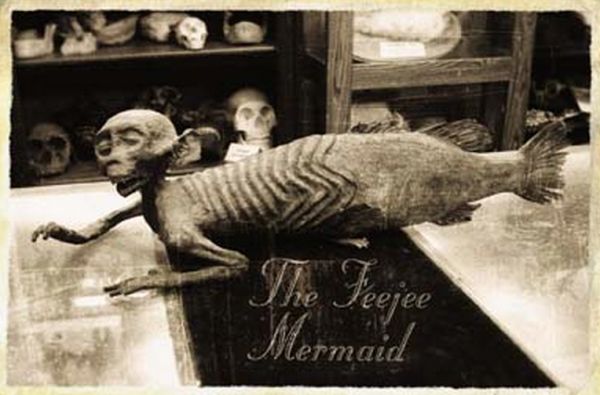
The freak show has been around for hundreds of years, but it reached new heights under the reign of P.T. Barnum in the 19th century, whose cobbled-together mummy called the “Feejee mermaid” made him a star.
Barnum embarked on a ferocious campaign to convince his crowds that the creature was real, feigning newspaper articles and even weaseling his way into the American Museum of Natural History. He fabricated a story about the mermaid’s discovery and distributed over 10,000 pamphlets. In a matter of weeks, he had the public’s attention.

Barnum purchased the American Museum on Broadway in New York and, throughout the 1840s, introduced a “rotating roster of freaks: albinos, midgets, giants, exotic animals” and anyone else who piqued the curiosities of the public. To advertise the space, he hired the most unskilled musicians he could find and had them play on the building’s balcony, in the hopes that this “terrible noise” would attract customers.

Under his leadership, the American freakshow became a booming business -- both highly profitable and degrading for its performers.
The death of the freak show came in the mid-20th century, as mass media replaced live shows and the exploitive nature of the exhibitions turned people off. There was a tug-of-war between those who said disabled people shouldn’t be exploited and the performers who were making a good living exhibiting themselves. But while the classic sideshow died out, the original concept lives on in different forms. The story of P.T. Barnum and the freakshow at Priceonomics also profiles the most famous “freaks” of yesteryear: General Tom Thumb, Zip the Pinhead, Chang and Eng Bunker, Jo-Jo The Dog-Faced Boy, and others.

Dyson’s Dock

Area 51′s Super Secret ‘Museum’
A museum is a place where things are put on display, so how can a museum be “secret?” In this case, it’s when the collection of things are classified government projects from Groom Lake, the testing facility at the mysterious Area 51 in Nevada.
Dyson’s Dock’s precise function remains unclear, but the most likely explanation suggests that it’s a storage facility for projects that have run their course but aren’t ready to be unveiled publicly. Its location is thought to be within Area 51′s massive Hangar 18 complex (top), possibly in a lower bay beneath office space on the west side of the building.

Some references to Dyson’s Dock point to a classified museum, where base workers with the appropriate security clearance can view past projects in all their glory – essentially a warehouse full of planes that you and I will never get to see, despite many of them likely being rather conventional in design. Others, however, assert that projects remain segregated, and that few people are cleared to view all of them.
But there are other explanations of what Dyson’s Dock is and who can visit it, plus some speculation of what may be inside, at Urban Ghosts.

Japan Thinks the New Godzilla is Too Fat

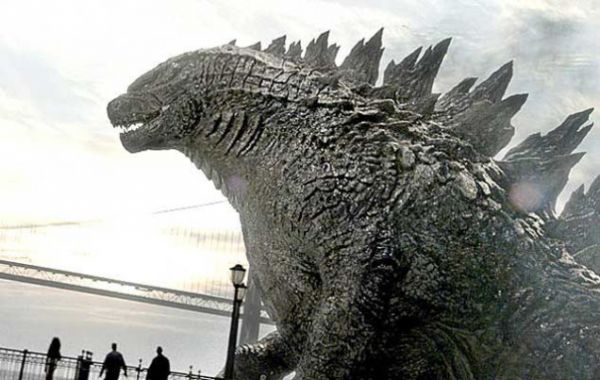
It was a long time between the first trailer for the new Godzilla film and the latest, in which we finally get a good look at the monster. So how does he stack up? Movie fans on the Japanese forum 2chan think he’s, well, overweight. And internet commenters aren't above a bit of fat-shaming.
Did he get fat?

His neck looks like an American football athlete's.

Is this Sin from Final Fantasy X?

Out of shape Godzilla

He's gone Supersize Me.
There’s more, and at least one Godzilla artist has a counter-argument at Kotaku. Godzilla opens May 16th in the U.S. 

Daily Comic Relief

http://l.yimg.com/bt/api/res/1.2/Z_IkGszq4z1shVP8DH74Cw--/YXBwaWQ9eW5ld3M7Zmk9ZmlsbDtoPTE5NDtweW9mZj0wO3E9NzU7dz02MDA-/http://media.zenfs.com/en_us/News/ucomics.com/dp140509.gif

Dogs lick toads to get high

Meanwhile, down under...
Queensland dogs are getting high by licking the poison off cane toads. Vets are warning some pooches may become addicted to the hallucinogenic and are risking their lives trying to get their next toad fix. It's being reported the dogs have worked out how to lick the toad just enough to get high. "This phenomenon of animals deliberately getting intoxicated by cane toads, it's fascinating," says veterinarian Megan Pickering. "It just seems unbelievable that an animal will go back for a second try.

Electrifying Organisms

Check out these charged organisms that use electricity to talk, to hunt and to defend themselves.


Bugs Are A Taste Sensation That's Sweeping The Nation

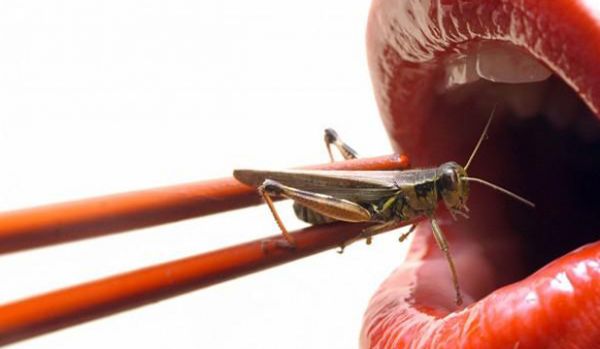
People around the world enjoy eating bugs- they’re a good source of protein, a renewable and plentiful resource, and there are enough flavor varieties to keep even the most jaded foodies coming back for more.
But Americans in general haven’t really embraced the concept of eating bugs, except for the occasional worm at the bottom of a bottle of tequila, but edible insects are a culinary delight that should be embraced, especially since so much of the pre-packaged food out there can’t compare to the vitamins and nutrients found in bugs.
Entomophagist Daniella Martin is the author of Edible: An Adventure Into The World Of Eating Insects, and her take on why we should all eat more bugs is enlightening and may change the way you think of those snacks that go squirm in the night.

Coming Tomorrow

Coming Tomorrow
  • How NASA might build its very first warp drive
  • 'Wimpy' dwarf fossil galaxy revels new facts about early universe
  • Why Lighthouse Keepers go mad
  • How 'Selfies' create confidence
And more ...
These opossums are our Animal Picture, for today.

Friday, May 9, 2014

The Daily Drift

The Fair's back in town ...!
 
Carolina Naturally is read in 199 countries around the world daily.   

Wanna go swimmin' ... !
Today is - Fintastic Friday: Giving Sharks A Voice Day

Don't forget to visit our sister blog: It Is What It Is

Some of our reader today have been in:
The Americas
Sioux Lookout, Kitchener, L'ancienne-Lorette, Saint John's, Britannia, Joliette, Thunder Bay, Ottawa, Montreal and Downsview, Canada
Arequipa and Lima, Peru
Reseda, Manning, Azusa, Itasca, Albion, Opelika, Landen and Slidell, United States
Tipitapa, Nicaragua
Luquillo and San Juan, Puerto Rico
Sao Paulo and Rio De Janeiro, Brazil
Jalapa Enriquez and Mexico City, Mexico
Guatemala City, Guatemala
The Bottom, Sint Eustatius and Saba
Europe
Salon-De-Provence, Rouen and Magenta, France
Eschborn and Frankfurt Am Main, Germany
Genova, Ivrea and Padova, Italy
Tranbjerg, Denmark
Rostov-Na-Donu, Ryazan and Vladivostok, Russia
Maribor, Slovenia
Warsaw, Poland
Nivelles, Belgium
Southampton, London, Birmingham and Kent, England
Riga, Latvia
Sarajevo, Bosnia and Herzegovina
Mykolayiv, Ukraine
Arendal and Stavanger,  Norway
Castello De La Plana, L'Olleria, Algeciras, Madrid and Basauri, Spain
Reykjavik, Iceland
Lisbon and Teixoso, Portugal
Prague, Czech Republic
Bucharest, Romania
Espoo, Finland
Dublin, Ireland
Kista, Sweden
Asia
Colombo, Sri Lanka
Mumbai, Bhubaneshwar, Coimbatore, Bangalore, Thiruvananthpuram and Shillong, India
Atyrau, Kazakhstan
Dhaka, Bangladesh
Ilam, Iran
Kuala Lumpur and Pasir Gudang Baru, Malaysia
Jakarta, Indonesia
Kathmandu, Nepal
Islamabad and Karachi, Pakistan
Kabul, Afghanistan
Al Harithah, Iraq
Hanoi, Vietnam
Seoul, Korea
Doha, Qatar
Africa 
Algiers, Algeria
The Pacific
Hagatna, Guam
Sydney and Brisbane, Australia

Today in History

1502 Christopher Columbus leaves Spain on his final trip to New World.
1754 The first newspaper cartoon in America appears.
1813 U.S. troops under William Henry Harrison take Fort Meigs from British and Canadian troops.
1864 Union General John Sedgwick is shot and killed by a Confederate sharpshooter during fighting at Spotsylvania. His last words are: "They couldn't hit an elephant at this dist–"
1859 Threatened by the advancing French army, the Austrian army retreats across the River Sesia in Italy.
1915 German and French forces fight the Battle of Artois.
1926 Explorer Richard Byrd and Floyd Bennett make the first flight over the North Pole.
1936 Fascist Italy captures the city of Addis Abba, Ethiopia and annexes the country.
1941 The German submarine U-110 is captured at sea along with its Enigma machine by the Royal Navy.
1946 King Victor Emmanuel II of Italy abdicates his throne and is replaced by Umberto.
1962 A laser beam is successfully bounced off the moon for the first time.
1974 The House Judiciary Committee begins formal hearings on Nixon impeachment.

Non Sequitur

http://l1.yimg.com/bt/api/res/1.2/W2wD.45inzTKfg5IIXvlzQ--/YXBwaWQ9eW5ld3M7Zmk9ZmlsbDtoPTE5NTtweW9mZj0wO3E9NzU7dz02MDA-/http://media.zenfs.com/en_us/News/ucomics.com/nq140508.gif

Hippocrates' Legendary Tree 'Fingerprinted'

Some 24 centuries after the ancient Greek father of medicine taught his students under an Oriental plane tree, scientists say they have the tree's genetic blueprint.

The plant with 1000 faces

There is a vine that is capable of contorting the size, shape, color, orientation, and vein patterns of its leaves to match nearby foliage. It's able to match not just one or two other species, but a whole host of them. Nobody has any clue how it knows what neighboring plants look like.

Monkey Math

Rhesus monkeys can perform advanced math, but what about other brainy members of the animal kingdom?

Tamarin Monkeys Stolen

Officers believe the squirrel-sized animals were specifically targeted in 'planned and pre-meditated crime.'

This Baby Deer Is the Size of a Hamster

The Java mouse deer (Tragulus javanicus) is among the smallest deer species in the world. Adults typically weigh between 2.2 and 4.1 pounds. Their natural habitat is the tropical rainforests of Southeast Asia.
This baby Java mouse deer lives at the Bioparc Fuengirola, a zoo in Spain. When these photos were taken a few days ago, he weighed just 3.5 ounces.
Here he is with his mother, who was born at the zoo in 2007. They're 2 of 43 of their species currently in zoos in Europe. His father came from a French zoo last year.

Rodents Fear Men ...

Men, but not women, increase anxiety levels in mice and rats, research shows.

Lioness Surgery

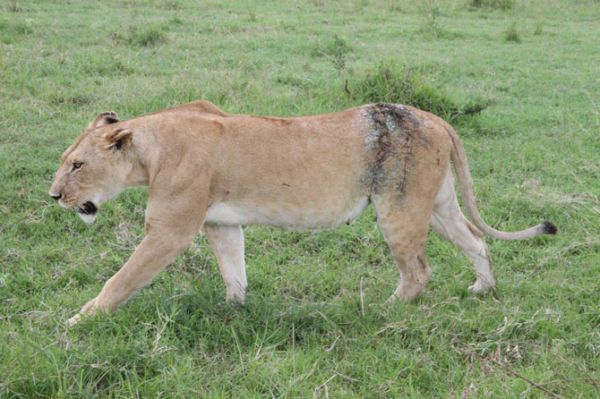
Siena is a lioness at the Masai Mara National Reserve, which straddles the border of Kenya and Tanzania. She was gored by a buffalo, a wound that looks horrible but did not affect any of her major organs. Siena is raising three cubs, who would die if Siena succumbed to infection. Rangers called for a vet to be flown in.
The veterinarian Dr Njoroge from the Kenya Wildlife service’s landed at Musiara airstrip at lunchtime and Governors guides drove the medical team directly to where Siena was resting. Treatment started in the afternoon when she was darted. Moments later a sub-adult lioness promptly sauntered up to Siena who was still standing while the drug was taking effect and pulled the dart out of her with her teeth.
Siena was treated and stitched effectively which took approximately 1½ hours.
The operation is documented in photographs at Africa Geographic, but be aware that they are gory. The first one, showing Siena standing stoically with the fresh wound may be disturbing. The picture here is Siena after surgery.

Endangered Giraffe Species Gains New Baby

Madrid Zoo welcomes the latest addition to the Rothschild giraffe club.

Top 10 Fastest Land Animals

A look at the 10 fastest land animals reveals a new speedster in the number one spot.

Did you know ...

The Deadliest Animal In The World

An article by Bill Gates. What would you say is the most dangerous animal on Earth? Sharks? Snakes? Humans? Of course the answer depends on how you define dangerous. If you're judging by how many people are killed by an animal every year, then the answer isn't any of the above. It's mosquitoes. When it comes to killing humans, no other animal even comes close.
Mosquitoes carry devastating diseases. The worst is malaria, which kills more than 600,000 people every year; another 200 million cases incapacitate people for days at a time. It threatens half of the world's population and causes billions of dollars in lost productivity annually.

Crow Vs Raven

While crows and ravens may look similar, they are very different in their behavior, habitat and even have physical characteristics that clearly distinguish them from one another.

AM Radio Can Disorient Birds

Don't get too attached to a favorite AM radio station -- a new study finds it could be harming songbirds.

This Is a Bird Nest Made of Coat Hangers

 
You've got to adapt to survive and the Jungle Crow is a survivor. Amusing Planet reports that many of these birds live in Fukuoka City, Japan. They're open minded about building materials. Some freely use coat hangers left outside:
In such a large city, there are few trees, so the natural materials that crows need to make their nests are scarce. As a result, the crows will often steal hangers from the people who live in apartments nearby, and carefully assemble them into intricate nests. The completed nests almost look like works of art.
Nests built from hangers were also discovered in other Japanese cities. In Fukuoka City, the Jungle Crow would often make nests atop power lines during the breeding season that could cause large blackouts due to short circuiting. The Kyushu Electric power company actually has "crow patrols" that search out and destroy hanger nests on their power grid.
You can see more photos of these nests at Amusing Planet.

Boobies Declining

The animal's numbers have dropped more than 50 percent in less than 20 years.

Ziggy

http://l2.yimg.com/bt/api/res/1.2/6GLMgYxrirJ5YJCPbnnzyw--/YXBwaWQ9eW5ld3M7Zmk9ZmlsbDtoPTI5MTtweW9mZj0wO3E9NzU7dz0zMDA-/http://media.zenfs.com/en_us/News/ucomics.com/zi140508.gif

Albino Kingsnake Slithering Amok in Canary Islands

Invasive reptile threatening bird, mammal and lizard populations.

You Can See the Eyes of This Transparent Spider Move inside Its Skull

YouTube user Wayne Maddison identifies this cutie as a yellow amycine jumping spider from Ecuador. I am unable to independently verify that claim, but never mind: look at its eyes! You can see right through its skull at the eyes movin' around!

This is a living creature ...

The creature is a single-cell organism (Nassula).
And it has all that is needed for life.  What is it that converts this combination of membranes and complex molecules into a "living" organism capable of eating and reproducing.

A Single Drop of Seawater, Magnified 25 Times

A Single Drop of Seawater, Magnified 25 Times   water science nature microbes  
You know when you’re horsing around at the beach and accidentally swallow a nasty gulp of salt water? Well I hate to break it to you but that foul taste wasn’t just salt. Photographer David Littschwager captured this amazing shot of a single drop of seawater magnified 25 times to reveal an entire ecosystem of crab larva, diatoms, bacteria, fish eggs, zooplankton, and even worms. Read more about what you probably don’t want to know at Dive Shield.

Daily Comic Relief

http://l.yimg.com/bt/api/res/1.2/pKkbUtdpFNLKFYoe8PwTRQ--/YXBwaWQ9eW5ld3M7Zmk9ZmlsbDtoPTE5MztweW9mZj0wO3E9NzU7dz02MDA-/http://media.zenfs.com/en_us/News/ucomics.com/dp140508.gif

Military-trained dolphins will not be killing Russians

Yes.
The US Navy keeps and trains dolphins.
No, they are not trained to murder.
No, they will not be deployed to Ukraine.

How much shark fin soup could you make from the largest shark that ever lived?

Scientist and shark enthusiast David Shiffman has done the calculations and he estimates that one extinct megalodon could yield 70,456 bowls of shark fin soup.

Secret to Surviving Extinction?

If you hope to avoid extinction, it pays not to be a finicky eater.

The Ten Most Bizarre Theories About Why The Dinosaurs Went Extinct

It’s one of the most enduring mysteries in the history of planet Earth, and because we still haven’t totally figured out what killed off the dinosaurs people love to come up with far out explanations of what exactly happened to them.
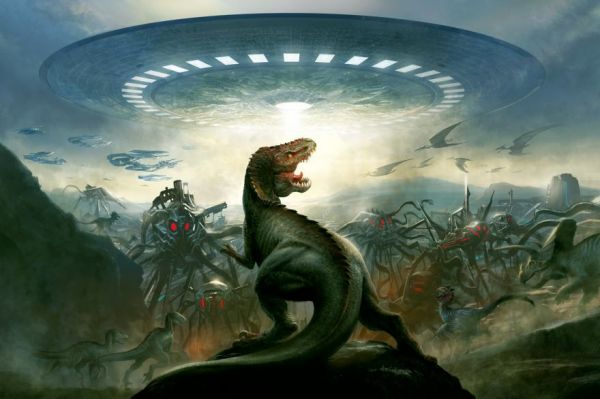
Some think meteor strikes wiped them out, others believe UFOs beamed them up and took them to another planet far across the galaxy, but these are just the tip of the iceberg in terms of strange theories, as you will discover in this collection of strange theories brought to you by io9.

Coming Tomorrow

Coming Tomorrow
  • The Rise And Fall Of Circus Freak Shows
  • Is Yoda's Advice Any Good?
  • Dogs Lick Toads To Get High
  • Bugs Are A Taste Sensation That's Sweeping The Nation
And more ...
This bear is our Animal Picture, for today.

Thursday, May 8, 2014

The Daily Drift

Ahem ...!
 
Carolina Naturally is read in 199 countries around the world daily.   

Go ahead go bare, we dare you ... !
Today is - No Socks Day

Don't forget to visit our sister blog: It Is What It Is

Some of our reader today have been in:
The Americas
Tijuana, Mexico
Downsview, Sioux Lookout, Nunalla, L'ancienne-Lorette, Pikangikum and Lake Louise, Canada
San Juan and Luquillo, Puerto Rico
Armenia and Bogota, Colombia
Avon, Urbana, Houma, Onalaska, Linthicum and Flushing, United States
Tipitapa, Nicaragua
Sao Paulo and Rio De Janeiro, Brazil
Buenos Aires, Argentina
Europe
Padova, Ravenna, Ivrea, Milan and Cagliari, Italy
Madrid, Barcelona and Algeciras, Spain
Dubrovnik, Croatia
Kista and Malmo, Sweden
Riga, Latvia
Kiev, Ukraine
Lisbon, Portugal
London and Kent, England
Frankfurt Am Main, Dresden and Koeln, Germany
Vladivostok and Ryazan, Russia
Athens, Greece
Reykjavik, Iceland
Dublin, Ireland
Karabaglar, Turkey
Frederiksberg, Slagelse and Copenhagen, Denmark
Amsterdam, Netherlands
Sarajevo, Bosnia and Herzegovina
Prague, Czech Republic
Asia
Muscat, Oman
Hyderabad, Thiruvananthpuram, New Delhi, Shillong, Coimbatore, Delhi, Bangalore and Mumbai, India
Tehran, Tabriz and Shiraz, Iran
Bangkok and Bang Rak, Thailand
Seremban and Kota Kinabalu, Malaysia
Shibuya-Ku, Japan
Tel Aviv, Israel
Islamabad, Pakistan
Beirut, Lebanon
Amman, Jordan
Riyadh, Saudi Arabia
Guangzhou and Shenzhen, China
Colombo, Sri Lanka
Pontianak and Kedaton, Indonesia
Singapore, Singapore
Ulaanbaatar, Mongolia
Doha, Qatar
Kathmandu, Nepal
Africa 
Johannesburg, South Africa
Cairo, Egypt
Meknes, Morocco
Kampala, Uganda
Osogbo, Nigeria
Nairobi and Yala, Kenya
The Pacific
Makati, Philippines
Sydney and Brisbane, Australia

Today in History

1450 Jack Cade's Rebellion–Kentishmen revolt against King Henry VI.
1541 Hernando de Soto discovers the Mississippi River which he calls Rio de Espiritu Santo.
1559 An act of supremacy defines Queen Elizabeth I as the supreme governor of the church of England.
1794 The United States Post Office is established.
1846 The first major battle of the Mexican War is fought at Palo Alto, Texas.
1862 General 'Stonewall' Jackson repulses the Federals at the Battle of McDowell, in the Shenendoah Valley.
1864 Union troops arrive at Spotsylvania Court House to find the Confederates waiting for them.
1886 Atlanta pharmacist John Pemberton invents Coca Cola.
1895 China cedes Taiwan to Japan under Treaty of Shimonoseki.
1904 U.S. Marines land in Tangier, North Africa, to protect the Belgian legation.
1919 The first transatlantic flight by a navy seaplane takes-off.
1933 Hahatma Gandhi begins a hunger strike to protest British oppression in India.
1940 German commandos in Dutch uniforms cross the Dutch border to hold bridges for the advancing German army.
1942 The Battle of the Coral Sea between the Japanese Navy and the U.S. Navy ends.
1945 The final surrender of German forces is celebrated as VE (Victory Europe) day.
1952 Allied fighter-bombers stage the largest raid of the war on North Korea.
1958 President Eisenhower orders the National Guard out of Little Rock as Ernest Green becomes the first black to graduate from an Arkansas public school.
1967 Boxer Muhammad Ali is indicted for refusing induction in U.S. Army.
1984 The Soviet Union announces it will not participate in Summer Olympics planned for Los Angeles.
1995 Jacques Chirac is elected president of France.

Non Sequitur

http://l3.yimg.com/bt/api/res/1.2/B_BtE1YSodeuVbGBV65hrA--/YXBwaWQ9eW5ld3M7Zmk9ZmlsbDtoPTE5NTtweW9mZj0wO3E9NzU7dz02MDA-/http://media.zenfs.com/en_us/News/ucomics.com/nq140507.gif

The secret, underground concert hall of Boston

The secret, underground concert hall of Boston
Boston has its own phantom of the opera; a vast and forgotten 120 year-old concert theatre buried 40 feet below street level. One of the city’s best-kept secrets, the sleeping concert hall reminiscent of Italian Renaissance style, has been closed for more than 70 years, hidden away from the public below the unassuming old storefront of piano seller 
M. S Steinert & Sons on Boylston Street.

Cape Town Girls