Welcome to ...

The place where the world comes together in honesty and mirth.
Windmills Tilted, Scared Cows Butchered, Lies Skewered on the Lance of Reality ... or something to that effect.


Monday, May 12, 2014

The Dangers of a Bigger Godzilla

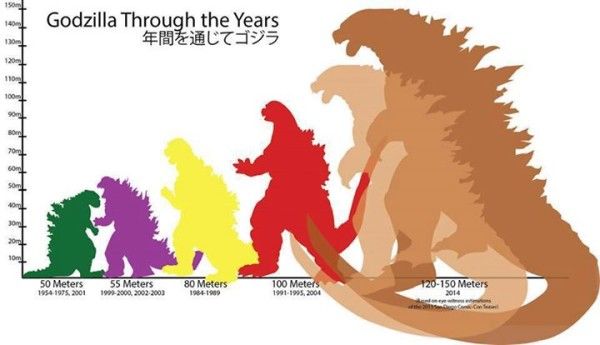
Godzilla has grown larger over the years, as you can see in this graph. In 1954, the movie monster was only 50 meters (164 feet) tall (as if that isn’t tall enough). In the 2014 movie, opening later this month, Godzilla is estimated to be about 150 meters (492 feet) tall! Deep Sea News crunches the numbers to study this size change and speculate on its meaning.
So why is Godzilla obtaining ever larger sizes with time?  Skyscrapers.  Skyscraper height has increased dramatically over the last century.  For Godzilla to continue to plow through buildings in major metropolises, a more formidable size is needed.  Of course this size change can only be evolutionarily adaptive if it changes the fitness of Godzilla, i.e. in the simplest case the number of offspring passed to the next generation.  If Godzilla is able to topple buildings this might allow for greater acquisition of resources in this case food in the form of people. This would increase the lifespan of Godzilla allow for more reproduction or allow for greater amount of energy to be passed to the offspring increasing their rate of survival  Or perhaps toppling buildings is a sexual display that sexual partners cue on.  Sexual selection!
Which is all well and good for the species, I suppose, but then they get into the urine output of such a large creature, and that’s even scarier than the movies!

The science of ever-larger Godzillas

A 55,000-ton, city-destroying lizard beast could pee 151,436,928 gallons per day. They never show you all the people who died, drowned in Godzilla's urine.

Coming Tomorrow

Coming Tomorrow
  • Putin's not Post-Communist, he's Post-Fascist
  • USA: The world's newest third world nation
  • The repugicans freak out as the FEC wants Faux News and wingnut media as PACs
  • Corrupt judge tries to protect Scott Walker by ordering incriminating evidence destroyed
And more ...
These macaws are our Animal Picture, for today.

Sunday, May 11, 2014

The Daily Drift

We could use a dozen or so of these around here - a couple of dozen, even ...!
 
Carolina Naturally is read in 199 countries around the world daily.   

Queen for a Day ... !
Today is - Mother's Day

Don't forget to visit our sister blog: It Is What It Is

Some of our reader today have been in:
The Americas
Mountain View, Monte Sereno, Mount Gilead, Mount Pleasant, Pilot Mountain, Black Mountain, Montara, Green Mountain and Suwanee, United States
Pikangikum, L'ancienne-Lorette, Montreal, Quebec, Ottawa, Britannia and Nunalla, Canada
Mexico City and Ecatepec, Mexico
Bogota and Medellin, Colombia
Luquillo, Puerto Rico
Tipitapa, Nicaragua
Santiago, Chile
Rio De Janeiro and Sao Paulo, Brazil
Europe
Gornja Tuzla and Sarajevo, Bosnia and Herzegovina
Salon-De-Provence, France
Ryazan, Vladivostok, Saint Petersburg and Velikiye Luki, Russia
Huddinge and Stockholm, Sweden
Merida and Madrid, Spain
Milan, Rome, Treviso, Novara, Padova and Genoa, Italy
Kent, London and Gosport, England
Dublin, Ireland
Lublin, Warsaw, Olsztyn and Chrzanow, Poland
Novi Sad, Serbia
Ruse, Bulgaria
Reykjavik, Iceland
Dubrovnik, Croatia
Espoo, Finland
Rothe Erde and Bonn, Germany
Oslo, Norway
Den Haag, Netherlands
Asia
Singapore, Singapore
Kuala Lumpur, Kota Kinabalu and Seri Kembangan, Malaysia
Kolkata, Bankura, Chetput, Bangalore, Mumbai, Pune and Thiruvananthpuram, India
Jakarta, Indonesia
Kathmandu and Pokhara, Nepal
Tehran and Ahvaz, Iran
La Dagotiere, Mauritius
Cyberjaya, Malaysia
Sialkot, Pakistan
Ratchaburi, Thailand
Colombo, Sri Lanka
Amman, Jordan
Muscat, Oman
Africa 
Anaba and Algiers, Algeria
Rosebank, South Africa
The Pacific
Sydney, Australia
Quiapo and Simpaloc, Philippines

Today in History

1573 Henry of Anjou becomes the first elected king of Poland.
1689 French and English navies battle at Bantry Bay.
1690 In the first major engagement of King William's War, British troops from Massachusetts seize Port Royal in Acadia (Nova Scotia and New Brunswick) from the French.
1745 French forces defeat an Anglo-Dutch-Hanoverian army at Fontenoy.
1792 The Columbia River is discovered by Captain Robert Gray.
1812 British prime Minster Spencer Perceval is shot by a bankrupt banker in the lobby of the House of Commons.
1857 Indian mutineers seize Delhi.
1858 Minnesota is admitted as the 32nd U.S. state.
1860 Giuseppe Garibaldi lands at Marsala, Sicily.
1862 Confederates scuttle the CSS Virginia off Norfolk, Virginia.
1864 Confederate General J.E.B. Stuart is mortally wounded at Yellow Tavern.
1960 Israeli soldiers capture Adolf Eichmann in Buenos Aires.
1967 The siege of Khe Sanh ends, the base is still in American hands.

Non Sequitur

http://l2.yimg.com/bt/api/res/1.2/ky8.MroA3fwgT_mNGDzJ9Q--/YXBwaWQ9eW5ld3M7Zmk9ZmlsbDtoPTE5NTtweW9mZj0wO3E9NzU7dz02MDA-/http://media.zenfs.com/en_us/News/ucomics.com/nq140510.gif

How ‘selfies’ create confidence


How ‘selfies’ create confidence


sel·fie /ˈselfē/ (noun)- a photograph that one has taken of […]

Playing outside could make kids more spiritual

Playing outside could make kids more spiritual


Children who spend significant time outdoors could have a stronger […]

In sickness and in health

Why couples don't get marriedIn sickness and in health: How illness affects the risk of divorce


In the classic marriage vow, couples promise to stay together […]

Yawning to cool the brain

Yawning to cool the brain
Why do we yawn? We tend to yawn before sleep […]

Extreme sleep

Extreme sleep: Change in durations may affect brain health in later life


A new research study led by Brigham and Women’s Hospital […]

Out of shape?

Out of shape? Your memory may suffer


Here’s another reason to drop that doughnut and hit the […]

People with autistic tendencies vulnerable to alcohol problems

Young adults with autistic tendencies don’t often engage in social […]

Acupuncture Helps Kids Manage Pain, Nausea

Acupuncture Helps Kids Manage Pain, Nausea


The pink plastic box thatCynthia Kim, MD, EdD, opens at […]

Vitamin D deficiency may be linked to aggressive prostate cancer

Vitamin D deficiency may be linked to aggressive prostate cancer


Vitamin D deficiency was an indicator of aggressive prostate cancer […]

Rare Polio-Like Disease in California

Rare Polio-Like Disease in California


UCSF and Stanford physicians and researchers report on five cases […]

Autoimmune Diseases May Succumb to New Drug Strategy

Autoimmune Diseases May Succumb to New Drug Strategy


New pharmaceuticals to fight autoimmune diseases, such as multiple sclerosis, […]

Electronic nose sniffs out prostate cancer using urine samples

Electronic nose sniffs out prostate cancer using urine samples


Novel noninvasive technique successfully discriminates between prostate cancer and benign […]

Ziggy

http://l3.yimg.com/bt/api/res/1.2/xhHqvyIdeQusNiUphwCKSw--/YXBwaWQ9eW5ld3M7Zmk9ZmlsbDtoPTI5MztweW9mZj0wO3E9NzU7dz0zMDA-/http://media.zenfs.com/en_us/News/ucomics.com/zi140510.gif

Why Is It So Hard to Thread a Needle?

Scientists are shedding light on why threading a needle can be such a challenge, even if you do have good eyesight and a steady hand.

Why did lighthouse keepers go mad?

It wasn't the solitude. The Old Salt Blog explains:
In the 19th century, lighthouse keepers had a high frequency of madness and suicide.  Many assumed that they went mad from solitude and the demands of the job. It turns out it was something simpler and more sinister.

Fresnel lenses were the great lighthouse innovation of the 19th century.  The lenses developed by French physicist Augustin-Jean Fresnel greatly increased the intensity and range of the lighthouse beacon. For rotating lights, just as importance as the strength of the light, however, was maintaining a specific speed of rotation, so that if the chart said that the light flashed every twenty seconds, the light, in fact, rotated so that the light was visible every twenty seconds.  The best near zero-friction bearing of the day was created by floating the light and the lens on a circular track of liquid mercury.  When dust, dirt or other impurities built up in the mercury, part of the light house keeper’s job was to strain the mercury through a fine cloth.
For an exhaustive academic study of the subject, see Lighthouse Keeper's Madness: Folk Legend, or Something more Toxic? in the Proceedings of the 11th Annual History of Medicine Days at the University of Calgary.

The last operating lighthouse Fresnel lens in the United States is in the Split Rock Lighthouse near Two Harbors along Minnesota's famed North Shore of Lake Superior (top photo).

Their blog entry from 2009 describes the extreme precautions taken nowadays when the lens needs to be serviced:
Nearly two gallons of mercury was drained, and the mercury bowl and float cleaned, and the mercury replaced.  The very small surface area of mercury that is exposed to the air when the float is closed was covered with mineral oil to stop any mercury exposure to the air.

Neanderthals Weren't Stupid

Think Neanderthals were inferior to Homo sapiens? Think again.

Study questions Neanderthal inferiority to early modern humans

Study questions Neanderthal inferiority to early modern humans


Neanderthal demise may be the result of interbreeding, assimilation, not […]

Daily Comic Relief

http://l2.yimg.com/bt/api/res/1.2/UTZVZeUEAvkJXs7EB1mejA--/YXBwaWQ9eW5ld3M7Zmk9ZmlsbDtoPTE5MztweW9mZj0wO3E9NzU7dz02MDA-/http://media.zenfs.com/en_us/News/ucomics.com/dp140510.gif

Bacteria Could Stop Dangerous Gas Leaks

Bacteria that chow down on methane gas could trap greenhouse gas before it contributes to global warming, reports a new study.

U.S. corn yields are increasingly vulnerable to hot, dry weather

U.S. corn yields are increasingly vulnerable to hot, dry weather


Corn yields in the central United States have become more […]

Citizen scientists provide clarity for lake researchers’ big questions

Citizen scientists provide clarity for lake researchers’ big questions


A massive new study of water clarity trends in Midwestern […]

Drought in West?


If you think the 1930s drought that caused The Dust […]

How NASA Might Build Its Very First Warp Drive

A few months ago, physicist Harold White stunned the aeronautics world when he announced that he and his team at NASA had begun work on the development of a faster-than-light warp drive.

His proposed design, an ingenious re-imagining of an Alcubierre Drive, may eventually result in an engine that can transport a spacecraft to the nearest star in a matter of weeks - and all without violating Einstein's law of relativity.

Can We Grow Plants on Mars?

Last year, NASA announced that they had found water on Mars. This posed a question to scientists: Could we grow plants in the soil of Mars? Trace explains what is necessary to grow crops on Earth, and if Mars is able to sustain life.

‘Wimpy’ dwarf fossil galaxy reveals new facts about early universe

‘Wimpy’ dwarf fossil galaxy reveals new facts about early universe
Faintest galaxy ever detected illuminates unusual aspects of the universe’s […]

Astronimical News

Northern China is infamous for dust storms that can sometimes choke Beijing in a yellow haze. A new satellite image shows one of these storms from above.
The first few months of 2014 have certainly been active for our nearest star and last night the sun unleashed another X-class flare -- the most powerful type of solar flare.
For the first time, a Space Exploration Technologies’ Falcon 9 rocket successfully flew itself back to Earth for an experimental touchdown at sea, company chief executive Elon Musk told reporters.
Astronomers are fascinated by exoplanets and the possibility of life on these worlds. Should they also focus on exomoons? Ian O'Neill from Discovery News explores the possibility of alien life and oceans on the moons of other planets.
By now we should be used to Curiosity's "firsts," but it doesn't make them any less spectacular.
The Eta Aquarid shower is coming, but where do the meteors come from and how can we see them?
A robotic miniature space shuttle on a classified mission for the U.S. Air Force marked its 500th day in orbit on Friday, with no word about when and where the space plane will land.

Coming Tomorrow

Coming Tomorrow
  • How a hospital contributed to the deaths of five children
  • The brutal yet refined art of Boat Jousting
  • LA's House of Davids de-tackified
  • Good Samaritan turns trash into mobile homes for the homeless
And more ...
This bird is our Animal Picture, for today.

Saturday, May 10, 2014

The Daily Drift

The truth can be funny ...!
 
Carolina Naturally is read in 199 countries around the world daily.   

Windy ... !
Today is - Windmill Day

Don't forget to visit our sister blog: It Is What It Is

Some of our reader today have been in:
The Americas
Pikangikum, Britannia, L'ancienne-Lorette, Joliette, Sioux Lookout, Montreal, Thunder Bay, Lake Louise, Downsview and Ottawa, Canada
Catoosa, Lubbock, Detroit, Marietta, Fallon and Sparta, United States
Florencia and Armenia, Colombia
Caguas and Luquillo, Puerto Rico
Curitiba, Sao Paulo and Rio De Janeiro, Brazil
Panama, Panama
Tipitapa, Nicaragua
Colegiales, Argentina
Lima, Peru
Mexico City, Mexico
Europe
Stenlille and Copenhagen, Denamrk
Vladivostok, Ryazan and Kazan,  Russia
Salon-De-Provence, Rouen and Cerny, France
Nuremberg, Frankfurt Am Main and Muenchen, Germany
Bratislava, Slovakia
Lublin and Gdansk, Poland
Merida, Algeciras, L'Olleria and Onda, Spain
Lycksele and Huddinge, Sweden
Oslo and Stavanger, Norway
Sofia, Bulgaria
London, Kent and Sheffield, England
Amsterdam and Bussum, Netherlands
Ivera, Treviso and Padova, Italy
Dublin and Limerick, Ireland
Athens, Greece
Sarajevo, Bosnia and Herzegovina
Braga, Portugal
Espoo, Finland
Nis, Serbia
Asia
Ha Dong, Vietnam
Pokhara and Kathmandu, Nepal
Dar Kulayb, Bharain
Bangkok, Thailand
La Dagotiere, Mauritius
Ahvaz, Iran
New Delhi, Hyderabad, Chennai, Bhubaneshwar, Thiruvananthpuram, Shillong, Bangalore, Delhi, Tiruppur, Kolata and Coimbatore, India
Tripoli, Lebanon
Petaling Jaya and Kuala Lumpur, Malaysia
Jakarta, Indonesia
Muscat, Oman
Rangoon, Burma
Colombo, Sri Lanka
Doha, Qatar
Dhaka, Bangladesh
Africa 
Lagos, Nigeria
Shurugwi, Zimbabwe
Kampala, Uganda
Durban and Cape Town, South Africa
The Pacific
Surrey Hills, Sydney and Heidelberg, Australia

Today in History

1285 Philip III of Spain is succeeded by Philip IV ("the Fair").
1503 Christopher Columbus discovers the Cayman Islands.
1676 Bacon's Rebellion begins in the New World.
1773 To keep the troubled East India Company afloat, Parliament passes the Tea Act, taxing all tea in the American colonies.
1774 Louis XVI succeeds his father Louis XV as King of France.
1775 American troops capture Fort Ticonderoga from the British.
1794 Elizabeth, the sister of King Louis XVI, is beheaded.
1796 Napoleon Bonaparte wins a brilliant victory against the Austrians at Lodi bridge in Italy.
1840 Mormon leader Joseph Smith moves his band of followers to Illinois to escape the hostilities they experienced in Missouri.
1857 The Bengal Army in India revolts against the British.
1863 General Thomas "Stonewall" Jackson succumbs to illness and wounds received during the Battle of Chancellorsville.
1865 Union cavalry troops capture Confederate President Jefferson Davis near Irvinville, Georgia.
1869 The Central Pacific and Union Pacific railroads meet in Promontory, Utah.
1859 French emperor Napoleon III leaves Paris to join his troops preparing to battle the Austrian army in Northern Italy.
1872 Victoria Woodhull becomes first woman nominated for U.S. president.
1917 Allied ships get destroyer escorts to fend off German attacks in the Atlantic.
1924 J. Edgar Hoover is appointed head of the Federal Bureau of Investigation.
1928 WGY-TV in Schenectady, New York, begins regular television programming.
1933 Nazis begin burning books by "unGerman" writers such as Heinrich Mann and Erich Maria Remarque, author of All Quiet on the Western Front.
1940 German forces begin a blitzkrieg of the Netherlands, Belgium and Luxembourg, skirting France's "impenetrable" Maginot Line.
1940 Winston Churchill succeeds Neville Chamberlain as British Prime Minister.
1941 England's House of Commons is destroyed during the worst of the London Blitz: 550 German bombers drop 100,000 incendiary bombs.
1960 The USS Nautilus completes first circumnavigation of globe underwater.
1994 Nelson Mandela is sworn in as South Africa's first black president.

Non Sequitur

http://l1.yimg.com/bt/api/res/1.2/RJUmADo.N3lx7SYMpTXBHw--/YXBwaWQ9eW5ld3M7Zmk9ZmlsbDtoPTE5NTtweW9mZj0wO3E9NzU7dz02MDA-/http://media.zenfs.com/en_us/News/ucomics.com/nq140509.gif

The Day the Beatles Ran a Relay Race

by Eddie Deezen
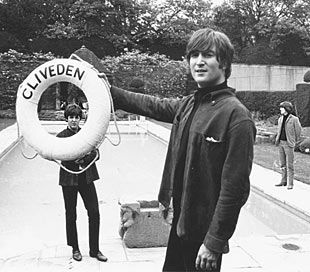
Cliveden House
It was May 11, 1965. The Beatles were on location, wrapping up filming their second movie Help! The Help! shoot had begun on February 23rd and this was the boys' 54th and final day of Help! filming. Director Richard Lester was to film a few atmosphere and scenery shots in London the next day, and after that, the 55th day of filming, Help! would officially wrap.

The Beatles' final scenes on this historic day were filmed at Cliveden House, a 19th century stately home in Maidenhead, Berkshire. Cliveden House was doubling as Buckingham Palace in these scenes.

Sometime during this day, the Beatles were officially "challenged" to a relay race by the crew of Help! Although world famous and universally popular as singers, musicians and composers, the Fab Four's athletic prowess left much to be desired. It was during the Help! shoot that all four Beatles openly admitted to smoking and indulging in marijuana use, frequently, if not daily. 
Besides the marijuana indulgence, the Beatles also liked their meals and enjoyed fine food. John Lennon was to call this his "fat Elvis" period and remember it as his "steak and whiskey" era. But being adventurous lads, the boys readily accepted the challenge.

The race was to be around Cliveden Gardens, outside of and around Cliveden House. There were four separate relay teams, each team consisting of six members. Besides the Beatles team, there were the electricians, the carpenters and the camera operators.
The Beatles team consisted of the Fab Four, plus their road manager Neil Aspinall and their chauffeur Alf Bicknell. John, Paul, George, Ringo, Neil, and Alf were to be the victors in the once-in-a-lifetime race.

Paul McCartney is the only Beatle to actually speak publicly about the Help! relay race. Many years later, Paul said he "vaguely remembered Ringo handing off a baton" to him.

How long was the race?  According to Paul (in an interview he gave that day): “Fifteen furlongs, I’d say" (one furlong is 1/8th of a mile). Paul also said the Beatles were "very proud" of their relay race victory.

There is no record of exactly when the race took place during the day, whether before the day's shoot was finished, during the lunch break, at the end of the day, or during a "wrap" celebration.

Interestingly, the relay race was filmed and captured by a home movie camera. It is footage any Beatle fan (like me) would love to view.

The Jumping Jack Is Named after Its Inventor, General “Black Jack” Pershing

 
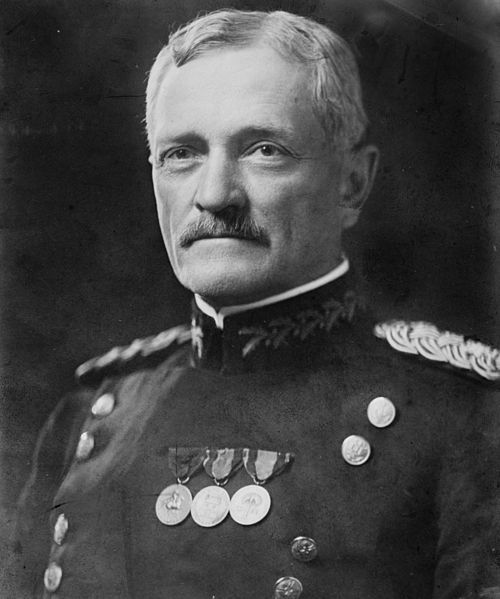
John J. Pershing (1860-1948) was one of America’s greatest military leaders. He began in humble conditions in Missouri. Pershing was commissioned as a lieutenant in 1886 after graduating from West Point. His first commands were in the west in the final years of the Indian Wars. In 1896, he was given command of the Tenth Cavalry, an all-black unit in America’s racially segregated military. Pershing led that regiment into battle in Cuba during the Spanish-American War. He was unflinching in his praise and respect for his men. Some white officers nicknamed him “Black Jack” in reference to his defense of his black troops. Others used a somewhat different nickname that rhymes with “jigger.”

Pershing led the American Expeditionary Forces during World War I. It was a monumental task, for Pershing had to organize, train, and equip an army of 4 million men almost from scratch, then lead it into battle on the other side of the planet.
Pershing was successful, for which was rightfully promoted to the rank of General of the Armies of the United States in 1919. This is an honor held by only one other person: George Washington.
(Photo: Troop A, Tenth Cavalry Regiment, c. 1902)
But “Black Jack” Pershing is not often remembered for one of his most practical, everyday innovations. While he was a senior cadet at West Point, he invented an exercise used by people around the world to this day: the jumping jack. It was a means that Pershing used to haze a cadet named Charles D. Rhodes. Frank Everson Vandiver writes about it in Black Jack: The Life and Times of John J. Pershing:
Worst of all, Pershing invented an almost foolproof method of hazing, and Rhodes suffered directly. The scheme got the name “jumping Jack” for obvious reasons, and few treatments seem to have affected plebes more lastingly. Origins of the technique are obscure, but Pershing’s plan had simplicity and adaptability. He would line up a group of plebes, order them to count off to identify odds and evens, and when he pulled on an imaginary string, all the odds threw their arms stiffly out at right angles to their bodies; then Jack pulled the string in the opposite direction, and the odds dropped their arms and evens jumped their legs out to make a V. Back and forth went the string, arms flapped, legs splayed, while upperclassmen howled at the marionettes in action.
And since that time more than a century ago, gym teachers and trainers have hazed people with General Pershing’s invention.
So it is appropriate that on May 1, Pershing’s home state of Missouri declared the jumping jack the official state exercise

How Efficiency Killed the Department Store

Department stores went from elite shops for wealthy people to a more accessible design in the early 20th century, but they really took off after World War II with the meteoric rise of the middle class. Then in the ‘50s, the suburban indoor shopping mall concept gathered department stores into clusters to make shopping more efficient, which drew shoppers away from downtown. But the idea of shopping for pleasure didn’t last, no matter how much "science" went into managing the experience. What killed the department store? It wasn’t just online shopping, although that played a part. You can read the history of department stores, which is really a history of the way we shop, at Collectors Weekly