| 1471 | The Earl of Warwick, who fought on both sides in the War of the Roses, is killed at the Battle of Barnet with the defeat of the Lancastrians. | |
| 1543 | Bartoleme Ferrelo returns to Spain after discovering a large bay in the New World (San Francisco). | |
| 1775 | The first abolitionist society in United States is organized in Philadelphia. | |
| 1793 | A royalist rebellion in Santo Domingo is crushed by French republican troops. | |
| 1828 | The first edition of Noah Webster's dictionary is published. | |
| 1860 | The first Pony Express rider arrives in San Francisco with mail originating in St. Joseph, Missouri. | |
| 1865 | President Abraham Lincoln is assassinated in Ford's Theater by John Wilkes Booth. | |
| 1894 | Thomas Edison's kinetoscope is shown to the public for the first time. | |
| 1900 | The World Exposition opens in Paris. | |
| 1912 | The passenger liner Titanic–deemed unsinkable–strikes an iceberg on her maiden voyage and begins to sink. The ship will go under the next day with a loss of 1,500 lives. | |
| 1931 | King Alfonso XIII of Spain is overthrown. | |
| 1945 | American B-29 bombers's damage the Imperial Palace during firebombing raid over Tokyo. | |
| 1953 | The Viet Minh invade Laos with 40,00 troops in their war against French colonial forces. | |
| 1959 | The Taft Memorial Bell Tower is dedicated in Washington, D.C. | |
| 1961 | The first live broadcast is televised from the Soviet Union. | |
| 1969 | The first major league baseball game is played in Montreal, Canada. | |
| 1981 | America's first space shuttle, Columbia, returns to Earth. |

Tuesday, April 14, 2015
Today in History


Tourism Troubles
Berlin Cracks Down on Vacation Rentals
by Ann-Kathrin Nezik
by Ann-Kathrin Nezik

A Monumental Day in the Fight Against Polio
 Sixty years ago on April 12, 1955, Dr. Thomas Francis of the University of Michigan made the announcement that a polio vaccine had been created. The nation immediately celebrated the life-changing news.
If it is difficult now to understand why that was so momentous, credit the vaccine announced that day, and another one revealed soon after. In the United States, polio killed or paralyzed thousands of children every summer. In 1952, the worst year on record, it attacked 58,000 American kids, closing pools and movie theaters, turning streets into ghost towns as families fled crowded cities for sparsely settled summer colonies where they imagined they would be more safe. Around the world, hundreds of thousands more every year were mowed down by it; in societies with few resources to treat the illness or support the disability that followed, they faced a lifetime of mistreatment and poverty.Scientists had been working on the problem of polio for years, and while millions of vaccinations ended the terror of the disease in the U.S., it took decades to do so. Polio still exists in some parts of the world, and the battle to eradicate it continues. Mary McKenna of the science blog Germination talked to one of the pioneering “polio warriors,” Dr. John Sever. Sever knew both Dr. Jonas Salk and Dr. Albert Sabin, the inventors of two polio vaccines, and was the founder of Rotary International’s campaign against polio.
John Sever: I was working on a PhD in microbiology and an MD at Northwestern Medical School in the 1950s, so I was aware, of course, of polio. My father had been a practicing physician in the Chicago area, and I had a cousin who had polio paralysis of her legs, so it was very much a personal experience as well as professional. I remember that parents with newborns could buy “polio insurance” against the possibility their child would develop polio, so they could pay for the cost of care. It was on everyone’s mind, that children would be paralyzed and have to be in “iron lungs,” or die.In the interview, he tells what those early days of polio vaccination were like and how it grew from an emergency measure to a global eradication project. Read the story of the polio breakthrough, and then take a minute to be thankful for the miracle of modern science.
A Visual Overview of Early Supercomputers

"Computers in the future may weigh no more than 1.5 tons."Computers have been around a long time: exactly how long depends on how you define “computer.” However, the development of computers took off big time in the past 100 years. Before transistors, they were incredibly massive, and before microchips they were too big for home use. Now just about everyone carries one around in their pocket. We’ve come a long way, baby. Dark Roasted Blend takes a look back at some of the famous early supercomputers -at least the ones that were photographed. Shown above is an IBM model from the 1960s that stored data on reels of tape. Yes, all that is one computer.
- Popular Mechanics (1949)
Ain't it always the way ...

Far from being a romantic scene, the burial represent a human
sacrifice in which the man was killed to be entombed with the woman.
Earth's 'Great Dying'

Death by acid was the fate of the sea monsters that perished
in Earth's biggest mass extinction, some 251 million years ago.
In The Shadow of Galaxy's Black Hole Beast

Despite the harsh environment created by the monster black
hole lurking in the center of the Milky Way galaxy, new observations
show that stars — and, potentially, planets — are forming just two
light-years away from the colossal giant.

Towering 'Terror Bird' Stalked Prey by Listening for Footsteps
by Laura Geggel
 About 3.5 million years ago, carnivorous birds with hooked
beaks standing 10 feet (3 meters) tall roamed parts of South America in
search of prey. Now, researchers have found a nearly complete skeleton
of a new species of these so-called terror birds, and are learning
surprising details about their hearing and anatomy.
About 3.5 million years ago, carnivorous birds with hooked
beaks standing 10 feet (3 meters) tall roamed parts of South America in
search of prey. Now, researchers have found a nearly complete skeleton
of a new species of these so-called terror birds, and are learning
surprising details about their hearing and anatomy.
Researchers
found the fossil in 2010 on a beach in Mar del Plata, a city on the
eastern coast of Argentina. To their delight, the fossil is the most
complete skeleton of a terror bird
ever found, with more than 90 percent of its bones preserved, said the
study's lead researcher, Federico Degrange, an assistant researcher of
vertebrate paleontology at the Centro de Investigaciones en Ciencias de
la Tierra and the Universidad Nacional de Córdoba in Argentina.
The scientists named the new species Llallawavis scagliai:
"Llallawa" because it means "magnificent" in Quechua, a language native
to the people of the central Andes, and "avis," which means "bird" in
Latin. The species name honors the famed Argentine naturalist Galileo
Juan Scaglia (1915-1989).
Given its extraordinary condition, the fossil has helped researchers
study the terror bird's anatomy in detail. The specimen is the first
known fossilized terror bird with a complete trachea and complete palate
(the roof of the mouth). It even includes the intricate bones of the
creature's ears, eye sockets, brain box and skull, providing scientists
with an unprecedented look at the flightless bird's sensory capabilities.
An analysis of L. scagliai's
inner ear structures suggests the terror bird likely heard
low-frequency sounds, an advantage for predators that hunt by listening
for the low rumble of their prey's footsteps hitting the ground, the
researchers said. The new findings also suggest that the terror bird
communicated using low-frequency noises, the researchers added.
"That actually tells us quite a bit about what the animals do, simply
because low-frequency sounds tend to propagate across the environment
with little change in volume," said Lawrence Witmer, a professor of
anatomy?at Ohio University? who has worked with Degrange before, but was
not involved in the new study.
"Low-frequency sounds are great for long-[distance] communication, or
if you're a predator, for sensing the movements of prey animals," Witmer
told Live Science.
This skill puts L. scagliai in good company. Other animals that can or could hear low-frequency sounds include Tyrannosaurus rex, crocodiles, elephants and rhinos, Witmer said.
The researchers also looked at the bird's skull, and found that it was
more rigid than in other birds. This could have been to the bird's
advantage, the scientists said, since a rigid skull could have helped
the terror bird slam prey with its large beak.
"Terror birds didn't have a strong bite force, but they were capable of
killing prey just by striking up and down with the beak," Degrange
said.
The incredible,
near-complete fossil shows that terror birds were more diverse in the
Late Pliocene epoch than had been previously thought — an interesting
fact given that the Late Pliocene falls toward the end of the birds'
reign. Terror birds emerged about 52 million to 50 million years ago,
and lived until about 1.8 million years ago, Degrange said. (Some
scientists say that terror birds lived until 17,000 years ago, but
evidence for this is dubious, he said.)
The researchers plan to study the terror bird's eye bones, brain case
and skull in the coming years, with hopes of learning more about the
animal's vision and other sensory capabilities, the scientists said.
The findings were published April 9th in the Journal of Vertebrate Paleontology.
Mosasaurs

Firefighters called out to rescue dog stuck in tree
 Tippi the dog climbed 5 meters up a tree and needed to be rescued by
volunteer firefighters.
The 11-year-old canine tree climber clawed her way up a tree in
Northland, New Zealand, at about 11.30am on Sunday, leaving herself
stranded and perched on a branch.
Tippi the dog climbed 5 meters up a tree and needed to be rescued by
volunteer firefighters.
The 11-year-old canine tree climber clawed her way up a tree in
Northland, New Zealand, at about 11.30am on Sunday, leaving herself
stranded and perched on a branch.
Owner Robyn Martinovich said it was too high for her to climb as she had
just been released from hospital and her husband was away working. "I
didn't have any other options so I rang 111. It was really embarrassing
telling the operator I had a dog stuck in a tree."
After confirming that yes it was a dog stuck in a tree the volunteer firefighters from Dargaville were alerted.
"The firemen all turned up smiling and were really awesome. I don't think they get to many callouts like that." On arrival a ladder was extended into the branches with one firefighter climbing high. He was able to tuck the tan-and-white colored Jack Russell cross under his arm and safely deliver her to the ground again. Ms Martinovich said she suspected Tippi had been hunting for birds when she got stuck.
Tippi has history of tree climbing. Last year she also ascended a tree. Ms Martinovich said on that occasion she was able to climb the tree herself and reach Tippi but then found herself stuck and had to wait in the branches for about 20 minutes until her husband returned home and the duo could both be rescued. She said tree climbing wasn't something she could stop her dog from doing. "Hopefully if it happens again I'll be in a state to rescue her."
"The firemen all turned up smiling and were really awesome. I don't think they get to many callouts like that." On arrival a ladder was extended into the branches with one firefighter climbing high. He was able to tuck the tan-and-white colored Jack Russell cross under his arm and safely deliver her to the ground again. Ms Martinovich said she suspected Tippi had been hunting for birds when she got stuck.
Tippi has history of tree climbing. Last year she also ascended a tree. Ms Martinovich said on that occasion she was able to climb the tree herself and reach Tippi but then found herself stuck and had to wait in the branches for about 20 minutes until her husband returned home and the duo could both be rescued. She said tree climbing wasn't something she could stop her dog from doing. "Hopefully if it happens again I'll be in a state to rescue her."
Search for man who abducted wild peacock
 Bloodcurdling screams are fairly routine in the Beckley Club Estates neighborhood of east Oak Cliff in Dallas, Texas.
That’s because the area is home to a large flock, or ostentation, of
peacocks, whose mating call sounds vaguely like a human scream.
But the commotion Saturday evening was enough to alarm even longtime
resident Tisha Crear. She ran out onto her porch just in time to see a
man slam the door of his vehicle on some tail feathers and drive away
with a peacock.
“I couldn’t believe it,” Crear said. “I was screaming.”
Bloodcurdling screams are fairly routine in the Beckley Club Estates neighborhood of east Oak Cliff in Dallas, Texas.
That’s because the area is home to a large flock, or ostentation, of
peacocks, whose mating call sounds vaguely like a human scream.
But the commotion Saturday evening was enough to alarm even longtime
resident Tisha Crear. She ran out onto her porch just in time to see a
man slam the door of his vehicle on some tail feathers and drive away
with a peacock.
“I couldn’t believe it,” Crear said. “I was screaming.”
She wasn’t the only one screaming. A stream of peacocks ran after the
man’s black Chevy Tahoe, yelling in futility after the alpha male of the
group.
The peacock was taken at about 7pm from a flock that has roamed the neighborhood for more than 20 years. The stolen bird was the largest
and oldest male of the group.
Crear said the birds have lived in the neighborhood ever since one of
her neighbors bought two peafowl and a few other wild birds, Crear
said. The whole community feeds them and looks after them.
But on Saturday night, someone else was watching them.
Lisa Solis’ home security system recorded the bird being snatched. She
said the video shows the man stalking the birds for about 20 minutes
before making his move.
The man approaches the bird just as it fanned its feathers and began
calling for mates.
“That’s part of what makes this so sickening,” said Solis, noting that
the peacock was at its most vulnerable.
Crear said the man clearly knew what he was doing, grabbing the peacock by its feet and quickly lifting it upside down.
“Who knows how to capture a peacock?” she said. “I sure don’t.”
The suspect was described as a Hispanic man wearing a white T-shirt and a
baseball cap, and the surveillance video also captured images of his
black Chevrolet Tahoe.
Solis filed a report with Dallas police and planned to call animal
control, too.
“We just want him to see that we know what he did,” Solis said, “and
that we care.”
She said she’s concerned that the male won’t be around to fertilize any
eggs this season, possibly throwing off the flock’s dynamic.
“We all think of the peacocks as our own,” Crear said. “They grow up in
the neighborhood and we hope to keep the generations coming.”
Authorities request that well-meaning people stop accidentally drowning tortoises

It is now giving advice to help people spot the difference between sea turtles and gopher tortoises."Gopher tortoises cannot swim well and can easily drown," it
says.
"Because gopher tortoises often nest in dunes adjacent to sea turtle
nesting beaches, correct identification of these terrestrial animals is
important before deciding what action, if any, is necessary."
You can tell whether you are looking at a tortoise or a turtle, by just looking at their limbs from a distance - and the conservation group has released some photos to help. "Gopher tortoises have toes, with claws on each toe. Sea turtles have flippers with only one or two claws present on each foreflipper," says the commission.
 They say it is important that people do not touch or handle the animals.
"All five species of sea turtles found in Florida are federally
endangered or threatened and managed under the Endangered Species Act as
well as under Florida Statutes. The gopher tortoise is listed under
state law," the commission explains.
"If you spot any of these species in danger on the beach, please do not
disturb the animal."
They say it is important that people do not touch or handle the animals.
"All five species of sea turtles found in Florida are federally
endangered or threatened and managed under the Endangered Species Act as
well as under Florida Statutes. The gopher tortoise is listed under
state law," the commission explains.
"If you spot any of these species in danger on the beach, please do not
disturb the animal."
You can tell whether you are looking at a tortoise or a turtle, by just looking at their limbs from a distance - and the conservation group has released some photos to help. "Gopher tortoises have toes, with claws on each toe. Sea turtles have flippers with only one or two claws present on each foreflipper," says the commission.
They say it is important that people do not touch or handle the animals.
"All five species of sea turtles found in Florida are federally
endangered or threatened and managed under the Endangered Species Act as
well as under Florida Statutes. The gopher tortoise is listed under
state law," the commission explains.
"If you spot any of these species in danger on the beach, please do not
disturb the animal."
Stolen dog flagged down RSPCA van 100 miles from home

But Alfie’s pal Lillie, a five year-old unneutered female taken in the
same burglary, is still missing.
Stephanie said she was amazed when the dog emerged from woodland in
Gerrards Cross.
“I have had plenty of people wave me down for help but I have never been
flagged down by a dog in need of rescue before,” she said.
“I saw Alfie run towards me, clearly trying to attract my attention.
He ran right in front of the van, barking.
“As soon as I stopped and opened the door he bounded in, jumped onto the seat and looked at me. It was as if he recognized my uniform and knew I was there to rescue him. We can only assume he had been dumped in the woods and came running out when he heard me drive along. He’s a lovely, friendly dog, despite his ordeal, and I am so pleased he got the happy ending he deserved. Very sadly, Lillie is still missing.” The dogs were taken in the burglary on March 21.
 Kirsty, 23, said: “We are over the moon to have Alfie back.
We didn’t think we would see him again, but so sad that Lillie is still missing.
I jumped straight in the car to drive the 112 miles to be with him as soon as I heard he was safe.
Thank goodness we had Alfie microchipped, as there’s no way we would have been traced without that.
Sadly Lillie had not been chipped so we would really appreciate it if anyone who recognizes her lets the RSPCA know.
We’ve learned the hard way how important it is to have your pets chipped.”
Anyone with any information about Lillie should call the RSPCA.
Kirsty, 23, said: “We are over the moon to have Alfie back.
We didn’t think we would see him again, but so sad that Lillie is still missing.
I jumped straight in the car to drive the 112 miles to be with him as soon as I heard he was safe.
Thank goodness we had Alfie microchipped, as there’s no way we would have been traced without that.
Sadly Lillie had not been chipped so we would really appreciate it if anyone who recognizes her lets the RSPCA know.
We’ve learned the hard way how important it is to have your pets chipped.”
Anyone with any information about Lillie should call the RSPCA.
“As soon as I stopped and opened the door he bounded in, jumped onto the seat and looked at me. It was as if he recognized my uniform and knew I was there to rescue him. We can only assume he had been dumped in the woods and came running out when he heard me drive along. He’s a lovely, friendly dog, despite his ordeal, and I am so pleased he got the happy ending he deserved. Very sadly, Lillie is still missing.” The dogs were taken in the burglary on March 21.
Kirsty, 23, said: “We are over the moon to have Alfie back.
We didn’t think we would see him again, but so sad that Lillie is still missing.
I jumped straight in the car to drive the 112 miles to be with him as soon as I heard he was safe.
Thank goodness we had Alfie microchipped, as there’s no way we would have been traced without that.
Sadly Lillie had not been chipped so we would really appreciate it if anyone who recognizes her lets the RSPCA know.
We’ve learned the hard way how important it is to have your pets chipped.”
Anyone with any information about Lillie should call the RSPCA.
Goat not ghost responsible for turning lights on at college
 A goat fooled staff at a college in Wales into thinking they were being
haunted by ghosts.
Turning off lights to save energy is common practice at Coleg Cambria’s
Northop campus yet caretakers kept reporting lights were regularly being
left on in the rare breeds center’s goat barn.
A goat fooled staff at a college in Wales into thinking they were being
haunted by ghosts.
Turning off lights to save energy is common practice at Coleg Cambria’s
Northop campus yet caretakers kept reporting lights were regularly being
left on in the rare breeds center’s goat barn.
But staff were adamant they are turning them off and a baffled animal center manager Wendy Gacem began to suspect a ghost or intruders were to
blame.
This week the truth was revealed after Jake the Bagot Billy Goat was
caught red-handed flicking the switch.
Staff were working in the barn when the lights came on and turned around
to see Jake had climbed on his hay-rack and pushed the switch with his
horns.
Wendy said: “It is a relief that we do not have intruders or a ghost, and animal care staff are relieved that they are no longer being grilled about leaving lights on. Jake has been a cheeky character since he arrived and will often jump on to a wheelbarrow to be pushed around.” Wendy says rare breed Jake has been forgiven for his cheeky antics after becoming a proud father to twin girls last week.
A college spokesman added: “Coleg Cambria takes its responsibilities seriously by encouraging staff to reduce energy consumption. This has been recognized across the UK through the Carbon Trust and Green Dragon sustainability awards. The college is proud to be breeding this very rare goat which are classed as endangered on The Rare Breed Survival Trust Watchlist.”
Wendy said: “It is a relief that we do not have intruders or a ghost, and animal care staff are relieved that they are no longer being grilled about leaving lights on. Jake has been a cheeky character since he arrived and will often jump on to a wheelbarrow to be pushed around.” Wendy says rare breed Jake has been forgiven for his cheeky antics after becoming a proud father to twin girls last week.
A college spokesman added: “Coleg Cambria takes its responsibilities seriously by encouraging staff to reduce energy consumption. This has been recognized across the UK through the Carbon Trust and Green Dragon sustainability awards. The college is proud to be breeding this very rare goat which are classed as endangered on The Rare Breed Survival Trust Watchlist.”
Climbing routes closed by pine marten
 A female pine marten has closed off two popular climbing routes near Inverness after building a den at the top of the crag.
The Mountaineering Council of Scotland (MCofS) said the Ephemeral Artery and Venus Return routes on Moy Rock should not be used.
A female pine marten has closed off two popular climbing routes near Inverness after building a den at the top of the crag.
The Mountaineering Council of Scotland (MCofS) said the Ephemeral Artery and Venus Return routes on Moy Rock should not be used.
It said it was an offense to harm pine martens or their dens. Females
can give birth to up to five young during April.
The MCofS said the routes were closed until further notice.
At this time of the year the council usually gives advice on climbs to
be avoided because of nesting birds, with ravens having previously
nested at Moy Rock.
 It said it was unusual to be issuing a warning about a mammal.
Pine martens were once found all over Britain before their numbers fell because of persecution in the 19th Century.
By the 20th Century they were only found in remote forests and rocky moorland in north west Scotland.
It said it was unusual to be issuing a warning about a mammal.
Pine martens were once found all over Britain before their numbers fell because of persecution in the 19th Century.
By the 20th Century they were only found in remote forests and rocky moorland in north west Scotland.
They were given full legal protection in 1988. Scottish Natural Heritage said numbers have recovered since. Climbs on the crag are listed by UK Climbing and Scottish Climbs. Other routes on the rock include ones named Scooby Doo, The Dark Side and The Ticks Ate All the Midgies.
It said it was unusual to be issuing a warning about a mammal.
Pine martens were once found all over Britain before their numbers fell because of persecution in the 19th Century.
By the 20th Century they were only found in remote forests and rocky moorland in north west Scotland. They were given full legal protection in 1988. Scottish Natural Heritage said numbers have recovered since. Climbs on the crag are listed by UK Climbing and Scottish Climbs. Other routes on the rock include ones named Scooby Doo, The Dark Side and The Ticks Ate All the Midgies.
A Chimp is the Next Animal Species to Have Zero Drone Tolerance
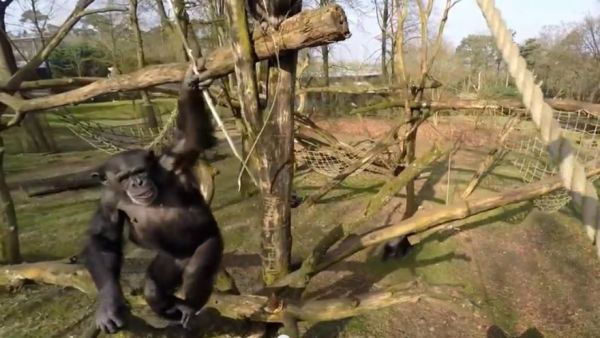
In this video footage filmed at Burgers' Zoo in the Netherlands, a chimp has more frustration toward the annoying, buzzy thing in his face than he can shake a stick at. Fortunately, shaking a stick seems to eradicate the problem. The drone was killed, but the camera lived on to provide cautionary tales to other humans pulling the ol' drone trick on their captive animal species.

Monday, April 13, 2015
The Daily Drift

Carolina Naturally is read in 203 countries around the world daily.
Thomas Jefferson Presidential Portrait ... !

Today is - Thomas Jefferson Day
You want the unvarnished truth?
You want the unvarnished truth?
Don't forget to visit:The Truth Be Told
Some of our readers today have been in:
The Americas
Campinas, Curitiba and Rio de Janeiro, Brazil
Henry Farm, Montreal and Ottawa, Canada
Bogota and Medellin, Colombia
Santo Domingo, Dominican Republic
Mexico City, Mexico
Boaco, Nicaragua
Lima Peru
Catano, Puerto Rico
The Bottom, Sint Eustatius-Saba
Montevideo, Uruguay
Christiansted, Virgin Islands
Europe
Tirana, Albania
Andorra la Vella, Andorra
Vienna, Austria
Hadzici, Bosnia-Herzegovina
Horni Pocernice, Karlin, Prague and Stare Mesto, Czech Republic
Basingstoke, Chester, Leeds, London and Sheffield, England
Calais, Cerny, Ivry-sur-Siene, Paris and Rouen, France
Tbilisi, Georgia
Dusseldorf, Franfurt Am Main, Hamburg, Hurth and Rothe Erde, Germany
Athens, Greece
Reykjavik, Iceland
Frosinone, Milan, Prato and Ravenna, Italy
Riga Latvia
Almere Stad, Alphen aan den Rijn, Amsterdam and Den Haag, Netherlands
Gjerstad, Norway
Braga and Teixoso, Portugal
Bucharest, Romania
Ryazan and Saratov, Russia
Alford and Glasgow, Scotland
Belgrade, Serbia
Ljubljana, Slovenia
Barcelona, Madrid and Valencia, Spain
Gislovs Lage and Lulea, Sweden
Baar, Geneva and Zurich, Switzerland
Dnipropetrovsk, Ukraine
Asia
Mandalay and Thanton, Burma
Chongging, China
Bangalore, Bhubaneshwar, Chennai, Kolkata and Trichur, India
Jakarta, Indonesia
Tehran, Iran
Petah Tikva, Israel
Almaty, Kazakhstan
Pohang, Korea
Beirut, Lebanon
Johor Bahru, Kajang and Sandakan, Malaysia
Kathmandu, Nepal
Karachi, Pakistan
Doha, Qatar
Riyadh, Saudi Arabia
Colombo, Sri Lanka
Chon Buri and Phang Khon, Thailand
Africa
Algiers, Algeria
Cape Town, South Africa
Lusaka, Zambia
The Pacific
Homebush and Sydney, Australia
Cebu City and Rodriguez, Philippines
Today in History
| 1598 | The Edict of Nantes grants political rights to French Huguenots. | |
| 1775 | Lord North extends the New England Restraining Act to South Carolina, Virginia, Pennsylvania, New Jersey and Maryland. The act forbids trade with any country other than Britain and Ireland. | |
| 1861 | After 34 hours of bombardment, Union-held Fort Sumter surrenders to Confederates. | |
| 1865 | Union forces under Gen. Sherman begin their devastating march through Georgia. | |
| 1902 | J.C. Penny opens his first store in Kemmerer, Wyoming. | |
| 1919 | British forces kill hundreds of Indian nationalists in the Amritsar Massacre. | |
| 1933 | The first flight over Mount Everest is completed by Lord Clydesdale. | |
| 1941 | German troops capture Belgrade, Yugoslavia. | |
| 1943 | Franklin D. Roosevelt dedicates the Jefferson Memorial. | |
| 1945 | Vienna falls to Soviet troops. | |
| 1960 | The first navigational satellite is launched into Earth's orbit. | |
| 1961 | The U.N. General Assembly condemns South Africa because of apartheid. | |
| 1964 | Sidney Poitier becomes the first black to win an Oscar for best actor. | |
| 1970 | An oxygen tank explodes on Apollo 13, preventing a planned moon landing and jeopardizing the lives of the three-man crew. | |
| 1976 | The U.S. Federal Reserve begins issuing $2 bicentennial notes. | |
| 1979 | The world's longest doubles ping-pong match ends after 101 hours. |
When No Means Yes

That neologism wasn’t so hard to understand, because parents and teachers are well-attuned to a sarcastic tone of voice. But now we have another language conundrum popping up that can be difficult to parse for some of us, whether it is spoken or written. It’s the phrase, “No. Totally.” Apparently it means “yes.”
“No, totally.” “No, definitely.” “No, exactly.” “No, yes.” These curious uses turn “no” into a kind of contranym: a word that can function as its own opposite. Out of the million-odd words in the English language, perhaps a hundred have this property. You can seed a field, in which case you are adding seeds, or seed a grape, in which case you are subtracting them. You can be in a fix but find a fix for it. You can alight from a horse to observe a butterfly alighting on a flower.The blogger in me wonders how quoting people who use this will confuse a reader. The parent in me is glad to read about it so I can interpret what my kids are trying to say. Read about the new slang and how to deal with it at The New Yorker.
Fighting Fire with Data
Mary Putnam Jacobi: Fighting Fire with Data
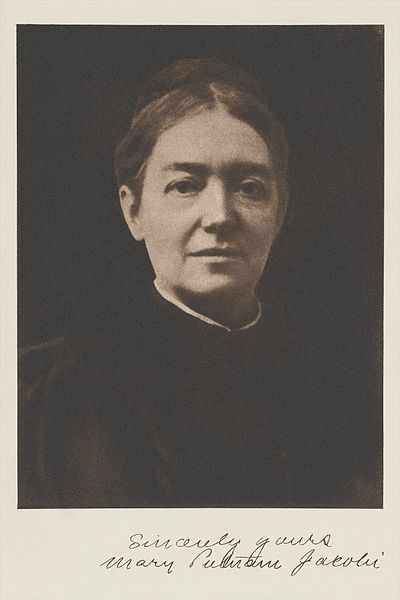 In 1873, Harvard professor Edward Clarke published a book entitled Sex in Education; or, A Fair Chance For Girls. Despite a promising title, what he meant by “a fair chance” was to discourage higher education for women because,
"There have been instances, and I have seen such, of females... graduated from school or college excellent scholars, but with undeveloped ovaries. Later they married, and were sterile."Clarke’s rationale was that a woman couldn’t menstruate and think at the same time, and trying to do so was dangerous. That was a wonderful way of keeping women out of colleges and universities because, see, it was for their own good. Then as now, a Harvard professor was considered an expert and few took exception to his opinions. One of those who did was Mary Putnam Jacobi, a medical doctor and an extraordinary woman of her time. Jacobi earned a medical degree at Woman’s Medical College of Pennsylvania in the 1860s, then went on to study at France’s École de Médecine, where she was the first woman ever admitted. Jacobi objected to Clarke’s views, but knew that her opinion wouldn’t matter a bit. Instead, she used research.
Jacobi challenged Clarke’s thinly veiled justification for discrimination with 232 pages of hard numbers, charts, and analysis. She gathered survey results covering a woman’s monthly pain, cycle length, daily exercise, and education along with physiological indicators like pulse, rectal temperature, and ounces of urine. To really bring her argument home, Jacobi had test subjects undergo muscle strength tests before, during, and after menstruation. The paper was almost painfully evenhanded. Her scientific method-supported mic drop: “There is nothing in the nature of menstruation to imply the necessity, or even the desirability, of rest.” If women suffered from consumption, scrofula, anemia, and neuralgia, it wasn’t, as Clarke claimed, because they studied too hard.Jacobi’s work won awards and helped to break down barriers in women’s education. She also led a fascinating life, which you can read about at the Atlantic.
The noise in the human brain

Long Distance Runners Are More Reproductively Successful

Previous studies indicate that men who have ring fingers that are longer than their index fingers tend to have higher sex drives and sperm counts. They have greater "reproductive potential." A new study finds that long distance runners--specifically marathon runners--tend to have longer ring fingers. The authors take this as evidence that runners have an advantage in mating.
The study measured 542 men at the Robin Hood Marathon in Nottingham, UK. The Daily Telegraph reports on the results:
They found that the 10 per cent of men with the most masculine digit ratios were, on average, 24 minutes and 33 seconds faster than the 10 per cent of men with the least masculine digit ratios, suggesting that those who were better runners also had increased fertility.
“The observation that endurance running ability is connected to reproductive potential in men suggests that women in our hunter-gatherer past were able to observe running as a signal for a good breeding partner,” said the study’s lead author Dr Danny Longman.
“It was thought that a better hunter would have got more meat, and had a healthier – and larger – family as a consequence of providing more meat for his family.
Tombs Filled with Dozens of Mummies Discovered in Peru
by Owen Jarus

Dozens of tombs filled with up to 40 mummies each have been
discovered around a 1,200-year-old ceremonial site in Peru's Cotahuasi
Valley.
So far, the archaeologists have excavated seven tombs containing at least 171 mummies from the site, now called Tenahaha.
The tombs are located on small hills surrounding the site. "The dead, likely numbering in the low thousands, towered over the living," wrote archaeologist Justin Jennings, a curator at Toronto's Royal Ontario Museum, in a chapter of the newly published book "Tenahaha and the Wari State: A View of the Middle Horizon from the Cotahuasi Valley" (University of Alabama Press, 2015).
Understanding the selective destruction of the mummies and artifacts is a challenge. "In the Andes, death is a process, it's not as if you bury someone and you're done," Jennings told Live Science in an interview.
For instance, the breakup and movement of the mummies may have helped affirm a sense of equality and community. "The breakup of the body, so anathema to many later groups in the Andes, would have been a powerful symbol of communitas (a community of equals)," wrote Jennings in the book. However, while this idea helps explain why some mummies were broken up, it doesn't explain why other mummies were left intact, Jennings added.
A changing land
Radiocarbon dates and pottery analysis indicate the site was in use between about A.D. 800 and A.D. 1000, with the Inca rebuilding part of the site at a later date.
So far, the archaeologists have excavated seven tombs containing at least 171 mummies from the site, now called Tenahaha.
The tombs are located on small hills surrounding the site. "The dead, likely numbering in the low thousands, towered over the living," wrote archaeologist Justin Jennings, a curator at Toronto's Royal Ontario Museum, in a chapter of the newly published book "Tenahaha and the Wari State: A View of the Middle Horizon from the Cotahuasi Valley" (University of Alabama Press, 2015).
Before
rigor mortis set in, the mummies had their knees put up to the level of
their shoulders and their arms folded along their chest, the
researchers found. The corpses were then bound with rope and wrapped in
layers of textiles. The mummies range in age from neonate fetuses to
older adults, with some of the youngest mummies (such as infants) being
buried in jars. While alive the people appear to have lived in villages
close to Tenahaha.
Bits and pieces of mummies
The
mummified remains were in poor shape due to damage from water and
rodents. Additionally, the researchers found some of the mummies were
intentionally broken apart, their bones scattered and moved between the
tombs. In one tomb the scientists found almost 400 isolated human
remains, including teeth, hands and feet.
"Though many individuals
were broken apart, others were left intact," Jennings wrote in the
book. "People were moved around the tombs, but they sometimes remained
bunched together, and even earth or rocks were used to separate some
groups and individuals." Some grave goods were smashed apart, while
others were left intact, he said.Understanding the selective destruction of the mummies and artifacts is a challenge. "In the Andes, death is a process, it's not as if you bury someone and you're done," Jennings told Live Science in an interview.
For instance, the breakup and movement of the mummies may have helped affirm a sense of equality and community. "The breakup of the body, so anathema to many later groups in the Andes, would have been a powerful symbol of communitas (a community of equals)," wrote Jennings in the book. However, while this idea helps explain why some mummies were broken up, it doesn't explain why other mummies were left intact, Jennings added.
A changing land
Radiocarbon dates and pottery analysis indicate the site was in use between about A.D. 800 and A.D. 1000, with the Inca rebuilding part of the site at a later date.
Tenahaha,
with its storerooms and open-air enclosures for feasting and tombs for
burying the dead, may have helped villages in the Cotahuasi Valley deal
peacefully with the challenges Peru
was facing. Archaeological research indicates that the villages in the
valley were largely autonomous, each likely having their own leaders.
Research
also shows that between A.D. 800 and A.D. 1000 Peru was undergoing
tumultuous change, with populations increasing, agriculture expanding
and class differences growing, Jennings said. At sites on the coast of
Peru,archaeologists have found evidence for violence, with many people
suffering cranial trauma (blows to the head), Jennings said. In some areas of Peru,
scientists have found pottery containing drawings of fanged teeth and
human trophy skulls (skulls that could have been taken in battle) the
researchers note.
At
Tenahaha, however, there is little evidence for violence against humans,
and pottery at the site is decorated with what looks like depictions of
people smiling, or "happy faces," as archaeologists referred to them.
Tenahaha
may have served as a "neutral ground" where people could meet, bury
their dead and feast. As such, the site may have helped alleviate the
tensions caused by the changing world where these people lived, Jennings
said.
"It's a period of
great change and one of the ways which humans around the world deal with
that is through violence," Jennings said in the interview. "What we are
suggesting is that Tenahaha was placed in part to deal with those
changes, to find a way outside of violence, to deal with periods of
radical cultural change."
Excavations
at the site were carried out between 2004 and 2007 and involved a team
of more than 30 people from Peru, Canada, Sweden and the United States.
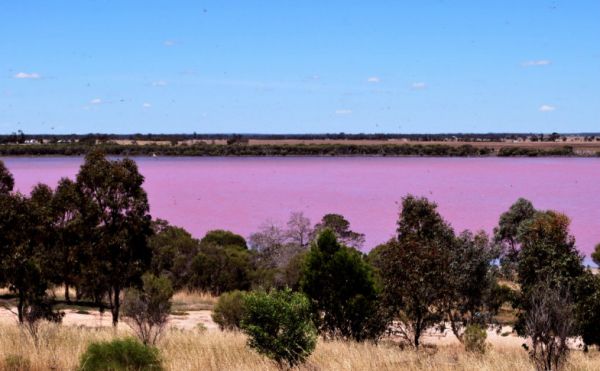
This Lake is Pink
Earth's 'Little Sister'

The primordial planet believed to have smashed into baby
Earth, creating a cloud of debris that eventually formed into the moon,
was chemically a near-match to Earth.
Chemistry for Life

Scientists have found complex organic molecules in a
planet-forming disk of gas, dust and ice swirling around a very young
star, evidence that the building blocks for life may be common in the
universe.
Brimming With Water

Glaciers beneath the dusty sands of Mars contain enough water
to coat the planet with more than three feet of ice, a new study shows.
Watching the Sunsets of Mars

Transport yourself to Mars and stare in wonder at these
stunning views of Red Planet sunsets through our robotic explorers'
eyes.
Late To The Party

Astronomers have taken a census of distant spiral galaxies to
help us understand what our Milky Way may have looked like in the
distant past, also providing us with an invaluable look at the evolution
of our own solar system.
Tyrannosaurs Were Violent Cannibals

Rancher unhappy about being given ticket for riding horse to Taco Bell
 Rick Braun from West Kansas has lived in Lucas, Texas, for 11 years.
And over that time, he's been riding horses on his open ranch just east
of Allen.
"It's heck of a lot better than being in a car," Braun said.
He finds peace in the saddle, but lately it's been more pain. He was
recently cited by Allen police for 'riding animal on public street.'
"It's horse country!" he said. "Everywhere you go, there's horses
everywhere."
Rick Braun from West Kansas has lived in Lucas, Texas, for 11 years.
And over that time, he's been riding horses on his open ranch just east
of Allen.
"It's heck of a lot better than being in a car," Braun said.
He finds peace in the saddle, but lately it's been more pain. He was
recently cited by Allen police for 'riding animal on public street.'
"It's horse country!" he said. "Everywhere you go, there's horses
everywhere."
 But that argument didn't register with Allen authorities after he and
friends rode into that city from Lucas two weeks ago. They had stopped
off at a Taco Bell. Braun said he's been going there by horse for years, often two to three nights a week.
Allen police spokesman Jon Felty said officers had warned Braun
repeatedly. "We've asked them, please don't do this," he said.
Allen's city code, Chapter 3-18F, outlines the police point of view.
It is unlawful for anyone to ride or drive an animal on a public
sidewalk.
It is unlawful for anyone to ride or drive an animal within any portion
of the street or right-of-way of a heavily traveled street.
But that argument didn't register with Allen authorities after he and
friends rode into that city from Lucas two weeks ago. They had stopped
off at a Taco Bell. Braun said he's been going there by horse for years, often two to three nights a week.
Allen police spokesman Jon Felty said officers had warned Braun
repeatedly. "We've asked them, please don't do this," he said.
Allen's city code, Chapter 3-18F, outlines the police point of view.
It is unlawful for anyone to ride or drive an animal on a public
sidewalk.
It is unlawful for anyone to ride or drive an animal within any portion
of the street or right-of-way of a heavily traveled street.
"You show me what roadway around here is not heavily traveled," Felty said. "They all are heavily traveled." But Braun maintained that his group was riding along a greenbelt nearly the entire way. He concedes there were a couple of streets they had to cross to make it to the restaurant, but that traffic was minimal. "At 5:30 in the afternoon? Yes. But at 10:30 at night? No!" Braun said. Police said they received complaints from residents about horse droppings, and even said Braun's darker horses are a safety issue. "These horses are not visible," Felty said. "They're riding along roadways, and they're not visible late at night."
Surprise as six-foot long snake found on top of bathroom radiator in Rochdale home

 A huge snake discovered by a terrified teenager in a bathroom was
recovered by a real-life pet detective.
Karen Marriott dialed 999 after her daughter Hannah, 16, spotted the six
foot-long reptile curled up on a bath mat on top of a radiator.
Craig Wallace, a detective based at Rochdale police station, overheard
the control room call and offered to help as he has experience with
keeping snakes.
Det Con Wallace raced to the family’s home in Littleborough, Rochdale,
Greater Manchester, and managed to capture the snake in a pillow slip.
A huge snake discovered by a terrified teenager in a bathroom was
recovered by a real-life pet detective.
Karen Marriott dialed 999 after her daughter Hannah, 16, spotted the six
foot-long reptile curled up on a bath mat on top of a radiator.
Craig Wallace, a detective based at Rochdale police station, overheard
the control room call and offered to help as he has experience with
keeping snakes.
Det Con Wallace raced to the family’s home in Littleborough, Rochdale,
Greater Manchester, and managed to capture the snake in a pillow slip.
It was taken back to the station before being transferred into the care
of the RSPCA.
The reptile, white with black eyes, is believed to be a northern pine
snake - and Det Con Wallace believes it may be a missing or escaped
family pet which slithered into the house on Halifax Road during the
recent warm weather.
Mum Karen, 40, said she was forced to dial police for help at 7am on
Tuesday morning as she couldn’t get hold of the RSPCA.
She said: “Hannah was calm at first. She can’t even deal with spiders,
but I don’t think she thought it was real.
“She’d been looking at it for a few minutes until it moved. She thought I was having a joke. I felt like a wally dialing 999 (That's 911 to those in the USA) but I didn’t know what to do. I’m frightened because I don’t know how it got in. It was like something out of a film. I didn’t know whether to laugh or cry. Everybody needed a wee, but we couldn’t go.” Det Con Wallace said that although it wasn’t a police matter, he was concerned for the family who were too scared to use their own bathroom. He said: “I keep snakes so I know a lot about them. It was a northern pine snake.

“They can give a nasty bite, but they’re not venomous. If it did bite you, you would struggle to get it off. I put my hand through a pillow slip then got the back of it’s head and wrapped it up.” He believes the snake is a pet and had either escaped or been set free. DC Wallace added: “It’s been a nice few days with people leaving doors and windows open. It isn’t uncommon for them to go through the loft space or floorboards. He added: “I wanted to keep it as a station pet, but no-one would sit near me.” The RSPCA later attended Rochdale police station and the snake is now being cared for by the animal charity.
“She’d been looking at it for a few minutes until it moved. She thought I was having a joke. I felt like a wally dialing 999 (That's 911 to those in the USA) but I didn’t know what to do. I’m frightened because I don’t know how it got in. It was like something out of a film. I didn’t know whether to laugh or cry. Everybody needed a wee, but we couldn’t go.” Det Con Wallace said that although it wasn’t a police matter, he was concerned for the family who were too scared to use their own bathroom. He said: “I keep snakes so I know a lot about them. It was a northern pine snake.
“They can give a nasty bite, but they’re not venomous. If it did bite you, you would struggle to get it off. I put my hand through a pillow slip then got the back of it’s head and wrapped it up.” He believes the snake is a pet and had either escaped or been set free. DC Wallace added: “It’s been a nice few days with people leaving doors and windows open. It isn’t uncommon for them to go through the loft space or floorboards. He added: “I wanted to keep it as a station pet, but no-one would sit near me.” The RSPCA later attended Rochdale police station and the snake is now being cared for by the animal charity.
Less Honey Bees Dying

Birds and Economic Vitality

Malaria parasite hotbed


Subscribe to:
Posts (Atom)
