
Thursday, April 16, 2015
Eating out = high blood pressure?


Plucking and Growing

Plucking lots of hairs from one area prompts the body to
command more hair to be grown to take its place.
Death and a Lack of Oxygen

More support for a psychological basis of near-death
experiences comes from a new study involving cardiac arrest in rats.
Will Humans Ever Live 200 Years?

A woman dies five days after taking title of world's oldest
human (must have been the stress). But what does the future hold for
longevity?
Doctor raising money for first human head transplant has a volunteer
 Italian physician Dr. Sergio Canavero is collecting funds to conduct the
first human head transplant. He has a volunteer: Valery Spiridonov, 30,
who suffers from a rare genetic disease causing his spinal muscles to
atrophy. Other researchers call Canavero "nuts."
Italian physician Dr. Sergio Canavero is collecting funds to conduct the
first human head transplant. He has a volunteer: Valery Spiridonov, 30,
who suffers from a rare genetic disease causing his spinal muscles to
atrophy. Other researchers call Canavero "nuts."From CNN:
Canavero points to Dr. Robert White, who transplanted the head of one monkey to the body of another at Case Western Reserve University School of Medicine in 1970. The monkey died after eight days, because the body rejected the new head. Before the monkey died, it could not move because the spinal cord of the head and body were not connected. The monkey also was unable to breathe on its own. The paper in which Canavero outlined his procedure references a different 1971 experiment White conducted with six monkey heads, none of which survived more than 24 hours. But Canavero says advances in science and medicine since then eliminate the problems White faced.
Dr. Hunt Batjer, chairman of neurological surgery at UT Southwestern and president-elect of the American Association for Neurological Surgeons, says White's research is not validation for a human head transplant. "[It's] a 45-year-old reference in a primate and there is no evidence that the spinal cord was anatomized functionally," he says. Batjer further explains that it's a great leap to go from brain survival of the surgery to restoring body function, which White did not look at.
Africa's Albino Population

People with albinism in Tanzania and other parts of Africa
are seen as supernatural beings, magical creatures whose bodies bring
good luck. Unfortunately, they're hunted because of these perceptions.
What Happens Underground When a Missile or Meteor Hits

'Warm Blob' Wonky Weather

A blob of warm water in the Pacific Ocean may be to blame for
some of the bizarre weather in the United States this year.
Chicxulub Crater


Accelerating universe?

The hexagon at Saturn's north pole

Researchers at the Technical University of Denmark in Lyngby have created similar geometric shapes (holes in the form of stars, squares, pentagons and hexagons) in whirlpools of water in a cylindrical bucket. The shapes appear easily enough once the bucket is spinning at a rate of one to seven revolutions per second, they say.But the researchers admit their studies may not be relevant to planetary-sized systems.
Biologists Confirm 'God' Evolved From Chimpanzee Deity

Researchers say today’s Lord Almighty shares many traits in common
with the chimp deity, including color vision and omniscience.
BERKELEY, CA—Challenging
long-held views on the origins of divinity, biologists at the University
of California, Berkeley, presented findings Thursday that confirm God,
the Almighty Creator of the Universe, evolved from an ancient chimpanzee
deity.
The recently discovered sacred ancestor, a divine chimp species scientists have named Pan sanctorum, reportedly gave rise over millions of years to the Lord Our God, Maker of Heaven and Earth.
“Although perhaps not obvious at first glance, there are actually overwhelming similarities between the Supreme Being of today and this early primate deity who preceded Him,” said Dr. Richard Kamen, a leading biologist who also heads Berkeley’s paleotheology department. “The holy chimp moved around on all fours, but its descendants eventually began walking upright to expend less energy while foraging across the infinite reaches of the universe. This of course led to the bipedalism of modern-day God.”
“In fact, you can see a distinct likeness to God in the chimpanzee deity’s skeletal structures, not to mention its prototypical expressions of vengeance and wrath,” Kamen continued. “The great-ape god was, however, considerably smaller in stature, having not yet developed the capacity to occupy all space and time simultaneously.”
According to experts, divine life began as a single-celled all-powerful organism roughly 3.6 billion years ago, eventually evolving into a multicelled, sponge-like deity that bobbed and floated across the chaos of the early universe. Kamen explained that over hundreds of millions of years, the godlike life form became more complex, with limbs that allowed for locomotion across the endless expanse of the heavens, and sophisticated photoreceptor cells capable of seeing all things.
Based on newly obtained evidence, the Pan sanctorum is thought to have first experimented with creation ex nihilo around 7 million years ago. Kamen noted that the chimpanzee deity made several early attempts to produce rudimentary solar systems, but on each occasion was spooked upon inadvertently creating fire, which is said to have caused it to screech loudly, angrily swat away the newly formed sun, and then scamper across the universe to hide from the flaming sphere.
“Natural selection played a huge role in the evolution of divinity, and in this regard, the adaptive value of Pan sanctorum’s immortality proved critical to its survival,” said Kamen, adding that with its opposable thumbs, the divine ancestor was eventually able to fashion primitive tools for creating crude oceans and basic mountain ranges. “Today’s Lord Almighty actually still has a small bony protuberance in the small of His back, the vestigial remains of a tail we believe was used by an even older, monkey-like god to facilitate climbing, allowing it to escape into the heavens when faced with danger.”
“That potential for threats made it an evolutionary imperative for the primate god to develop omnipotence,” Kamen continued. “As well as sharp claws and pointed incisors.”
Though its smaller brain limited its cognitive abilities, the chimpanzee deity is believed to have possessed not only self-awareness, but also spatial intelligence, object permanence, and a rudimentary capacity for knowing all that is, all that has been, and all that ever will be.
However, it was only relatively recently that the heavenly species developed the intellectual capacity for higher reasoning, critical thinking, and infinite wisdom, according to Kamen. For Pan sanctorum, he noted, the passage of divine judgment was “purely a matter of primal instinct.”
“While complex speech would not emerge until the evolution of the Cro-Magnon god from Pan Sanctorum, the chimpanzee deity was capable of using grunts and hand gestures to convey basic emotions such as happiness, anger, or the forgiveness of sin,” Kamen said. “However, it appears that the chimp deity often exhibited extremely aggressive behavior, in some cases unleashing its divine wrath with little if any provocation toward the mortal chimps it created in its own image.”
He added, “It is our understanding that these creatures lived in a kind of jungle-like forerunner to the Garden of Eden, until a day came when their enraged creator cast them out, flinging feces at them as they fled.”
The recently discovered sacred ancestor, a divine chimp species scientists have named Pan sanctorum, reportedly gave rise over millions of years to the Lord Our God, Maker of Heaven and Earth.
“Although perhaps not obvious at first glance, there are actually overwhelming similarities between the Supreme Being of today and this early primate deity who preceded Him,” said Dr. Richard Kamen, a leading biologist who also heads Berkeley’s paleotheology department. “The holy chimp moved around on all fours, but its descendants eventually began walking upright to expend less energy while foraging across the infinite reaches of the universe. This of course led to the bipedalism of modern-day God.”
“In fact, you can see a distinct likeness to God in the chimpanzee deity’s skeletal structures, not to mention its prototypical expressions of vengeance and wrath,” Kamen continued. “The great-ape god was, however, considerably smaller in stature, having not yet developed the capacity to occupy all space and time simultaneously.”
According to experts, divine life began as a single-celled all-powerful organism roughly 3.6 billion years ago, eventually evolving into a multicelled, sponge-like deity that bobbed and floated across the chaos of the early universe. Kamen explained that over hundreds of millions of years, the godlike life form became more complex, with limbs that allowed for locomotion across the endless expanse of the heavens, and sophisticated photoreceptor cells capable of seeing all things.
Based on newly obtained evidence, the Pan sanctorum is thought to have first experimented with creation ex nihilo around 7 million years ago. Kamen noted that the chimpanzee deity made several early attempts to produce rudimentary solar systems, but on each occasion was spooked upon inadvertently creating fire, which is said to have caused it to screech loudly, angrily swat away the newly formed sun, and then scamper across the universe to hide from the flaming sphere.
“Natural selection played a huge role in the evolution of divinity, and in this regard, the adaptive value of Pan sanctorum’s immortality proved critical to its survival,” said Kamen, adding that with its opposable thumbs, the divine ancestor was eventually able to fashion primitive tools for creating crude oceans and basic mountain ranges. “Today’s Lord Almighty actually still has a small bony protuberance in the small of His back, the vestigial remains of a tail we believe was used by an even older, monkey-like god to facilitate climbing, allowing it to escape into the heavens when faced with danger.”
“That potential for threats made it an evolutionary imperative for the primate god to develop omnipotence,” Kamen continued. “As well as sharp claws and pointed incisors.”
Though its smaller brain limited its cognitive abilities, the chimpanzee deity is believed to have possessed not only self-awareness, but also spatial intelligence, object permanence, and a rudimentary capacity for knowing all that is, all that has been, and all that ever will be.
However, it was only relatively recently that the heavenly species developed the intellectual capacity for higher reasoning, critical thinking, and infinite wisdom, according to Kamen. For Pan sanctorum, he noted, the passage of divine judgment was “purely a matter of primal instinct.”
“While complex speech would not emerge until the evolution of the Cro-Magnon god from Pan Sanctorum, the chimpanzee deity was capable of using grunts and hand gestures to convey basic emotions such as happiness, anger, or the forgiveness of sin,” Kamen said. “However, it appears that the chimp deity often exhibited extremely aggressive behavior, in some cases unleashing its divine wrath with little if any provocation toward the mortal chimps it created in its own image.”
He added, “It is our understanding that these creatures lived in a kind of jungle-like forerunner to the Garden of Eden, until a day came when their enraged creator cast them out, flinging feces at them as they fled.”
***
Editor's Note: For those too stupid to recognize satire (yes, religio-wingnuts we are talking to you) this is a piece from the Onion.Although it is from the Onion it does point out how ALL 'gods' evolved from older stories passed on and embellished with each retelling - all 'gods' were at one point in time actual human beings (or an amalgamation of a number of actual humans) that were incorporated as characters into a storytellers stories and the rest as they say is history ...
What's going on here?

Answer at the BBC's Weird and Wonderful Photo Quiz.
Cat-Eating Nile Lizards


Wednesday, April 15, 2015
The Daily Drift

Carolina Naturally is read in 203 countries around the world daily.
Go ahead, guess... !

Today is - Take A Wild Guess Day
You want the unvarnished truth?
You want the unvarnished truth?
Don't forget to visit:The Truth Be Told
Some of our readers today have been in:
The Americas
Jundlai, Maraba, Rio de Janeiro and Sao Paulo, Brazil
Chelsea, Ottawa and York Mills, Canada
Santiago, Chile
San Ramon, Costa Rica
Santo Domingo, Dominican, Republic
Tijuana, Mexico
Boaco, Nicaragua
Lima, Peru
Luquillo, Pajaros and San Juan, Puerto Rico
Absecon, Celebration, Fortuna, Kalamazoo, Muncie, Murrieta, Olathe, Reedley, Rosemead, Syracuse, Tamarac, Tiffin and Tribune, United States
Montevideo, Uruguay
Christiansted, Virgin Islands
Europe
Vienna, Austria
Glavinitsa and Sofia, Bulgaria
Copenhagen, Denmark
Chester, London and Sheffield, England
Villeurbanne and Yssingeaux, France
Meria, Georgia
Nuremberg, Germany
Athens and Piraeus, Greece
Tallaght, Ireland
Prato, Italy
Riga, Latvia
Amsterdam and Roosendaal, Netherlands
Gjerstad and Stavanger, Norway
Cieszyn and Warsaw, Poland
Costa de Caparica and Covilha, Portugal
Ryazan and Saint Petersburg, Russia
Maribor, Slovenia
Madrid, Spain
Stockholm, Sweden
Zuchwil, Switzerland
Istanbul, Turkey
Dnipropetrovsk and Kiev, Ukraine
Asia
Yerevan, Armenia
Bangalore, Bhopal, Calicut, Delhi, Hazaribag, Kolkata, Pune and Trichur, India
Jakarta, Indonesia
Petah Tikva, Israel
Tokyo, Japan
Kuwait, Kuwait
Macau, Macao
Bayan Lepas, Johor Bahru, Kota Kinabalu, Kulim, Puchong and Sandakan, Malaysia
Islamabad, Pakistan
Doha, Qatar
Riyadh, Saudi Arabia
Bangkok, Thailand
Africa
Bloemfontein, Cape Town and Johannesburg, South Africa
Lusaka, Zambia
The Pacific
Girilambone and Homebush, Australia
Makati, Rodriguez and Silway, Philippines
Today in History
| 1755 | English lexicographer Dr. Samuel Johnson publishes his Dictionary of the English Language. | |
| 1784 | The first balloon is flown in Ireland. | |
| 1813 | U.S. troops under James Wilkinson siege the Spanish-held city of Mobile in future state of Alabama. | |
| 1858 | At the Battle of Azimghur, the Mexicans defeat Spanish loyalists. | |
| 1871 | 'Wild Bill' Hickok becomes the marshal of Abilene, Kansas. | |
| 1861 | President Lincoln mobilizes Federal army. | |
| 1865 | Abraham Lincoln dies from John Wilkes Booth's assassination bullet. | |
| 1912 | With her band playing on the deck, the ocean liner Titanic sinks at 2:27 a.m. in the North Atlantic. | |
| 1917 | British forces defeat the Germans at the battle of Arras. | |
| 1919 | British troops kill 400 Indians at Amritsar, India. | |
| 1923 | Insulin becomes generally available for people suffering with diabetes. | |
| 1923 | The first sound films shown to a paying audience are exhibited at the Rialto Theater in New York City. | |
| 1940 | French and British troops land at Narvik, Norway. | |
| 1945 | President Franklin D. Roosevelt is buried on the grounds of his Hyde Park home. | |
| 1948 | Arab forces are defeated in battle with Israeli forces. | |
| 1952 | President Harry Truman signs the official Japanese peace treaty. | |
| 1955 | Ray Kroc starts the McDonald's chain of fast food restaurants. | |
| 1959 | Cuban leader Fidel Castro begins a U.S. goodwill tour. | |
| 1960 | The Student Nonviolent Coordinating Committee (SNCC) organizes at Shaw University. | |
| 1971 | North Vietnamese troops ambush a company of Delta Raiders from the 101st Airborne Division near Fire Support Base Bastogne in Vietnam. The American troops were on a rescue mission. | |
| 1986 | U.S. warplanes attack Libya. |
Man’s wallet returned after 14 years with more money in it than when lost
 A Croatian man could not believe his eyes when he received a parcel
containing a wallet he misplaced 14 years ago, containing more money
than he originally lost.
A Croatian man could not believe his eyes when he received a parcel
containing a wallet he misplaced 14 years ago, containing more money
than he originally lost.
"First I though that someone was joking with me so I went to check
whether the money was real," Ivica Jerkovic, from a village in eastern
Croatia, said.
"It was the best greeting for Easter!" said Jerkovic, proudly posing in a photo with the wallet which he received last week, and 1,500 Swiss francs (£1,040, €1,440, $1,530) that were in it.
The sender gave no indication of his identity.
Jerkovic recalled the day when he lost the wallet 14 years ago with some 2,000 German marks (around £725, €1,000, $1,060) inside that he had withdrawn from his bank account to repair the roof of his house. He lost the wallet either when he attended a party with friends or when he was driving one of them who had fallen sick to a hospital.
 Jerkovic, in his 50s and from the village of Donja Moticina, believes
that the person who found and eventually returned the wallet was someone
who had financial problems.
"I belive that this money saved him and for years he was calculating how much he should return to me. Otherwise, I don't know why he would keep the wallet for all those years!
I call on him to contact me. He is the best personal banker in Croatia," he joked.
Jerkovic, in his 50s and from the village of Donja Moticina, believes
that the person who found and eventually returned the wallet was someone
who had financial problems.
"I belive that this money saved him and for years he was calculating how much he should return to me. Otherwise, I don't know why he would keep the wallet for all those years!
I call on him to contact me. He is the best personal banker in Croatia," he joked.
Jerkovic recalled the day when he lost the wallet 14 years ago with some 2,000 German marks (around £725, €1,000, $1,060) inside that he had withdrawn from his bank account to repair the roof of his house. He lost the wallet either when he attended a party with friends or when he was driving one of them who had fallen sick to a hospital.
Jerkovic, in his 50s and from the village of Donja Moticina, believes
that the person who found and eventually returned the wallet was someone
who had financial problems.
"I belive that this money saved him and for years he was calculating how much he should return to me. Otherwise, I don't know why he would keep the wallet for all those years!
I call on him to contact me. He is the best personal banker in Croatia," he joked.
Woman who accidentally sent boss a text calling him a 'complete dick' loses unfair dismissal claim
 A bookkeeper has been sacked for serious misconduct after she
accidentally sent a text to her boss calling him a "complete dick".
The text was meant for her daughter's boyfriend and now she has lost an
unfair dismissal claim, failing to convince the Fair Work Commission
that it was a "lighthearted insult".
Before her dismissal, Louise Nesbitt worked for six years as the office
administrator and bookkeeper for small mineral exploration company
Dragon Mountain Gold in Perth, Australia. She and Rob Gardner, the
company's chairman and managing director, were the sole employees.
A bookkeeper has been sacked for serious misconduct after she
accidentally sent a text to her boss calling him a "complete dick".
The text was meant for her daughter's boyfriend and now she has lost an
unfair dismissal claim, failing to convince the Fair Work Commission
that it was a "lighthearted insult".
Before her dismissal, Louise Nesbitt worked for six years as the office
administrator and bookkeeper for small mineral exploration company
Dragon Mountain Gold in Perth, Australia. She and Rob Gardner, the
company's chairman and managing director, were the sole employees.
As part of an office refurbishment, Ms Nesbitt arranged for plumbing
work to be carried out by her daughter's boyfriend, Robert Guy.
On January 12 last year, Ms Nesbitt sent a text message intended for Mr
Guy to Mr Gardner describing Mr Gardner as a "complete dick" before
adding "we know this already so please try your best not to tell him
that regardless of how you feel the need". Realizing her mistake, Ms Nesbitt texted Mr Gardner, saying, "Rob,
please delete without reading. I am so so so sorry. Xxx."
She subsequently sent another text message to Mr Gardner which read, in part, "Rob I need to explain … that message came across so wrong … that is not how I feel. My sense of humor is to exaggerate ... Yes I do feel that my ideas are all ignored but that's ok ... Please forget it and just go on as normal. I am very very sorry." Ms Nesbitt did not attend the office for several days, saying she was working from home. Mr Gardner told the commission that the text message describing him as a "complete dick" was highly offensive, derogatory and a shock given Ms Nesbitt's position as an employee and their long working relationship.
Commissioner Danny Cloghan noted that although the text message was the main reason for the dismissal, the working relationship between the duo had deteriorated in previous months. Commissioner Cloghan said he did not accept Ms Nesbitt's argument that the text was a "light-hearted insult" or that she lived with young people who put "complete" in front of every second word. "To call a person a 'dick' is a derogatory term to describe them as an idiot or fool," he said. "The word 'complete' is used to convey the message that the person is, without exception, an idiot or fool – they are nothing less than a 'dick'. He said he was satisfied that Mr Gardner believed on "reasonable grounds" that Ms Nesbitt's conduct was serious enough to justify summary dismissal and she had not been unfairly dismissed.
She subsequently sent another text message to Mr Gardner which read, in part, "Rob I need to explain … that message came across so wrong … that is not how I feel. My sense of humor is to exaggerate ... Yes I do feel that my ideas are all ignored but that's ok ... Please forget it and just go on as normal. I am very very sorry." Ms Nesbitt did not attend the office for several days, saying she was working from home. Mr Gardner told the commission that the text message describing him as a "complete dick" was highly offensive, derogatory and a shock given Ms Nesbitt's position as an employee and their long working relationship.
Commissioner Danny Cloghan noted that although the text message was the main reason for the dismissal, the working relationship between the duo had deteriorated in previous months. Commissioner Cloghan said he did not accept Ms Nesbitt's argument that the text was a "light-hearted insult" or that she lived with young people who put "complete" in front of every second word. "To call a person a 'dick' is a derogatory term to describe them as an idiot or fool," he said. "The word 'complete' is used to convey the message that the person is, without exception, an idiot or fool – they are nothing less than a 'dick'. He said he was satisfied that Mr Gardner believed on "reasonable grounds" that Ms Nesbitt's conduct was serious enough to justify summary dismissal and she had not been unfairly dismissed.
Father and son are extremely proud of their handmade wooden car
 An innovative wooden car made by a father-son duo has been attracting
visitors in Patiala, south eastern Punjab, northern India. Powered by a
Maruti 800 engine, the entire body has been carved out of teak.
An innovative wooden car made by a father-son duo has been attracting
visitors in Patiala, south eastern Punjab, northern India. Powered by a
Maruti 800 engine, the entire body has been carved out of teak.  The petrol-driven car stands out because of its design. The brains
behind the unique car, Amandeep Singh owes it to his carpenter father.
Amandeep said he encountered a major problem when he had to fit in the
engine.
The petrol-driven car stands out because of its design. The brains
behind the unique car, Amandeep Singh owes it to his carpenter father.
Amandeep said he encountered a major problem when he had to fit in the
engine. But their persistence paid off and their happiness knew no bounds when it first hit the roads. The father-son duo had to put in 12 hours daily for two months to complete the car, which cost 400,000 rupees (£4,400, $6,400).
Quirk of backpacker culture led to German tourists becoming unintentional vehicle thieves
 Three German tourists who had just arrived in New Zealand say they
become unintentional vehicle thieves through a quirk of backpacker
culture.
The tourists said they thought they were allowed to take a van left at
Christchurch Airport with the keys in the driver's door as they had been
told that backpackers sometimes left vehicles they could not sell at
airports for other backpackers to take.
They spotted the van in what they said was a non-rental area of the
airport car park and took it for a few days, but they were later
arrested for unlawfully taking a rental van.
Three German tourists who had just arrived in New Zealand say they
become unintentional vehicle thieves through a quirk of backpacker
culture.
The tourists said they thought they were allowed to take a van left at
Christchurch Airport with the keys in the driver's door as they had been
told that backpackers sometimes left vehicles they could not sell at
airports for other backpackers to take.
They spotted the van in what they said was a non-rental area of the
airport car park and took it for a few days, but they were later
arrested for unlawfully taking a rental van.
They were held in custody and appeared in the Christchurch District
Court on Friday. They pleaded guilty to charges of unlawfully taking the
$10,000 Lucky Rentals campervan on Tuesday.
The tourists were Hans Lorenz Steinfurth, 20, Friedrich Wiesbach, 21,
both of Radebeul, and Isabelle Caroline Manna, 21, of Stephanskirchen.
They appeared in the dock together before Judge Noel Walsh, who was told
the case needed to be dealt with on Friday because the tourists were
continuing their journey.
The judge bailed the three at the request of duty lawyer Michael Knowles
to allow them to go to a bank and get the money they owed the rental
van company.
They would have to return to the courthouse with the money in two hours, they were told. Police prosecutor Sergeant Kathy Pomfrett told the court the rental van was dropped off at the airport car park by its previous hirer at 7.30am on Tuesday, and the keys were left in the driver's door. The Germans went to the car park three hours later and looked around for a vehicle they could take and eventually headed off in the van. Once they paid $602 to the court, as reparation to the rental van company, they were convicted and discharged and allowed to leave.
They had to wait at court while police informed the rental company that the money had been paid and they could retrieve their belongings, which were still in the van. The tourists apologized for the theft, and Steinfurth said outside the court that they did not know it was a rental van. They had been told by other travelers in Australia about backpackers leaving cars with the keys in them at airports when they could not sell them. They planned to use the van for a couple of days and would then have returned it to the airport and left the keys, he said. Manna said they had not realized it was a rental because it was not parked in the area for rentals. They plan to leave New Zealand on May 4.
They would have to return to the courthouse with the money in two hours, they were told. Police prosecutor Sergeant Kathy Pomfrett told the court the rental van was dropped off at the airport car park by its previous hirer at 7.30am on Tuesday, and the keys were left in the driver's door. The Germans went to the car park three hours later and looked around for a vehicle they could take and eventually headed off in the van. Once they paid $602 to the court, as reparation to the rental van company, they were convicted and discharged and allowed to leave.
They had to wait at court while police informed the rental company that the money had been paid and they could retrieve their belongings, which were still in the van. The tourists apologized for the theft, and Steinfurth said outside the court that they did not know it was a rental van. They had been told by other travelers in Australia about backpackers leaving cars with the keys in them at airports when they could not sell them. They planned to use the van for a couple of days and would then have returned it to the airport and left the keys, he said. Manna said they had not realized it was a rental because it was not parked in the area for rentals. They plan to leave New Zealand on May 4.
Cop Delivers Epic Burn to Flirtatious Driver

Intoxicated lady bereft of underwear allegedly tried to wear bag full of rubbish
 Police say a woman who was wearing no pants and highly intoxicated was
arrested at around 1am on Friday in Dayton, Ohio, while outside banging
on an apartment door.
Police say a woman who was wearing no pants and highly intoxicated was
arrested at around 1am on Friday in Dayton, Ohio, while outside banging
on an apartment door.
Ashley Sturgill, 27 is now facing public indecency and disorderly conduct charges.
According to the Dayton Police report, they were called about a suspicious person complaint with possible sex acts involved.
The officers found Sturgill loudly banging on a door where, it was later determined, she was no longer welcome because of her behavior. Police tried to get the woman to put on her pants, located on the ground nearby.
Instead, the officer reports the woman picked up a white garbage bag, full of trash, and tried to put it on like pants. In the process, she reportedly cut her foot on broken glass. The wound was photographed to log her injury, then Sturgill was taken to jail, with pants on.
The officers found Sturgill loudly banging on a door where, it was later determined, she was no longer welcome because of her behavior. Police tried to get the woman to put on her pants, located on the ground nearby.
Instead, the officer reports the woman picked up a white garbage bag, full of trash, and tried to put it on like pants. In the process, she reportedly cut her foot on broken glass. The wound was photographed to log her injury, then Sturgill was taken to jail, with pants on.
Teenager who stole disguise from pharmacy's display before robbing it arrested

 A teenager has been arrested, accused of robbing a pharmacy in Nashville, Tennessee.
Police said 19-year-old Jackson Boonstra was arrested in a church parking lot.
A teenager has been arrested, accused of robbing a pharmacy in Nashville, Tennessee.
Police said 19-year-old Jackson Boonstra was arrested in a church parking lot.
 According to police, Boonstra went into the CVS in south Nashville on Wednesday morning and wandered up and down the aisles before finding a manager to ask where the hats and sunglasses were.
Moments later, he reportedly put on a hat and and sunglasses along with a pair of socks over his hands and went up to the pharmacy counter, where he allegedly demanded pills from the clerk.
News report from before Mr Boonstra was arrested.
Teenagers held up Mr Whippy at gunpoint
 Police are hunting for two teenagers who held up a Mr Whippy ice cream
truck at gunpoint in Auckland, New Zealand, on Sunday afternoon.
Police are hunting for two teenagers who held up a Mr Whippy ice cream
truck at gunpoint in Auckland, New Zealand, on Sunday afternoon.
The youths approached the truck at 3.10pm while it was parked in Orakei.
Inspector Kerry Watson told the Herald the pair approached the truck and, brandishing a small firearm, demanded money from a woman. They fled on foot with a bag full of cash and credit cards.
Mr Watson said the two offenders were described as Maori youths aged between 15 and 18. Both were wearing light grey hoodies and one also had a green rain jacket on.
Inspector Kerry Watson told the Herald the pair approached the truck and, brandishing a small firearm, demanded money from a woman. They fled on foot with a bag full of cash and credit cards.
Mr Watson said the two offenders were described as Maori youths aged between 15 and 18. Both were wearing light grey hoodies and one also had a green rain jacket on.
Robber had swag bag with drawn-on dollar sign
 When David Eli Lingafelter was arrested on Wednesday for the robbery of a
Subway restaurant in Olympia, Washington, he was carrying a white
canvas bag with a handwritten dollar sign on it.
When David Eli Lingafelter was arrested on Wednesday for the robbery of a
Subway restaurant in Olympia, Washington, he was carrying a white
canvas bag with a handwritten dollar sign on it.
The bag was tied to the front of Lingafelter’s trousers when police
caught the 20-year-old shortly after the sandwich shop heist.Police
allege that Lingafelter entered the Subway wearing a white hat and a red
bandana over his face, adding that he “reached into his pocket as if he
had a weapon.”
After directing a female employee to open the cash register and place her hands on her head, Lingafelter swiped $100 and the worker’s cell phone. While committing the robbery, Lingafelter warned the Subway employee not to “do anything funny,” police reported. Lingafelter was later apprehended hiding behind a dumpster at a nearby shopping center.
A police search of the suspect turned up a knife, $100 in cash, and a phone matching the description of the one stolen from the Subway worker. Additionally, investigators noted, Lingafelter “also had a white canvas bag tied to the front of his pants that had a dollar sign printed on it.” Lingafelter was booked on robbery and obstruction charges. He is being held in the Thurston County jail in lieu of $10,000 bond.
After directing a female employee to open the cash register and place her hands on her head, Lingafelter swiped $100 and the worker’s cell phone. While committing the robbery, Lingafelter warned the Subway employee not to “do anything funny,” police reported. Lingafelter was later apprehended hiding behind a dumpster at a nearby shopping center.
A police search of the suspect turned up a knife, $100 in cash, and a phone matching the description of the one stolen from the Subway worker. Additionally, investigators noted, Lingafelter “also had a white canvas bag tied to the front of his pants that had a dollar sign printed on it.” Lingafelter was booked on robbery and obstruction charges. He is being held in the Thurston County jail in lieu of $10,000 bond.
Woman poured barbecue sauce on her husband before chasing after him with knives
 Police in Florida say a woman poured barbecue sauce on her husband and
chased after him with a knife in each hand on Tuesday, according to an
arrest report.
Viven Palmer, 30, faces charges of battery, aggravated assault with a
deadly weapon and resisting an officer. She was later released from the
Palm Beach County Jail on $5,000 bail.
Police in Florida say a woman poured barbecue sauce on her husband and
chased after him with a knife in each hand on Tuesday, according to an
arrest report.
Viven Palmer, 30, faces charges of battery, aggravated assault with a
deadly weapon and resisting an officer. She was later released from the
Palm Beach County Jail on $5,000 bail.
On Tuesday morning, police were called to an address in Riviera Beach where a 30-year-old man was waving and yelling from his front door, “Help, police!”
Officers say they heard a woman, later identified as Palmer, yelling
from the home, but when she came outside, she refused to speak with
them. Instead, she just put items into a parked car outside the home.
Police said two children, ages 4 and 9, were seen in a car, according to the report. Though she refused to speak with police and told them to leave her home, her husband said the two were arguing about getting a divorce. He said things turned violent and his wife came after him, damaging property along the way.
Police noted the home appeared to be ransacked. He said his wife ripped off his shirt, poured barbecue sauce on him and hit him. When he fought back, he realized she had grabbed butcher's knives from the kitchen, so he ran outside. Palmer has no previous criminal history, according to county records.
Police said two children, ages 4 and 9, were seen in a car, according to the report. Though she refused to speak with police and told them to leave her home, her husband said the two were arguing about getting a divorce. He said things turned violent and his wife came after him, damaging property along the way.
Police noted the home appeared to be ransacked. He said his wife ripped off his shirt, poured barbecue sauce on him and hit him. When he fought back, he realized she had grabbed butcher's knives from the kitchen, so he ran outside. Palmer has no previous criminal history, according to county records.
Smell of bacon led police to pork thieves
 A late night fry-up proved too tempting for a pair of meat thieves who
inadvertently lured police straight to their front door with the smell
of sizzling bacon.
Damian Barry Lewis faced magistrates in Hervey Bay, Queensland,
Australia, last week to answer for the night he and a young accomplice
went on a failed mission for greasy food in Pialba.
A late night fry-up proved too tempting for a pair of meat thieves who
inadvertently lured police straight to their front door with the smell
of sizzling bacon.
Damian Barry Lewis faced magistrates in Hervey Bay, Queensland,
Australia, last week to answer for the night he and a young accomplice
went on a failed mission for greasy food in Pialba.
The court heard 33-year-old Lewis and a "spaced out" teenager were found rifling through a stranger's shed in December.
When the owner yelled out and asked what they were doing, Lewis apparently pointed to the younger male who was "walking around in circles" with bacon and sausages in hand and said "he told me to".
The man told the pair police were on their way and they jumped his fence and fled.
Following footprints in the grass, police arrived at Lewis' address where they detected the smell of cooking bacon coming from the home. Lewis was later identified on a photo board and charged. While he insisted he "wasn't actually the one taking the food", Lewis admitted to being in the man's yard when the bacon was stolen and that he should have known better. He pleaded for another chance on the grounds his dog was waiting at home to be fed and he needed to clean his home so he didn't fail an upcoming rental inspection.
He also told the court he had previously completed more than 100 hours community service and was so popular he had been asked to return as a volunteer. Magistrate Graeme Tatnell said: "I've told you a number of times you need to start behaving yourself". He ordered Lewis to serve a further 80 hours of community service, warning him if he continued to re-offend, he would lose both the dog and his home and end up in jail.
Following footprints in the grass, police arrived at Lewis' address where they detected the smell of cooking bacon coming from the home. Lewis was later identified on a photo board and charged. While he insisted he "wasn't actually the one taking the food", Lewis admitted to being in the man's yard when the bacon was stolen and that he should have known better. He pleaded for another chance on the grounds his dog was waiting at home to be fed and he needed to clean his home so he didn't fail an upcoming rental inspection.
He also told the court he had previously completed more than 100 hours community service and was so popular he had been asked to return as a volunteer. Magistrate Graeme Tatnell said: "I've told you a number of times you need to start behaving yourself". He ordered Lewis to serve a further 80 hours of community service, warning him if he continued to re-offend, he would lose both the dog and his home and end up in jail.
Man faces jail for changing course of river

Just lives downstream from Cayo. Flooding is a chronic problem, he says,
regularly threatening homes.
According to charging documents, Cayo told wildlife officials he'd
"already lost one home to the river" and "did not intend to lose another
home."
When officials warned him he'd need a permit, he replied he was tired of
asking for help "and he was going to finish his work…he had nothing to
lose besides his home … and already suffered several heart attacks
recently."
"I can understand where he's coming from because his house is right on the water, and if it floods, it's gone," Just said. By trying to protect his home, law enforcement says, Cayo endangered many more. He not only put his neighbors' homes at risk, but also created potentially permanent damage to the river's ecosystem by "suffocating and preventing the emergence of salmonids and other small fish."
 The environmental effects "may not be felt until the 2016-2017 fish runs," one document reads.
"He should have gone the right way and gotten a permit, yes," Just said.
However, Just claims he and some of his neighbors can't always afford the cost of required permits. Court documents claim Cayo told officers he "did not need any permits to protect his home."
Cayo now faces 364 days in jail and $16,000 worth of fines. His sentencing is scheduled for April 17.
The environmental effects "may not be felt until the 2016-2017 fish runs," one document reads.
"He should have gone the right way and gotten a permit, yes," Just said.
However, Just claims he and some of his neighbors can't always afford the cost of required permits. Court documents claim Cayo told officers he "did not need any permits to protect his home."
Cayo now faces 364 days in jail and $16,000 worth of fines. His sentencing is scheduled for April 17.
"I can understand where he's coming from because his house is right on the water, and if it floods, it's gone," Just said. By trying to protect his home, law enforcement says, Cayo endangered many more. He not only put his neighbors' homes at risk, but also created potentially permanent damage to the river's ecosystem by "suffocating and preventing the emergence of salmonids and other small fish."
The environmental effects "may not be felt until the 2016-2017 fish runs," one document reads.
"He should have gone the right way and gotten a permit, yes," Just said.
However, Just claims he and some of his neighbors can't always afford the cost of required permits. Court documents claim Cayo told officers he "did not need any permits to protect his home."
Cayo now faces 364 days in jail and $16,000 worth of fines. His sentencing is scheduled for April 17.
Men are More Likely Than Women to Travel Back in Time to Kill Hitler

You find a time machine and travel to 1920. A young Austrian artist and war veteran named Adolf Hitler is staying in the hotel room next to yours. The doors aren't locked, so you could easily stroll next door and smother him. World War II would never happen.Leaving aside the highly dubious notion that World War II could be prevented with such a simple act or that the results would be more favorable than World War II as it unfolded in real history, you have a moral dilemma.
But Hitler hasn't done anything wrong yet. Is it acceptable to kill him to prevent World War II?
Rebecca Friesdorf, a graduate student at Wilfrid Laurier University in Ontario examined how people respond to this and other moral dilemmas and their reasoning for their choices. She surveyed 6,100 people from the USA, Canada, and Germany. Friesdorf published the results of her study in the Personality and Social Psychology Bulletin.
Friesdorf found that women were less likely to kill Hitler when given the chance. Ben Tufft writes in The Independent:
While men and women both calculated the consequences of their decision and computed how many lives might be saved, females found it harder to commit murder and were more likely to let Hitler live.
Flaming cannonball set fire to historic boathouse
A historic thatched boathouse at Warwick Castle went up in flames after
it was hit by a flaming cannonball launched from a wooden trebuchet.

Sparks from the cannonball, which was fired from the huge 22-tonne
wooden trebuchet, ignited the roof of the 119-year-old boathouse.
Rescue crews, including 30 firefighters, dashed to the scene of the
blaze which broke out shortly after 5.45pm on Thursday.
Families watched in disbelief as the thatched roof caught fire after the final launch of the trebuchet. Warwickshire Fire and Rescue Service confirmed that they sent three fire engines to tackle the blaze.
 It is not believed anyone was injured in the blaze and the castle was unaffected by the fire.
The historic boathouse which was destroyed in the blaze dates back to 1896.
It is not believed anyone was injured in the blaze and the castle was unaffected by the fire.
The historic boathouse which was destroyed in the blaze dates back to 1896.
The launch.
Families watched in disbelief as the thatched roof caught fire after the final launch of the trebuchet. Warwickshire Fire and Rescue Service confirmed that they sent three fire engines to tackle the blaze.
The aftermath.
The boathouse in happier times.
The Mystery of the Green Children of Woolpit
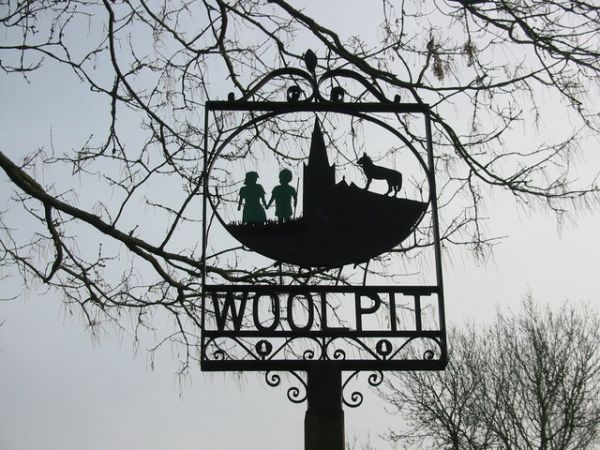
The green children’s story began when they emerged from one of the wolf-trapping pits for which the town is named. The pits—designed to lure and ensnare dangerous wolves—were likely at least twice as tall as the children and a couple hundred square feet in area. A reaper discovered the pair and took them into town, where Sir Richard de Calne gave them a home. In time, they lost their iridescent pallor and diversified their diets, though the boy became increasingly depressed and sickly before succumbing to illness and dying.The girl eventually learned English and told her caretakers that the boy was her brother. She related the tale of how they wandered into the pit, but could not explain where they came from. The story survives thanks to two different accounts, although neither writer actually met the children. We don’t know where the children originated, or what made them appear to be green, but mental_floss offers several possible explanations. None involve aliens from another planet.
200 Years After Tambora, Some Unusual Effects Linger

Tambora was “a tragedy of nations masquerading as a spectacular sunset,” Gillen D’Arcy Wood of the University of Illinois, Urbana-Champaign, writes in Tambora: The Eruption That Changed the World. Those aerosol particles stayed in the stratosphere for two years, blocking sunlight and causing havoc on Earth’s climate. The year 1816 was so cold that it snowed in New England in June, and the period became known as “the year without a summer.” Grain shortages and famine occurred across the globe, and Tambora’s far-reaching death toll would eventually claim more than 100,000 according to some estimates.Our world would be different today if the Tambora disaster had never happened. Smithsonian has a list of seven of the effects Tambora had on history, including weather patterns, disease, human migration, food, and even art and literature.
Protective Puppy Refuses to Fall Asleep While Guarding Infan...zzz
A
puppy stands guard next to his tiny, sleeping human, seemingly averse
to falling asleep during guard duty. Yet his eyelids grow droopy. The
warmth and comfort of the room and the deep breathing of the little
being next to him are slowly lulling him to sleep. The pup holds out as
long as he can, but acquiesces in the end. Sweet dreams, cuties.

Tuesday, April 14, 2015
The Daily Drift

Carolina Naturally is read in 203 countries around the world daily.
Aw, So, Cute... !

Today is - National Dolphin Day
You want the unvarnished truth?
You want the unvarnished truth?
Don't forget to visit:The Truth Be Told
Some of our readers today have been in:
The Americas
Curitiba, Rio de Janeiro and Salvador, Brazil
Brampton, Henry Farm, Ottawa and Quebec, Canada
Bogota, Colombia
Santo Domingo, Dominican Republic
Boaco, Nicaragua
Lima, Peru
San Juan, Puerto Rico
The Bottom, Sint Eustatius-Saba
Des Moines, Eau Claire, El Cerrito, Ellicott City, Fair Oaks, Isle of Palms, La Crosse, Las Vegas,
Little Rock, Long Beach, Los Angeles, Menlo Park, Mountain View, Mount Pilot, New York City,
Old Town, Port Chester, Saint Cloud, saint Louis, Stone Mountain, Sugar Land, Sun City,
West Hartford and Yuba City, United States
Christiansted, Virgin Islands
Europe
Andorra la Vella, Andorra
Glavinitsa, Bulgaria
Karlin and Stare Mesto, Czech Republic
Chester, London and Sheffield, England
Cerny, Ivry-sur-Suene, Paris, Roubaix and Rouen, France
Meria, Georgia
Bonn, Frankfurt Am Main, Hamburg, Hurth, Rothe Erde and Wuppertal, Germany
Athens, Greece
Reykjavik, Iceland
Dublin, Ireland
Milan, Prato and Ravenna, Italy
Riga, Latvia
Chisinau, Moldova
Amsterdam, Netherlands
Gjerstad and Oslo, Norway
Warsaw, Poland
Braga and Lisbon, Portugal
Bucharest, Romania
Ryazan, Russia
Belgrade, Serbia
Ljubljana, Slovenia
Madrid, Spain
Gislovs Lage and Lulea, Sweden
Ankara, Turkey
Chernihiv, Ukraine
Asia
Chongging, Dalian and Shanghai, China
Bangalore, Bhubaneshwar, Calicut and Kolkata, India
Jakarta, Indonesia
Tehran, Iran
Petah Tikva, Israel
Beirut, Lebanon
Bayan Lepas, Johor Bahru, Kula Lumpur, Kulim and Sandakan, Malaysia
Doha, Qatar
Riyadh, Saudi Arabia
Colombo, Sri Lanka
Bangkok and Phang Khon, Thailand
Africa
Bloemfontein, Cape Town and Johannesburg, South Africa
Lusaka, Zambia
The Pacific
Girilambone, Homebush and Sydney, Australia
Cebu City and Rodriguez, Philippines
Today in History
| 1471 | The Earl of Warwick, who fought on both sides in the War of the Roses, is killed at the Battle of Barnet with the defeat of the Lancastrians. | |
| 1543 | Bartoleme Ferrelo returns to Spain after discovering a large bay in the New World (San Francisco). | |
| 1775 | The first abolitionist society in United States is organized in Philadelphia. | |
| 1793 | A royalist rebellion in Santo Domingo is crushed by French republican troops. | |
| 1828 | The first edition of Noah Webster's dictionary is published. | |
| 1860 | The first Pony Express rider arrives in San Francisco with mail originating in St. Joseph, Missouri. | |
| 1865 | President Abraham Lincoln is assassinated in Ford's Theater by John Wilkes Booth. | |
| 1894 | Thomas Edison's kinetoscope is shown to the public for the first time. | |
| 1900 | The World Exposition opens in Paris. | |
| 1912 | The passenger liner Titanic–deemed unsinkable–strikes an iceberg on her maiden voyage and begins to sink. The ship will go under the next day with a loss of 1,500 lives. | |
| 1931 | King Alfonso XIII of Spain is overthrown. | |
| 1945 | American B-29 bombers's damage the Imperial Palace during firebombing raid over Tokyo. | |
| 1953 | The Viet Minh invade Laos with 40,00 troops in their war against French colonial forces. | |
| 1959 | The Taft Memorial Bell Tower is dedicated in Washington, D.C. | |
| 1961 | The first live broadcast is televised from the Soviet Union. | |
| 1969 | The first major league baseball game is played in Montreal, Canada. | |
| 1981 | America's first space shuttle, Columbia, returns to Earth. |

Tourism Troubles
Berlin Cracks Down on Vacation Rentals
by Ann-Kathrin Nezik
by Ann-Kathrin Nezik

A Monumental Day in the Fight Against Polio
 Sixty years ago on April 12, 1955, Dr. Thomas Francis of the University of Michigan made the announcement that a polio vaccine had been created. The nation immediately celebrated the life-changing news.
If it is difficult now to understand why that was so momentous, credit the vaccine announced that day, and another one revealed soon after. In the United States, polio killed or paralyzed thousands of children every summer. In 1952, the worst year on record, it attacked 58,000 American kids, closing pools and movie theaters, turning streets into ghost towns as families fled crowded cities for sparsely settled summer colonies where they imagined they would be more safe. Around the world, hundreds of thousands more every year were mowed down by it; in societies with few resources to treat the illness or support the disability that followed, they faced a lifetime of mistreatment and poverty.Scientists had been working on the problem of polio for years, and while millions of vaccinations ended the terror of the disease in the U.S., it took decades to do so. Polio still exists in some parts of the world, and the battle to eradicate it continues. Mary McKenna of the science blog Germination talked to one of the pioneering “polio warriors,” Dr. John Sever. Sever knew both Dr. Jonas Salk and Dr. Albert Sabin, the inventors of two polio vaccines, and was the founder of Rotary International’s campaign against polio.
John Sever: I was working on a PhD in microbiology and an MD at Northwestern Medical School in the 1950s, so I was aware, of course, of polio. My father had been a practicing physician in the Chicago area, and I had a cousin who had polio paralysis of her legs, so it was very much a personal experience as well as professional. I remember that parents with newborns could buy “polio insurance” against the possibility their child would develop polio, so they could pay for the cost of care. It was on everyone’s mind, that children would be paralyzed and have to be in “iron lungs,” or die.In the interview, he tells what those early days of polio vaccination were like and how it grew from an emergency measure to a global eradication project. Read the story of the polio breakthrough, and then take a minute to be thankful for the miracle of modern science.
A Visual Overview of Early Supercomputers

"Computers in the future may weigh no more than 1.5 tons."Computers have been around a long time: exactly how long depends on how you define “computer.” However, the development of computers took off big time in the past 100 years. Before transistors, they were incredibly massive, and before microchips they were too big for home use. Now just about everyone carries one around in their pocket. We’ve come a long way, baby. Dark Roasted Blend takes a look back at some of the famous early supercomputers -at least the ones that were photographed. Shown above is an IBM model from the 1960s that stored data on reels of tape. Yes, all that is one computer.
- Popular Mechanics (1949)
Ain't it always the way ...

Far from being a romantic scene, the burial represent a human
sacrifice in which the man was killed to be entombed with the woman.
Subscribe to:
Posts (Atom)
