| 240 BC | Eratosthenes estimates the circumference of Earth using two sticks. | |
| 1778 | General George Washington’s troops finally leave Valley Forge after a winter of training. | |
| 1821 | The Ottomans defeat the Greeks at the Battle of Dragasani. | |
| 1846 | The New York Knickerbocker Club plays the New York Club in the first baseball game at Elysian Field, Hoboken, New Jersey. | |
| 1848 | The first Women’s Rights Convention convenes in Seneca Falls, New York. | |
| 1861 | Virginians, in what will soon be West Virginia, elect Francis Pierpoint as their provisional governor. | |
| 1862 | President Abraham Lincoln outlines his Emancipation Proclamation. News of the document reaches the South. | |
| 1864 | The USS Kearsarge sinks the CSS Alabama off of Cherbourg, France. | |
| 1867 | Mexican Emperor Maximillian is executed. | |
| 1885 | The Statue of Liberty arrives in New York City from France. | |
| 1903 | The young school teacher, Benito Mussolini, is placed under investigation by police in Bern, Switzerland. | |
| 1919 | Mustafa Kemal founds the Turkish National Congress at Ankara and denounces the Treaty of Versailles. | |
| 1933 | France grants Leon Trotsky political asylum. | |
| 1934 | The National Archives and Records Administration is established. | |
| 1937 | The town of Bilbao, Spain, falls to the Nationalist forces. | |
| 1942 | Prime Minister Winston Churchill arrives in Washington D.C. to discuss the invasion of North Africa with President Roosevelt. | |
| 1944 | U.S. Navy carrier-based planes shatter the remaining Japanese carrier forces in the Battle of the Marianas. | |
| 1951 | President Harry S. Truman signs the Universal Military Training and Service Act, which extends Selective Service until July 1, 1955 and lowers the draft age to 18. | |
| 1958 | Nine entertainers refuse to answer a congressional committee’s questions on communism. | |
| 1961 | Kuwait regains complete independence from Britain. | |
| 1963 | Soviet cosmonaut, Valentia Tereshkova, becomes the first woman in space. | |
| 1965 | Air Marshall Nguyen Cao Ky becomes South Vietnam’s youngest premier at age 34. | |
| 1968 | Over 50,000 people march on Washington, D.C. to support the Poor People’s Campaign. | |
| 1973 | The Case-Church Amendment prevents further U.S. involvement in Southeast Asia. | |
| 1987 | The U.S. Supreme Court voids the Louisiana law requiring schools to teach creationism. | |
| 1995 | The Richmond Virginia Planning Commission approves plans to place a memorial statue of tennis professional Arthur Ashe. |

Friday, June 19, 2015
Today in History

Here are 9 things many Americans just don’t understand — compared to the rest of the world
by Alex Henderson

To hear the lunatic fringe ideologues of Fox News and AM talk radio tell it, life in
Europe is hell on Earth. Taxes are high, sexual promiscuity prevails,
universal healthcare doesn’t work, and millions of people don’t even
speak English as their primary language! Those who run around screaming
about “American exceptionalism” often condemn countries like France,
Norway and Switzerland to justify their jingoism. Sadly, the U.S.’
economic deterioration means that many Americans simply cannot afford a
trip abroad to see how those countries function for themselves. And
often, lack of foreign travel means accepting clichés about the rest of
the world over the reality. And that lack of worldliness clouds many
Americans’ views on everything from economics to sex to religion.
Here are nine things Americans can learn from the rest of the world.
1. Universal Healthcare Is Great for Free Enterprise and Great for Small Businesses
The modern-day Republican Party would have us believe that
those who promote universal healthcare are anti-free enterprise or
hostile to small businesses. But truth be told, universal healthcare is
great for entrepreneurs, small businesses and the self-employed in
France, Germany and other developed countries where healthcare is
considered a right. The U.S.’ troubled healthcare system has a long
history of punishing entrepreneurs with sky-high premiums when
they start their own businesses. Prior to the Affordable Care Act of
2010, a.k.a. Obamacare, many small business owners couldn’t even obtain
individual health insurance plans if they had a preexisting condition
such as heart disease or diabetes—and even with the ACA’s reforms, the
high cost of health insurance is still daunting to small business
owners. But many Americans fail to realize that healthcare reform is not
only a humanitarian issue, it is also vitally important to small
businesses and the self-employed.
In 2009, the Center for Economic and Policy Research
published a study on small businesses around the world and found that
“by every measure of small-business employment, the United States has
among the world’s smallest small-business sectors.”
People in the Netherlands, France, Germany, Sweden, Finland, Belgium
and other European countries are more likely to be self-employed—and the
study concluded that universal healthcare is a key factor. According to
CEPR’s study, “High healthcare costs discourage small business formation since start-ups in other countries can tap into government-funded healthcare systems.”
2. Comprehensive Sex Education Decreases Sexual Problems
For decades, social conservatives in the U.S. have insisted
that comprehensive sex education promotes unplanned pregnancies and
sexually transmitted diseases. But in fact, comprehensive sex education
(as opposed to the abstinence-only programs that are common in the
American Bible Belt) decreases sexual problems, and the data bears that
out in no uncertain terms. Public schools in the Netherlands have
aggressive sex education programs that America’s Christian Right would
despise. Yet in 2009, the Netherlands had (according to the United
Nations) a teen birth rate of only 5.3 per 1,000 compared to 39.1 per
1,000 in the U.S. That same year, the U.S. had three times as many
adults living with HIV or AIDS as the Netherlands.
Switzerland, France, Germany and many other European
countries also have intensive sex-ed programs and much lower teen
pregnancy rates than the U.S. Still, far-right politicians in the U.S.
can’t get it through their heads that inadequate sex education and
insufficient sexual knowledge actually promote teenage pregnancies and sexually transmitted diseases instead of decreasing them.
3. American Exceptionalism Is Absolute Nonsense in 2015
No matter how severe the U.S.’ decline becomes, neocons and
the Tea Party continue to espouse their belief in “American
exceptionalism.” But in many respects, the U.S. of 2015 is far from
exceptional. The U.S. is not exceptional when it comes to civil
liberties (no country in the world incarcerates, per capita, more of its
people than the U.S.) or healthcare (WHO ranks the U.S. #37 in
terms of healthcare). Nor is the U.S. a leader in terms of life
expectancy: according to the WHO, overall life expectancy in the U.S. in
2013 was 79 compared to 83 in Switzerland and Japan, 82 in Spain,
France, Italy, Sweden and Canada and 81 in the Netherlands, Germany,
Norway, Austria and Finland.
4. Adequate Mass Transit Is a Huge Convenience
When it comes to mass transit, Europe and Japan are way
ahead of the U.S.; in only a handful of American cities is it easy to
function without a car. New York City, Chicago, Boston, Philadelphia and
Washington, DC are among the U.S.’ more mass transit-oriented cities,
but overall, the U.S. remains a car culture—and
public transportation is painfully limited in a long list of U.S.
cities. Many Americans fail to realize that mass transit has numerous
advantages, including less air pollution, less congestion, fewer DUIs
and all the aerobic exercise that goes with living in a
pedestrian-friendly environment.
5. The Bible Was Not Written by Billionaire Hedge Fund Managers
Christianity in its various forms can be found all over the
developed world. But the U.S., more than anywhere, is where one finds a
far-right version of white Protestant fundamentalism that idolizes the
ultra-rich, demonizes the poor and equates extreme wealth with morality
and poverty with moral failings. The problem with hating the
poor in the name of Christianity is that the Bible is full of quotes
that are much more in line with Franklin Delano Roosevelt than Ayn
Rand—like “It is easier for a camel to go through the eye of a needle
than for a rich man to enter into the kingdom of God” (Mark 10:25) and
“The love of money is the root of all evil” (1 Timothy 6:10).
6. Learning a Second or Third Language Is a Plus, Not a Character Flaw
In the Netherlands or the Scandinavian countries, becoming
proficient in two or three foreign languages is viewed as a sign of
intellect and sophistication. But xenophobia runs
so deep among many neocons, Republicans and Tea Party wingnuts that any
use of a language other than English terrifies them. Barack Obama,
during his 2008 campaign, was bombarded with hateful responses from
Republicans when he recommended that Americans study foreign languages
from an early age. And in the 2012 GOP presidential primary, Newt
Gingrich’s campaign ran an ad in South Carolina attacking Mitt Romney
for being proficient in French.
In February, an eighth-grade girl who was studying Latin in
Vermont received equally clueless responses when she wrote to a state
senator suggesting that Vermont adopt a Latin motto in addition to its
English-language motto (not as a replacement). The wingnuts went
ballistic, posting on the Facebook page of a local television station
that if the girl wanted to speak Latin, she should move to Latin
America.
7. Union Membership Benefits the Economy
In 2014, a Gallup poll found that 53% of Americans approved of labor unions while
71% favored anti-union “right to work” laws. Union membership is way
down in the U.S.: only 6.6% of private-sector workers, according to the
Bureau of Labor Statistics, belonged to unions in 2014 compared to
roughly 35% in the mid-1950s. The U.S.’ overall unionization rate
(factoring in both public-sector and private-sector workers) is 11.1%,
which is quite a contrast to parts of Europe, where
overall union rates range from 74% in Finland and 70% in Sweden to 35%
in Italy, 19% in Spain and 18% in Germany. That is not to say
unionization has not been decreasing in Europe, but overall, one finds a
more pro-labor, pro-working class outlook in Europe. The fact that 47%
of Americans, in that Gallup poll, consider themselves anti-union is
troubling. Too many Americans naively believe that the 1% have their
best interests at heart, and they fail to realize that when unions are
strong and their members earn decent wages, that money goes back into
the economy.
8. Paid Maternity Leave Is the Norm in Most Developed Countries
The U.S. continues to lag behind the rest of the developed
world when it comes to maternity leave. Paid maternity leave is strictly
voluntary in the U.S., where, according to the organization Moms
Rising, 51% of new mothers have no paid maternity leave at all. But government-mandated maternity
leave is the norm in other developed countries, including the
Netherlands (112 days at 100% pay), Italy (140 days at 80% pay),
Switzerland (98 days at 80% pay) and Germany (98 days at 100% pay).
9. Distrust of Oligarchy Is a Positive
In February, the Emnid Polling Institute in Germany
released the results of a poll that addressed economic and political
conditions in that country: over 60% of the Germans surveyed believed
that large corporations had too much influence on
elections. ThE survey demonstrated that most Germans have a healthy
distrust of crony capitalists and oligarchs who take much more than they
give. Meanwhile, in the U.S., various polls show a growing distrust of
oligarchy on the part of many Americans but with less vehemence than in
the German Emnid poll. A 2012 poll by the Greenberg Quinlan Rosner
Research showed that while 62% of American voters opposed the
U.S. Supreme Court’s disastrous Citizens United decision, only 46%
strongly opposed it. And in a 2012 poll by the Corporate Reform
Coalition, most Americans agreed that there was too much corporate money
in U.S. politics—although only 51% strongly agreed.
8 Brilliant Advances in Medical Technology in 2015

8. Holographic KeyboardsAnd that’s just the first one on the list of 8 Brilliant Advances in Medical Technology in 2015 you’ll find at Worthly.
Holographic keyboards might seem like a trivial and useless technology for the medical industry, however that is far from the case. While modern hospitals aim to be as clean as humanly possible, people still wind up getting infections from germs within hospitals. Actually, around 100,000 people each year die from hospital infections, and holographic keyboards can help reduce the spread. Technologies like the HaptoMime would provide hospital staff members with a virtual screen that you can interact with, without touching it at all. These devices then would curb the spread of deadly infections.
Lady suing restaurant after being mistaken for a man and kicked out of the women's bathroom

But she hasn't returned since the January 23rd incident, when, she says,
she was kicked out of the restaurant's women's bathroom - accused of
being a man.
Bogorad says she went to use the restroom and a security worker yelled
from outside for whatever man is in the restroom to come out now.
“As I came out of the stall, this gentleman, who was a security guard, came in the bathroom, and before I was even completely out of the bathroom he grabbed me by the arms and pushed me up against the wall, told me that boys aren’t allowed in this restroom," she says. "This could have happened to anybody.
“There are lots of females out there with short hair. some people might
think we’re boys, but, at the end of the day, we’re not"
Bogorad is suing Fishbones, claiming the restaurant violated her civil
rights and caused emotional distress. She says, despite the
embarrassment she felt after the incident, she is taking legal action so
no one else goes through a similar experience.
The lawsuit was filed on Wednesday in Wayne County Circuit Court.
“As I came out of the stall, this gentleman, who was a security guard, came in the bathroom, and before I was even completely out of the bathroom he grabbed me by the arms and pushed me up against the wall, told me that boys aren’t allowed in this restroom," she says. "This could have happened to anybody.


Most gun deaths are suicides, not homicides
That's a strong case for gun control.
National
Review's Charles C. W. Cooke disagrees with Martin O'Malley about gun
control. That's fine. But in doing so, he winds up reinforcing a quite
damaging myth about suicide:Two thirds are suicides. https://t.co/JWGWutnt8I
— Charles C. W. Cooke (@charlescwcooke) June 2, 2015
Indeed they are. This matters, Cooke argues, because suicides and homicides aren't "morally comparable":
@McdougNathaniel @GovernorOMalley Moreover, suicides and murders are not morally comparable. The conflation is routine and it is deliberate.
— Charles C. W. Cooke (@charlescwcooke) June 2, 2015
It's a common viewpoint that suicide is ultimately just someone's choice. It may be bad, but it's not nearly as bad as homicide or death by disease, and certainly not a morally significant enough problem to justify gun control measures.
It's common, but it's wrong. Suicide is the terminal stage of a disease. It's a preventable death that we can, and should, prevent. And gun control is a necessary tool for doing that.
A life saved is a life saved
A suicide prevention sign on the Golden Gate Bridge in San Francisco. (Jamie McCaffrey)
Obviously there's tremendous variation in particular people's ethical frameworks, but where I come from, a death is a death. The friends and family of people who've killed themselves grieve just as the friends and family of people who've been killed by others grieve. The deceased is denied years of potentially happy life whether dead by his own hand or another's.
The only way a suicide could be somehow morally "better" than a homicide is if, in some meaningful sense, it serves the interests of the person committing suicide. In all but a few cases, this isn't true. There are some rare instances where suicide may be a viable option — when terminally ill, for instance — but for the most part it's a rational failure, a cognitive bias that places way too much weight on current pain and way too little on the welfare of one's future self. Depression is a liar intent on convincing you it'll never leave. But for many people, with treatment, it does leave. If those people never got to experience that future because a disease claimed their life early, the fact that the disease in question was depression rather than cancer or heart disease hardly seems relevant. It doesn't make the outcome any less tragic. It doesn't mean the victim was asking for it.
This may feel infantilizing or insulting — who are we to say that people who commit suicide don't know what's best for them? — but believe me, it's not. I can't speak for other people who've dealt with suicidal ideation, but I can speak for myself. I've oscillated between times like now, when my baseline tendency is to feel genuinely happy and fulfilled, and times like my senior spring of college, when life felt like an impossible burden to be endured and I ignored any indications that this might change. But it did change. One night I confessed to my roommate that I'd made a plan to kill myself; he instructed me that, whether I liked it or not, I was going to start seeing a psychiatrist at least once a week. I started getting treatment, and I got better.
If I'd followed through on that plan, I would've been making a rational decision for the moment. But I'd have missed out on years of happy life and, with luck, years more to come. I more or less know what's good for me. But depression doesn't. Honoring depression's wishes doesn't do me any favors. It doesn't respect my autonomy. What does help are efforts to reduce depression's power, to place roadblocks that keep it from making decisions that will permanently harm me.
Why suicide attempts with guns are more dangerous
Limits on gun ownership, it appears, can serve as that kind of roadblock.
While high rates of gun ownership are associated with higher homicide rates, the evidence around suicide is particularly strong. For example, a recent meta-analysis, which collated studies comparing suicide and homicide victimization rates for people with and without gun access, "found strong evidence for increased odds of suicide among persons with access to firearms compared with those without access and moderate evidence for an attenuated increased odds of homicide victimization when persons with and without access to firearms were compared."
Suicide is more common in places with more guns
There's a popular myth that suicidal people will find a way to kill themselves no matter what, and that closing off one method (like guns) will just lead to an increase in suicides through other methods (like hanging or overdoses). But most suicides aren't committed by determined people who can't be talked out of it. They're impulsive actions that can usually be prevented by small barriers. Many survivors say they deliberated less than a day, and sometimes for only a matter of minutes, before making a suicide attempt. Ken Baldwin, who survived a jump off the Golden Gate Bridge, once told the New Yorker's Tad Friend that as he was falling, he "instantly realized that everything in my life that I’d thought was unfixable was totally fixable — except for having just jumped."
Baldwin's change of heart isn't too unusual. Ninety percent or so of people who've survived suicide attempts do not end up dying by suicide. So blocking off particularly lethal suicide methods — ones where attempts almost always lead to death — saves life. Guns are an extremely lethal suicide method. The Centers for Disease Control and Prevention found that in 2001, 85 percent of suicide attempts involving guns resulted in death, significantly above other methods. A study looking at hospital admissions for suicides and suicide attempts in Illinois found that 96 percent of firearm cases resulted in death, while only 6.7 percent of cases involving cuts and 6.5 percent of cases involving poisoning did. "In the public-health community," Leon Neyfakh wrote in an excellent piece on guns and suicide for the Boston Globe, "researchers have widely come to regard it as a basic truth that access to a gun makes it more likely that someone who wants to commit suicide actually manages to do so."
At least 385 Americans have been shot and killed by police in the U.S. already this year
The year is not even half over:
In an alley in Denver, police gunned down a 17-year-old girl
joyriding in a stolen car. In the backwoods of North Carolina, police
opened fire on a gun-wielding moonshiner. And in a high-rise apartment
in Birmingham, Ala., police shot an elderly man after his son asked them
to make sure he was okay. Douglas Harris, 77, answered the door with a
gun.
The three are among at least 385 people shot and killed by police nationwide during the first five months of this year, more than two a day, according to a Washington Post analysis. That is more than twice the rate of fatal police shootings tallied by the federal government over the past decade, a count that officials concede is incomplete.
“These shootings are grossly underreported,” said Jim Bueermann, a former police chief and president of the Washington-based Police Foundation, a nonprofit organization dedicated to improving law enforcement. “We are never going to reduce the number of police shootings if we don’t begin to accurately track this information.”
And even that is "only" those shot and killed. Because not all those killed are shot. Grossly underreported, indeed:
An average of 545 people killed by local and state law enforcement officers in the US went uncounted in the country’s most authoritative crime statistics every year for almost a decade, according to a report released on Tuesday.
The first-ever attempt by US record-keepers to estimate the number of uncounted “law enforcement homicides” exposed previous official tallies as capturing less than half of the real picture. The new estimate – an average of 928 people killed by police annually over eight recent years, compared to 383 in published FBI data – amounted to a more glaring admission than ever before of the government’s failure to track how many people police kill.
The revelation called into particular question the FBI practice of publishing annual totals of “justifiable homicides by law enforcement” – tallies that are widely cited in the media and elsewhere as the most accurate official count of police homicides.
There are plenty of good police officers, and it is an inherently dangerous job. But the United States is doing it wrong. Horrifically wrong. As Eugene Robinson wrote last December:
By contrast, there were no fatal police shootings in Great Britain last year. Not one. In Germany, there have been eight police killings over the past two years. In Canada — a country with its own frontier ethos and no great aversion to firearms — police shootings average about a dozen a year.
It is long past time for the United States to hold a national dialogue on how to do police work right. For the sake of the police as well as the public. It is long past time for this dialogue to be a top national priority
The three are among at least 385 people shot and killed by police nationwide during the first five months of this year, more than two a day, according to a Washington Post analysis. That is more than twice the rate of fatal police shootings tallied by the federal government over the past decade, a count that officials concede is incomplete.
“These shootings are grossly underreported,” said Jim Bueermann, a former police chief and president of the Washington-based Police Foundation, a nonprofit organization dedicated to improving law enforcement. “We are never going to reduce the number of police shootings if we don’t begin to accurately track this information.”
And even that is "only" those shot and killed. Because not all those killed are shot. Grossly underreported, indeed:
An average of 545 people killed by local and state law enforcement officers in the US went uncounted in the country’s most authoritative crime statistics every year for almost a decade, according to a report released on Tuesday.
The first-ever attempt by US record-keepers to estimate the number of uncounted “law enforcement homicides” exposed previous official tallies as capturing less than half of the real picture. The new estimate – an average of 928 people killed by police annually over eight recent years, compared to 383 in published FBI data – amounted to a more glaring admission than ever before of the government’s failure to track how many people police kill.
The revelation called into particular question the FBI practice of publishing annual totals of “justifiable homicides by law enforcement” – tallies that are widely cited in the media and elsewhere as the most accurate official count of police homicides.
There are plenty of good police officers, and it is an inherently dangerous job. But the United States is doing it wrong. Horrifically wrong. As Eugene Robinson wrote last December:
By contrast, there were no fatal police shootings in Great Britain last year. Not one. In Germany, there have been eight police killings over the past two years. In Canada — a country with its own frontier ethos and no great aversion to firearms — police shootings average about a dozen a year.
It is long past time for the United States to hold a national dialogue on how to do police work right. For the sake of the police as well as the public. It is long past time for this dialogue to be a top national priority
Most Elaborate Prison Escapes

From crafting rafts from coconuts to stealing helicopters, prisoners have found impressively creative ways to escape.
False name man locked up for crime committed by the person he pretended to be

Police said because people are not fingerprinted when they are found breaching bail conditions, they had no idea the man was not who he claimed to be. The man appeared in court under the false name.
However, Ngawha Prison officials recognised who he really was.
From First-degree Murder to Chicken Theft
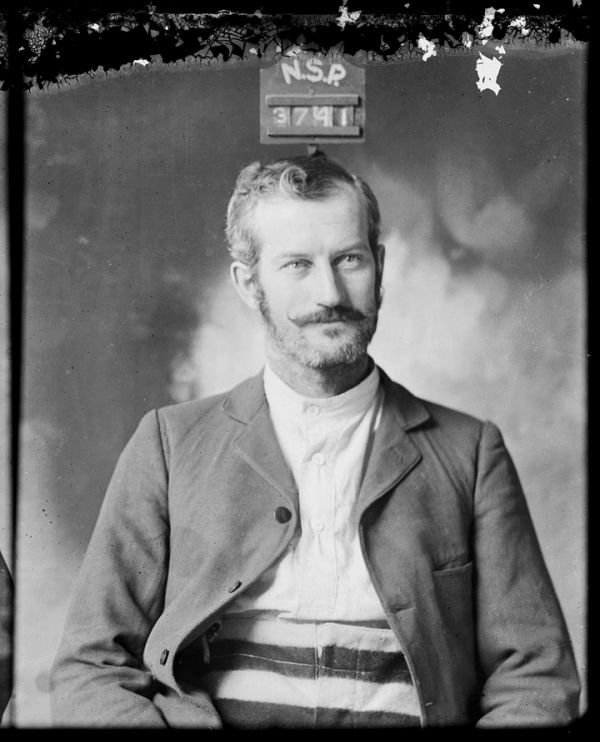
A double murder rocked the tiny town of Odessa, Buffalo County on the night of Dec. 4, 1899. Lillian Dinsmore was found dead in the kitchen of the house in which she and her charismatic husband Frank L. Dinsmore boarded. Fred Laue, the boarding house owner was shot in his bedroom. The Dinsmores had been married only a year. According to Fred Laue's wife, Mr. Dinsmore became obsessed with her and seduced her. Unhappy in his marriage, Dinsmore supposedly plotted to kill his young wife and murder Laue. After she was murdered, Lillian Dinsmore's brothers accused Dinsmore of using hypnotic powers on their vulnerable sister. After hearing the accusation, Mrs. Laue also claimed to be a victim of Dinsmore's hypnotic influence. The Dinsmore case became a newspaper sensation. He vehemently denied all the charges even after the guilty verdict was read, and he was sentenced to death by hanging. Dinsmore's lawyers appealed the sentence and Governor Dietrich stepped in to commute his sentence to life in prison. Dinsmore posed for his mug shot at the Nebraska State Prison wearing a simple white cotton shirt, sack jacket and striped prison-issue pants.

Bert Martin was sentenced for stealing a horse in Keya Paha County. At the prison, Bert worked in the broom factory. One day, Bert's cellmate of 11 months told the prison authorities a secret: Bert was really a woman named Lena Martin. In sparsely settled Keya Paha County, Lena's masculine appearance allowed her to find work as a cowboy. Prison records show Martin was transferred to the women's division on Sept. 22, 1901. When Martin was sentenced, a woman, believed to be Martin's wife stood beside him. Martin was sentenced to two years. The Governor of Nebraska Ezra P. Savage said of her: “a sexual monstrosity, unfit for association with men or women even in a penal institution, and on the solemn promise of its aged mother to care for it and guard it, and that prison morals imperatively demanded its removal, sentence was commuted to one year, six months, Feb. 3, 1902.”Nebraska seems like such a wholesome state, full of small towns, agricultural products, and God-fearing Americans. But, of course, there are miscreants everywhere. Mashable has a collection of 41 mugshots taken between the 1880s and the 1930s from the Nebraska State Historical Society, with the stories behind each. The crimes include pickpocketing, prostitution, theft, insurance fraud, bank robbery, mayhem, bootlegging, murder, and more.

Neil deGrasse Tyson Reveals We’re Pretty Much Fucked Due To Climate Change

It’s time to get prepared for our “new normal…”
Read more
Read more
Everest Moved

While Mt. Everest moved, Kathmandu shifted south by over 1.5 meters and was uplifted by nearly a meter by the quake.
Has the Sun's Color Looked Different Recently?

Smoke from Canadian wildfires, as it turns out, created that deeper solar hue.
The Pekingese Was Used as Attack Dog, Hidden in the Sleeves of Royalties in Ancient China
 The
Pekingese make cute lap dogs, but did you know that they were also bred
as personal guard dogs to royalties in Imperial China?
The
Pekingese make cute lap dogs, but did you know that they were also bred
as personal guard dogs to royalties in Imperial China?The smallest and most ferocious ones were called "Sleeve" Pekingese or just "Sleeves" because emperors and courtiers would carry the dogs around in their sleeves. When their owners felt threatened, they'd release the dogs to attack and scare off the unfortunate fellow. According to the Pekingese Club of America, the dogs were "the ancient Chinese version of mace."
And if you've ever seen a Pekingese, you'd know how protective and aggressive it can be. So the next time you see a cute Pekingese, you'd know that it's actually a descendant of vicious imperial guard dogs of ancient China!
Green tree frog found attempting to devour carpet python
 Carpet pythons often make a meal of green tree frogs but a new video has
shown the tables being turned, with one of the amphibians exacting
revenge by chomping down on a snake.
The clip, taken in the Darwin suburb of Malak in Australia's Northern
Territory on Saturday night, shows a green tree frog with a baby carpet
python being eaten headfirst, and the snake part way into its stomach.
Carpet pythons often make a meal of green tree frogs but a new video has
shown the tables being turned, with one of the amphibians exacting
revenge by chomping down on a snake.
The clip, taken in the Darwin suburb of Malak in Australia's Northern
Territory on Saturday night, shows a green tree frog with a baby carpet
python being eaten headfirst, and the snake part way into its stomach.
 Once the feisty frog is found by Mark Drescher, who lives in the home,
it clings to the still wriggling snake and refuses to relinquish it,
even holding on while the snake is lifted into the air.
At an estimated 50 centimeters long, the snake would appear a difficult
meal for the much smaller frog, but there was no sign of the frog giving
up its efforts.
"The frog was downstairs under the house when I found it, moving around
with what I thought was a lizard's tail wriggling in its mouth," Mr
Drescher said.
Once the feisty frog is found by Mark Drescher, who lives in the home,
it clings to the still wriggling snake and refuses to relinquish it,
even holding on while the snake is lifted into the air.
At an estimated 50 centimeters long, the snake would appear a difficult
meal for the much smaller frog, but there was no sign of the frog giving
up its efforts.
"The frog was downstairs under the house when I found it, moving around
with what I thought was a lizard's tail wriggling in its mouth," Mr
Drescher said.
"Only when I had a closer look did I realise it was a small snake." Mr Drescher said he thought about letting the battle between the two animals continue, but in the end decided to intervene. "I was in two minds as to let it continue but couldn't see that the frog given its size would be successful and [it would be] most unpleasant for the snake, which was obviously well and truly alive, [so I] decided to intervene," he said.
 He said he lifted up the snake and gave it a gentle tug, but the frog held on doggedly.
"The snake once free was rearing and hissing and though not happy didn't look to have suffered any ill effects," he said.
The snake was then released into his garden.
Dr Gavin Bedford, snake expert and curator of reptiles at Crocosaurus Cove, said it was unusual for a small animal like a frog to try and eat a larger snake.
"Carpet pythons are known on occasion to eat frogs, so the tables are turned," Dr Bedford said.
He said he lifted up the snake and gave it a gentle tug, but the frog held on doggedly.
"The snake once free was rearing and hissing and though not happy didn't look to have suffered any ill effects," he said.
The snake was then released into his garden.
Dr Gavin Bedford, snake expert and curator of reptiles at Crocosaurus Cove, said it was unusual for a small animal like a frog to try and eat a larger snake.
"Carpet pythons are known on occasion to eat frogs, so the tables are turned," Dr Bedford said.
Isn't this Octopus Adorabilis?


Thursday, June 18, 2015
The Daily Drift
Breaking News: The suspect in the murders at a Charleston, SC cult has been apprehended in Shelby, NC.
It is being called a hate crime - and while that has been officially established (to be based on an interview with the suspect) - all indicators are most decidedly pointing that way.

Dinner ... !


Well, somebody had to ...!
Carolina Naturally is read in 203 countries around the world daily.
Dinner ... !

Today is - International Sushi Day
You want the unvarnished truth?
You want the unvarnished truth?
Don't forget to visit: The Truth Be Told
Some of our readers today have been in:
The Americas
Argentina - Bermuda - Bolivia - Brazil - Canada - Colombia - Mexico - Puerto Rico - United States
Europe
Belarus - Belgium - Bosnia/Herzegovina - Bulgaria - Croatia - Czech Republic - England - Finland - France Germany - Greece - Iceland - Ireland - Italy - Latvia - Lithuania - Macedonia - Netherlands - Nicaragua Northern Ireland - Norway - Poland - Portugal - Russia - Scotland - Serbia - Slovenia - Spain
Switzerland - Ukraine - Wales
Asia
India - Indonesia - Israel - Japan - Kuwait - Malaysia - Mauritius - Pakistan - Saudi Arabia - Sri Lanka Syria - Taiwan - Thailand
Africa
Egypt - Morocco - Somalia - South Africa
The Pacific
Australia - Guam - New Zealand - Philippines
Some of our readers today have been in:
The Americas
Argentina - Bermuda - Bolivia - Brazil - Canada - Colombia - Mexico - Puerto Rico - United States
Europe
Belarus - Belgium - Bosnia/Herzegovina - Bulgaria - Croatia - Czech Republic - England - Finland - France Germany - Greece - Iceland - Ireland - Italy - Latvia - Lithuania - Macedonia - Netherlands - Nicaragua Northern Ireland - Norway - Poland - Portugal - Russia - Scotland - Serbia - Slovenia - Spain
Switzerland - Ukraine - Wales
Asia
India - Indonesia - Israel - Japan - Kuwait - Malaysia - Mauritius - Pakistan - Saudi Arabia - Sri Lanka Syria - Taiwan - Thailand
Africa
Egypt - Morocco - Somalia - South Africa
The Pacific
Australia - Guam - New Zealand - Philippines
Today in History
| 1155 | German-born Frederick I, Barbarossa, is crowned emperor of Rome. | |
| 1667 | The Dutch fleet sails up the Thames River and threatens London. | |
| 1778 | British troops evacuate Philadelphia. | |
| 1812 | The War of 1812 begins when the United States declares war against Great Britain. | |
| 1815 | At the Battle of Waterloo, Napoleon is defeated by an international army under the Duke of Wellington. | |
| 1863 | After repeated acts of insubordination, General Ulysses S. Grant relieves General John McClernand during the siege of Vicksburg. | |
| 1864 | At Petersburg, Union General Ulysses S. Grant realizes the town can no longer be taken by assault and settles into a siege. | |
| 1873 | Susan B. Anthony is fined $100 for attempting to vote for president. | |
| 1918 | Allied forces on the Western Front begin their largest counter-attack yet against the German army. | |
| 1928 | Amelia Earhart becomes the first woman to cross the Atlantic by airplane. | |
| 1936 | Mobster Charles ‘Lucky’ Luciano is found guilty on 62 counts of compulsory prostitution. | |
| 1942 | The U.S. Navy commissions its first black officer, Harvard University medical student Bernard Whitfield Robinson. | |
| 1944 | The U.S. First Army breaks through the German lines on the Cotentin Peninsula and cuts off the German-held port of Cherbourg. | |
| 1945 | Organized Japanese resistance ends on the island of Mindanao. | |
| 1951 | General Vo Nguyen Giap ends his Red River Campaign against the French in Indochina. | |
| 1953 | South Korean President Syngman Rhee releases Korean non-repatriate POWs against the will of the United Nations. | |
| 1959 | A Federal Court annuls the Arkansas law allowing school closings to prevent integration. | |
| 1966 | Samuel Nabrit becomes the first African American to serve on the Atomic Energy Commission. | |
| 1979 | President Jimmy Carter and Leonid Brezhnev sign the Salt II pact to limit nuclear arms. | |
| 1983 | Sally Ride becomes the first American woman in space. |
Breakin’ Up Is Hard To Do: 5 Other American Secession Attempts
The War Between the States was sparked when eleven states tried to secede
from the Union. They’re not the only ones. Here are
some other lesser-known secessionist movements.
1. THE GREAT REPUBLIC OF ROUGH AND READY 
Seceded from: The United States, in April 1850
Details: At least two reasons have been cited for why the tiny mining town of Rough and Ready, in California’s gold country, decided to secede from the Union. One was anger over the imposition of a tax on mining claims, and the other involved a man known as the “Boston Ravine Slicker,” who swindled a popular miner named Joe Swiegart out of $ 200. When a local judge refused to prosecute the Slicker on the grounds that he hadn’t actually broken any laws, Rough and Ready seceded from the United States and “the next morning rescued what was left of Joe’s money and took the Slicker to the edge of town with instructions never to return,” writes Fay Dunbar of the Nevada County Historical Society. (Another version of the story says the Slicker was hanged.)
What Happened: Whatever the case, the Great Republic of Rough and Ready voted to rejoin the Union in time to celebrate the 4th of July, perhaps hurried along by the refusal of saloons in nearby Nevada City and Grass Valley to sell liquor to Rough and Ready’s “foreign miners.”
2. THE FREE AND INDEPENDENT STATE OF SCOTT
Seceded from: Tennessee, in June 1861

What Happened: Not much— Scott County was of little strategic value to either the Union or the Confederacy. Both sides ignored the secession, and no major Civil War battles were fought there. But Scott County didn’t formally rejoin the state until 1986, when Governor Lamar Alexander signed a resolution declaring the State of Scott “dissolved and disbanded… after 125 years of independence.”
3. THE REPUBLIC OF KINNEY
Seceded from: The United States, in July 1977

Details: When the water system in Kinney, Minnesota, began to fail in the mid-1970s, the village of 325 people couldn’t afford the $186,000 price tag to replace it. And when it applied for funding from various state and federal agencies, the request got bogged down in red tape. So in July 1977, perhaps inspired by the 1959 film The Mouse that Roared, the village council announced their intention to secede from the U.S. and apply for foreign aid. “It is much easier to get assistance as a foreign country, which we need badly, and there is no paperwork to worry about,” the council wrote in a letter to Secretary of State Cyrus Vance, adding that “if necessary, we will be glad to declare war and lose. However, if this is a requirement, we would appreciate being able to surrender real quick, as our Mayor works as a nurse in a hospital, and most of our council members work in a nearby mine and cannot get much time off from work.”
What Happened: The publicity stunt landed Kinney on the NBC Nightly News and helped it do a brisk business in Republic of Kinney “passports,” T-shirts, bumper stickers, and other items. But it didn’t speed up the bureaucratic process much: The funding for their water system didn’t come through until November 1978.
4. WENDOVER, UTAH
Attempted to Secede from: Utah, in 2002

Details: Wendover makes up half of the metropolitan area that it shares with West Wendover, across the state line in Nevada. The difference between the two cites is stark: West Wendover’s economy is buoyed by Nevada’s legalized gambling and its casinos attract nearly two million visitors each year. Wendover, by comparison, is a veritable ghost town, thanks to no gambling, and some of the strictest state liquor laws in the country. Allowing Wendover to leave Utah and join West Wendover in Nevada would give its struggling economy a boost and allow the cities to combine police and fire departments and other public services that are needlessly duplicated. The citizens of both cities approved the secession/ annexation in a nonbinding referendum in November 2002.
What Happened: In order for a city to leave one state and join another, the U.S. Constitution requires that the legislatures of both states and the U.S. Congress approve the move. The first constitutional hurdle was passed in 2002, when the U.S. House of Representatives unanimously approved a bill permitting succession. But the bill died in the Senate, thanks to opposition from Senator Harry Reid of Nevada, who never gave a reason for why he killed the bill.
5. KILLINGTON, VERMONT
Attempted to Secede from: Vermont, in 2004
 Details: This
upscale resort town is home to the Mt. Killington ski area. When
Vermont changed the way it pays for public education in 1997, creating a
statewide pool of funds to replace the old system of local funding,
towns like Killington with high-priced vacation homes and few schools
saw their property taxes quadruple. Property taxes in next-door New
Hampshire were lower, and there was no state sales tax or income tax,
either. Suddenly being in Vermont didn’t seem very attractive. At packed
town meetings in 2004 and ’05, the residents voted overwhelmingly to
secede from the state and join New Hampshire.
Details: This
upscale resort town is home to the Mt. Killington ski area. When
Vermont changed the way it pays for public education in 1997, creating a
statewide pool of funds to replace the old system of local funding,
towns like Killington with high-priced vacation homes and few schools
saw their property taxes quadruple. Property taxes in next-door New
Hampshire were lower, and there was no state sales tax or income tax,
either. Suddenly being in Vermont didn’t seem very attractive. At packed
town meetings in 2004 and ’05, the residents voted overwhelmingly to
secede from the state and join New Hampshire.What Happened: Killington is still part of Vermont, and probably always will be. For one thing, unlike Wendover, Utah, which is right on the border, Killington is smack in the middle of the state, 35 miles from the New Hampshire line. Attempts to create a “corridor” of secessionist towns all the way to the border have failed. And the state of Vermont, which must approve secession, has shown no signs of being willing to do so. In 2005, three state legislators introduced legislation to slap Killington with crippling “exit fees” if it ever did leave the state. So in 2006, the town abandoned its plans for secession… but it’s still lobbying to change the property tax laws.
Amy Schumer Leaves 1,000 Percent Tip For Struggling Student Waiter

This tip was amazing, but debt-free college would be a lot better.
"Morning already? Nah, I'll just stay here."

Perfectly Logical Reasons For Not Getting Out of Bed in the Morning
You know this piece was posted simply for the Aww ...Cute Factor, right?
Not Laughing Out Loud?

Genes may be responsible for more than we think, from how we shop to how we sleep.

Adventurous Woman Films Her Wild Adventures Around Chernobyl

A few adventurous people have made their way into the Chernobyl Exclusion Zone to study the wildlife and take pictures of the apocalyptic scene, and some Ukranian babushkas still call the area home.
One wild and crazy gal has taken Chernobyl exploration to the next level, a level that would be considered pure madness by many, and thanks to the internet we get to see her madcap adventures on the YouTubes.
She goes by “Bionerd23”, and there's something about the calm and collected way she handles herself while exploring the Chernobyl region that almost makes it look like a fun destination for adventure travel.
And then you hear her Geiger counter start crackling away and you're reminded of just how dangerous those adventures really are...
Cash-strapped Michigan school system uses 1980s home computer to control heating for entire district

Why the Trip Back Always Feels Shorter
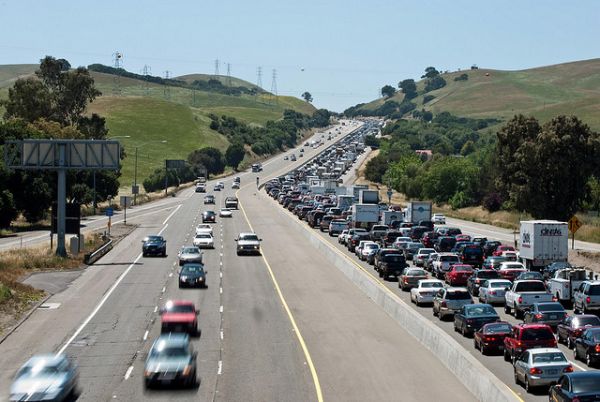
When you go on a road trip, does going to your destination seem to take forever? Yes, most of the time. But the trip home seems somewhat shorter, doesn’t it? This holds up even when you take the exact same route home. A recent study says that the reason behind this phenomena is that we are bad at judging or remembering how long a trip takes.
The study does support the basic “return trip effect,” but its methods and reasoning are unconvincing. The sample size was woefully small, at 20 participants. The researchers assumed we have to travel the exact same route there and back to feel the effect, which isn’t necessarily true. And their conclusion was flat: even if people recall return trips poorly, the question of why they have this particular memory failure still remains.So which is it? Bad memory, novelty vs. familiarity, or revised expectations? A series of experiments reveals the answer, described in an article at Citylab.
For a stronger theory on the “return trip effect” we (re)turn to a clever series of studies reported in a 2011 paper in the Psychonomic Bulletin & Review. The work was led by social psychologist Niels van de Ven of the Tilburg University in the Netherlands.
Ven and collaborators wanted to explore two possible explanations for the “return trip effect.” One was “familiarity”: just as routine tasks seem to take less effort than new ones, perhaps familiar routes seem to take less time to complete. The other was “expectations”: if the way there takes longer than we thought it would, then perhaps we adjust our time expectations upward on the way back, and find ourselves pleasantly surprised when it doesn’t take as long.
Weird Monthly Clubs You Can Join On Etsy
 Are you looking for the perfect gift for Father's Day and can't find anything quite right? Then perhaps you should head over to Etsy, where there are an array of unique and wonderful "of the month clubs."
Some of the most surprising of these clubs have been featured in a new TopTenz article, which includes not only a sea urchin of the month club, but also a tampon of the month club. There are also a few clubs with hilariously misleading names -like the sushi and Game of Thrones socks clubs, which have nothing to do with either sushi or Game of Thrones.

'Cannon Earthquakes'

For generations, Bedouin nomads living by the Red Sea, have
heard noises that sound like cannon blasts accompanying small quakes in
the area.
![Neil deGrasse Tyson appears on 'Larry King Now' on June 15, 2015. [Ora.Tv]](https://lh3.googleusercontent.com/blogger_img_proxy/AEn0k_tkuM7o1D11UoV8KgKdcH9bEXFX1Knqth2VigpDxdNgiUEwdwYGldMR2YY1npA6JtSnHvYJGhYkZHT7vqCSVDokW221-3NktkJFbRPskYH5Twfu2gAPuMrYPB_NvWhsy_-8763VGrJneaWiJscb2JZ2LF5HW1YgjLEIEuvReYBv1Zf5-hnCNiLuaVygqheiLlWdLfyqX_urDMO3YZgPcVK3v2dkMFRQr8OVSLgLP1-bz6E4oETE4UpZjVOEVanhNw3PKEHLzoWXCW0=s0-d)

Temperature Jump

The International Energy Agency says extreme weather events will become much more frequent as a result.
Thunderstorms on Saturn

Many thunderstorms in Saturn's atmosphere could be driving
the gas giant's vast polar cyclones, according to new simulations
inspired by observations from NASA's Cassini spacecraft.
This Chicken Looks Like It Has Never Missed Leg Day!


Miserable Tropical Dinosaurs

Miserable conditions in the tropics 200 million years ago
help explain why only a few scrappy species of dinos managed to survive
there.

Subscribe to:
Posts (Atom)
