
Wednesday, September 16, 2015
New York bishop says teen was an ‘accomplice’ when priest molested him


Fountain thief left a trail of wet coins while running from police
 A midnight raider left a trail of damp loose change as he tried to make a rapid getaway from police.
CCTV had caught the moment money appeared to be taken from a fountain in Wells, Somerset.
A midnight raider left a trail of damp loose change as he tried to make a rapid getaway from police.
CCTV had caught the moment money appeared to be taken from a fountain in Wells, Somerset.
 When Avon and Somerset Police officers arrived in the Market Place the man denied fishing coins out of the fountain.
Inspector Mark Nicholson said: "When the police asked to search the man he refused.
When Avon and Somerset Police officers arrived in the Market Place the man denied fishing coins out of the fountain.
Inspector Mark Nicholson said: "When the police asked to search the man he refused.
"He then started to run away and wet loose change flew out of his pockets and onto the pavement. He was arrested and taken to Bridgwater where he was remanded in custody before being taken to Taunton Magistrates and charged with theft."
A 27-year-old man from Wells has been charged with theft from the fountain and has been released on unconditional bail until his appearance at Taunton Magistrates Court on October 2.
Stolen diamond surgically removed from woman after laxatives failed

 A Chinese woman suspected of stealing a 10 million baht (£195,000,
$300,000) diamond in the Thai capital, Bangkok, has had the jewel
surgically removed from her intestines.
A Chinese woman suspected of stealing a 10 million baht (£195,000,
$300,000) diamond in the Thai capital, Bangkok, has had the jewel
surgically removed from her intestines.
She is thought to have swallowed it in
order to smuggle it out of the country.
Jiang Sulian, 30, is believed to have stolen the six-carat diamond from a
jewellery fair on Thursday by swapping it for a fake gemstone.
 However, she was caught on security cameras at the fair and later arrested at Bangkok's Suvarnabhumi Airport.
A man traveling with her was also arrested.
Police said the woman initially denied involvement, but an X-ray revealed the diamond lodged inside her.
However, she was caught on security cameras at the fair and later arrested at Bangkok's Suvarnabhumi Airport.
A man traveling with her was also arrested.
Police said the woman initially denied involvement, but an X-ray revealed the diamond lodged inside her.
She was initially given laxatives, but when nature failed to take its course, a colonoscope was used to extract the gem. Pol Maj Gen Sanit Mahathavorn said the operation had taken about 12 minutes and the woman was now recovering in hospital to regain strength before being sent for detention.

She was initially given laxatives, but when nature failed to take its course, a colonoscope was used to extract the gem. Pol Maj Gen Sanit Mahathavorn said the operation had taken about 12 minutes and the woman was now recovering in hospital to regain strength before being sent for detention.
Woman stole steak, fondled strangers, flashed genitals and entered home to play cards
 A woman from Spartanburg, South Carolina, faces several charges
following an unusual crime spree on Tuesday in which police say she
stole steak, fondled store customers, exposed herself, and locked
herself and two women in an apartment to play cards while police
searched for her.
Annetta Pabellon Brewton, 46, has been charged with kidnapping,
burglary, indecent exposure and other offenses.
A woman from Spartanburg, South Carolina, faces several charges
following an unusual crime spree on Tuesday in which police say she
stole steak, fondled store customers, exposed herself, and locked
herself and two women in an apartment to play cards while police
searched for her.
Annetta Pabellon Brewton, 46, has been charged with kidnapping,
burglary, indecent exposure and other offenses.
At about 10:00am a Spartanburg police officer responded to a shoplifting
at a Save A Lot store.
A store employee told the officer that a woman took several packages of
steak and hid them under her shirt before leaving the store. The
employee stated that several customers told him the woman’s name. The
officer compiled a photo lineup including Brewton’s photo and she was
positively identified by the employee.
Police say Brewton then caused a disturbance a couple of hours later.
At around 12:15pm, an officer responded to a disturbance at a store in the same strip mall where a witness complained that Brewton came into his store and began fondling customers and asking them for money. The man claimed Brewton pulled down her pants, revealing her genitals, and made “vulgar slurs.” The man said Brewton left when he grabbed a phone to call police. Officers searched for Brewton who was later found inside an apartment sitting on a toilet, cursing and asking the police to leave.
Brewton refused to stand up and pull up her pants, but was eventually handcuffed and led from the apartment. Two women in the apartment told police that Brewton opened the front door to the apartment, sat on a couch and insisted they play cards. After she was asked to leave, Brewton locked the door and told them they were not going anywhere and to stay inside because the police were outside. Brewton remains jailed at the Spartanburg County Detention Center.
At around 12:15pm, an officer responded to a disturbance at a store in the same strip mall where a witness complained that Brewton came into his store and began fondling customers and asking them for money. The man claimed Brewton pulled down her pants, revealing her genitals, and made “vulgar slurs.” The man said Brewton left when he grabbed a phone to call police. Officers searched for Brewton who was later found inside an apartment sitting on a toilet, cursing and asking the police to leave.
Brewton refused to stand up and pull up her pants, but was eventually handcuffed and led from the apartment. Two women in the apartment told police that Brewton opened the front door to the apartment, sat on a couch and insisted they play cards. After she was asked to leave, Brewton locked the door and told them they were not going anywhere and to stay inside because the police were outside. Brewton remains jailed at the Spartanburg County Detention Center.
Mother arrested after children found living in wooden crate in cave

 A woman has been charged after her two children were found living in a
wooden crate at an underground cave in Kansas City, Missouri.
Brittany Mugrauer, 24, was charged with two counts of endangering the
welfare of a child, according to the Jackson County Prosecutor's Office.
A woman has been charged after her two children were found living in a
wooden crate at an underground cave in Kansas City, Missouri.
Brittany Mugrauer, 24, was charged with two counts of endangering the
welfare of a child, according to the Jackson County Prosecutor's Office.
Jackson County Sheriff's deputies found the children on Thursday while they were investigating a possible chop shop at the cave.
According to court records, the children, ages 4 and 6, were barefoot and filthy. They were toward the back of the cave and were discovered in a 10' x 8' wooden crate with car seats and blankets.
Investigators said the 4-year-old was eating a cup of dry ramen noodles that had dirt in it.
The children told deputies that they lived in the cave with mother and that "mema and papa live in a hotel," according to court documents. The children were taken to a hospital to be evaluated. "It's quite inhumane," said a man who said he rents space in the cave but did not want to give his name. "I don't even believe they allow animals to live like that, so for a person or two children, I'm saddened by it."
The cave is large, cold and damp inside.
"It's a storage facility, not a living space," said the man. Court
records indicate that when Mugrauer was reached by phone, she told
investigators that the children had been living in the cave for several
days, and that she left them there without a parent.
The oldest of the two children should be in first grade, but does not
attend school.
Mugrauer, who is originally from Florida, was taken into custody on
Friday. Prosecutors requested $75,000 bail.
The children were taken to a hospital for evaluation and were given
food, new clothes and a bath.
The children told deputies that they lived in the cave with mother and that "mema and papa live in a hotel," according to court documents. The children were taken to a hospital to be evaluated. "It's quite inhumane," said a man who said he rents space in the cave but did not want to give his name. "I don't even believe they allow animals to live like that, so for a person or two children, I'm saddened by it."

Nazi 'Gold Train'

Claims that a mysterious lost Nazi train has been found have
created a bit of a treasure-hunting circus in Poland, prompting concerns
about safety and questions about who's entitled to what from the train,
assuming it exists.
Key to Survival Found

The survivors managed to live for nearly a month — in winter — despite struggling to shore with almost nothing.
Thinking of Colors

Cosmic Hourglass

The unusual hourglass-shaped structure is carved by multiple
jets of gas, suggesting the structure hides two bulky newborn stars at
its heart.
Big Mouth

A larger mouth can improve feasting, as demonstrated by a
newly identified prehistoric shark that could take in enormous
quantities of food.
Man surprised to find alligator in his koi pond

 When Ryan Alavi from Montgomery County, Maryland, got up on Friday
morning, he looked out his back window and saw something in his koi
pond.
“Looked out my window thought I saw a snake walked out to flush him out
... took a step there and realized that was no snake,” Alavi said.
When Ryan Alavi from Montgomery County, Maryland, got up on Friday
morning, he looked out his back window and saw something in his koi
pond.
“Looked out my window thought I saw a snake walked out to flush him out
... took a step there and realized that was no snake,” Alavi said.
That’s when Alavi dialed 911.
“This may sound crazy but...we have an alligator in the pond in our back yard,” Alavi said.
“The lady said ‘are you sure?’ I said yeah I’m pretty sure it’s a gator,” he said.
Police were sent to the scene in Brookville. Officer Jack Breckenridge, with animal control, couldn’t believe it.
“They said there’s an alligator in that pond and I’m like ... and when he popped up I’m like hey there’s an alligator in this pond,” Breckenridge said. It was the first alligator officers have seen in the area in 18 years. Officers are still investigating exactly how the three-foot gator got into the koi pond especially because they’re illegal in Montgomery County and in the state of Maryland.
“It could be an accidentally escaped pet it could be an intentionally
released pet,” Breckenridge said. “This property backs up to the
reservoir there’s no telling where this animal came from.”
The gator is now at the Catoctin Wild Life Preserve and Zoo.
Officers are investigating what happened and said anyone in possession
of an alligator faces a misdemeanor charge with a $1,000 fine.
“They said there’s an alligator in that pond and I’m like ... and when he popped up I’m like hey there’s an alligator in this pond,” Breckenridge said. It was the first alligator officers have seen in the area in 18 years. Officers are still investigating exactly how the three-foot gator got into the koi pond especially because they’re illegal in Montgomery County and in the state of Maryland.
Genetic Islands

Chopping up habitat into small patches or reserves has led to declines of many big animals.

Tuesday, September 15, 2015
The Daily Drift
Welcome to the Tuesday Edition of Carolina Naturally.
~ Louisa Beason
Our latest comment:
Forward.
Carolina Naturally is read in 205 countries around the world daily.
Nice Hat ... !

Today is - Felt Hat Day
You want the unvarnished truth?
You want the unvarnished truth?
Don't forget to visit: The Truth Be Told
Some of our readers today have been in:
The Americas
Argentina - Bahamas - Brazil - Canada - Colombia - Nicaragua - Puerto Rico - United States Uruguay - Venezuela
Europe
Bosnia/Herzegovina
- Bulgaria - England - France - Germany - Hungary - Ireland - Italy -
Latvia Netherlands - Norway - Poland - Portugal - Romania - Russia -
San Marino - Scotland - Serbia Slovenia - Spain - Turkey - Ukraine -
Wales
Asia
Bangladesh - China - India - Iran - Iraq - Mauritius - Pakistan - Thailand
Africa
Algeria - Egypt - Ethiopia - Gambia - Morocco - South Africa - Zambia
The Pacific
Australia - New Zealand - PhilippinesToday in History
| 1588 | The Spanish Armada, which attempted to invade England, is destroyed by a British fleet. | |
| 1776 | The British occupy Manhattan. | |
| 1788 | An alliance between Britain, Prussia and the Netherlands is ratified at the Hague. | |
| 1858 | The Butterfield Overland Mail Company begins delivering mail from St. Louis to San Francisco. The company’s motto is: "Remember, boys, nothing on God’s earth must stop the United States mail!" | |
| 1862 | Confederates capture Harpers Ferry, securing the rear of Robert E. Lee’s forces in Maryland. | |
| 1891 | The Dalton gang holds up a train and takes $2,500 at Wagoner, Oklahoma. | |
| 1914 | President Woodrow Wilson orders the Punitive Expedition out of Mexico. The Expedition, headed by General John Pershing, had been searching for Pancho Villa, a Mexican revolutionary. | |
| 1916 | Armored tanks are introduced by the British during the Battle of the Somme. | |
| 1928 | Scottish bacteriologist Alexander Fleming discovers, by accident, that the mold penicillin has an antibiotic effect. | |
| 1935 | In Berlin, the Reich under Adolf Hitler adopts the swastika as the national flag. | |
| 1937 | Prime Minister of England Neville Chamberlain flies to Germany to discuss the future of Czechoslovakia with Adolf Hitler. | |
| 1939 | The Polish submarine Orzel arrives in Tallinn, Estonia, after escaping the German invasion of Poland. | |
| 1950 | U.N. Forces, lead by the U.S. Marine Corps, invade occupied Korea at the port of Inchon. Considered the greatest amphibious attack in history, it is the zenith of General Douglas MacArthur’s career. | |
| 1959 | Nikita Khrushchev becomes first Soviet leader to visit the US. | |
| 1961 | Hurricane Carla comes ashore in Texas, the second-most powerful ever to make landfall in that state. | |
| 1963 | Four young African-American girls are killed by the bombing of a church in Birmingham, Alabama. | |
| 1966 | US President Lyndon Johnson urges Congress to adopt gun control legislation in the wake of Charles Whitman’s sniper attack from the University of Texas’s Texas Tower; in all, Whitman shot and killed 15 people before being shot dead himself by an Austin police officer. | |
| 1968 | The USSR launches Zond 5, which becomes the first spaceshipt to orbit the moon and reenter Earth’s atmosphere. | |
| 1971 | The environmental group Greenpeace is founded. | |
| 1981 | Sandra Day O’Connor is unanimously approved by the Senate Judiciary Committee to become the first female justice on the US Supreme Court. | |
| 1983 | Menachem Begin resigns as premier of Israel. | |
| 1990 | France announces it will send 4,000 troops to join those of other nations assembling in the Persian Gulf to protect Saudi Arabia and force Iraq’s dictator Saddam Hussein to withdraw troops from occupied Kuwait. | |
| 1998 | MCI WorldCom begins operations after a landmark merger between World Com and MCI Communications. | |
| 2004 | National Hockey League commissioner Gary Bettman announces a lockout of the players union. | |
| 2008 | The largest Chapter 11 bankruptcy in US history is filed by Lehman Brothers financial services firm. |
11 reasons the US would be a better place if Americans traveled more
 by Matt Hershberger

There’s nothing wrong with loving your job, but taking a break and going on vacation every now and then is tied to a number of health benefits. People who take vacations are happier, and men who don’t take vacations for several years are 30% more likely to suffer heart attacks. On top of this, vacations are a great way to de-stress, and stress is a huge factor in a wide array of physical and mental health conditions.
2. Meeting people from other cultures helps make us more worldly.
The stereotype about Americans is that we never travel abroad, and there’s a false stat that still flies around the internet about how only one-fifth of us have passports. The true number is now up to one-third, which can only be a good thing.
But that leaves two-thirds of Americans who don’t have a passport, and therefore can’t travel abroad. There’s evidence that travel is tied to greater creativity and open-mindedness — when you get away from home, you can better see the world as a whole, rather than just from your tiny corner of it. And that most certainly results from meeting people you’d never encounter at the Shop ‘n’ Save in Anytown, USA.
3. By seeing more of the world’s endangered animals and ecosystems, Americans could become better stewards of our own environment.
 The Nature Conservancy has found
that kids who spend time in nature are more likely to feel a personal
investment in protecting the environment. And while the US has plenty of
beautiful ecosystems of its own, most of us have to work pretty hard to
access them, traversing endless miles of suburban strip malls and
developed agricultural land along the way. Compare this with a country
like Costa Rica — just a few hours away by plane — where 26% of the land
area is protected and harbors a huge variety of wild animals that we
just don’t have in the United States.
The Nature Conservancy has found
that kids who spend time in nature are more likely to feel a personal
investment in protecting the environment. And while the US has plenty of
beautiful ecosystems of its own, most of us have to work pretty hard to
access them, traversing endless miles of suburban strip malls and
developed agricultural land along the way. Compare this with a country
like Costa Rica — just a few hours away by plane — where 26% of the land
area is protected and harbors a huge variety of wild animals that we
just don’t have in the United States.Tropical rainforests are one of the most important and fragile ecosystems — Americans could benefit from exposure to places like this that are unavailable to us in the continental US. A more environmentally aware United States is a more environmentally friendly United States.
4. A USA that’s more multilingual could be a kinder, more inclusive place.
About a quarter of Americans are multilingual, which is actually surprisingly low for a country of immigrants. Choosing to learn another language — especially when you weren’t raised with it — is an act of opening your mind not only to the language you’re learning, but to the culture surrounding it. It’s also an active decision to try to better understand the perspective of a group of people to which you don’t yet belong.
5. Getting out into nature is good for our physical and mental health — and Americans could use a bit more of both.

Tell your friends (and your boss): Trips to free-flowing rivers, jungles, and beaches can help you relax and get healthy. You’ll find all three on the Osa Peninsula of Costa Rica.
6. Americans absorb the best parts of other cultures and make them their own — especially when it comes to food.
Because the United States is a country of immigrants, we’ve become particularly good at taking the best elements of the countries we’ve left behind and making them our own. Everything from our music to our literature to our food is a product of the melting pot.
And the great thing about a melting pot is that you never have to stop adding ingredients to it. If your family has been in the US for 17 generations, so what? Travel somewhere else, learn a new custom or dish, and bring it back to America and share it with the rest of us.
7. Young people who see the world today are those who change the world tomorrow.

There’s the friend who works on political campaigns while also helping to fund a Cambodian orphanage on the side, the two public health workers, the five who chose to teach English in Japan, Korea, and China for years, and a huge number of people who continue to be environmental, anti-poverty, or human rights activists in addition to working full-time jobs.
Young people who learn about the world go on to change the world. The more young people we can get traveling, the better.
8. Through travel, we learn more about our own history.
One of the best ways to learn about your own culture is to see it from afar. Travel provides a chance to step back and view your history and culture through the eyes of those who live outside it. And the fact is that the history of the United States is inextricably linked with the history of the rest of the world, particularly our neighbors to the south. Nothing builds an appreciation for nuance more quickly than stepping out of our day-to-day routines.
9. We could use a bit more adrenaline in our lives.

10. Other countries — all of them — have something to teach us.
The great thing about travel is that it’s unpredictable. You can’t know what’s going to happen ahead of time. You can’t know which moment’s going to stick with you for the rest of your life. Will it be an afternoon of solitude on the beach? Will it be something your guide says over drinks at a local bar? An interaction with a local while visiting a remote town?
This moment happens on every trip: the moment that teaches you something you never knew — something you never realized you didn’t know — and changes you, in a big or a small way.
11. It’s affordable to travel — and it’s unaffordable not to.
 There’s an entire subsection of the internet devoted to helping you
travel affordably. There are sites that help you find the cheapest
flight, sites that help you maximize your frequent flyer points, sites
that help you with virtually every other aspect of paying for your
travels.
There’s an entire subsection of the internet devoted to helping you
travel affordably. There are sites that help you find the cheapest
flight, sites that help you maximize your frequent flyer points, sites
that help you with virtually every other aspect of paying for your
travels.On top of this, the evidence continues to grow that not traveling is bad for your physical and mental health, which can make life very expensive down the road. In that sense, travel is not only an affordable option. It’s a necessity.
How homes kept cool before the age of Air Conditioning

The modern air conditioner was invented only in the 1920s, and it didn’t become a common home feature until the latter half of the 20th century.
But, while some of us might wonder how our grandparents survived hot and steamy summers, the fact is those older homes had a few tricks up their sleeves. They were designed and built with features to help them stay cool without AC.
Mary Wheeler Schap is a registered architect who designs and restores historic buildings to their former glory in Cincinnati, Ohio. She offered this expert insight into the features that made older homes livable in the heat.
Airflow
In northern states, it was common to create a “stack effect” by opening windows in the basement and top floor. This generated a cool breeze through the house. Further south, before AC many homes were built on blocks, allowing breezes to flow underneath and help keep them cool all summer long.
Tall ceilings
Ceilings as high as 10, 12 and even 14 feet were common in older homes. As heat rose to the ceiling, lower areas stayed cool and comfortable. Ceiling fans—powered by electricity or elaborate rope systems—also facilitated air movement.
Transoms
A transom—a small window over a door—allowed warmer air at the ceiling to circulate up to higher floors, providing more air movement throughout the house. Transoms over exterior doors often had hinges and special hardware. This allowed easy access to open and close, helping create airflow while still providing security.
Large windows
Many older and historic homes had large, double-hung windows. Opening the top sash would allow hot air near the ceiling to escape. Opening the bottom sash, especially at night, allowed cool air to flow inside. Rooms had many windows, some as large as doors. Thick, long draperies were often used in these large windows to keep out the heat. People would “draw the drapes” to help keep a room cool without sacrificing light.
Porches
Wraparound porches offered shade from the direct sun while still allowing light to pour through windows. Screened and furnished sleeping porches were also very common. People would sleep outside to catch the cool breeze of the summer night without all the bugs. Many believed that fresh air had health benefits.
Reflective roofs
Many older homes had light-colored or silver-metal roofs made of lead, tin or copper. This was a great way to reflect heat away from the home to reduce interior temperatures. It’s quite a contrast to today’s dark asphalt shingles that can absorb a lot of the sun’s rays.
Thick walls
If you could afford them, thick brick masonry or stone walls were a great insulator and kept homes cool before AC. Walls 12 to 24 inches thick were common in the Deep South, blocking the heat from the inside as the day wore on, and providing some warmth as the evening chill set in.
Here’s an expert tip: If you own or are considering buying a house built before the age of air conditioning, Mary recommends contacting an architect or energy advisor who focuses on historic homes: “An hour or two walk-through can help you identify a home’s potential for energy savings. He or she can even help you find ways to preserve the ‘look’ of an older home using modern, energy-efficient materials.”
The U.S. Environmental Protection Agency also offers some energy tips for owners of historic homes.
The Top 10 Most Dangerous Ads
What Were We Thinking?

The most heartbreaking part of this 1923 brochure is its emphasis on kids having fun with the whole “Lead Family” of products, whose presence in everything from their nursery walls to their windup toys made young children particularly susceptible to its dangers. Combined with lead paint’s seductively sweet flavor, putting kids in environments literally covered with the stuff was a recipe for disaster.What were they thinking? See the other product advertisements that were downright dangerous in a collaborative list from Collectors Weekly at mental_floss.
In fact, the effects of lead poisoning (brain damage, seizures, hypertension, etc.) were known long before the Consumer Product Safety Commission finally banned them in 1977; the industry had simply refused to acknowledge them.


Do ‘deeply held’ religious beliefs force doctors to commit malpractice?

Califonia officials uphold ex-Uber driver's right to apply for unemployment benefits

Woman told her bus pass was no longer valid on account of her being dead
 A pensioner had her bus pass confiscated and was then told: "I'm sorry,
our records show that you're dead."
Maria Illingworth, who is 70 years old and a grandmother-of-four, said
she "almost passed out" when a town hall worker said they thought she
was deceased.
She said she had been "embarrassed and confused" when the bus driver
insisted he had to take her pass from her and is calling on Bournemouth
council to ensure the same mistake is not made with anyone else.
The problem arose when she tried to board a bus to take her from her
home in Hengistbury Head, Dorset, to her doctor's surgery.
A pensioner had her bus pass confiscated and was then told: "I'm sorry,
our records show that you're dead."
Maria Illingworth, who is 70 years old and a grandmother-of-four, said
she "almost passed out" when a town hall worker said they thought she
was deceased.
She said she had been "embarrassed and confused" when the bus driver
insisted he had to take her pass from her and is calling on Bournemouth
council to ensure the same mistake is not made with anyone else.
The problem arose when she tried to board a bus to take her from her
home in Hengistbury Head, Dorset, to her doctor's surgery. She had used her free bus pass two days before with no problem but this time it triggered an alert to the driver that it could be being used fraudulently. He said he had no choice but to confiscate it and Mrs Illingworth had to pay to board the bus. "It was so embarrassing," she said. "The bus was full and everyone was looking at me and I just couldn't understand what the problem could be. It was lucky I had my bag with me and enough money to get on the bus." She went straight to Bournemouth town hall and waited to see an advisor.
"I could see she had a little smile on her face. I asked her what was wrong and she said 'Well, according to the computer you are deceased.' I nearly passed out. I said 'I know I'm not very well but I'm not dead yet.'" Mrs Illingworth was told a new bus pass would be sent to her but she had to pay to take the bus back home from the town hall. She said: "What concerns me is no-one seems to know how this happened. What if it happened to somebody much older, who might not be able to sort it out? It was not a nice experience at all. I found it very worrying and embarrassing and I wouldn't want it to happen to anybody else."
Richard Barnes, public and community passenger transport manager, said: "We apologize to Mrs Illingworth for what happened and any distress this may have caused. The concessionary bus pass is a smartcard and in certain circumstances, usually when a passholder has deceased or been provided with a replacement pass, then the relevant pass is cancelled. This then shows up on the bus driver’s ticket machine to protect against fraudulent use. This is clearly not the case in this instance, so we have sent Mrs Illingworth a replacement pass and will reimburse any expenses that she incurs until the day that she receives it."


Oregon cop and his family face death threats for denouncing racist police chief

Man driving at 112 mph was heading to court to resolve speeding ticket
 A man from West Hartford, Connecticut, clocked at 112 mph on Interstate
89 on Wednesday afternoon, was on his way to traffic court, police have
said.
A man from West Hartford, Connecticut, clocked at 112 mph on Interstate
89 on Wednesday afternoon, was on his way to traffic court, police have
said.
The Vermont State Police police dispatch center received reports about a
vehicle traveling in excess of 100 mph and weaving in and out of
traffic, Trooper Rich Slusser said.
He said the stop was made in a 65 mph zone in Royalton at about 1:30pm. Seth Tichenor, 33, explained he was headed to traffic court to resolve a speeding ticket.
Slusser said Tichenor received a citation ordering him to appear in Vermont Superior Court in White River Junction on Oct. 27. The new offenses are excessive speeding and negligent operation.
He said the stop was made in a 65 mph zone in Royalton at about 1:30pm. Seth Tichenor, 33, explained he was headed to traffic court to resolve a speeding ticket.
Slusser said Tichenor received a citation ordering him to appear in Vermont Superior Court in White River Junction on Oct. 27. The new offenses are excessive speeding and negligent operation.
Pour Yourself a Shot of Unicorn Tears

Witchcraft plane crash caused commotion
 Kasungu Police Station and Gundani location in the Kasungu district of
Malawi became the center of attention on Monday as hundreds of people
flocked to the two places to see an object which is alleged to be a
witchcraft plane.
The ‘plane’ is said to have ‘crashed’ in one of the areas in the
Municipality called Gundani in front of a house of one Liness Kaulungo.
Kasungu Police Station and Gundani location in the Kasungu district of
Malawi became the center of attention on Monday as hundreds of people
flocked to the two places to see an object which is alleged to be a
witchcraft plane.
The ‘plane’ is said to have ‘crashed’ in one of the areas in the
Municipality called Gundani in front of a house of one Liness Kaulungo.
According to people close to the house where the object fell, the object
was discovered in the early hours of Monday after the owner went out to
answer the call of nature.
The black object which resembles an airplane attracted hundreds of
people as the news of the ‘plane crash’ had spread like wild fire in
surrounding areas of Chitete, Chiteyeye and as far as Juma and Kasalika.
The police had to go to the area and take the object to Kasungu Police
Station.
The attention of the people then shifted to Kasungu Police Station where people were gathering to have a rare sight of crashed ‘plane’. The crowd that gathered blocked the busy road which is usually used by vehicles going up north making it difficult for cars to pass. The country’s laws do not recognize the existence of witchcraft and when the Police Publicist Inspector Kaunda was asked why they had to intervene on the issue by taking away the object and questioning a few people, Kaunda said they did it for safety reasons.
“We saw that the issue was causing some commotion in the area so we had to act by taking away the object, to prevent further chaos,” said Kaunda. According to Kaunda the object is being kept at the Police Station but did not say what action will be taken next. The incident ignited some debate on the issue of recognizing witchcraft’s existence in the country with some people saying that was evidence enough that witchcraft exists while some were still of the view that it is difficult to tell from the object itself.
The attention of the people then shifted to Kasungu Police Station where people were gathering to have a rare sight of crashed ‘plane’. The crowd that gathered blocked the busy road which is usually used by vehicles going up north making it difficult for cars to pass. The country’s laws do not recognize the existence of witchcraft and when the Police Publicist Inspector Kaunda was asked why they had to intervene on the issue by taking away the object and questioning a few people, Kaunda said they did it for safety reasons.
“We saw that the issue was causing some commotion in the area so we had to act by taking away the object, to prevent further chaos,” said Kaunda. According to Kaunda the object is being kept at the Police Station but did not say what action will be taken next. The incident ignited some debate on the issue of recognizing witchcraft’s existence in the country with some people saying that was evidence enough that witchcraft exists while some were still of the view that it is difficult to tell from the object itself.
Edible weed eaters angry at council for spraying herbicide in park
 Edible weed munchers fear they may have been poisoned after Moreland
Council in Melbourne, Australia, sprayed their prized Jones Park patch.
Adam Grubb, a weed and garden expert,
said council workers indicated they used Bayer Spearhead to control
weeds at the Brunswick East park, a spray that carried a two-week
avoidance safety warning.
Mr Grubb said it seemed unsafe that people were allowed in the park and
in contact with the sprayed grass.
Edible weed munchers fear they may have been poisoned after Moreland
Council in Melbourne, Australia, sprayed their prized Jones Park patch.
Adam Grubb, a weed and garden expert,
said council workers indicated they used Bayer Spearhead to control
weeds at the Brunswick East park, a spray that carried a two-week
avoidance safety warning.
Mr Grubb said it seemed unsafe that people were allowed in the park and
in contact with the sprayed grass.
“According to the safety precautions, they should have shut down the
park for two weeks,” he said.
“When herbicides are used by the Merri Creek Management Committee along
the creek, at least a blue dye is used and signs erected informing
people to stay out of the area for several days.
No such signs or dye were used in Jones Park, and presumably children
were playing there later that day or even during the spraying.”
Mr Grubb said he was picking edible weeds in the park when he noticed some were showing signs of herbicide spray. Neighbor Liam Oakwood told him council workers had sprayed the park to kill broadleaf weeds. Mr Grubb said there were more than 15 types of edible wild food growing in the park, including mallow, dandelion, plantain, stork’s bill and oxalis. He said people picking these to eat could have ingested unsafe chemicals.
“(Weed picking) is not out of desperation, but for health and cultural reasons,” he said. “For a lot of people from migrant backgrounds, it is a way of connecting to their traditions and their home.” Moreland Mayor Meghan Hopper said the council used selective herbicide to control weeds and adhered to strict safety procedures when spraying, with signs present while work took place. She said the herbicide used would not harm park users who touched it. Cr Hopper said the council did not plant edible plants or trees in public spaces and discouraged eating plants on public land.
Mr Grubb said he was picking edible weeds in the park when he noticed some were showing signs of herbicide spray. Neighbor Liam Oakwood told him council workers had sprayed the park to kill broadleaf weeds. Mr Grubb said there were more than 15 types of edible wild food growing in the park, including mallow, dandelion, plantain, stork’s bill and oxalis. He said people picking these to eat could have ingested unsafe chemicals.
“(Weed picking) is not out of desperation, but for health and cultural reasons,” he said. “For a lot of people from migrant backgrounds, it is a way of connecting to their traditions and their home.” Moreland Mayor Meghan Hopper said the council used selective herbicide to control weeds and adhered to strict safety procedures when spraying, with signs present while work took place. She said the herbicide used would not harm park users who touched it. Cr Hopper said the council did not plant edible plants or trees in public spaces and discouraged eating plants on public land.

Purin the Beagle sets new record for most balls caught in paws in one minute

 Nine-year-old Beagle, Purin, has broken the world record for the most balls caught by a dog with the paws in one minute.
 Purin skilfully caught 14 mini footballs smashing the previous record of 11 - a feat she had achieved a year earlier.
Owner Makoto Kumagai explains that they practice together for 15 minutes every day.
Purin skilfully caught 14 mini footballs smashing the previous record of 11 - a feat she had achieved a year earlier.
Owner Makoto Kumagai explains that they practice together for 15 minutes every day. He carefully throws each ball to Purin, who stands on her back legs and holds out her paws ready to catch them one at a time. The record was achieved in the pair’s hometown in Japan earlier this year.
Man Shows Gorilla Photos To A Gorilla At The Zoo
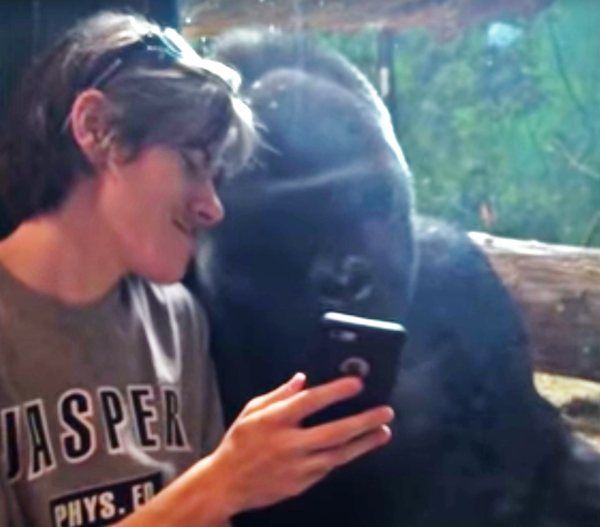
They
see us staring at small screens all day long and wonder what's so
interesting about those shiny objects, because gorillas have never had a
friend like this guy
This
lucky gorilla calls the Louisville Zoo's award winning 4-acre gorilla
sanctuary home, but he has never seen anything as amazing as the gorilla
pics this guy's got saved on his smartphone.

Subscribe to:
Posts (Atom)
