Oh, but there's more!
Oh, Snap!

 This is a disaster of historical proportions, and the corporate media doesn’t think you should know about it.
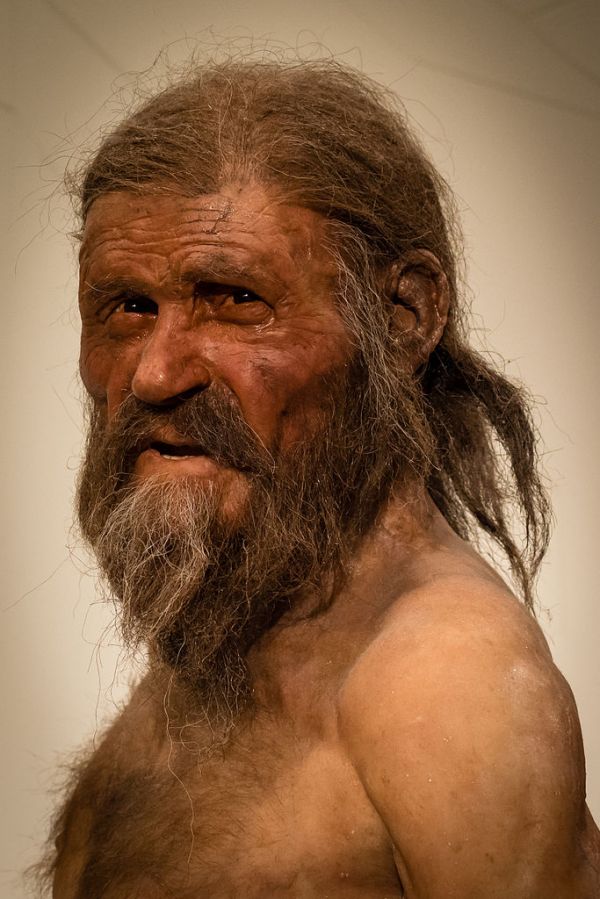
The findings give us a lot to think about how humans -and bacteria- migrated around the globe thousands of years ago. Read more about the discovery at Science magazineWhen they compared Ötzi’s H. pylori genome with other types from around the world, they got a surprise—Ötzi’s type most closely resembled one from Asia, not those found today in Europe or Africa. This provides insights not only into Ötzi’s health, but also the movements of his ancestors. Ötzi’s own DNA most closely resembles that of early European farmers who originally came from the Middle East. But his bacterial strain most closely matches strains in India and South Asia today, which cluster together in the hpAsia2 population. Today’s hpEurope strain has far more DNA from the African type of H. pylori than does Ötzi’s Asian strain, notes lead author Frank Maixner, a microbial ecologist at EURAC.
He says this suggests a new scenario: The ancestors of early European farmers such as Ötzi must have carried H. pylori with DNA from Asian strains perhaps in the Middle East before they migrated to Europe. Then, new immigrants carrying African microbes arrived in Europe much later, after Ötzi lived. The two types of microbes mixed in these migrants, creating today’s European strain much more recently than expected.


 Another fascinating Turkish archaeological site, the 18-story Derinkuyu underground city would have been able to accommodate up to 20,000 people, plus their livestock and stores.
 This is an ancient city in Bolivia built by the Tiwanaku people, and makes this list due to its precise stonework.
 This prehistoric underground structure was discovered by accident in
Malta back in 1902. What makes it a feat of engineering, besides being
three stories and made of megalithic stones (feats in themselves), it
was discovered that when standing at a certain spot, a voice speaking in
the 95-120 Hz range would reverberate throughout the entire structure.
This prehistoric underground structure was discovered by accident in
Malta back in 1902. What makes it a feat of engineering, besides being
three stories and made of megalithic stones (feats in themselves), it
was discovered that when standing at a certain spot, a voice speaking in
the 95-120 Hz range would reverberate throughout the entire structure. 


| 49 BC | Julius Caesar leads his army across the Rubicon River, plunging Rome into civil war. | |
| 1843 | Francis Scott Key, author of “The Star-Spangled Banner,” dies in Baltimore. | |
| 1861 | Alabama secedes from the Union. | |
| 1862 | Lincoln accepts Simon Cameron’s resignation as Secretary of War. | |
| 1887 | At Fort Smith, Arkansas, hangman George Maledon dispatches four victims in a multiple hanging. | |
| 1904 | British troops massacre 1,000 dervishes in Somaliland. | |
| 1916 | Russian General Yudenich launches a WWI winter offensive and advances west. | |
| 1923 | The French enter the town of Essen in the Ruhr valley, to extract Germany’s resources as war payment. | |
| 1934 | The German police raid the homes of dissident clergy in Berlin. | |
| 1941 | Adolf Hitler orders forces to be prepared to enter North Africa to assist the Italian effort, marking the establishment of the Afrika Korps. | |
| 1940 | Benjamin O. Davis, Sr., becomes the U.S. Army’s first black general, his son would later become a general as well. | |
| 1942 | Japan invades the Dutch East Indies at Borneo. | |
| 1943 | The Soviet Red Army encircles Stalingrad. | |
| 1948 | President Harry S. Truman proposes free, two-year community colleges for all who want an education. | |
| 1949 | Negotiations in China between the Nationalists and Communists open as Tientsin is virtually lost to the Communists. | |
| 1964 | A collection of previously unexhibited paintings by Pablo Picasso are displayed for the first time in Toronto. | |
| 1980 | Honda announces it will build the first Japanese-owned passenger-car assembly plant in the United States–in Ohio. | |
| 1994 | The Irish Government announces an end to a 15-year ban on broadcasting by the IRA and its political branch, Sinn Fein. | |
| 2003 | Illinois Gov. George Ryan commutes the death sentences of 167 prisoners on the state’s death row in the wake of allegations that Chicago police detective and commander Jon Burge tortured confessions from some 200 suspects over a 19 year period. |
 The word "pander", meaning to "pimp" is derived from Pandarus, a licentious figure who facilitates the affair between the protagonists in Troilus and Criseyde, a poem by Geoffrey Chaucer. Pandarus appears with a similar role in Shakespeare's interpretation of the story, Troilus and Cressida.
 The woman in black, the leering coupler, "in a nun's costume", could be the eponymous procuress, while the man to her right, "wearing a black beret and a doublet with slashed sleeves", has been identified as a self portrait of the artist.





When builders found their way into the secret street more than a century later, while working in the cellars of the shops above, they discovered the original wooden shop-fronts and stable pens hauntingly frozen in time.There are now plans to restore the complex and open it up to the public as a glimpse into the past. You can see plenty of pictures of this subterranean time capsule at Urban Ghosts.
Electric lighting was installed to make the space easier to navigate during reconstruction work and it’s understood that various period items were also added for the benefit of future tours. Other items, however, may have been left over from the Victorian era, largely undisturbed since the abandoned underground street was sealed off and forgotten.