

Wednesday, January 13, 2016
Six science mysteries that might be solved in 2016

We have not always been the only human species around ...

Modern humans or Homo sapiens are now the only living species in their genus, but several other species of ancient humans have existed through history. Our friends at Hybrid Librarian have put together this informative video which lists 10 of the most mysterious extinct human species. This is so interesting!
To think there were people roaming the earth over 600,000 years ago! It’s hard for us to actually perceive that sort of time scale in our heads, you really have to sit and think about to appreciate just how far back some of these species go.
Boskop man at number 7 is one that really peaked my interest. Their heads are so big that it reminds me so much of how we would describe aliens .. .

Woman injured after head-on collision between two horse-drawn buggies
 One person was injured following a collision between two horse-drawn buggies south of Middlebury, Indiana, last Friday.
According to a report from the Elkhart County Sheriff's Department, the
crash happened shortly before 9pm on County Road 41 north of County Road
34, south of Middlebury.
Deputies said a buggy driven by Eldon Miller, 22, of Millersburg, was travelling south on County Road 41 and went left of centre . Miller's buggy struck the left front of a northbound buggy driven by Freeman Slabach, 52, of Goshen. Slabach's buggy overturned.
 A passenger in the second buggy, Marlene Slabach, 50, of Goshen, was
taken to IU Health Goshen Hospital for treatment of a laceration to her
face and back pain, deputies said.
No one else was injured, deputies said.
No citations were issued at the scene.
A passenger in the second buggy, Marlene Slabach, 50, of Goshen, was
taken to IU Health Goshen Hospital for treatment of a laceration to her
face and back pain, deputies said.
No one else was injured, deputies said.
No citations were issued at the scene.
There's a short video of the aftermath here.
Deputies said a buggy driven by Eldon Miller, 22, of Millersburg, was travelling south on County Road 41 and went left of centre . Miller's buggy struck the left front of a northbound buggy driven by Freeman Slabach, 52, of Goshen. Slabach's buggy overturned.
 A passenger in the second buggy, Marlene Slabach, 50, of Goshen, was
taken to IU Health Goshen Hospital for treatment of a laceration to her
face and back pain, deputies said.
No one else was injured, deputies said.
No citations were issued at the scene.
A passenger in the second buggy, Marlene Slabach, 50, of Goshen, was
taken to IU Health Goshen Hospital for treatment of a laceration to her
face and back pain, deputies said.
No one else was injured, deputies said.
No citations were issued at the scene.
There's a short video of the aftermath here.
Miniature horse learned how to open gate of field before running away to join the fire brigade
 A miniature horse named Harvey is back home after learning to open the
gate to his paddock, escaping and attempting to join the fire brigade.
Firefighters in Trowbridge, Wiltshire, arrived at work on Monday morning to find the miniature horse had mysteriously appeared in the yard at the town's fire station.
A miniature horse named Harvey is back home after learning to open the
gate to his paddock, escaping and attempting to join the fire brigade.
Firefighters in Trowbridge, Wiltshire, arrived at work on Monday morning to find the miniature horse had mysteriously appeared in the yard at the town's fire station.
Instead of signing it up as a mascot, they issued an appeal to find out where it had come from, and swiftly discovered it was missing from a paddock up the road.
"Just shown up to work and there is a pony in the yard," said a spokesman for Trowbridge fire brigade. "I have seen some weird things in my time but coming face to face with a pony at work just about takes the biscuit."
Sand Tiger Shark Nursery Found in Busy NY Bay

The rare shark has taken up residence near the bustling shore waters of Long Island's Great South Bay.

Animal News

So far at least, bowhead whales off Alaska may be benefiting from a warmer Arctic.

The finds boost Australia’s total number of known freshwater fish species by nearly 10 percent.

Tuesday, January 12, 2016
The Daily Drift
Welcome to Today's Edition of Carolina Naturally.

Carolina Naturally is read in 205 countries around the world daily.
Pintos ... !

Today is - Bean Day
You want the unvarnished truth?
You want the unvarnished truth?
Don't forget to visit: The Truth Be Told
Some of our readers today have been in:
The Americas
Brazil - Canada - Colombia - El Salvador - Guatemala - Mexico - Nicaragua - Puerto Rico
United States - Venezuela
Europe
Albania - Austria - Belgium - Bosnia and Herzegovina - Bulgaria - England - Finland - France Georgia - Germany - Greece - Hungary - Ireland - Italy - Latvia - Netherlands - Norway - Poland Portugal - Romania - Russia - Scotland - Serbia - Slovakia - Slovenia - Spain - Ukraine - Wales
Asia
China - India - Indonesia - Korea - Malaysia - Pakistan - Sri Lanka - Vietnam
Africa
Algeria - Ethiopia - South Africa - Tunisia
The Pacific
Australia - New Zealand - Philippines
The Americas
Brazil - Canada - Colombia - El Salvador - Guatemala - Mexico - Nicaragua - Puerto Rico
United States - Venezuela
Europe
Albania - Austria - Belgium - Bosnia and Herzegovina - Bulgaria - England - Finland - France Georgia - Germany - Greece - Hungary - Ireland - Italy - Latvia - Netherlands - Norway - Poland Portugal - Romania - Russia - Scotland - Serbia - Slovakia - Slovenia - Spain - Ukraine - Wales
Asia
China - India - Indonesia - Korea - Malaysia - Pakistan - Sri Lanka - Vietnam
Africa
Algeria - Ethiopia - South Africa - Tunisia
The Pacific
Australia - New Zealand - Philippines
Today in History
| 1872 | Russian Grand Duke Alexis goes on a gala buffalo hunting expedition with Gen. Phil Sheridan and Lt. Col. George Armstrong Custer. | |
| 1879 | The British-Zulu War begins. British troops — under Lieutenant General Frederic Augustus — invade Zululand from the southern African republic of Natal. | |
| 1908 | A wireless message is sent long-distance for the first time from the Eiffel Tower in Paris. | |
| 1913 | Kiel and Wilhelmshaven become submarine bases in Germany. | |
| 1915 | The U.S. Congress establishes Rocky Mountain National Park. | |
| 1926 | U.S. coal talks break down, leaving both sides bitter as the strike drags on into its fifth month. | |
| 1927 | U.S. Secretary of State Kellogg claims that Mexican rebel Plutarco Calles is aiding communist plot in Nicaragua. | |
| 1932 | Oliver Wendell Holmes retires from the Supreme Court at age 90. | |
| 1938 | Austria recognizes the Franco government in Spain. | |
| 1940 | Soviet bombers raid cities in Finland. | |
| 1943 | Soviet forces raise the siege of Leningrad. | |
| 1952 | The Viet Minh cut the supply lines to the French forces in Hoa Binh, Vietnam. | |
| 1962 | The United States resumes aid to the Laotian regime. | |
| 1973 | Yassar Arafat is re-elected as head of the Palestinian Liberation Organization. | |
| 1982 | Peking protests the sale of U.S. planes to Taiwan. | |
| 1991 | The U.S. Congress gives the green light to military action against Iraq in the Persian Gulf Crisis. | |
| 1998 | Nineteen European nations agree to prohibit human cloning. | |
| 2010 | An earthquake in Haiti kills an estimated 316,000 people |
Why We Can Get by Without Our Tonsils

Tonsils are weird. We don't need them, but there they are!
What do they do, and why have they failed to prove their usefulness to
us?
The second-deadliest drug in America is legal — and it's getting deadlier
by German Lopez
As the country deals with a rise in opioid painkiller and heroin
overdose deaths, a drug that already kills more people is causing more
and more deaths each year: alcohol.According to new data from the Centers for Disease Control and Prevention, after controlling for age, the alcohol-induced death rate reached 8.5 per 100,000 people in 2014, up from 7.1 in 1999 and 7 in 2006.
As a result, nearly 31,000 people died by alcohol in 2014, up from 22,000 in 2006. That means more people died to alcohol in 2014 than the nearly 29,000 who died from opioid — including heroin — overdoses, but fewer than the nearly 34,000 who died to gun violence or car crashes that same year.
Still, the 2014 data likely under-counts alcohol-related deaths, since it only includes deaths induced directly by alcohol, like liver cirrhosis. It doesn't include deaths from drunk driving, other accidents, and homicides committed under the influence (alcohol is linked to 40 percent of violent crimes). Counting those deaths, alcohol's death toll in the US reached 88,000, according to the CDC — and that's before accounting for the recent rise in alcohol-induced deaths shown in the chart above. All together, this puts alcohol just behind tobacco, which is by far the deadliest drug in the US, in terms of total deaths.
The Zika virus could be heading for the United States


Baltimore psychologist pioneering use of ‘sacred molecules’ in psychedelics to ‘transform’ lives of patients


Adelson Didn’t Expect Journalists at His New Paper to Uncover His Purchase
Adelson bought a paper expecting to solidify his position in Las
Vegas.
What he didn't expect was that its journalists would find out…

Money talks. Especially Adelson’s $24.5 billion. And buys things. Not only the means of reporting words. But what words are reported. But you already knew that, because Fox News.
Like those other captains of industry, the Kochs, Adelson seems to think capitalism is the fleecing of the people wrongly granted political power by the Constitution. The Constitution would make the people the ultimate authority, but capitalism puts corporations first.
The beauty of this system for the Kochs and the Adelsons is that nobody gets to vote for them, taking that pesky Constitution out of the picture. And if, like Adelson, they own the media, nobody is going to utter a word of complaint either.
In other words, as CNN Money is reporting, the Las Vegas Review-Journal staff has been “told to ease up on coverage of new owner.” Of course, by omitting certain areas from coverage, Adelson has tried to render it the print version of Fox News.
CNN tells us that,
Management brought in Dave Butler, the executive editor of the Providence Journal, to “help establish some guidelines.” The Review-Journal and the Providence Journal are operated by the same company but owned by separate groups.That ‘same company’ is GateHouse Media, which is a subsidiary of the New Media Investment Group.
The consequences?
“At one point, we mentioned that we were worried about being able to cover some significant trials involving Adelson, and Butler said if we don’t cover them other media outlets will, so it’s OK,” one of the attendees said.Needless to say, if you’re a journalist, a serious one – that is, somebody NOT employed by Fox News (sorry Megyn Kelly) – this rubs you the wrong way. Nothing is off limits. Editor Stephanie Grimes of the Review-Journal tweeted her take:
Grimes reported through Twitter that Butler was “concerned about looking like we’re ‘out to get our owner’: ‘How often do we need to mention the owners'”?The journalists in this room are plainly on a much different page than Mr. Butler re: how we should be covering this
 stephanie grimes
That’s “Republican speak,” as we all know by now, for “reveal the facts.”
Unfortunately, apparently, this was supposed to be a private meeting and…not so much. Butler told CNN Money that,
“I told the staff I would take notes from the meeting and put together a proposal for review on some guidelines. Some folks are still nearly hysterical, as you might understand, and I did say let’s just calm down a bit.”To which Grimes tweeted, “None of us were told it was a private meeting and we’re not ‘nearly hysterical.’ We’re doing our jobs.”
She also pointed out that “Company leadership really doesn’t seem to understand just how far Adelson’s reach extends in Las Vegas.”
The thing is, when the paper was sold, it was kept secret for days. You can ask, what did the family have to hide? But what’s truly shocking is that it was the paper itself that had to break the news, against the wishes of its new owner.
The Review-Journal‘s manager, Michael Schroeder, told his staff that the (so far unrevealed) new owners “want you to focus on your jobs … don’t worry about who they are.”
So they did, as one of them, Jennifer Robison tweeted “Welp, we DID focus on our jobs. Bad advice for him.” She was one of three RJ journalists who broke the story.
Michael Schroeder, as it happens, in what is an attempt by the Adelson family at damage control, has just been fired, reported the Review-Journal Monday. And there is good reason for their concern. The Review-Journal notes,
The spotlight on Schroeder intensified on Dec. 18, when the RJ revealed that GateHouse Media, which bought the RJ in March before flipping it to the Adelson family, had without explanation ordered RJ staffers to monitor the activities of three judges in Las Vegas.CNN’s Brian Stelter puts it this way: “There may be no more awkward position for a newspaper to find itself in: reporting on itself when the owners clearly don’t want the reporting.”
The RJ noted that a story critical of District Court Judge Elizabeth Gonzalez’ handling of a wrongful termination case involving Adelson had appeared in Schroeder’s New Britain (Conn.) Herald on Nov. 30. The story carried the byline of Edward Clarkin, and included made-up quotes and plagiarized passages.
Nationwide searches by multiple news organizations have turned up no writers named Edward Clarkin, though Michael Schroeder’s middle name is Edward, and his mother’s maiden name was Clarkin.
Schroeder has refused to comment on the Gonzalez story and did not return a call seeking comment for this story.
Then again, there may be: Schroeder has ties to the Adelson family. They knew what they were getting when they turned him loose on the journalists at the Review-Journal. The Adelsons can say now that they always planned to reveal the purchase, but why not reveal it then?
Because it’s a lot harder to have a paper say nice things about you when everybody knows you own the paper. Information is for sale. Newspapers are for sale.
Information is not so easy to control, however. Information almost wants to be discovered. And just occasionally the power of the people and their right to know, wins out. We have the courage of some of the Review-Journal‘s staff to thank for that.
As WaPo’s Steve Friess tweeted, “the backbone and integrity the @reviewjournal reporters have shown this week is a modern miracle. Inspiring and brave.”
Adelson is now claiming he didn’t buy the paper, his kids did, with their inheritance, and he has nothing to do with it.
Right.
Actions have consequences. Sometimes, they’re just not the consequences you expected.

North Carolina waitress fired after telling bosses about manager’s sexual harassment

Oh, but there's more!
Oh, Snap!

When is it legal for a cop to kill you?
by Dara Lind
Charging a police officer with a crime after the death of a civilian is
incredibly rare — even when there's video evidence. And a big part of
that is because of the legal standards for when a cop is allowed to use
deadly force: what the public sees as crossing the line may not actually
break the law, and even the most reliable video evidence might not show
an officer actually committing a crime.
There are plenty of guidelines for use of force by police, but it often boils down to what the officer believed when the force was used (something that is notoriously difficult to standardize), regardless of how much of a threat actually existed. Here's how prosecutors draw the line between a justifiable use of force by a police officer, and a crime.
"Hands up, don't shoot" has become the motto of the Ferguson protests.
How do you determine if a police officer was justified in using deadly force?
When a police officer kills someone on the job, there's a two-track investigation. That's because there are actually two different sets of standards that govern when a police officer can use deadly force.
One set of standards is state law, informed by a couple of Supreme Court precedents that lay out the circumstances under which law enforcement officers are justified in using lethal force on suspects.
The other set of standards is the policy of the officer's police department, which tells its employees when it is and isn't appropriate for them to use force.
If a police officer were to murder someone in cold blood while on the job, he wouldn't just be breaking the law — he'd be violating his equivalent of an employee handbook. But something can be against a police department's policy without being against the law. When New York police officer Daniel Pantaleo put Eric Garner in a chokehold (ultimately killing him) in July 2014, for example, he violated the NYPD's policy on use of force — but there isn't a law on the books saying a police officer can't use a chokehold.
So when a cop uses deadly force in an officer-involved death, there's a standard criminal investigation: detectives collect evidence and present it to the local prosecutor. The prosecutor then determines whether the killing fits the standards in state law for permissible homicide. If it doesn't, then a crime has been committed, and the prosecutor's job becomes figuring out which crime it was and whether there's enough evidence to charge the officer with it.
But there's also an internal investigation within the cop's department to evaluate whether the incident violated its use-of-force policy. Many departments' policies are stricter than state law — but an officer can't be charged with a crime just for violating the policy. He or she can, however, be fired for it.
There are plenty of guidelines for use of force by police, but it often boils down to what the officer believed when the force was used (something that is notoriously difficult to standardize), regardless of how much of a threat actually existed. Here's how prosecutors draw the line between a justifiable use of force by a police officer, and a crime.
"Hands up, don't shoot" has become the motto of the Ferguson protests.
How do you determine if a police officer was justified in using deadly force?
When a police officer kills someone on the job, there's a two-track investigation. That's because there are actually two different sets of standards that govern when a police officer can use deadly force.
One set of standards is state law, informed by a couple of Supreme Court precedents that lay out the circumstances under which law enforcement officers are justified in using lethal force on suspects.
The other set of standards is the policy of the officer's police department, which tells its employees when it is and isn't appropriate for them to use force.
If a police officer were to murder someone in cold blood while on the job, he wouldn't just be breaking the law — he'd be violating his equivalent of an employee handbook. But something can be against a police department's policy without being against the law. When New York police officer Daniel Pantaleo put Eric Garner in a chokehold (ultimately killing him) in July 2014, for example, he violated the NYPD's policy on use of force — but there isn't a law on the books saying a police officer can't use a chokehold.
So when a cop uses deadly force in an officer-involved death, there's a standard criminal investigation: detectives collect evidence and present it to the local prosecutor. The prosecutor then determines whether the killing fits the standards in state law for permissible homicide. If it doesn't, then a crime has been committed, and the prosecutor's job becomes figuring out which crime it was and whether there's enough evidence to charge the officer with it.
But there's also an internal investigation within the cop's department to evaluate whether the incident violated its use-of-force policy. Many departments' policies are stricter than state law — but an officer can't be charged with a crime just for violating the policy. He or she can, however, be fired for it.


The Worst Environmental Disaster Since The BP Oil Spill Is Happening And The Media Is IGNORING It
 This is a disaster of historical proportions, and the corporate media doesn’t think you should know about it.
Floods Leave Castle Precariously on River's Edge


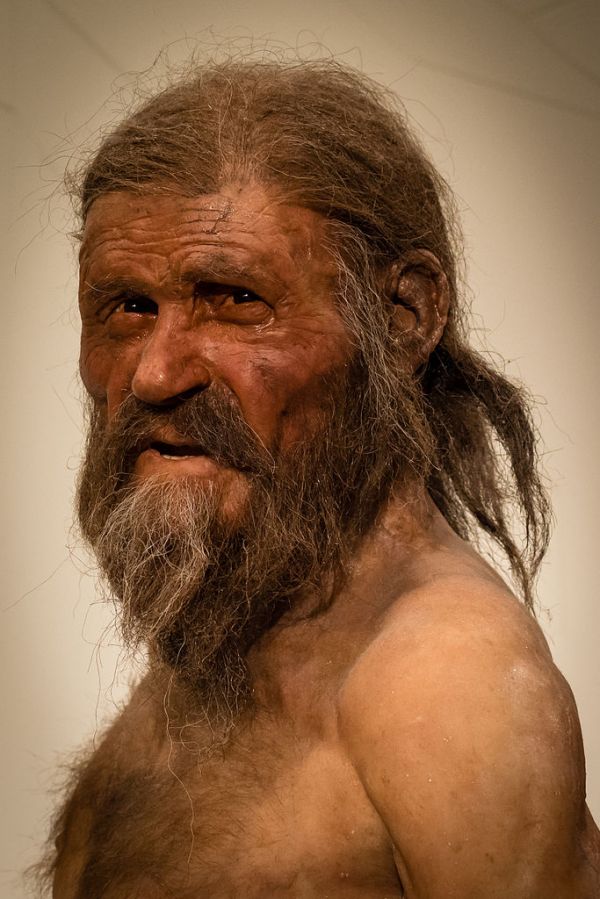
Ötzi the Iceman Had Asian Ulcer Bacteria
Ötzi the Iceman
is the name given to a frozen mummy of a man who was murdered 5300
years ago. Scientists have been studying the relatively well-preserved
remains since he was found in the Italian Alps in 1991. The latest
finding is that Ötzi carried Helicobacter pylori, the bacteria that causes ulcers, in his gut. Many people carry H. pylori without
ever developing ulcers, and scientists have identified different
strains of the bacteria in different parts of the world. And that's
where Ötzi's story makes a left turn. Or right, depending on how you
read maps.
The findings give us a lot to think about how humans -and bacteria- migrated around the globe thousands of years ago. Read more about the discovery at Science magazineWhen they compared Ötzi’s H. pylori genome with other types from around the world, they got a surprise—Ötzi’s type most closely resembled one from Asia, not those found today in Europe or Africa. This provides insights not only into Ötzi’s health, but also the movements of his ancestors. Ötzi’s own DNA most closely resembles that of early European farmers who originally came from the Middle East. But his bacterial strain most closely matches strains in India and South Asia today, which cluster together in the hpAsia2 population. Today’s hpEurope strain has far more DNA from the African type of H. pylori than does Ötzi’s Asian strain, notes lead author Frank Maixner, a microbial ecologist at EURAC.
He says this suggests a new scenario: The ancestors of early European farmers such as Ötzi must have carried H. pylori with DNA from Asian strains perhaps in the Middle East before they migrated to Europe. Then, new immigrants carrying African microbes arrived in Europe much later, after Ötzi lived. The two types of microbes mixed in these migrants, creating today’s European strain much more recently than expected.
Got Allergies? Blame Neanderthals

Mating with Neanderthals may have helped modern humans adapt
to Europe, but may have also made them more prone to allergies.
5 Ancient Structures That Were Mysteriously Advanced For Their Time

The Marib Dam

The Marib Dam is regarded as one of the greatest engineering feats of the ancient world. It was built around 750 BC in Yemen by the Sabaen empire, whose kingdom was based near the modern capital of Sanaa, and took hundreds of years to complete.
Although built long before the existence of concrete, the dam stood for over 1000 years, outlasting the culture who built it by hundreds of years.
When the 2000 foot structure finally failed around 600 AD, it brought down much of the agriculture in the region with it.
Gobekli Tepe

It predates agriculture, writing, the walls of Jericho (previously thought to be the oldest human monument), and was built several thousand years before Stonehenge. Archaeologists are convinced that this was a religious site for ancient pre-civilized humans, as there is no evidence of habitation.
As the National Geographic so succinctly put it, the discovery “was like finding that someone had built a 747 in a basement with an X-Acto knife.”
Underground City Of Derinkuyu
 Another fascinating Turkish archaeological site, the 18-story Derinkuyu underground city would have been able to accommodate up to 20,000 people, plus their livestock and stores.
It was built around the 8th century BC, but scientists are not sure by whom.
What is obvious is that the feat of engineering is astounding, as the complex may have started as simple caves, but was completed with tools such as hammers and chisels. The site has yet to be fully excavated.
Puma Punku
 This is an ancient city in Bolivia built by the Tiwanaku people, and makes this list due to its precise stonework.
Despite lacking technology, the construction boasts straight cuts on hundreds of identical building blocks, the largest of which is 25 by 17 feet and weighs 130 tons.
The work was so fine that when the Inca came along, they thought that the builders must have been gods.
The Hypogeum of Hal-Saflieni
 This prehistoric underground structure was discovered by accident in
Malta back in 1902. What makes it a feat of engineering, besides being
three stories and made of megalithic stones (feats in themselves), it
was discovered that when standing at a certain spot, a voice speaking in
the 95-120 Hz range would reverberate throughout the entire structure.
This prehistoric underground structure was discovered by accident in
Malta back in 1902. What makes it a feat of engineering, besides being
three stories and made of megalithic stones (feats in themselves), it
was discovered that when standing at a certain spot, a voice speaking in
the 95-120 Hz range would reverberate throughout the entire structure. What’s more is that sounds at a frequency of 110 Hz produce an effect that is consciousness altering in humans. Scientists don’t know who built this or why, but it is known that someone chanting at the right frequency at a certain location would have induced a trance-like religious experience among ancient worshipers.
The required knowledge for this feat of acoustics is perplexing to scientists.
Archaeology News

As ISIL is pushed out of northern Iraq, archaeologists are
returning to the area, including at the Neanderthal site in Shanidar
Cave.

Archaeologists believe the man, who was likely in his 50s, was hung for piracy or other crimes.

The highlight of the 500-year-old arsenal were a pair of spiked helmets almost undamaged by rust.
Animal News

Snakes reveal that recovery from digestion is not complete,
leaving behind damage to cells that can accumulate over time.

The ancient monkeys show they can perceive the sound quality in the same way humans can.

Monday, January 11, 2016
The Daily Drift
Welcome to Today's Edition of Carolina Naturally.

Carolina Naturally is read in 205 countries around the world daily.
There are more people held as slaves today than at any other point in history ... !

Today is - Human Trafficking Awareness Day
You want the unvarnished truth?
You want the unvarnished truth?
Don't forget to visit: The Truth Be Told
Some of our readers today have been in:
The Americas
Brazil - Canada - Colombia - Honduras - Mexico - Nicaragua - Puerto Rico - United States
Europe
Albania - Austria - Bosnia and Herzegovina - Bulgaria - England - France - Georgia - Germany Greece - Hungary - Ireland - Italy - Latvia - Netherlands - Norway - Poland - Portugal - Romania Russia - San Marino - Scotland - Serbia - Slovakia - Slovenia - Spain - Ukraine - Wales
Asia
India - Indonesia - Korea - Malaysia - Mauritius - Saudi Arabia - Singapore - Vietnam
Africa
Algeria - Ethiopia - Mozambique - South Africa
The Pacific
Australia - New Zealand - Philippines
The Americas
Brazil - Canada - Colombia - Honduras - Mexico - Nicaragua - Puerto Rico - United States
Europe
Albania - Austria - Bosnia and Herzegovina - Bulgaria - England - France - Georgia - Germany Greece - Hungary - Ireland - Italy - Latvia - Netherlands - Norway - Poland - Portugal - Romania Russia - San Marino - Scotland - Serbia - Slovakia - Slovenia - Spain - Ukraine - Wales
Asia
India - Indonesia - Korea - Malaysia - Mauritius - Saudi Arabia - Singapore - Vietnam
Africa
Algeria - Ethiopia - Mozambique - South Africa
The Pacific
Australia - New Zealand - Philippines
Subscribe to:
Posts (Atom)
