Welcome to ...

The place where the world comes together in honesty and mirth.
Windmills Tilted, Scared Cows Butchered, Lies Skewered on the Lance of Reality ... or something to that effect.


Tuesday, November 30, 2010

The Barton Swing Aqueduct


If you need a canal to cross another canal, you simply build a water bridge across, with one canal on top of another. If you need to build a land bridge across a waterway, you can make the bridge split in two or swing aside when tall ships need to pass. But what do you do when you need to have a canal make room for large ships on another canal? That was the situation in Manchester, UK, in 1885. Originally the smaller Bridgewater Canal crossed the Manchester Ship Canal on an arched bridge. But now the region needed to move large ships — too large to fit under the Bridgewater Canal — through the Manchester Ship Canal. So the bridge was replaced with an aqueduct that would swing out of the way of traffic on Manchester Ship Canal:
It was replaced by a unique swing aqueduct that was opened in 1893 and was an even more daring structure than the original aqueduct, consisting of a channel that could be sealed off at each end to form a 235 feet long and 18 feet wide tank, holding 800 tons of water, that swung round on its pivot, situated on an island in the middle of the Ship Canal.
In the links, you can find a video of the swinging aqueduct in action.

Man combines boat and lawnmower to create amphibious 'Shortcutter'

Amateur inventor John Hinton has launched an amphibious assault on the misery of the morning rush hour - with a vehicle that can swap traffic queues for river cruises. John’s ‘Shortcutter’, made from a sit-on lawnmower and an old boat, can chug along the roads at a ‘relaxing’ 9kph (6mph), then take to the water at the first sign of a snarl-up.


Of course, with a top speed that could cause more traffic jams than it solves and a propeller that spins wildly behind it on dry land, the four-wheeler is still very much a work in progress. But Mr Hinton hopes future models could revolutionise the way we travel. The 76-year-old said: ‘In theory, you could go anywhere on it – it would be just as good as a normal car.


‘You could go and get your shopping on it or go to work in it and, if you had to cross a lake or river or even part of the sea to get there, that would be fine. If it was big enough you could probably get all the way to France, drive on to land, pick up some cheese and wine and bring it all back without leaving the boat.’ And the retired insurance broker, of Horsham in West Sussex, has even been in touch with Honda about mass production of his vehicle.


He added: ‘It’s about time the car and marine industries combined.’ Mr Hinton spent two years and £1,000 making the prototype with late friend Laurie Mayhead. Wife Pat said: ‘Everyone needs something to do when they retire. This is just one of his many projects. I was quite happy to get him out of the house, to be honest.’

Believe it or not

http://d.yimg.com/a/p/umedia/20101130/largeimage.11a3e1d4fda40dcdbc76bb300eba0dfb.gif

U.S. faces new 'Sputnik moment'

"Time is running out" for Americans to take the lead in a crucial high-tech race, a top official warns.  
Also: 

How war gave us the microwave

In Sex, Bombs and Burgers, Peter Nowak argues that pornography, fast food and warfare created technology as we know it today

Freak weather rattles Amazon

A year after massive floods, a "once in a century" drought leaves the great rain forest reeling.  
Also: 

Royal Society Paints Grim Picture of 4°C Temperature Rise

drought photo
Drought and desertification could be widespread within 50 years. 
With no doubt intentional perfect timing as the COP16 climate talks open in Mexico, the Royal Society has released a special issue on the future impacts of climate change and, as you might imagine if you've been following the climate research to date, the outlook is entirely grim for many of the planetary systems upon which humans are utterly dependent. As The Guardian puts it, the Royal Society describes a "hellish vision of a world warmed 4C within a lifetime."
Article continues: Royal Society Paints Grim Picture of 4°C Temperature Rise

What Would Happen If Every Element On The Periodic Table Came Into Contact Simultaneously?

In Popular Science, Bjorn Carey imagines a scenario in which all of the elements on the periodic table were present in the same location simultaneously:
Ramming the atoms together at 99.999 percent the speed of light—the top speed of particles in the Large Hadron Collider, at the CERN particlephysics lab near Geneva—might fuse a few nuclei, but it won’t make that cool Frankenstein element. More likely, they would meld into a quark-gluon plasma, the theoretical matter that existed right after the universe formed. “But they would last for a fraction of a second before degrading,” Tuckerman says. “Plus, you’d need 118 LHCs—one to accelerate each element—to get it done.”
The other approach, as explained by John Stanton, the director of the Institute for Theoretical Chemistry at the University of Texas, would be to toss a pulverized chunk of each element or a puff of each gas into a sealed container and see what happens. No one has ever tried this experiment either, but here’s how Stanton thinks things would play out: “The oxygen gas would react with lithium or sodium and ignite, raising the temperature in the container to the point that all hell would break loose. Powdered graphite carbon would ignite, too. There are roughly 25 radioactive elements, and they would make your flaming stew a little dangerous. Flaming plutonium is a very bad thing. Inhaling airborne radioactive material can cause rapid death.”
Once things calmed down, Stanton says, the result would be as boring as the atoms-only scenario. Carbon and oxygen would yield carbon monoxide and carbon dioxide. Nitrogen gas is very stable, and would remain as is. The noble gases wouldn’t react, nor would a few of the metals, like gold and platinum, which are mostly found in their pure forms. The things that do react will form rust and salts. “Thermodynamics wins again,” he says. “Things will always achieve equilibrium, and in this case that’s a mix of common, stable compounds.”

B.C.

http://d.yimg.com/a/p/uc/20101130/largeimagecrbc101130.gif

Super Human Elasticity

Is it possible

Are Stoners Really Dumb, or Do They Just Think They Are?

Stoner cropped
Earleywine and his colleagues studied 57 users, 30 male and 27 female. Half were given material to read suggesting that marijuana damages the brain; the other half read a research summary suggesting that the drug had no long-term negative cognitive effects. Then, all participants were asked to take cognitive tests after abstaining from marijuana for at least one day. (More on Time.com: See photos of cannabis conventions)
There was a marked difference in results — interestingly, between men and women. Men who got the negative information about marijuana performed worse than men who didn’t, but the women who were faced with stereotype threat actually scored better on tests of verbal skills and memory than women who weren’t given negative information.

Is Schizophrenia Caused by Retroviruses?

DNA by Micah Baldwin
Mind blowing research that indicates that schizophrenia, bipolar disorder, and multiple sclerosis could be caused by a retrovirus and triggered by other infections such as toxoplasmosis:
The facts of schizophrenia are so peculiar, in fact, that they have led Torrey and a growing number of other scientists to abandon the traditional explanations of the disease and embrace a startling alternative. Schizophrenia, they say, does not begin as a psychological disease. Schizophrenia begins with an infection.
The idea has sparked skepticism, but after decades of hunting, Torrey and his colleagues think they have finally found the infectious agent. [...]
After eight years of research, Perron finally completed his retrovirus’s gene sequence. What he found on that day in 1997 no one could have predicted; it instantly explained why so many others had failed before him. We imagine viruses as mariners, sailing from person to person across oceans of saliva, snot, or semen—but Perron’s bug was a homebody. It lives permanently in the human body at the very deepest level: inside our DNA. After years slaving away in a biohazard lab, Perron realized that everyone already carried the virus that causes multiple sclerosis. [...]
Through this research, a rough account is emerging of how HERV-W could trigger diseases like schizophrenia, bipolar disorder, and MS. Although the body works hard to keep its ERVs under tight control, infections around the time of birth destabilize this tense standoff. Scribbled onto the marker board in Yolken’s office is a list of infections that are now known to awaken HERV-W—including herpes, toxoplasma, cytomegalovirus, and a dozen others. The HERV-W viruses that pour into the newborn’s blood and brain fluid during these infections contain proteins that may enrage the infant immune system. White blood cells vomit forth inflammatory molecules called cytokines, attracting more immune cells like riot police to a prison break. The scene turns toxic.

Alien Life Found ... Possibly.

http://o.aolcdn.com/photo-hub/news_gallery/6/9/696197/1291014809653.JPEG
A Michigan man claiming to possess an ice meteorite rich in extraterrestrial organisms will announce in a news conference Tuesday that alien life, at long last, has been found. The announcement will take place at a Ramada Inn in South Haven, Mich.

Partial Reversal of Aging Achieved in Mice

Researchers led by Harvard Medical School geneticist Ronald A. DePinho have managed to partially reverse the physical degeneration that results from aging:
[...] they achieved the milestone in aging science by engineering mice with a controllable telomerase gene. The telomerase enzyme maintains the protective caps called telomeres that shield the ends of chromosomes.
As humans age, low levels of telomerase are associated with progressive erosion of telomeres, which may then contribute to tissue degeneration and functional decline in the elderly. By creating mice with a telomerase switch, the researchers were able to generate prematurely aged mice. The switch allowed the scientists to find out whether reactivating telomerase in the animals would restore telomeres and mitigate the signs and symptoms of aging. The work showed a dramatic reversal of many aspects of aging, including reversal of brain disease and infertility.

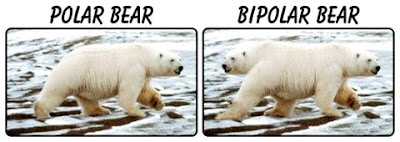
Funny Pictures

https://blogger.googleusercontent.com/img/b/R29vZ2xl/AVvXsEgEkyjZo22-mMjYWKQg96Q1yAvpUn-37bJ9F_IqCMzZ2JYHbH3_VqwarUJoXlakrvSQAQeG5bSlEcC5UQCdx3m9WwhbBZJzNOgkAOXFSMgxibjXXEv7nB4JD2Ig7oIcfXogQYC162JxE6g/s400/bipolar-bear_bits.jpeg

'Godzilla' joins whaling fight

A sleek new weapon joins the ongoing clash between Japanese hunters and an animal rights group.  
Also: 

Scotland's Battle Over the Beaver

european beaver photo
Photo credit: Wikimedia Commons
In medieval England, a beaver pelt was worth three years of wages to a peasant laborer. So important, in fact, was the beaver, that the Church of England classified it as a fish so it could be eaten on Fridays. After a few hundred years of such popularity, however, the European beaver became extinct in the UK.
Now, after four centuries, conservationists have decided it is time to reintroduce the beaver to Scotland—a decision many residents strongly oppose.

Snake fangs evolved from groovy teeth

A set of 200-million-year-old teeth from a beast related to dinosaurs and crocodiles has shed light on how snake fangs evolved.

Indian baby elephant rescue drama

Locals residents have rescued a baby elephant after it accidentally fell into a ditch on a tea plantation near Bokakhat in India's north eastern state of Assam.

The male calf, aged four or five years old, fell in the ditch when crossing a tea estate with with the rest of its herd.


The mother of the calf and other elephants are reported to have made several failed attempts to rescue the calf. Local people, forest rangers and an animal welfare volunteer then stepped it to rescue it with the help of an excavator.

Anil Deka, from the International Fund for Animal Welfare, said that the elephant had suffered only minor injuries. Once on its feet, the calf was reunited with its mother.

Chicken sore after laying 4 inch egg

A chicken was left shell-shocked after laying an enormous four inch tall egg, with her surprised owner describing the poor hen as 'bow-legged.'

The monster egg measures a whopping 9cm by 5.7cm (2.2ins) and is more than twice the size of a normal egg. It was laid by Bolt, a 20-week-old chicken from Christchurch, Dorset, who has only been laying for three weeks.


Owner Denise Sloan, a 52-year-old gardener, said she has never seen such a large egg despite owning chickens for 15 years. The egg, which has not been fertilised, is now destined for the dinner plate.

She said of Bolt’s impressive achievement: ‘I don't know what the world record is, but all I can say is she is pretty bow-legged now. It's enormous, bigger than a duck egg.’