Welcome to ...

The place where the world comes together in honesty and mirth.
Windmills Tilted, Scared Cows Butchered, Lies Skewered on the Lance of Reality ... or something to that effect.


Thursday, May 10, 2012

Teenager tried to rob police station

From the "Not the sharpest knife in the drawer" Department:

An 18-year-old accused of trying to rob a suburban Dallas police headquarters is now claiming he was joking when he allegedly told a dispatcher he had a gun.

“I didn’t say nothing like that, I swear to God I didn’t say nothing like that; that’s why they didn’t find no guns on me,” Keithan Manuel said in a jailhouse phone interview. “Man I play like that all the time, I didn’t think she would take it seriously.” But police say they had no choice but to take Manuel’s alleged threat seriously.


He reportedly walked into the Wilmer Police Department on Saturday, wearing a white towel over his hands and told the dispatcher at the lobby window to hand over all the station’s money. “He said he’d like to check on a warrant, but it was pretty obvious it was a situation … he gave a different name and after a few moments of maybe playing it off he said ‘you do know I have a gun’.

“At that point he seemed to be very serious,” Police Chief Victor Kemp said. Manuel faces several charges, including robbery, and remains in the Dallas County Jail on a $200,000 bond. “This young man wasn’t using his head for sure,” Kemp said. “You hear of those world’s dumbest criminals every once in a while but you never think it’s gonna happen in your city.”

China forcing Big Four audit firms to be run by Chinese

The global audit firms already have a bad reputation for doing whatever the client asks them to do (as long as the money is right - think Enron), so this is just a step in that direction. Time after time, this supposedly conservative and proper industry has glossed over or ignored serious problems on the books of shady businesses. Add this mix to what is widely considered to be one of the most corrupt countries in the world and you have a potentially devastating problem.
It's already dangerous enough for an outsider to invest in China, but this is worse. If I didn't know better, I might think that China wants to guarantee close ties to business so they can be more open to corruption.

Surely that's not it, is it?
China released new rules for the world's top four auditing firms on Thursday that include a requirement for their local operations to be led by Chinese citizens within three years.

The rules released by the Finance Ministry said that Chinese operations of the Big Four global audit firms must be "localized" to comply with laws that will set requirements on the ages, experience and training of executives.

China said the four auditors — Deloitte Touche Tohmatsu, Pricewaterhousecoopers, Ernst & Young and KPMG — must comply with the new rules by the end of 2017.

Bank tells customer they don’t take cash anymore

A returning Norwegian traveler wanting to pay cash into his account thought bank staff were pulling his leg when they told him they no longer accept bank notes. Last week, Bjart Berge headed to his local Nordea branch in Stavanger city center to deposit his remaining dollars after returning from a trip to the United States, only to be told the bank no longer handles cash of any kind over the counter.

”I thought it was an April Fool’s joke; I couldn’t believe it was true,” Berge said. The Stavanger branch stopped taking cash on May 1st, bringing it in line with company policy. Of Nordea’s 98 branches in Norway, only nine still handle cash. Nordea spokesman Thomas Sevang explained that the bank was in the process of automating all its cash services and was installing new machines for withdrawing and depositing cash across its network.


”He [Berge] has encountered the bank of the future,” said Sevang. But in the bank of the present, none of the deposit machines take dollars, and the bank was not able to say when this would become possible. ”You can take money out of an ATM in either Norwegian or foreign currency,” said Berge. ”The same should apply for deposits. But when that possibility doesn’t exist, it’s a bit early to cut the umbilical cord.”

Sevang said he understood it wasn’t optimal for the customer to have to ask a friend to deposit the dollars in another bank before having the money transferred to his own account. ”We well understand that situations arise in a transition phase that the customer experiences as more troublesome. But this is part of a development that will become easier and easier to deal with. We believe this is the future,” said Sevang.

Can that train rumble or glass reflection power your laptop?

Sensors, radio transmitters and GPS modules all feature low power consumption. All it takes is a few milliwatts to run ...
More

Why Do People Choke When the Stakes Are High?

In sports, on a game show, or just on the job, what causes people to choke when the stakes are ...
More

Funny


Nomophobia

Are you afraid of being away from your mobile phone? You may have (dun dun dun!) Nomophobia:
It's called Nomophobia, as in "No mobile phone phobia," and 66 percent of the people surveyed said they have it.
That number is up from a similar study four years ago, where 53 percent of people admitted to a fear of losing their cellphones. [...]

The study showed that the younger you are, the more likely you are to be afflicted with Nomophobia. Women are also more likely to have it than men.
Wondering if you have Nomophobia?
The warning signs include: Obsessively checking your phone, constantly worrying about losing it even when it's in a safe place, and never turning it off.

Long commutes may be hazardous to health


As populations move even further away from urban centers, more people spend longer hours behind the wheel on their way ...
More

Treatable infections cause 1 in 6 cancers

Bacteria, viruses and parasites 'cause 1.5million cancer deaths each year'
Of the 7.5 million global deaths from cancer that occurred in 2008, an estimated 1.5 million may have been due to potentially preventable or treatable infections.

Researchers found that that almost 2 million new cancer cases in 2008 were caused by the human papilloma virus, hepatitis B, hepatitis C, and the stomach bacterium Helicobacter pylori A sixth of all cancers worldwide are the result of potentially treatable or preventable infections caused by bacteria, viruses, and parasites, according to a new ...

A Shocking Cause of Obesity

The new clue to obesity may be surprising to you.While overeating, inactivity and genetics are key players in the path to obesity, but there may be a surprising, hidden cause that's also to blame. (Hint: it's in your stomach-and it's not that cheeseburger you ate for lunch.)
More than a third of adults in the US are obese, according to the Centers for Disease Control and Prevention. As these rates escalate, researchers are working to figure out obesity's causes in the hopes of developing more effective and less invasive treatments than doctors currently are relying on.

The new clue to obesity may be surprising to you.Recent research shows a surprising obesity predictor: intestinal bacteria. In 2010, Andrew Gewirtz, Ph.D., now a professor at Georgia State University's Center for Inflammation, Immunity & Infection, led a seminal study in this particular field. He and his team found that mice without a gene for toll-like receptor 5 (TLR5), a gene which helps cells control and detect bacteria, ate about 10 percent more than normal mice. Given limited food, mice without TLR5 still had insulin resistance, and when given high-fat diets, they gained more weight and developed diabetes and fatty liver disease.
In short, an inability to detect the presence of bacteria led mice to develop metabolic syndrome-that dangerous cocktail of obesity, insulin resistance, elevated triglycerides and elevated cholesterol, which puts people at risk for type 2 diabetes, heart disease and certain kinds of cancer.
How does this work? TLR5 detects flagellin, a component of bacteria's flagella, which propel their movement. If there's no TLR5, which acts like a sort of "border patrol", bacteria has the ability to multiply without inhibition.
Surprisingly, the composition of one's intestinal bacteria is not only a matter of genetics. When Gewirtz and his colleagues transferred the intestinal bacteria of TLR5-deficient mice to healthy mice, they exhibited the same dangerous eating behaviors and associated weight gain. "What this means is that when you transfer bacteria from one group of mice to another, you can transfer this predisposition for obesity and its related metabolic diseases," says Gewirtz.
So, what does this mean for us? "While adult humans may not efficiently transfer bacteria to each other, transmission to a newborn baby is very efficient," explains Gewirtz. "Thus, what our results may mean to humans is that the bacteria one acquires from their early development, especially their parents, may have a big impact upon one's tendency to develop obesity and/or type 2 diabetes over a lifetime."

Another study conducted by Mihai Covasa, Ph.D., and his colleagues at the French National Institute for Agricultural Research (INRA) has confirmed and built on these findings. The researchers bred obesity-prone and obesity-resistant rats-the former weren't actually obese, but actually came from a lineage of rats that had a tendency to gain weight and fatten quickly when fed high-fat foods. The researchers extracted microbiota from the rats' feces and implanted them into the stomachs of mice that had been germ-free since birth. For eight weeks, adequate time for the maturation of the intestinal microflora, the mice ate either a regular or a high-fat diet.
The results? The mice implanted with the obesity-prone gut bacteria ate more and gained more weight and fat-regardless of whether they were fed a high- or low-fat diet-compared to all other groups.
The upshot is that proneness to obesity can be inherited not just genetically, but also by simply transferring intestinal bacteria such as from parent to child. Also, the composition of your microbiota is controlled by a variety of factors, your environment and antibiotics, as well as your diet. "Diet can affect bacteria, but bacteria can affect appetite," notes Gewirtz. "So it's an interrelated factor." When discussing obesity, he says, "Most people have focused on diet and lifestyle or lack of exercise, but this is another potential contributor."
That said, there's no clear-cut cause-and-effect here-and researchers are still trying to unravel how those changes in gut bacteria could influence obesity in humans. "We speculate that those changes do influence obesity in humans," he says, "but it is indeed not established fact."

So what is in a bacterial profile that could make people prone to obesity? Could it be the amount of bacteria, or are there specific bacteria that present a problem? Both Drs. Covasa and Gewirtz say there are a lot of unknowns here and that the answer is not so simple. Preliminary findings, according to Covasa, show that obese individuals may have reduced microbial diversity. And Gewirtz's follow-up work has indicated that the issue is largely a matter of bacteria's instability. In healthy mice, the composition of intestinal bacteria doesn't change frequently, but in obesity-prone mice, the population shifts from week to week.
The current research is on mice, not humans, but Gewirtz and his team have found preliminary indications that their findings apply to us, too. A certain percentage of people are TLR5 deficient, and thus far, it looks as though they may be prone to obesity, just like mice. But only one in 250 people are TLR5-deficient-a tiny percentage of the obese population-so the point isn't to show that TLR5-deficiency is a significant cause of obesity, but rather that the mouse work applies to humans. The research is also meant to show that something that alters humans' bacterial composition can affect their metabolism.
One thing you shouldn't take away from these findings is the idea that if you have this or that bacterial profile, you're screwed. Both Gewirtz's and Covasa's research has shown that, no matter what your intestinal bacterial profile, you do have to eat more for the adverse metabolic effects to take hold.
Right now, some doctors rely on invasive gastric bypass surgery to treat obesity; these findings indicate that there might be another way. The end goal is to isolate just what a healthy bacterial profile looks like and, if possible, which types of bacteria are particularly important. From there, researchers could develop a way of manipulating obese people's microbiota to potentially decrease their proneness to metabolic syndrome-and protect their health.

Eye color may indicate risk for serious skin conditions


Eye color may be an indicator of whether a person is high-risk for certain serious skin conditions. A study, led ...
More

Hot Sauce Ingredient Reduces “Beer Belly” Fat as a Weight-Loss Surgery Alternative

According to research from Brigham and Women’s Hospital (BWH), the ingredient that gives hot sauce its heat could play a ...
More

The Truth About Buttermilk

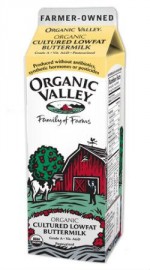
So is buttermilk good or not? I never could reconcile the stories my grandmother told of churning milk to separate the butter from the buttermilk with the ghastly-tasting buttermilk available at the grocery. How could milk go sour just by taking the fat out of it? L.V. Anderson explains with the history of buttermilk, or rather, the different things that have been called buttermilk.
My mistake was assuming that the buttermilk I had ordered would be the same kind of buttery buttermilk that Laura Ingalls Wilder had drunk in the late 19th century. This was a bad assumption. What we call buttermilk today has nothing at all to do with butter. In fact, the stuff known as cultured buttermilk at your local supermarket—i.e. milk that has been deliberately soured—is a 20th-century invention, and the product of a health-food diet craze dating back to the flapper era.
The distinction has to do with the lack of refrigeration in the days when people made their own butter. Sometimes the milk would be good; other times it had soured over the time it took to churn, or maybe it started out sour.

Random Photos

The Most Hazardous Places In The World

Most cities have a seedy underbelly - hidden dangers that lurk below the surface out of every day sight. Certain places, however, are plagued by dangers so great the warning signs are clear. Take a look at the most hazardous places in the world.

Vermont bans fracking

It's too bad that so many other states are willing to ignore the high costs of fracking and only look at the financial benefits to Big Energy. The only explanation for ignoring the financial costs (such as polluted water and earthquakes) is that too many politicians are also won over by the lobbying efforts and campaign contributions.
Good for Vermont for caring more about its people and environment than Big Energy.
With a 103-36 vote in the House of Representatives, Vermont on Friday became the first state to ban hydraulic fracturing to extract oil or natural gas. The bill passed the Senate earlier this week.

Inside The Kowloon Walled City

Once thought to be the most densely populated place on Earth, with 50,000 people crammed into only a few blocks, these fascinating pictures give a rare insight into the lives of those who lived in the Kowloon Walled City.

The city was a phenomenon with 33,000 families and businesses living in more than 300 interconnected high-rise buildings, all constructed without contributions from a single architect.

Dry rivers, vibrant with culture and life


‘When the River Runs Dry’ is a familiar song in Australia. Some rivers in the arid center of the continent ...
More

Sacred White Buffalo Slaughtered; Reward For Catching Killer Grows

Sacred White Buffalo Slaughtered; Reward For Catching Killer Grows

There's now a $45,000 reward for information leading to those responsible for the death of a white buffalo, "considered sacred by its Lakota Sioux owner," and its mother near Greenville, Texas, according to the Fort Worth Star-Telegram's Crime Time blog.

Animal Pictures