Welcome to ...

The place where the world comes together in honesty and mirth.
Windmills Tilted, Scared Cows Butchered, Lies Skewered on the Lance of Reality ... or something to that effect.


Wednesday, December 18, 2013

Hot pink stickers on manhole covers tell people what should and shouldn't be put down toilets

Oslo Council has become so desperate to stop people blocking up the drains, that it has turned manhole covers across the Norwegian capital bright pink.
Manhole covers have been adorned with hot-pink stickers, with the words "Bæsj, Tiss, Dopapir", or "Poo, Piss, Toilet paper". A small script underneath explains that nothing else should be put down the toilet.
"We chose pink because we thought it was the best way to get people's attention," Vivi Paulsen, a senior engineer at the city's Water and Sewerage Authority, said. "It's to teach people what they should not throw into the toilet."
She said that the cost of the adverts was a fraction of what the city had to spend every year on cleaning out fat, old cotton buds and tampons from its sewerage system and water treatment plants.

Fifteen Great Gifts of History


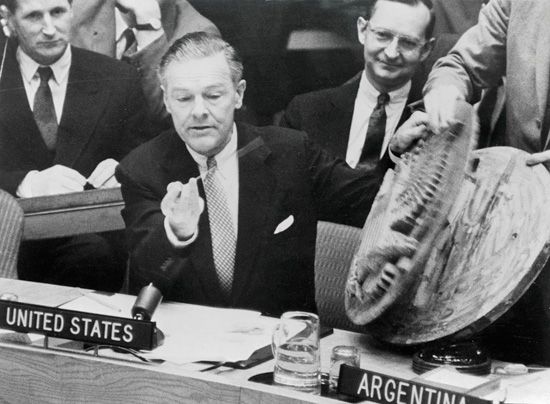
Not sure if your friend is talking about you behind your back? Well then perhaps he or she could use a great Seal of the United States with a bug in it, like, say the one the Soviet Union gave U.S. Ambassador Averell Harriman as a gift of friendship back in 1945:
Their definition of friendship was a little dysfunctional, though, because the gift contained a bug designed by famous Russian inventor Leon Theremin. The bug was hard to detect because it was extremely thin, gave off no signal and had no power supply.
There are plenty of other great gift ideas from history in this great article.

Stores have free rein to recoup shoplifting losses

This Friday, Dec. 13, 2013 photo shows a view of a Macy's flagship store in New York. Claims over racial profiling at department stores in New York have helped expose the practice in more than 40 states of retailers holding shoplifting suspects and assessing fines, even if a person hasn’t yet technically stolen anything. At Macy’s flagship store, suspects are held in cells, asked to sign an admission of guilt and pay hundreds in fines. (AP Photo/Bebeto Matthews) 
Outside the view of paying customers, people accused of shoplifting at Macy's huge flagship store are escorted by security guards to cells in "Room 140," where they can be held for hours, asked to sign an admission of guilt and pay hundreds in fines, sometimes without any conclusive proof they stole anything.
As shoppers jam stores ahead of the December holidays, claims of racial profiling at department stores in New York have helped expose the wide latitude that laws in at least 27 states give retailers to hold and fine shoplifting suspects, even if a person hasn't yet technically stolen anything, is wrongly accused or criminal charges are dropped.
"You must remember, these people are not police officers; they are store employees," said Faruk Usar, the attorney for a 62-year-old Turkish woman who sued Macy's, which some customers say bullied them into paying fines on the spot or harassed them with letters demanding payment. "When they are detained, they are not yet even in a real jail."
Industrywide, more than $12 billion is lost to shoplifting each year. The laws, which vary on strictness and fine amounts, allow stores to try to recoup some losses. Under New York's longstanding law, retailers may collect a penalty of five times the cost of the stolen merchandise, up to $500 per item, plus as much as $1,500 if the merchandise isn't in a condition to be sold. A conviction is not necessary to bring a civil claim.
Some customers say stores have harassed them into signing admissions of guilt in order to turn a profit — not just recoup a loss.
Retailers don't divulge how much money they recoup but use it in part to offset security costs, said Barbara Staib, spokeswoman for the National Association for Shoplifting Prevention. The total is a fraction of what they lose, she said.
"We tend to forget that retailers are the victims of crime when it comes to shoplifting," she said.
But at least nine customers at the Macy's store immortalized in "Miracle on 34th Street" say in lawsuits that the retailer is abusing the law, wrongly targeting minorities and holding customers for hours, years after it settled similar claims brought by the state attorney general by paying a $600,000 fine and changing practices. That agreement expired in 2008.
New York Attorney General Eric Schneiderman is again investigating claims against retailers. Last week, New York state stores agreed to post a customer "bill of rights" on their websites explicitly prohibiting profiling and unreasonable searches.
Usar's client, Ayla Gursoy, was detained in 2010 after she carried two coats in her arms up several flights of stairs in the flagship store, according to her suit. Store security accused Gursoy, who speaks little English, of trying to steal. She was asked to sign a form admitting guilt and pay a fine. She refused, the police were called and she was arrested.
Gursoy and others say they were held for hours in Room 140, a bare room with two small, barred holding cells with wooden benches within the store.
Elina Kazan, a spokeswoman for Cincinnati-based Macy's, said the company's practices prohibit coercion when recovering fines.
"Our policy of exercising our right to pursue a civil recovery payment is consistent with common practice in the retail industry and within the parameters of the law," she said.
Many retailers detain suspected shoplifters, industry experts said, but few have dedicated jail cells and most don't ask for payments on the spot like Macy's.
Most of the accused receive letters in the mail demanding payment from a law firm like the one used by Macy's, Palmer, Reifler & Associates, of Orlando, Fla. That firm also represents Home Depot, Wal-Mart and many other stores and sends out about 115,000 letters per month.
"We are confident in our clients' training processes and procedures for evaluating and investigating theft matters," attorney Natt Reifler said.
Letters sent to Gursoy said that if she didn't pay, she would be sued. One said she owed $400; the next said she owed $675 — the increase unexplained.
"We believe the whole purpose of her detention was to get the signature, to get the payments," Usar said shortly before his client's suit was settled in court Dec. 4. The terms were not disclosed. Her criminal charge was dismissed after no witness could testify.
In San Leandro, Calif., Jimin Chen accused Home Depot in a federal lawsuit of abusing the laws by shaking down customers to make an extra profit.
He said he was stopped in September by a security guard there who falsely accused him of trying to steal work gloves worth $3.99 that he had taken off the shelves and worn to load lumber into his cart. He said he was detained until he signed an admission of guilt.
Later, he started receiving letters demanding money; $350, then $675. Home Depot disputes the claims and has asked for dismissal.
Lawyers say that retailers rarely actually sue for the money, and they often suggest letter recipients don't bother paying because refusing won't affect their credit.
Generally, industry experts say, the laws allowing retailers to hold and fine suspected shoplifters are applied correctly.
"Retailers do a really good job of identifying where actual theft cases have occurred, and intervening and conducting investigations," said Joseph LaRocca, who runs RetaiLPartners, an industry group aimed at building partnerships between retailers and law enforcement. "There are always expectations, but by and large, there are few mistakes here."
The racial profiling allegations started in New York this fall with a different retailer, Barneys New York, after two black customers said they were stopped while buying expensive merchandise. The retailer has said it does not profile, and neither customer was asked to sign a confession or pay a fine.
But the allegations grew to include Macy's. Among those complaining was Rob Brown of the HBO show "Treme," who said he was stopped after buying a $1,300 Movado watch for his mother this summer.
Brown, 29, said he too was taken to Room 140. There, he said in a federal suit filed by attorney Doug Wigdor, others being held were all "individuals of color." He was released, he said, when people realized he was a celebrity.
Kazan, of Macy's, said she couldn't comment on pending litigation.

Store sold meat recovered from shoplifter's pants

A Superstore grocery store in Charlottetown, Canada sold meat found in a shoplifter's pants.Jeffery Arthur Feehan, 29, pleaded guilty on Tuesday to shoplifting charges after he was caught putting packages of chicken breasts, bacon and steaks worth $71.32 in his pants in a store bathroom.
He was sentenced to 94 days in jail and has been banned from all Superstores in Charlottetown for one year. However, it's what store employees did after Feehan was caught, that has some incensed.
During his trial, the prosecutor learned that the evidence had been placed back on store shelves. Crown attorney Valerie Moore said: "That sounds strange. They must have been well-wrapped in plastic given that they were down his pants."

Woman allegedly attacked father-in-law with cane claiming he had stolen her dentures

Convinced her father-in-law had stolen her dentures, an enraged Pennsylvania woman allegedly took his cane and repeatedly struck him in the head. Jody A. Burns, 36, of Scranton arrived at Albert Zawicki's apartment at about 8:10am on Tuesday, looking for her dentures, police said.
Mr. Zawicki claimed he didn't know where they were, but told her to look around his home. Instead, Ms. Burns grabbed his cane and began striking his head. When Mr. Zawicki raised his arms to block the attack, Ms. Burns hit his forearm and legs, he told police.
After tossing the cane aside, Ms. Burns grabbed a ceramic mug and threw it at his face. Scrambling for help, Mr. Zawicki reached for his cordless phone and dialed 911. But Ms. Burns grabbed it, ripped out the battery pack and then threw the phone at him. Upon learning he called police, Ms Burns told him, "I will just tell them you raped me."
A dazed Mr. Zawicki told police he believes Ms Burns then left, but he wasn't sure. He refused medical treatment. At about 8:25am, officers spotted Ms. Burns. After a brief struggle officers handcuffed Ms Burns. She faces charges of aggravated assault, simple assault, harassment and resisting arrest.

Zoinks!

Tracing The History Of 'Zombie' From Haiti To The CDC

by Lakshmi Gandhi A still from the 1943 film I Walked With A Zombie.
A still from the 1943 film I Walked With A Zombie.

"Who doesn't like zombies?"
That was the subject line of an email blast that landed in my inbox recently from a major online retailer as it announced it was "bringing their Black Friday deals back to life."
With shows like The Walking Dead and movies like World War Z, plus a whole literary subgenre known simply as "," the supernatural beings have been having a pop culture moment for some time now.
While there's a long history and fascination with animated corpses in American literature and cinema, zombies aren't originally a product of the American imagination. The undead corpses actually trace their roots to Haiti and Haitian Creole traditions that have their roots in African religious customs.
According to Haitian folklore, the book recounts, zombies are the product of spells by a voudou sorcerer called a bokor. The word is believed to be of West African origin and was brought to Haiti by slaves from that region. The concept of zombies would evolve further with the creation of the voudou religion.
In , University of California, Irvine, professor Amy Wilentz called zombies a "very logical offspring of New World slavery." According to Wilentz, because slavery in colonial Haiti was so viciously brutal, death was the only real escape and seen as a way to return to Africa or lan Guinée (which translated means Guinea). As she writes:
"Suicide was the slave's only way to take control over his or her own body ... And yet, the fear of becoming a zombie might stop them from doing so ... This final rest — in green, leafy, heavenly Africa, with no sugarcane to cut and no master to appease or serve — is unavailable to the zombie. To become a zombie was the slave's worst nightmare: to be dead and still a slave, an eternal field hand."
The earliest references to zombies in the United States were closely associated with slavery and connected the word to African traditions. The word "zombi" — which for years was spelled without the "e" at the end — first appeared in print in an American newspaper in a reprinted short story called "The Unknown Painter" in 1838.
, which was first published in the Chambers's Edinburgh Journal and then in the U.S. in the Alton Telegraph newspaper, a young African slave owned by a Spanish painter named Bartolome Esteban Murillo claims that a "zombi" appears in the art studio at night to work on the paintings of Murillo's apprentices. However, no one believes the young slave's assertions and dismiss the existence of the zombi as an African myth. (Murillo's famous painting "Adoration of the Magi" features a black man as one of the three wise men. You can read more about people of color in medieval art .)
in American pop culture, Ann Kordas notes that the fictional story of Murillo's young slave seemed to have struck a chord with the American public and different versions of the story were published many times in local newspapers throughout the 1800s. Kordas notes that by the mid-1800s, a zombi had for many "come to be associated with a creature of African 'origin' that willingly performed services for whites."
By 1872, the linguistic scholar Maximilian Schele de Vere would as "a phantom or a ghost, not infrequently heard in the Southern States in nurseries and among the servants."
But the mainstreaming of the word would begin in 1929, when the travel writer William Seabrook released his book on Haiti and "voodoo," titled , in which Seabrook writes about seeing "voodoo" cults in Haiti and the concept of the zombi to many readers. Several film scholars believe the book was the basis of the classic 1932 horror film White Zombie.
The film was — as the title suggests — about white, rather than African, zombies. In the film, a young couple named Madeleine and Neil are talked into getting married on a Haitian plantation by the owner, who is secretly plotting to seduce the bride. To that end, he teams up with a local Creole mill owner (played by Bela Lugosi) who gives him a zombie potion to use on Madeline.
Other zombie films would follow, but they'd rarely take place in Haiti or incorporate the words origins the way White Zombie did. An example is the 1943 horror movie, I Walked With A Zombie, in which a Canadian nurse travels to the fictional Caribbean Island of St. Sebastian to care for the wife of a plantation owner. On arrival, she finds her charge in a zombie-like state and wonders if voudou would cure her.
1968's Night of the Living Dead is widely considered a landmark film in the genre. Marking the 45th anniversary of the release of the film, Code Switch's Matt Thompson , "set the expectation that [zombie movies] would be a vehicle for stinging social commentary." And that it did so because director George Romero cast a black actor, Duane Jones, as the protagonist. Audiences, at the time, were said to draw a connection between the action on the screen and the fight for civil rights.
Through the years, researchers and anthropologists have occasionally tried to research the Haitian voudou belief in zombies. In 1937, the author Zora Neale Hurston traveled to Haiti to research Haitian customs for her book Tell My Horse.
, Hurston was asked to define exactly what a zombie was. Her reply:
"A zombie is supposed to be the living dead: people who die and are resurrected, but without their souls. They can take orders, and they're supposed to never be tired, and to do what the master says."
One of the most famous studies of Haitian zombies was ethnobotanist The Serpent and the Rainbow: A Harvard Scientist's Astonishing Journey into the Secret Societies of Haitian Voodoo, Zombies, and Magic. The highly controversial book sought to discover how zombies were created. Wade studied the case of a man believed to have been turned into an actual zombie through a combination of drugs (including puffer fish venom and toad venom) in order to mimic death and then given the hallucinogenic drug tetrodotoxin to keep him in a zombie-like state.
Davis' research created a huge stir upon publication, with other researchers claiming his methodology was unscientific and that they couldn't find evidence of the hallucinogens upon testing his samples.
The Centers for Disease Control and Prevention is among the organizations that have sought to capitalize on the American appetite for all things zombie. In 2012, the CDC raised some eyebrows when it unveiled a page on its website devoted to "zombie preparedness."
On the page, the CDC's director of the Office of Public Health Preparedness and Response, , notes, "If you are generally well equipped to deal with a zombie apocalypse you will be prepared for a hurricane, pandemic, earthquake, or terrorist attack."
The site was so popular when it was launched.

Ziggy

http://media.zenfs.com/en_us/News/ucomics.com/zi131217.gif

The Girls Of Atomic City

The Untold Story Of The Women Behind The Bomb

'The Girls of Atomic City: The Untold Story of the Women Who Helped Win World War II', a book by Denise Kiernan, tells the story of the Oak Ridge center of the Manhattan Project.

Oak Ridge was established in 1942 as a production site for the Manhattan Project, a town of 70,000 workers - primarily women - who lived in a camp-like environment of propaganda, barbed wire, checkpoints, code words, and spies, while working a thousand different jobs, all of which contributed to the events of August 6, 1945 and the dropping of the atomic bomb.

The Short-Lived Experiment With Rubber Tires On Railways

For all their design innovations, railways still retain one fundamental weakness - they put metal wheels onto metal tracks. Not just inefficient as there is limited grip between two such smooth surfaces, but noisy as well. So why don't they use something different? Well, railway companies have tried. And sadly failed.

It's mainly a Frenchman we have to thank for the best attempt to deal with the metal upon metal, and that was tire magnate Andre Michelin who upon returning from an unpleasant train trip instructed his engineers to develop something better.

Native American masks sold in Paris to be returned to tribes

A US foundation has revealed it was the mystery buyer of sacred Native American objects auctioned off Monday in Paris under a cloud of controversy, and will return them to the tribes that claim them.
Native American masks sold in Paris to be returned to tribes
These Hopi masks were auctioned on Monday [Credit: AFP]
The Annenberg Foundation announced it had bought 21 Hopi masks -- which are worn by dancers during religious ceremonies and considered as living beings -- and three San Carlos Apache objects for $530,000 (390,000 euros) "for the sole purpose of returning them to their rightful owner." Monday's auction had gone ahead despite several attempts to block the sale of the colorful masks and head-dresses, including by the US embassy.

Advocacy group Survival International had also challenged the auction in court on behalf of the Hopi tribe, but was dismissed on Friday by a judge who ruled the sale was legal in France.

"Our hope is that this act sets an example for others that items of significant cultural and religious value can only be properly cared for by those vested with the proper knowledge and responsibility. They simply cannot be put up for sale," Sam Tenakhongva, a Hopi cultural leader, said in the Tuesday statement announcing the purchase.

The auction also included other pieces of Native American art, but the controversy focused on the sale of 27 objects considered sacred by the tribes.
Native American masks sold in Paris to be returned to tribes
The Tumas Crow Mother was another Hopi mask put on sale [Credit: AFP]
Pierre Servan-Schreiber, the lawyer who represented the Hopi in the legal attempt to block the sale, bought one of the masks for 13,000 euros and will return it to the Hopi, but the fate of the two other items included in the sale remained unclear.

All in all, the 27 objects fetched 550,000 euros, including a leather helmet mask framed by two large crow wings that went for 125,000 euros. It was unclear whether it was part of what the foundation bought.

Gregory Annenberg Weingarten, director of the Los Angeles-based foundation that funds non-profit organizations around the world, said he took the decision to buy the artifacts after Survival International's legal challenge failed.

"As an artist, I was struck by the awesome power and beauty of these objects," he said.

"But these are not trophies to have on one's mantel, they are truly sacred works for the Native Americans. They do not belong in auction houses or private collections.
Native American masks sold in Paris to be returned to tribes
The masks were sold on Monday [Credit: AFP]
"It gives me immense satisfaction to know that they will be returned home to their rightful owners, the Native Americans." The controversy echoed a similar case in April when French firm Neret-Minet ignored international appeals to halt the sale of some 70 Hopi masks that eventually fetched around 930,000 euros.

That auction was decried as a sacrilege by activists including Hollywood legend Robert Redford.

The sale of sacred Indian artifacts has been outlawed in the United States since 1990 but the law does not extend to sales overseas.

The judge in charge of the legal challenge to Monday's auction acknowledged that the sale of the objects could "constitute an affront to the dignity" of the tribe.

But she said "this moral and philosophical consideration does not in itself give the judge the right to suspend the sale of these masks which is not forbidden in France".

Terracotta Warriors inspired by Ancient Greek Art

The Terracotta Warriors, along with other life-size sculptures built for the First Emperor of China, were inspired by Greek art, new research indicates.
Terracotta Warriors inspired by Ancient Greek Art
About 8,000 Terracotta Warriors were buried in three pits less than a mile to the northeast of the mausoleum of the First Emperor of China, Qin Shi Huangdi. They include infantryman, archers, cavalry, charioteers and generals. Now new research, including newly translated ancient records, indicates that the construction of these warriors was inspired by Greek art [Credit: Lukas Hlavac/Shutterstock]
About 8,000 Terracotta Warriors, which are life-size statues of infantryman, cavalry, archers, charioteers and generals, were buried in three pits less than a mile to the northeast of the mausoleum of Qin Shi Huangdi, the first emperor.  He unified the country through conquest more than 2,200 years ago. Pits containing sculptures of acrobats, strongmen, dancers and civil servants have also been found near the mausoleum.

Now, new research points to ancient Greek sculpture as the inspiration for the emperor's afterlife army.

"It is perfectly possible and actually likely that the sculptures of the First Emperor are the result of early contact between Greece and China," writes Lukas Nickel, a reader with the School of Oriental and African Studies at the University of London, in the most recent edition of the journal Bulletin of the School of Oriental and African Studies.

Nickel's evidence includes newly translated ancient records that tell a fantastic tale of giant statues that "appeared" in the far west, inspiring the first emperor of China to duplicate them in front of his palace. This story offers evidence of early contact between China and the West, contacts that Nickel says inspired the First Emperor (which is what Qin Shi Huangdi called himself) to not only duplicate the 12 giant statues but to build the massive Terracotta Army along with other life-size sculptures.

Before the First Emperor's time, life-size sculptures were not built in China, and Nickel argues the idea to build so many of them, so suddenly, came from kingdoms in Asia that had been created and influenced by Alexander the Great's campaigns.

'Giants' appearing in the west

Nickel translated ancient Chinese records that tell a tale of 12 giant statues, clad in "foreign robes" that "appeared" in Lintao in what was the westernmost part of China. (The word "Lintao" can also mean any place far to the west.)
Terracotta Warriors inspired by Ancient Greek Art
Shown here, one of nine Terracotta Warriors that was on display at the Terracotta Warrior exhibition at New York City's Discovery Times Square in 2012. China lets only 10 of the warriors leave the country at any given time [Credit: Clara Moskowitz/LiveScience]
The records do not say how this appearance happened, who brought them there, or who exactly the statues depicted; they do reveal the statues were larger than life, rising about 38 feet (11.55 meters) high, with feet that were 4.5 feet long (1.38 m). They so impressed the First Emperor that he decided to build 12 duplicates in front of his palace by melting down bronze weapons that had been used for war.

On each duplicate an inscription was created telling of the "giants" (the original statues) that appeared in Lintao. The inscriptions, recorded by Yan Shigu, who lived around 1,400 years ago and used an earlier written source, said that in the "26th Year of the Emperor, when he first brought together all-under-heaven, divided the principalities into provinces and districts, and unified the weights and measures, [these] giants appeared in Lintao …"

The First Emperor duplicated these statues despite a "heavenly taboo" that "he who recklessly follows foreign models will encounter disaster," wrote Ban Gu, a historian who lived almost 2,000 years ago. Ban worked for the dynasty that had overthrown the First Emperor's dynasty and, as such, tried to cast him in a negative light.

These giant duplicates no longer exist, having been destroyed in the centuries after the First Emperor's death. Because the duplicates were displayed publicly in front of the First Emperor's palace ancient writers left records of them behind, Nickel told LiveScience. Meanwhile, the Terracotta Warriors, though they survive to present day, were buried in pits out of sight and, as such, no record of them survives today.

Even so, the newly translated records suggest contact, of some form, occurred between ancient China and kingdoms in Central Asia that had been influenced by Greek culture and its sculpture-building tradition.

Acrobats and dancers

A few dozen statues of half-naked acrobats and dancers were also found in separate pits near the First Emperor's mausoleum.
Terracotta Warriors inspired by Ancient Greek Art
An example of the miniature figures of people, animals and objects
 created by the Han Dynasty.[Credit: Owen Jarus]
"Here the sculptors attempted to render a bone structure, muscles and sinews to depict a person in movement," Nickel writes in his paper. "This comes close to an understanding of the human body that was employed at the time only in Hellenistic (Greek influenced) Europe and Asia."

He argues that creating this sort of realistic sculpture is not something that a sculptor could learn without some practice, taking the ancient Greeks centuries to master it.

"The creation of a believable human body preoccupied generations of Greek sculptors. It was a complex artistic and intellectual process that did not happen overnight," Nickel writes.

All this research leaves another mystery in its wake. After the First Emperor's death the rulers that came to power, the Han Dynasty, stopped building life-size sculptures, opting instead for miniature representations of people, animals and objects, Nickel said.

Several reasons could explain why the people stopped building these human-like statues, Nickel said. For instance, the skills involved in building these sculptures were complicated and, by the time Han rulers started building large tombs again, the people who had these skills could simply have died.

But there is another idea, one hinted at by the "heavenly taboo" recorded by Ban Gu that "disaster" happens when foreign models are followed recklessly. To the ancient Chinese, the 12 giant statues clad in foreign robes, and the Terracotta Warriors buried in pits, would have represented something unusual and foreign, Nickel said.

"Over all of Chinese early history sculpture did play only a minor role," Nickel told LiveScience in the interview. "To the Chinese it must have looked quite alien," he added. The Han rulers, wishing to repudiate the First Emperor and his foreign tastes, may have simply decided not to create life-size or larger sculptures of their own, Nickel said.

Daily Comic Relief

http://media.zenfs.com/en_us/News/ucomics.com/dp131217.gif

Could the universe collapse TODAY?

Physicists claim that risk is ‘more likely than ever and may have already started’

Could the universe collapse TODAY? Physicists claim that risk is ‘more likely than ever and may have already started’
The universe could be about to collapse and everything in it – including us – will be compressed into a small, hard ball.
The process may already have started somewhere in our cosmos and is eating away at the rest of the universe, according to theoretical physicists.
The mind-bending concept has been around for a while, but now researchers in Denmark claim they have proven it is possible with mathematical equations.

Dog sacrificed herself to save lives of owners

Cora the dog saved her owners' lives on Thursday night. She ran out to the road seeking help after the car she was riding in crashed.
Sgt. Adolfo Coronado accidentally ran into Cora on Highway 26, headed east out of Othello, Adams County, Washington. It was pitch black, making it nearly impossible to spot Cora when she darted onto the road. She was apparently looking for help.  "I just figured, 'what is this stray doing out here in the middle of nowhere?'" said Sgt. Coronado. Just as Sgt. Coronado went to check on her, his spotlight shined on something in the nearby field.
My lights started glowing off an object in the middle of the field, and that's what led me to find the collision itself," said Sgt. Coronado. That led him to Joshua and Shelby Keller, siblings, who were traveling from WSU Pullman. "I all of a sudden see a man jumping up and down in the field, waving his hands. And that's when it started to hit me like 'oh my god. Something's going on here,'" said Sgt. Coronado.
Their vehicle had rolled down a hill and flipped almost 70 feet. "The vehicle was on its top," said Sgt. Coronado. Joshua managed to get out of the car. But Shelby was injured and still stuck inside. Half of her face was severely damaged. But, she made it out alive. "I honestly believe everything happened for a reason," added Sgt. Coronado. Shelby is recovering in a Spokane hospital from non-life threatening injuries. Joshua said about Cora: "It's hard to think she's gone but was truly an angel to us."

Family of bears took relaxing dip in Florida pool

A North Naples homeowner watched from behind her sliding glass door as a family of black bears took a leisurely dip in her swimming pool last weekend.
"Two bears in my balcony! They're trying to get in my house. I'm so scared!" North Naples resident TJ Ozbay told a Collier County 911 dispatcher. Ozbay called 911 when she stumbled upon the bears swimming in her pool. "They're coming inside. I closed all the curtains, everything," Ozbay said.

That's when she pulled out her phone and recorded it all. The bears had broken through the screen lanai. Ozbay said she thought it was the sound of a hose filling up her pool that attracted them, and was only a few feet away on the other side of a sliding glass door.

One bear ended up walking right up to that door within inches of her. "I'm so scared. They're trying to break my window," she told the dispatcher. Ozbay says the bears stayed around for almost an hour before running away.

Animal Pictures


Tuesday, December 17, 2013

The Daily Drift

Eight Days To Go ....

Carolina Naturally is read in 194 countries around the world daily.
 
Water ... !
Today is - (no special celebration today) Day
 

Don't forget to visit our sister blog: It Is What It Is

Some of our readers today have been in:
The Americas
The Bottom Saba, Sint Eustatius and Saba
Britannia, Mississauga, Thunder Bay, Ottawa, Blainville, Byward Market, Winnipeg, Montreal and Ottawa, Canada
San Juan, Puerto Rico
Medellin, Colombia
Santiago, Chile
Cochabamba, Bolivia
Santo Domingo, Dominican Republic
Buenos Aires, Argentina
atascadero, Albuquerque, Russelville and Natchitoches, United States
Willemstad, Curacao
Guayaquil, Ecuador
Polanco, Mexico
Europe 
Madrid, L'Olleria and Teo, Spain
Kista, Sweden
Slough, Bath, London and Guildford, England
Warsaw and Szcecin, Poland
Russelheim, Ottobrunn and Eschborn, Germany
Kiev, Odessa, Zhovti Vody and Kramators'k, Ukraine
Lucenec, Slovakia
Ryazin, Chelyabinsk and Vladivostok, Russia
Dublin, Ireland
Rome, Ivrea, Vicenza, Cesena and Modugno, Italy
Oslo and Slemmestad, Norway
Sarajevo, Bosnia and Herzegovina
Salon-De-Provence, Rouen, Paris and Cerny, France
Amsterdam, Leiden and Groningen, Netherlands
Basel, Switzerland
Nigde, Ankara, Istanbul, and Sehitkamil, Turkey
Belgrade, Serbia
Prague, Czech Republic
Tbilisi, Georgia
Riga, Latvia
Maribor, Slovenia
Porto, Portugal
Asia
Bogor and Jakarta, Indonesia
Kolkata, Bilaspur, Chennai, Jodhpur, Shillong, Bangalore, Lohardaga, New Delhi, Kottayam, Lucknow, Thiruvananthapuram, Delhi, Dharwad, Vijayawada, Coimbatore and Patiala, India
Bangkok, Thailand
Riyadh and Jeddah, Saudi Arabia
Beijing and Jilin, China
Colombo, Sri Lanka
Kuala Lumpur, Kajang, Putrajaya, Kota Kinabalu and Bayan Lepas, Malaysia
Damascus, Syria
Abdanan, Hamadan and Esfahan, Iran
Ramla, Petah Tikva and Haifa, Israel
Doha, Qatar
Islamabad, Pakistan
Baghdad, Iraq
Africa 
Addis Ababa, Ethiopia
Lagos, Nigeria
Cape Town and Port Elizabeth, South Africa
Cairo, Egypt
Pacific
Homebush, Australia
Sampaloc, Philippines

Today in History

1399 Tamerlane's Mongols destroy the army of Mahmud Tughluk, Sultan of Delhi, at Panipat.
1861 The Stonewall Brigade begins to dismantle Dam No. 5 of the C&O Canal.
1886 At a Christmas party, Sam Belle shoots his old enemy Frank West, but is fatally wounded himself.
1903 Near Kitty Hawk, North Carolina, Orville and Wilbur Wright make the first successful flight in history of a self-propelled, heavier-than-air aircraft.
1927 U.S. Secretary of State Frank B. Kellogg suggests a worldwide pact renouncing war.
1938 Italy declares the 1935 pact with France invalid because ratifications had not been exchanged. France denies the argument.
1939 In the Battle of River Plate near Montevideo, Uruguay, the British trap the German pocket battleship Graf Spee. German Captain Langsdorf sinks his ship believing that resistance is hopeless.
1943 U.S. forces invade Japanese-held New Britain Island in New Guinea.
1944 The German Army renews the attack on the Belgian town of Losheimergraben against the defending Americans during the Battle of the Bulge.
1944 U.S. approves end to internment of Japanese Americans. U.S. Major General Henry C. Pratt issues Public Proclamation No. 21, declaring that Japanese American "evacuees" from the West Coast could return to their homes effective January 2, 1945.
1948 The Smithsonian Institution accepts the Kitty Hawk – the Wright brothers' plane.
1950 The French government appoints Marshal de Lattre de Tassigny to command their troops in Vietnam.
1952 Yugoslavia breaks relations with the Vatican.
1965 Ending an election campaign marked by bitterness and violence, Ferdinand Marcos is declared president of the Philippines.
1981 Red Brigade terrorists kidnap Brigadier General James Dozier, the highest-ranking U.S. NATO officer in Italy.
1989 The Simpsons, television's longest-running animated series, makes its US debut.
1989 Fernando Color de Mello becomes Brazil's first democratically elected president in nearly 30 years.
1990 Jean-Bertrand Aristide wins Haiti's first free election.
2002 Congolese parties of the inter Congolese Dialogue sign a peace accord in the Second Congo War, proviidn for transitional government and elections within two years.
2010 Mohamed Bouazizi immolates himself, the catalyst for the Tunisian revolution and the subsequent Arab Spring.

Non Sequitur

http://media.zenfs.com/en_us/News/ucomics.com/nq131216.gif

Xmas Countdown Xmas Stories

The Dime
Bobby was getting cold sitting out in his back yard in the snow. Bobby didn't wear boots; he didn't like them and anyway he didn't own any. The thin sneakers he wore had a few holes in them and they did a poor job of keeping out the cold. Bobby had been in his backyard for about an hour already. And, try as he might, he could not come up with an idea for his mother's Xmas gift. He shook his head as he thought, "This is useless, even if I do come up with an idea, I don't have any money to spend."
Ever since his father had passed away three years ago, the family of five had struggled. It wasn't because his mother didn't care, or try, there just never seemed to be enough. She worked nights at the hospital, but the small wage that she was earning could only be stretched so far.
What the family lacked in money and material things, they more than made up for in love and family unity. Bobby had two older and one younger sister, who ran the house hold in their mother's absence. All three of his sisters had already made beautiful gifts for their mother. Somehow it just wasn't fair. Here it was Xtmas Eve already, and he had nothing.
Wiping a tear from his eye, Bobby kicked the snow and started to walk down to the street where the shops and stores were. It wasn't easy being six without a father, especially when he needed a man to talk to. Bobby walked from shop to shop, looking into each decorated window.
Everything seemed so beautiful and so out of reach.
It was starting to get dark and Bobby reluctantly turned to walk home when suddenly his eyes caught the glimmer of the setting sun's rays reflecting off of something along the curb. He reached down and discovered a shiny dime. Never before has anyone felt so wealthy as Bobby felt at that moment.
As he held his new-found treasure, a warmth spread throughout his entire body and he walked into the first store he saw. His excitement quickly turned cold when the salesperson told him that he couldn't buy anything with only a dime.
He saw a flower shop and went inside to wait in line. When the shop owner asked if he could help him, Bobby presented the dime and asked if he could buy one flower for his mother's Xmas gift. The shop owner looked at Bobby and his ten cent offering.
Then he put his hand on Bobby's shoulder and said to him, "You just wait here and I'll see what I can do for you." As Bobby waited he looked at the beautiful flowers and even though he was a boy, he could see why mothers and girls liked flowers.
The sound of the door closing as the last customer left, jolted Bobby back to reality. All alone in the shop, Bobby began to feel alone and afraid. Suddenly the shop owner came out and moved to the counter.
There, before Bobby's eyes, lay twelve long stem, red roses, with leaves of green and tiny white flowers all tied together with a big silver bow. Bobby's heart sank as the owner picked them up and placed them gently into a long white box.
"That will be ten cents young man," the shop owner said reaching out his hand for the dime. Slowly, Bobby moved his hand to give the man his dime. Could this be true? No one else would give him a thing for his dime!
Sensing the boy's reluctance, the shop owner added, "I just happened to have some roses on sale for ten cents a dozen. Would you like them?"
This time Bobby did not hesitate, and when the man placed the long box into his hands, he knew it was true. Walking out the door that the owner was holding for Bobby, he heard the shop keeper say, "Merry Xmas son."
As he returned inside, the shop keeper's wife walked out. "Who were you talking to back there and where are the roses you were fixing?"
Staring out the window, and blinking the tears from his own eyes, he replied, "A strange thing happened to me this morning. While I was setting up things to open the shop, I thought I heard a voice telling me to set aside a dozen of my best roses for a special gift. I wasn't sure at the time whether I had lost my mind or what, but I set them aside anyway.
Then just a few minutes ago, a little boy came into the shop and wanted to buy a flower for his mother with one small dime.
"When I looked at him, I saw myself, many years ago. I too, was a poor boy with nothing to buy my mother a Xmas gift. A man, whom I never knew, stopped me on the street and told me that he wanted to give me ten dollars. "When I saw that little boy tonight, I knew who that voice was, and I put together a dozen of my very best roses." The shop owner and his wife hugged each other tightly, and as they stepped out into the bitter cold air, they somehow didn't feel cold at all.