

Tuesday, January 14, 2014

Burglar who thought he was trapped in eye care store did peculiar things
No one’s really sure what was going through Michael Garvin’s mind when
he broke into an Ada, Oklahoma eye care store last Saturday. All police
and store employees have is the aftermath of a very strange night.
Garvin, 22, used the businesses phone to call 911. He apparently hung up
the first time. The dispatcher had to call back twice. Garvin picked up
the second time.
The break-in still has Ada police, and Ada Family Eye Care owner Chris
Gurley scratching their heads."He obviously wasn't in the right state of
mind, I'm sure. He ended up wearing some of my staff's lab coats, and
tried on different clothing," said Gurley. "There was apparently a pair
of shorts that were even in my office back there that he found." Garvin
was inside for nearly an hour. Surveillance cameras captured his every
move starting at around 5am..
 "He was pretty incoherent. His actions weren't that of a normal person,"
said Ada Police Chief, Mike Miller. "He got a little bit agitated
because he couldn't get out, and at that point is when he started
tearing up a few displays and clearing off a few counters with golf clubs,"
said Gurley. He says it appears Garvin kicked in the bottom glass of
the front door, and at some point that glass slid down. Chris believes
the burglar thought his exit was blocked.
"He was pretty incoherent. His actions weren't that of a normal person,"
said Ada Police Chief, Mike Miller. "He got a little bit agitated
because he couldn't get out, and at that point is when he started
tearing up a few displays and clearing off a few counters with golf clubs,"
said Gurley. He says it appears Garvin kicked in the bottom glass of
the front door, and at some point that glass slid down. Chris believes
the burglar thought his exit was blocked.
"Simple door latch might have gotten him out," said Gurley. But, Garvin called 911. When police arrived, he threw a hand mirror at them then ran and hid in the attic. "They found that the front door was busted in and saw someone inside and called for backup," said Miller. "We were able to surround the building, go in and find this person that broke in, and arrested him. [I've] never had anyone in my office not be able to get out," said Gurley. Garvin was released from the Ponotoc County jail on Tuesday on a $1,000 bond.
"Simple door latch might have gotten him out," said Gurley. But, Garvin called 911. When police arrived, he threw a hand mirror at them then ran and hid in the attic. "They found that the front door was busted in and saw someone inside and called for backup," said Miller. "We were able to surround the building, go in and find this person that broke in, and arrested him. [I've] never had anyone in my office not be able to get out," said Gurley. Garvin was released from the Ponotoc County jail on Tuesday on a $1,000 bond.
Ghost Heart

The organ can then be reseeded with a patients own cells to regenerate it so it can be transplanted without fear of tissue rejection.

Spelling Hieroglyphics
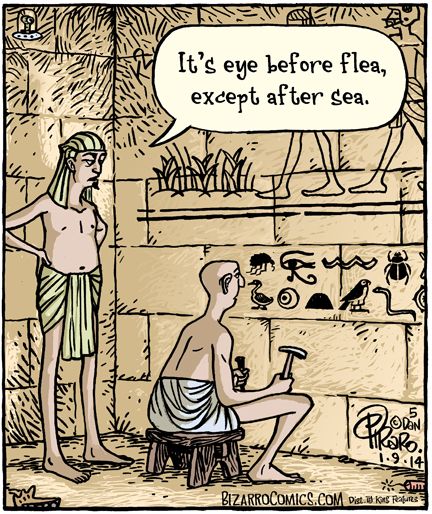
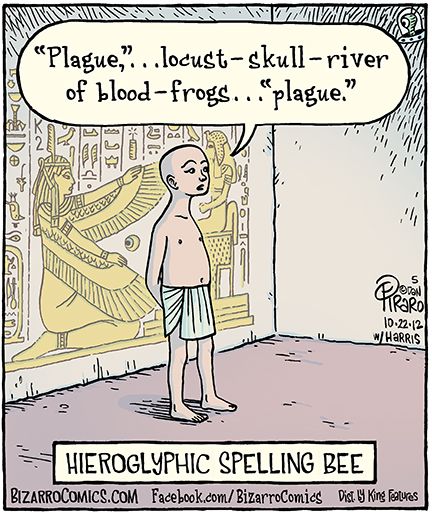
Here are a couple fun cartoons from Dan Piraro of Bizarro Comics. Yes, spelling in hieroglyphics could be hard. But I suspect that it's even more difficult in Tamarian.
Paranthropus boisei lived on tiger nuts
An Oxford University study has concluded that our ancient ancestors who
lived in East Africa between 2.4 million-1.4 million years ago survived
mainly on a diet of tiger nuts. Tiger nuts are edible grass bulbs still
eaten in parts of the world today. The study published in the journal,
PLOS ONE, also suggests that these early hominins may have sought
additional nourishment from fruits and invertebrates, like worms and
grasshoppers.

Previous research using stable isotope analyses suggests the diet of these homimins was largely composed of C4 plants like grasses and sedges. However, a debate has raged over whether such high-fiber foods could ever be of sufficiently high quality for a large-brained, medium-sized hominin. Dr Macho's study finds that baboons today eat large quantities of C4 tiger nuts, and this food would have contained sufficiently high amounts of minerals, vitamins, and the fatty acids that would have been particularly important for the hominin brain. Her finding is grounded in existing data that details the diet of year-old baboons in Amboseli National Park in Kenya -- a similar environment to that once inhabited by Paranthropus boisei. Dr Macho's study is based on the assumption that baboons intuitively select food according to their needs. She concludes that the nutritional demands of a hominin would have been quite similar.

Dr Macho modified the findings of the previous study on baboons by Stuart Altmann (1998) on how long it took the year-old baboons to dig up tiger nuts and feed on various C4 sources. She calculated the likely time taken by hominins, suggesting that it would be at least twice that of the yearling baboons once their superior manual dexterity was taken into account. Dr Macho also factored in the likely calorie intake that would be needed by a big-brained human relative. Tiger nuts, which are rich in starches, are highly abrasive in an unheated state. Dr Macho suggests that hominins' teeth suffered abrasion and wear and tear due to these starches. The study finds that baboons' teeth have similar marks giving clues about their pattern of consumption. In order to digest the tiger nuts and allow the enzymes in the saliva to break down the starches, the hominins would need to chew the tiger nuts for a long time. All this chewing put considerable strain on the jaws and teeth, which explains why "Nutcracker Man" had such a distinctive cranial anatomy. Paranthropus boisei lived on tiger nuts

On the basis of recent isotope results, these hominins appear to have survived on a diet of C4 foods, which suggests grasses and sedges. Yet these are not high quality foods. What this research tells us is that hominins were selective about the part of the grass that they ate, choosing the grass bulbs at the base of the grass blade as the mainstay of their diet. 'Tiger nuts, still sold in health food shops as well as being widely used for grinding down and baking in many countries, would be relatively easy to find. They also provided a good source of nourishment for a medium-sized hominin with a large brain. This is why these hominins were able to survive for around one million years because they could successfully forage -- even through periods of climatic change.'
This is Olduvai Hominid 5 (OH 5), the most famous of the early human
fossils,
which was found at Olduvai Gorge, Tanzania
Study author Dr Gabriele Macho examined the diet of Paranthropus boisei,
nicknamed "Nutcracker Man" because of his big flat molar teeth and
powerful jaws, through studying modern-day baboons in Kenya. Her
findings help to explain a puzzle that has vexed archaeologists for 50
years.
Scholars have debated why this early human relative had such strong
jaws, indicating a diet of hard foods like nuts, yet their teeth seemed
to be made for consuming soft foods. Damage to the tooth enamel also
indicated they had come into contact with an abrasive substance.Previous research using stable isotope analyses suggests the diet of these homimins was largely composed of C4 plants like grasses and sedges. However, a debate has raged over whether such high-fiber foods could ever be of sufficiently high quality for a large-brained, medium-sized hominin. Dr Macho's study finds that baboons today eat large quantities of C4 tiger nuts, and this food would have contained sufficiently high amounts of minerals, vitamins, and the fatty acids that would have been particularly important for the hominin brain. Her finding is grounded in existing data that details the diet of year-old baboons in Amboseli National Park in Kenya -- a similar environment to that once inhabited by Paranthropus boisei. Dr Macho's study is based on the assumption that baboons intuitively select food according to their needs. She concludes that the nutritional demands of a hominin would have been quite similar.
Amboseli National Park with baboons
Dr Macho modified the findings of the previous study on baboons by Stuart Altmann (1998) on how long it took the year-old baboons to dig up tiger nuts and feed on various C4 sources. She calculated the likely time taken by hominins, suggesting that it would be at least twice that of the yearling baboons once their superior manual dexterity was taken into account. Dr Macho also factored in the likely calorie intake that would be needed by a big-brained human relative. Tiger nuts, which are rich in starches, are highly abrasive in an unheated state. Dr Macho suggests that hominins' teeth suffered abrasion and wear and tear due to these starches. The study finds that baboons' teeth have similar marks giving clues about their pattern of consumption. In order to digest the tiger nuts and allow the enzymes in the saliva to break down the starches, the hominins would need to chew the tiger nuts for a long time. All this chewing put considerable strain on the jaws and teeth, which explains why "Nutcracker Man" had such a distinctive cranial anatomy. Paranthropus boisei lived on tiger nuts
This image shows the palate and maxillary teeth of Paranthropus boisei
(OH 5)
The Oxford study calculates a hominin could extract sufficient nutrients
from a tiger nut- based diet, i.e. around 10,000 kilojoules or 2,000
calories a day -- or 80% of their required daily calorie intake, in two
and half to three hours. This fits comfortably within the foraging time
of five to six hours per day typical for a large-bodied primate.
Dr Macho, from the School of Archaeology at Oxford University, said: 'I
believe that the theory -- that "Nutcracker Man" lived on large amounts
of tiger nuts- helps settle the debate about what our early human
ancestor ate.On the basis of recent isotope results, these hominins appear to have survived on a diet of C4 foods, which suggests grasses and sedges. Yet these are not high quality foods. What this research tells us is that hominins were selective about the part of the grass that they ate, choosing the grass bulbs at the base of the grass blade as the mainstay of their diet. 'Tiger nuts, still sold in health food shops as well as being widely used for grinding down and baking in many countries, would be relatively easy to find. They also provided a good source of nourishment for a medium-sized hominin with a large brain. This is why these hominins were able to survive for around one million years because they could successfully forage -- even through periods of climatic change.'
Aniva Rock Lighthouse
Sakhalinskaya Oblast, Russia

A formal penal island used by the Russians, Aniva was once sought after
by both the Russia and Japan. This now Russian controlled territory sits
uninhabited in the seas between Japan and the eastern coast of Russia.

MUSA
An Underwater Museum Off Isla Mujeres

By designing sculptures and placing them on the sandy bottom of the sea, Taylor was fulfilling two purposes. First, he was creating an artificial reef onto which coral would grow and within which sea life might flourish. Second, he was diverting human attention away from the overtaxed natural reef.
10 Animals Who Can Talk
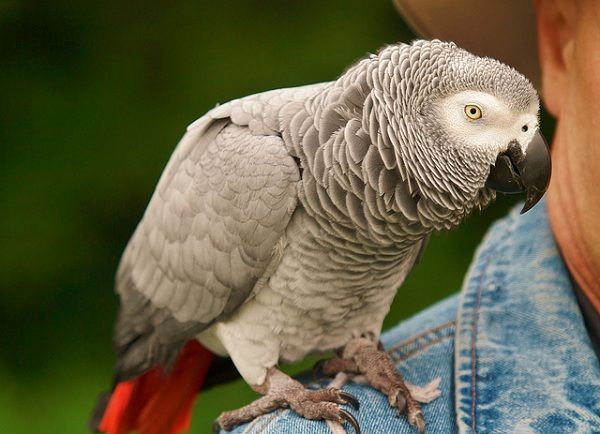
In a story told by Jane Goodall, after seeing a photo of the acclaimed primatologist, N'kisi had the opportunity to meet her in person, whereupon he looked at her and asked, "Got a chimp?"And that's only one critter of the 10 amazing talking ones on the list over at Oddee.
Say Hello to the Worms of Your Nightmares
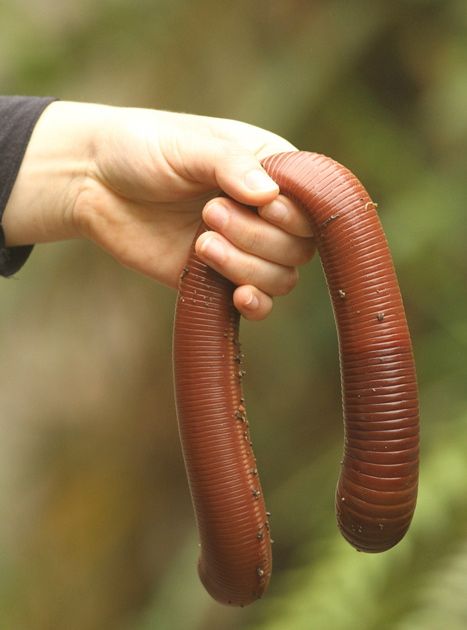
This isn't a photoshop. It's a picture of the giant gippsland, a worm that reaches up to nine feet in length don't worry, they don't usally grow longer than three feet long. Yeah, it's pretty much just alive for the sake of giving you nightmares.
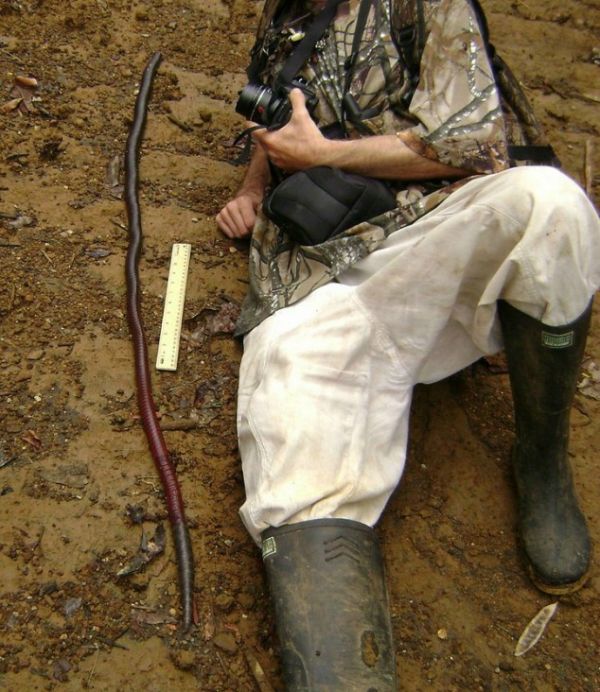
Think of them next time you have a hard time sleeping, just think of these monster worms and then you'll be motivated to get up out of bed and go do something since you won't be sleeping any time soon anyway.
A Living Time Capsule
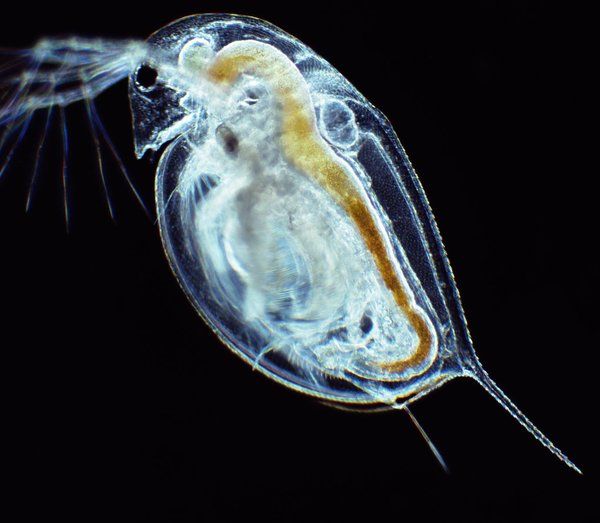
Some living things can be held in a suspended animation of sorts and be "resurrected" long afterward. Plant seeds are the most common example, and the brine shrimp capsules that develop into "sea monkeys" are a familiar animal example of cryptobiosis.
A shrimp called Daphnia is more commonly known as a water flea. Their egg cases can develop into water fleas months later, or they can sink into the sediment of lake bottoms, where they remain dormant. Evolutionary ecologist Lawrence J. Weider developed a method for resurrecting these eggs after years of dormancy. He hatched a plan to dig up old Daphnia eggs from the bottom of Minnesota lakes and compare the resulting animals to current populations, to see how the changing environments of the lakes (which were well documented) led to any differences in the water fleas. The results of the experiment are fascinating. But that's not what's most mind-boggling about this story.
To gather the animals, Dr. Weider and his colleagues took a boat out on the lakes. “It’s a smaller version of a party barge, with a hole cut out of the deck,” he said.Read about the 700-year-old shrimp and what they tell us about how changing environments change species in an article by Carl Zimmer at the New York Times.
Through the hole, the scientists lowered a tube and pushed it about three feet into the sediment — deep enough, Dr. Weider thought, to gather water flea eggs a few decades old.
The scientists then went back to Oklahoma, sifted the cases from the mud, and started resurrecting the animals. They also extracted Daphnia DNA, giving them more data to analyze.
Only then did Dr. Weider get an estimate for the age of the sediment in South Center Lake from another lab.
“I said, ‘Are you kidding me?'” said Dr. Weider.
The lab concluded that the bottom of the lake’s sediment core was about 1,600 years old. The oldest eggs that Dr. Weider and his colleagues had successfully hatched were about 700 years old.
Study Finds Widespread Biofluorescence Among Fish

Conducting aquarium-based experiments and a series of reef dives using high-intensity blue lighting, the researchers led by scientists from the American Museum of Natural History identified more than 180 species of biofluorescent fishes across 50 fish families.

Monday, January 13, 2014
The Daily Drift

Carolina Naturally is read in 194 countries around the world daily.
Take a bath today ... !

Some of our readers today have been in:
The Americas
Vancouver,
Britannia, Mississauga, Thunder Bay, Saint John's, Ottawa, Calgary,
Vaughan, Templeton, Winnipeg, Sioux Lookout and Henry Farm, Canada
San Juan and Ponce, Puerto Rico
Mexicali and Mexico City, Mexico
Tipitapa, Nicaragua
Santiago, Chile
Sao Paulo and Conchas, Brazil
Caracas, Venezuela
Lima, Peru
Kingston. Jamaica
Europe
Zagreb, Croatia
Riga, Latvia
Istanbul, Meydankapi and Ankara, Turkey
Jagodina, Serbia
Teo, Murcia, Madrid, Alicante and Zaragoza, Spain
Ivrea, Milan and Rome, Italy
Novosibirsk, Russia
Oslo and Bergen, Norway
Lucenec and Bratislava, Slovakia
Stockholm and Falkenberg, Sweden
Athens, Greece
Ruse, Bulgaria
Groningen. Netherlands
Bydgoszcz, Poznan and Warsaw, Poland
Zhovti Vody, Glevakha and L'viv, Ukraine
Palmela and Covilha, Portugal
Sarajevo, Bosnia and Herzegovina
Budapest, Hungary
Stuttgart-Ost, Essen and Sulzbach, Germany
Vilnius, Lithuania
Rouen, Laval and Saint-Amand, France
Lancaster, England
Dublin, Ireland
Vinicne Sumice, Czech Republic
Winterthur, Switzerland
Buhcarest and Odorheiu Secuisec, Romania
Valletta, Malta
Asia
Medan, Tangerang, Cileungsi and Jakarta, Indonesia
Thiruvananthapuram, Kolkata, Bhubaneshwar, Indore, New Delhi and Ernakulam, India
Colombo and Gampaha, Sri Lanka
Kuala Lumpur, Jita, Puchong, Klang and Kota Kinabalu, Malaysia
Bangkok and Nakon Pathom, Thailand
Riyadh, Saudi Arabia
Karbala, Iraq
Dubai, United Arab Emirates
Beijing, China
Karachi, Pakistan
Akko, Israel
Dhaka, Bangladesh
Hanoi, Vietnam
Africa
Douala, Cameroon
Kaduna, Nigeria
Algiers, Algeria
Abidjan, Ivory Coast
Mwanza, Tanzania
Antananrivo, Madagascar
Al Jizah and Cairo, Egypt
Cape Town, East London and Durban, South Africa
Pacific
Homebush, Australia
Quezon City, Manila and Makati, Philippines
Today in History
| 1397 | John of Gaunt marries Katherine Rouet. | |
| 1846 | President James Polk dispatches General Zachary Taylor and 4,000 troops to the Texas Border as war with Mexico looms. | |
| 1862 | President Lincoln names Edwin M. Stanton Secretary of War. | |
| 1900 | To combat Czech nationalism, Emperor Franz Joseph of Austria-Hungary decrees German the official language of the Imperial Army. | |
| 1919 | California votes to ratify the prohibition amendment. | |
| 1923 | Hitler denounces the Weimar Republic as 5,000 storm troopers demonstrate in Germany. | |
| 1927 | A woman takes a seat on the NY Stock Exchange breaking the all-male tradition. | |
| 1931 | The bridge connecting New York and New Jersey is named the George Washington Memorial Bridge. | |
| 1937 | The United States bars Americans from serving in the Civil War in Spain. | |
| 1943 | General Leclerc's Free French forces merge with the British under Field Marshal Bernard Law Montgomery in Libya. | |
| 1944 | Plants are destroyed and 64 U.S. aircraft are lost in an air attack in Germany. | |
| 1945 | The Red Army opens an offensive in South Poland, crashing 25 miles through the German lines. | |
| 1947 | British troops replace striking truck drivers. | |
| 1955 | Chase National and the Bank of Manhattan agree to merge resulting in the second largest U.S. bank. | |
| 1965 | Two U.S. planes are shot down in Laos while on a combat mission. | |
| 1968 | U.S. reports shifting most air targets from North Vietnam to Laos. | |
| 1976 | Argentina ousts a British envoy in dispute over the Falkland Islands. | |
| 1980 | The United States offers Pakistan a two-year aid plan to counter the Soviet threat in Afghanistan. | |
| 1982 | Air Florida Flight 90 Boeing 737 jet crashes into Washington, D.C.'s 14th Street Bridge shortly after takeoff, then plunges into the Potomac River; 78 people, including 4 motorists, are killed. | |
| 1990 | In Virginia, Douglas Wilder, the first African American elected governor of a US state, takes office. |

Virgin Galactic reaches new supersonic heights, completes third powered flight

Feathered
Flight during SpaceShipTwo's third powered flight on 10 January 2014
over the Mojave desert.
Richard Branson's commercial spaceline Virgin Galactic today completed the third rocket-powered supersonic flight of its passenger carrying reusable space vehicle, SpaceShipTwo (SS2). Here's the company's news brief, from Mojave:
In command on the flight deck of SS2 for the first time under rocket power was Virgin Galactic’s Chief Pilot Dave Mackay. Mackay, along with Scaled Composites’ (Scaled) Test Pilot Mark Stucky, tested the spaceship’s Reaction Control System (RCS) and the newly installed thermal protection coating on the vehicle’s tail booms. All of the test objectives were successfully completed.
Today’s flight departed Mojave Air and Space Port at 7:22 a.m. PST with the first stage consisting of the WhiteKnightTwo (WK2) carrier aircraft lifting SS2 to an altitude around 46,000 ft. At the controls of WK2 were Virgin Galactic Pilot Mike Masucci and Scaled Test Pilot Mike Alsbury. On release, SS2’s rocket motor was ignited, powering the spaceship to a planned altitude of 71,000 ft. – SS2’s highest altitude to date – and a maximum speed of Mach 1.4. SS2’s unique feather re-entry system was also tested during today’s flight.
Two important SS2 systems, the RCS and thermal protection coating, were tested during today’s flight in preparation for upcoming full space flights. The spaceship’s RCS will allow its pilots to maneuver the vehicle in space, permitting an optimal viewing experience for those on board and aiding the positioning process for spacecraft re-entry. The new reflective protection coating on SS2’s inner tail boom surfaces is being evaluated to help maintain vehicle skin temperatures while the rocket motor is firing.
SS2’s propulsion system has been developed by Sierra Nevada Corp and is the world’s largest operational hybrid rocket motor. Although today’s flight saw it burn for a planned 20 seconds, the system has been successfully tested in ground firings to demonstrate performance characteristics and burn time sufficient to take the spaceship and its private astronauts to space.
Commenting on the successful test flight, Sir Richard Branson said: “I couldn’t be happier to start the New Year with all the pieces visibly in place for the start of full space flights. 2014 will be the year when we will finally put our beautiful spaceship in her natural environment of space. Today, we had our own Chief Pilot flying another flawless supersonic flight and proving the various systems required to take us safely to space, as well as providing the very best experience while we’re up there.”
This flight was the third opportunity to see a supersonic, rocket-powered test of the Virgin Galactic system after dozens of successful subsonic test flights. “Today’s flight was another resounding success,” said Virgin Galactic CEO George Whitesides. “We focused on gathering more transonic and supersonic data, and our chief pilot, Dave, handled the vehicle beautifully. With each flight test, we are progressively closer to our target of starting commercial service in 2014.”
For Mackay, the flight was a “dream come true.”
“I have watched SS2 evolve over the years into an incredible vehicle that is going to open up space to more people than ever before,” he said. “To be behind the controls and fly it as the rocket ignited is something I will never forget. She flew brilliantly. All the tests went really well and generated vital data that will be used to further fine-tune our operations.”
Did you know ...
That Lush Dimbulb has been replaced by hot country in south Florida
About the 6 most terrifying facts about the chemical spill polluting West Virgina's drinking water
That the hype over canceled plans under The Affprdable Care Act are completely overblown
And RIP one of the original Greensboro 4, civil right activist Franklin McCain
Trans-Pacific Partnership: how the US Trade Rep is hoping to gut Congress with absurd lies
The US Trade Representative is pushing Congress hard for "Trade
Promotion Authority," which would give the President's representatives
the right to sign treaties like the Trans-Pacific Partnership without
giving Congress any chance to oversee and debate the laws that America
is promising to pass. With "Trade Promotion Authority" (also called
"fast track"), Congress's only role in treaties would be to say "yes" or
"no" to whatever the US Trade Rep negotiated -- so if the USTR papered
over a bunch of sweetheart deals for political cronies with a single
provision that politicians can't afford to say no to, that'll be that.
Not coincidentally, the TPP is one long sweetheart deal with a couple of political sweeteners that no Congresscritter can afford to kill.
The USTR's push for Trade Promotion Authority contains some of the stupidest, easy-to-debunk lies I've ever read. Either the Obama Administration figures that Congress is thicker than pigshit, or the USTR drafted this to give tame Congresscritters cover for selling out the people they represent to the corporations that fund their campaigns.
Techdirt's Mike Masnick has undertaken the unpleasant chore of documenting and rebutting the Trade Rep's falsehoods point-by-point.
Not coincidentally, the TPP is one long sweetheart deal with a couple of political sweeteners that no Congresscritter can afford to kill.
The USTR's push for Trade Promotion Authority contains some of the stupidest, easy-to-debunk lies I've ever read. Either the Obama Administration figures that Congress is thicker than pigshit, or the USTR drafted this to give tame Congresscritters cover for selling out the people they represent to the corporations that fund their campaigns.
Techdirt's Mike Masnick has undertaken the unpleasant chore of documenting and rebutting the Trade Rep's falsehoods point-by-point.
TPA does not provide new power to the Executive Branch.
Hell yes, it does. Trade Promotion Authority gives the power of regulating foreign commerce directly to the USTR, rather than Congress. It allows the USTR to negotiate a "final" agreement with other countries, which Congress cannot seek to change, amend or fix. Instead, Congress can only give a simple "yes or no" vote on what the USTR comes back with. Without TPA, the USTR actually needs to engage Congress, and win its support and approval on everything within the agreement. That gives Congress -- which is supposed to represent the public -- a chance to make sure that (as the USTR has shown a proclivity to do) the agreement is not filled with ridiculous "gifts" for cronies and friends at the expense of the public and disruptive innovation.
TPA is a legislative procedure, written by Congress, through which Congress defines U.S. negotiating objectives and spells out a detailed oversight and consultation process for during trade negotiations.
If TPA didn't tie Congress' own hands, the USTR might have a point here. But it's not true. While the TPA bill does officially "define" the negotiating objectives, those objectives listed in the current bill are basically the USTR's own list of what it's working on, reprinted by friends in Congress. And, honestly, how is it possible that it "spells out detailed oversight," when what the bill really does is make sure that the USTR can give Congress whatever it comes up with and say "take it or leave it"? Without TPA, the USTR actually has to go convince Congress that what it's been proposing (secretly and with no public review) is actually in the public interest.
Subscribe to:
Posts (Atom)
