Welcome to ...

The place where the world comes together in honesty and mirth.
Windmills Tilted, Scared Cows Butchered, Lies Skewered on the Lance of Reality ... or something to that effect.


Friday, October 10, 2014

Bernie Sanders Exposes The repugican Fraud Behind Voter ID Laws Via New GAO Report

sanders-gop-nightmare
Sen. Bernie Sanders (I-VT) initiated the request with the GAO that led to the newly released report on voter ID laws. The report found that voter ID laws have nothing to do with voter fraud and everything to do with lowering election turnout.
According to a statement from the office of Sen. Sanders,
The Government Accountability Office report also found scant evidence of voter fraud that the new laws that ostensibly are designed to discourage.
The report was requested by Sens. Bernie Sanders (I-Vt.), Patrick Leahy (D-Vt.), Richard Durbin (D-Ill.), Charles Schumer (D-N.Y.) and Bill Nelson (D-Fla.). The senators asked the research arm of Congress to investigate what they called an “alarming number” of new state laws that make it “significantly harder” for millions of voters to cast ballots.
The report calculated the direct cost to would-be voters in the 17 states where voters must present a drivers’ license or other state identification at polling places. The price for drivers’ licenses ranges from $14.50 in Indiana to $58.50 in Rhode Island. The cost of getting a birth certificate needed to obtain a non-driver ID ranges from $7 in North Dakota to $25 in Georgia.
Focusing on two states with strict ID laws, Kansas and Tennessee, the GAO found greater falloffs in voter turnout in those states than in states without restrictive voting laws. The 2012 general election turnout compared to 2008 was as much as 3.2 percent less in Kansas and 2.2 percent less in Tennessee than in other states. The falloff was greatest among African-Americans, young people and newly-registered voters, the GAO said.
Sanders said, “We must make it easier, not harder, for poor and working people to vote and to participate in the political process. These state laws aren’t really intended to discourage fraud, they’re intended to discourage voting. The GAO looked at study after study and found no credible evidence of voter fraud having had any impact whatsoever on the outcome of any election in recent history.”
The only thing that voter ID laws accomplish is making it more difficult for people who are likely support Democrats to vote. The GAO found that voter ID laws in the states that were studied caused turnout to drop 2-3 points. In close elections, like the current midterms, those few points can make the difference between defeat and victory for Democrats.
The study confirms that the voter fraud threat is a smokescreen that is being used by repugicans to depress turnout and keep people from voting. Sen. Sanders deserves a great deal of the credit for this report. Sanders initiated the request for the GAO to do the study.
It might seem obvious that that voter suppression is the purpose of voter ID laws, but having data to support the claims makes all the difference between having facts versus a political debate about beliefs. The facts are on the side of those who understand the real intent of voter ID laws.
Voter fraud is code for keeping Democrats away from the polls. Republicans can only win elections if the electorate is smaller, older, white, and conservative. The repugican cabal can’t win on ideas, so they are trying to rig the game. The GAO report is significant because it gives voting advocates ammo to use in their attempts to level the playing field.
Bernie Sanders has demonstrated once again that he is the Koch fueled repugican cabal’s worst nightmare.

The 7th Circuit Relies On Faux Logic and Lies To Uphold Wisconsin’s Vote Suppression Law

Wisconsin Vote Suppression Law
On Monday, the Seventh Circuit  handed Wisconsin’s vote suppressors a victory with a ruling that is to law, what Fox is to news.  Judge Frank Easterbrook relied on the sort of logic that you can find in a Sarah Palin word salad and the sort of lies Faux relies to pretend that it reports the news.
For example, Easterbrook dismissed the fact that 300,000 registered voters will be disenfranchised, based on the following.
Take the conclusion (based on the testimony of a “marketing consultant”) that 300,000 registered voters lack acceptable photo ID. The number is questionable; the district judge who tried the Indiana case rejected a large estimate as fanciful in a world in which photo ID is essential to board an airplane, enter Canada or any other foreign nation, drive a car (even people who do not own cars need licenses to drive friends’ or relatives’ cars), buy a beer, purchase pseudoephedrine for a stuffy nose or pick up a prescription at a pharmacy, open a bank account or cash a check at a currency exchange, buy a gun, or enter a courthouse to serve as a juror or watch the argument of this appeal
There is so much nonsense packed into this paragraph, it begs for a response. Generally, Easterbrook compares ID requirements for a host of privileges to the restrictive voter ID requirments as a condition to exercising the fundamental right to vote.
Let’s dispense with the categorically ridiculous.  The point about entering foreign country is nonsensical because it compares the rights of U.S. citizens within their country to requirements one must meet for a foreign country to grant the privilege of entry to foreign nationals.
On the point about drivers’ licenses, again we’re talking about applying the same hoops to jump through for the privilege of driving vs. the right to vote.
Now let’s dispense with additional points that combine the ridiculous with the untrue.
First, the claim that a photo ID is essential to board an airplane is simply not true. In fact, the TSA’s website clearly states:
We understand passengers occasionally arrive at the airport without an ID, because of losing it or inadvertently leaving it at home. If this happens to you, it does not necessarily mean you won’t be allowed to fly. If you are willing to provide additional information, we have other ways to confirm your identity, like using publicly available databases, so you can reach your flight.
In other words, having a photo ID will make it easier to board a plane, but failure to present a photo ID does not mean you will automatically be forbidden from boarding the plan. However, while people will be disenfranchised in Wisconsin if they don’t have photo ID. Moreover, boarding an airplane is a privilege, while voting is a fundamental right.
Aside from the fact that buying beer is a privilege, it is not “essential” to show a photo ID in order to buy it. The repugicans relied on the Sudafed argument ever since overt vote suppression became their preferred election strategy. Again, buying Sudafed is not a right. As for the ID requirement for picking up a prescription, Pharmacists accept all sorts of ID that are excluded from Wisconsin’s restricted list of voter ID.  Similarly, banks may require ID for the privilege of opening an account and the same may be true of the privilege of cashing a check at a currency exchange. It’s likely that if a student shows their government issued student card, they can open a bank account and cash a check. Of course, Wisconsin repugicans excluded the student ID from their list of “acceptable” government issued Voter ID.
The closest to an analogous example is Easterbrooke’s claim that a photo ID is essential to buy a gun. Even that fails when you consider the reality that one can buy a gun on the internet, where I suspect the less a gun seller knows about their customers the more they like it. It’s also likely that one can buy a gun at a gun show without showing ID, provided they have the green to pay for their purchase.
Based on personal experience in DC, I question the veracity of Eastbrooke’s claim that one needs to show a photo ID to enter a courthouse. I didn’t see a requirement for photo ID on my most recent summons for jury duty. However, I’ll grant the possibility that it may be “essential” in some jurisdictions.
Of course, I’ll happily defer to Judge Easterbrooke’s expertise regarding the essentially of showing photo ID to observe argument in the 7th Circuit’s courtroom.
Rick Hasen observes another Faux like trait in Easterbrooke’s ruling. He rejected a study that found no relationship between voter ID laws and public confidence solely because “it was published in the Harvard Law Review.” Just as Faux rejects any policy President Obama is for because President Obama is for it, Easterbrooke rejeccts a quality study just because the Harvard Law Review published it.
Just as there is nothing fair and balanced about news based on lies, distortions and cherry picked facts, there is nothing fair and balanced about a ruling based on lies and cherry picked evidence. Unfortunately, this means the fate of 300,000 voters in Wisconsin now rests in the hands of the wingnut Supreme Court.

Charter school fraud has cost Pennsylvania at least $30 million

Charter school fraud has continued on Tom Corbett's watch, while public school funding has been slashed.
Pennsylvania's charter schools are rife with fraud and mismanagement, as anyone who reads local newspapers knows. But a new report from the Center for Popular Democracy, "Integrity in Education, and Action United" details just how big the problem is. Pennsylvania charter school enrollment and funding is growing rapidly and without adequate oversight, and according to the report, there's been at least $30 million in fraud by charter school officials since 1997. For instance:
In 2012, the former CEO and founder of the New Media Technology Charter School in Philadelphia was sentenced to prison for stealing $522,000 in taxpayer money to prop up a restaurant, a health food store, and a private school. Media coverage of parent complaints of fiscal wrongdoing initially uncovered the fraud.
Nicholas Tombetta, founder of the Pennsylvania Cyber Charter School, has been indicted for diverting $8 million of school funds for houses, a Florida condominium, and an airplane. In 2005, a former business associate of Tombetta surfaced allegations of fraud, which led to the investigation.
Dorothy June Brown, founder of Laboratory, Ad Prima, Planet Abacus, and Agora Cyber charter schools, will be retried this year for allegedly defrauding the schools of $6.5 million and conspiring to conceal the fraud from 2007 to 2011. Two administrators plead guilty and testifed against Brown in her first trial. In 2009, the Pennsylvania Department of Education conducted an audit of Agora after receiving complaints from parents of Agora students.
You'll notice that in each of those cases, it was complaints from parents or a tip from a business associate that led to investigations. Pennsylvania should be doing more to uncover wrongdoing before it's so blatant that parents are screaming about it. In Philadelphia, there are 86 charter schools and only two auditors. What's more, charter school auditors in Pennsylvania don't actively look for fraud; the report calls for expanded local audit authority, fraud risk assessments for all charter schools in the state, and targeted fraud audits. The report's authors also call for a moratorium on new charter schools until these oversight goals are met.

Bankruptcy judge calls for impoverishing retirees

This is just horrible:
Analysts from Moody's Investor Services, a bond rating firm, said that Wednesday's ruling by a federal judge considering Stockton's bankruptcy case could open the door for cities to cut retirement obligations - once considered sacrosanct.
In that ruling, Judge Christopher Klein said cities could walk away from their pension obligations - just as they can from other debts. [...]
The judge agreed with Franklin that the federal bankruptcy code - which treats creditors equally -superseded California laws that say cities cannot reduce amounts that CalPERS collects for pensions promised to workers in labor agreements.
We are talking here about pensions that are instead of, not in addition to, Social Security:
"If they are allowed to take up to 60 percent of our retirement, I don't know how I'll make it," says Charlotte Martin. "I think I clear $2200 a month. If they take 60 percent of that, that's a lot." [...]
"All I know is if I had been under Social Security, they couldn't have touched that money, no way," she said. "But because the city made a decision prior to my coming to work, I had no choice in it."
After the bankruptcy judge who said Detroit water shutoffs could continue, it's fair to say that bankruptcy judges are getting on my last nerve. It's probably more accurate, though, to say that federal bankruptcy laws that put corporate debt at the same level as basic human needs are evil.
Continue reading below the fold for more of the week's labor and education news.

Wal-Mart Cuts Benefits For Most Of Its Part-Time Workers

Wal-Mart
Wal-Mart Stores Inc. plans to eliminate health insurance coverage for most of its part-time US employees in a move aimed at controlling rising healthcare costs of the nation's largest private employer.
Starting Jan. 1, Wal-Mart told The Associated Press, the company will no longer offer health insurance to employees who work less than an average of 30 hours a week. The move, which would affect 30,000 employees, follows similar decisions by Target, Home Depot, and others to eliminate health insurance benefits for part-time employees.
"We had to make some tough decisions," Sally Welborn, Wal-Mart's senior vice president of benefits, told The Associated Press.
Welborn says the company will use a third-party organization to help part-time workers find insurance alternatives: "We are trying to balance the needs of (workers) as well as the costs of (workers) as well as the cost to Wal-Mart."
The announcement comes after Wal-Mart said far more US employees and their families were enrolling in its healthcare plans than it had expected following rollout of the Affordable Care Act. Wal-Mart, which employs about 1.4 million full- and part-time US workers, says about 1.2 million Wal-Mart workers and family members combined now participate in its healthcare plan.
That has had an impact on Wal-Mart's bottom line. Wal-Mart now expects the impact of higher healthcare costs to be about $500 million for the current fiscal year, or about $170 million higher than the original estimate of about $330 million that it gave in February.
But Wal-Mart is among the last of its peers to cut health insurance for some part-time workers. In 2013, 62 percent of large retail chains didn't offer healthcare benefits to any of their part-time workers, according to Mercer, a global consulting company. That's up from 56 percent in 2009.
"Retailers who offer part-time benefits are more of an exception than the rule," says Beth Umland, director of research for health and benefits at Mercer.
Wal-Mart has been scaling back eligibility for part-time workers over the past few years, though. In 2011, Wal-Mart said it was cutting backing eligibility of its coverage of part-time workers working less than 24 hours a week. And then in 2013, it announced a threshold of 30 hours or under.
Wal-Mart, like most big companies, also is increasing premiums, or out-of-pocket costs that employees pay, to counter rising healthcare costs. Wal-Mart told The Associated Press that it was raising premiums for all of its full-time workers: For a basic plan, of which 40 percent of its workers are enrolled, the premiums will go up to $21.90 per pay period, up from $18.40, starting Jan. 1.
Wal-Mart also said that changes in the co-insurance, or the percentage workers pay before coverage kicks in, for the health reimbursement accounts and the health savings accounts would result in the company paying 75 percent of the eligible costs of doctor visits, tests, hospitalization, and other services within the network after employees meet their deductible. That's down from 80 percent.

Weight Discrimination

Weight discrimination, while serious, is rarer than most people assume, new research suggests.

How Did the Nobel Prize Become the Biggest Award on the Planet?

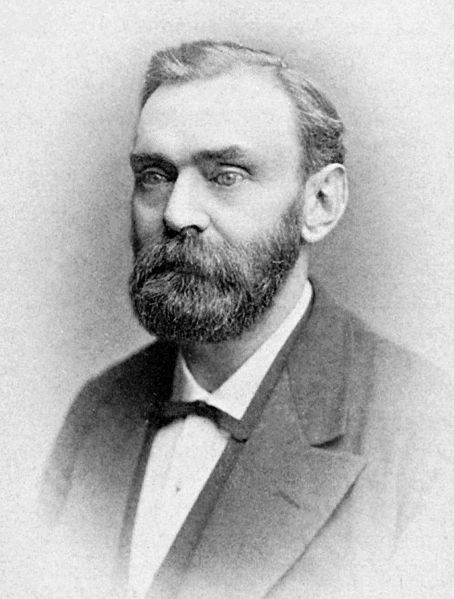
Although there are awards and prizes in almost every scientific discipline, as well as art, tech, and other fields, the Nobel Prize is the most well-known. In fact, other awards are constantly compared to the Nobel. Wired has the story of how the Nobel Prize became so big, which begins with its strange origin.
It all began with a journalistic error. In 1888, a French newspaper mistakenly wrote that Alfred Nobel, inventor of dynamite, had died. It was actually his brother, Ludvig, who had passed. But, in addition to lackluster fact checking, the paper commemorated the event with defamatory prose: “Dr. Alfred Nobel, who became rich by finding ways to kill more people faster than ever before, died yesterday,” it wrote. Nobel, it is said, was crushed by the idea that he’d be remembered as a “merchant of death.” In order to regain control of his legacy, he willed his fortune to create an award that would recognize people who had made positive contributions to mankind.
Imagine finding out what would be said about on your death: would it cause you to change the rest of your life? But that’s just the beginning of the story. There are several reasons the Nobel Prize stands head and shoulders above other awards, spelled out at Wired. The Nobel Prizes for 2014 are being announced each day this week.

Fire truck burst into flames during response

A fire truck in Maryland burst into flames while responding to an emergency call on Monday afternoon. A Montgomery County Fire and Rescue truck was responding to a commercial building fire when mechanical issues forced it to pull over.
Soon after, the vehicle’s engine and cab area burst into flames. Another Montgomery County fire unit that was with the truck extinguished the blaze. All firefighters aboard were unharmed.
The crew managed to save a majority of the truck’s equipment, which will be tested before being put onto a new fire engine. The truck was station's only vehicle equipped with a ladder, so crews are working to get another in service.
Investigators are working to determine the fire’s cause. The fire which the truck was initially responding to, which appears to have originated in the air conditioning, was quickly put out as well. The cost of the damage is unknown.

Woman dressed as Ninja Turtle robbed motel

Police in Midvale, Utah, are searching for a woman who dressed as a Ninja Turtle and robbed a motel. Lt. John Barker of the Unified Police Department said the woman is in her early to mid-20s. She was dressed in all green with a black mask covering her eyes and wearing green face paint. Barker said the woman walked into the Super 8 Motel just before midnight on Sunday.
She pulled out a pocket knife and demanded money from the clerk behind the reservation desk, he said. The robber fled with some cash, and witnesses saw a car leaving the area at the same time.
“We are unsure if she got in the car or left on foot,” Barker said. He said no one was injured and investigators are not sure how much money the robber got. They are checking surveillance video to get a clearer look at her.

Man charged with flushing nails down toilets

A 38-year-old Minnesota man has been charged with criminal damage to property after police say he flushed several pounds of nails down a number of toilets at various businesses, causing thousands of dollars in damage. According to a criminal complaint, police were dispatched to a Subway in Eagan on a report of property damage, where they met with the manager. The manager told them a man dumped two pounds of nails down the toilet and this was the third time it has happened at their location.
The first time it happened was on Aug. 6 and two days later, it happened again. The manager told police a plumber came to fix the toilet after the Aug. 6 incident and charged $1,000 to remove the nails and repair the plumbing. In each incident, approximately two pounds of nails were flushed. The manager told police they had the suspect on video on Aug. 18 and supplied authorities with photos. On Aug. 30, officers were again called to the Subway restaurant, as the suspect had returned to the scene. Police identified the man as Nicholas Mullenmaster, of St. Paul. Mullenmaster denied any involvement.
On Sept. 3, Eagan police officers were dispatched to the Transit Station, which is about a block away from Subway, on a report that a man flushed approximately three pounds of nails down the toilet, clogging the sewer system. The manager told police it caused about $800 in damage. The suspect’s description matched that of Mullenmaster and mail, which was discovered by plumbers in the toilet, was also addressed to Mullenmaster. A similar incident happened on Sept. 26 at a Starbucks in Eagan, where the plumbing was backed up for three days. In that case, the sewer system caused flooding on the floors and forced the store to close from 10am until 2pm. Nails were again discovered in the store’s plumbing. Employees identified Mullenmaster as a regular at the store and said they noticed him going to the restroom for long periods of time.

Police were called again when Mullenmaster returned to the Starbucks the next day. Officers located Mullenmaster at a nearby Leeann Chin, where the restaurant manager told police he was in the bathroom. Officers knocked on the door and heard metallic objects hitting porcelain, as well as the toilet flushing. When Mullenmaster came out, officers noticed he was carrying bags. Inside one bag was a large amount of silver, three-inch nails and a receipt from Home Depot. The nails in the bag matched the nails removed from the plumbing at Starbucks. Officers were also notified that the restroom at the Starbucks was still closed — the damage was so extensive, the plumber had to cut through the wall to try and correct it. Mullenmaster has been charged with first-degree criminal damage to property. If convicted, he could face up to five years in prison.

Random Photos


The 7 Scariest Ghost Towns in America


ghosts
A ghost town is, by definition, a deserted town with few or no remaining inhabitants. But the name itself strikes such ghastly imagery in our minds. The term itself invokes thoughts of old, gray, cob-webbed towns where only the spirits of the dead walk the streets (and in a few of these cases, that could be true). These places were often abandoned for very specific reasons. In some cases, they were small towns built around the time of the gold rush that just could not thrive, and in some other examples, you will see they were abandoned for very different reasons. Regardless of how or why they were abandoned, these places are undeniably creepy if you ever get to see them in real life, and a few of them even have rumors of curses associated with them for all who visit. Here are 7 of the scariest ghost towns in America.

DudleyTown in Cornwall, Connecticut
enq
DudleyTown in Connecticut is often also referred to as "the village of the damned" because of the strange rumors that swirl around it. Founded in the 1700's, it was a settlement for farmers, and was actually never a real town (though has since become one of the most well known "ghost towns" in the country). It was actually land owned by the Dudley family who allowed more people to come in as it grew and thrived for a small time.
Problem was, it was not ideal land for farming, so over time, people just sort of left and went to places with richer soil and better farming conditions. Thing is, the place has quite a reputation now. Rumor is (for us locals who live in the Northeast, anyway) is that if you visit this abandoned town and take something with you when you leave, you place a curse upon your family. But that is the thing that makes ghost towns so cool. The (most likely untrue) statements and rumors that seem to surround them.
Bodie in California
bodie
Perhaps one of the most well known ghost towns in all of America, Bodie was established in 1859 after William Bodie found some gold nearby. Of course, that brought in a decent amount of people who quickly seemed to figure out that William's find was not common, so just like with most ghost towns, everyone upped and left when they saw it was not going to "pan" out as planned. Get it, because they used pans to find gold? High quality wordplay right there.
What sets Bodie apart from most other ghost towns in the country is that it is the ghost town that still remains the most untouched. In other words, the old shacks people used to live in are all still there. Nothing has been reconstructed or touched. So you walk through it, they say it feels like you are walking through some haunted postcard of a time and place long forgotten.
Animas Forks in Colorado
Animas Forks in Colorado, as seen from the above pic, is quite chilling. Said to require a four wheel vehicle to even reach (making you wonder how it was established as mining community way back in the day), the reality is, with its backdrop of gorgeous mountains and residences that are seemingly all in good shape still (despite looking like a haunted houses), there is just an eeriness and sense of solace in Animas Forks that you wont find anywhere else in the beautiful state.
Many people who have visited this ghost town have said the looming mountains in the background, though lovely, add a real sense of dread while you are there, walking among the memories of the long forgotten.
Centralia in Pennsylvania

Perhaps my favorite entry on the list, few ghost towns in the entire world are quite as creepy as this smoldering ghost town in Pennsylvania. Originally a mining town that was thriving, this was all brought to a screeching halt when a massive mine fire erupted underground in 1962, causing it to be slowly evacuated over time once the severity of the fire was determined. So how severe was the mine fire over Centralia? Well, um, does this answer your question:


That video is from one year ago, so yes, the fire was serious. Though they installed pipes to drain the smoke and such, the place is still known to bellow from time to time. The reason I love this entry so much is because this town is rumored to have been a big part of the inspiration for the stellar Silent Hill game series.
North Brother Island in New York

northThey say a picture is worth a thousand words, but the above picture is worth even more than that, and most of them amount to just screaming in terror, rather than words.
What blows the mind about North Brother Island is that people do not normally associate ghost towns with New York. Especially considering how close this is in proximity to Manhattan. This island housed a quarantined medical facility for people suffering from serious and deadly illnesses. North Brother Island is most well-known for having the hospital that housed Typhoid Mary.
Though the hospital took on different causes over the years (veterans and such), it eventually closed down in the 1950's and has been left, abandoned, to scare away people ever since.
Thurmond in West Virginia

If you had to put a few of these places on a must-see list, add Thurmond to it right now. Though it may have a population of five now (not even kidding), this place is about as visually creepy as it gets. From an abandoned train station to an eerily empty downtown that almost always seems like a zombie may shamble into view at any point, Thurmond may not be the a ghost town in the sense that no one is there, but it sure feels and looks like a ghost town to anyone passing through downtown.
What turned this once a thriving community into a ghost town was the invention of the diesel locomotive in the 1950's. This rendered their coal run railroad obsolete, and slowly turned the place into the ghost town it is known for today. Well, except for those five, really random people. But remember, "few" or no remaining inhabitants, so it is still technically a ghost town.
Seattle Underground in Washington

Did you know Seattle as we know it now was built atop another version of Seattle? All the stuff underground now was ground level in mid-nineteenth century. Essentially, Seattle was fine until some idiot started a fire and spilled some glue which ended up causing it to be a grease based fire that would not go out. Much was destroyed, but in the process of rebuilding, they thought completely out of the box.
seatThey lined the streets with concrete walls, and built up. Though it took years and heavy planning, eventually the Seattle you know now was built on the bones of the old Seattle. Underground Seattle was fully condemned in the early nineteen hundreds for fears of the plague, but now there are certain parts of the Seattle underground that have become open to tours. Tours where you see things like the above photo and realize how utterly creepy the whole idea is.

Location of Columbus’ Point of Departure Found in Spain

Columbus-Departure-Spain-Identified
Traces of a fifteenth-century pottery and a reef unearthed at Palos de la Frontera in southwestern Spain have led archaeologist Juan Manuel Campos of the University of Huelva to claim he has discovered the exact location of Christopher Columbus’ departure for the New World in 1492. Historical sources describe La Fontanilla port as having a shipyard, a fresh water fountain, a pottery works, and a reef. “The reef was the port’s customs area, and it was the place where Columbus negotiated and made the arrangements necessary for the success of his historic voyage,” Campos told The Latin American Herald Tribune.

The Tallest Statues In The World

A list of the 12 tallest statues in the world. These statues are immense and unfamiliar. Just for comparison, the Statue of Liberty would be all the way down at number 38 on this list.

Cavity-Searching 10,000 Pigeons

And you thought your job sucked? How would you like to be on the Chinese “security” team that got forced to inspect the anuses of 10,000 pigeons?
About 10,000 pigeons released in a ceremony for China’s National Day underwent unusual scrutiny, each having its feathers and anus checked for dangerous materials, state-run media has said, reflecting government concerns over possible attacks.
The symbols of peace were released at sunrise on Wednesday in Beijing’s symbolic heart of Tiananmen Square in a ceremony for the October 1 holiday to celebrate the 65th anniversary of the founding of the People’s Republic of China.
Beijing domestic security police officer, Guo Chunwei, was quoted in the Jinghua Times as saying workers checked the wings, legs and anus of each pigeon ahead of time to ensure they were “not carrying suspicious material”.
Life in a paranoid police state, it’s hard on pigeons and other living things.

Are Chimps Legal Persons?

A group of judges could decide whether Tommy the chimp should be recognized as a person by law. 

The Thief of Tachira

Venezuela now has its first meat-loving dinosaur, a scrappy carnivore known as Thief of Tachira.

Dolphin Speak

Orcas that have been socialized with dolphins mimic the sounds they make. 

Meet the World’s Newest—and Most Endangered—Whale

A genetically distinct group of whales—possibly an entirely new species—has been discovered off the coast of Florida’s Panhandle region.
That’s the good news. The bad news is they could be the most endangered whales in the world.
Scientists discovered the genetically unique set of about 50 whales during recent research in the Gulf of Mexico. The whales, which are members the Bryde’s (pronounced “broodus”) family, lives year-round in the Gulf. The whales reside in an underwater canyon near Florida’s west coast—an area highly susceptible to offshore oil spills.
The Natural Resources Defense Council (NRDC) has petitioned the U.S. government list the whale as endangered, citing the whales’ tiny population and vulnerability.
“Clearly the whales are in need of special protection, and not simply for their small numbers,” wrote NRDC policy analyst Michael Jasny in a blog post. “The massive industrialization of the northern Gulf threatens them six ways to Sunday.”
The whale’s home, DeSoto Canyon, is adjacent to the canyon where the 2010 Deepwater Horizon oil spill occurred. The whales don’t migrate from the Gulf, and are actually are genetically to the Pacific Bryde’s whale than its Atlantic cousin, the according to the study.
“New oil and gas leases are slated for the eastern Gulf, encroaching further on their habitat and adding to the risk of future spills,” wrote Jasny. “With so few remaining, the loss of even one Bryde’s whale puts the entire population in jeopardy.”
Currently, there are only two recognized Bryde’s whale subspecies. But the study’s lead author, Patricia Rosel of the University of Louisiana, found the Gulf group was at least as different as those subspecies are from each other. The study suggests they may even be an entirely different species.
“The level of divergence suggests a unique evolutionary trajectory worthy of its own taxonomic standing,” according to study.
Bryde’s whales are baleen whales, meaning they feed through long, plate-like filters that hang from their upper jaws. Adults are typically about 35 feet to 50 feet long.
If the whales aren’t protected, the population could quietly disappear, Jasny told the Mother Nature Network "It’s hard to imagine how this population—or possibly this species—would survive without protection," he said.
Good thing the whales can hold their breath—it can take years for the government to act on a listing petition as it works its way through a huge backlog of other endangered animals and plants.

Animal Pictures