Welcome to ...

The place where the world comes together in honesty and mirth.
Windmills Tilted, Scared Cows Butchered, Lies Skewered on the Lance of Reality ... or something to that effect.


Tuesday, March 3, 2015

The Daily Drift

Don't forget to check out the new The Truth Be Told today
And I Quote ...!
 
Carolina Naturally is read in 201 countries around the world daily.   
    
Pancakes ... !
Today is  -  National Pancake Day

You want the unvarnished truth?
Don't forget to visit:The Truth Be Told

Some of our readers today have been in:
The Americas
Curitiba, Rio De Janeiro, Sorocaba, Brazil
Henry Farm, Ottawa, Prince George, Quebec, Saint John's, Toronto, Vancouver, Canada
San Jose, Costa, Rica
Mexico City, Mexico
Boaco, Managua, Nicaragua
Luquillo, San Juan, Puerto Rico
The Bottom, Sint Eustatius-Saba
Europe
Hadzici, Sarajevo, Bosnia-Herzegovina
Sofia, Bulgaria
Acton, Basingstoke, Gosport, London, Manchester, England
Cerny, Ivry-sur-Seine, Paris, Rouen, Salon-De-Provence, Strasbourg, Toulouse, France
Berlin, Eschborn, Frankfurt Am Main, Germany
Marousi, Greece
Budapest, Hungary
Reykjavik, Iceland
Waterford, Ireland
Palermo, Rome, Italy
Skopje, Macedonia
Chisinau, Moldova
Podgorica, Montenegro
De Haag, Netherlands
Arendal, Jessheim, Norway
Elblag, Poland
Komsomol'skiy, Vladivostok, Russia
Belgrade, Novi sad, Serbia
Madrid, Torrent, Vitoria-Gasteiz, Spain
Kista, Sweden
Ankara, Turkey
Dnipropetrovsk, Ukraine
Asia
Bangalore, Chandigarh, Delhi, Gaya, Jodhpur, Kolkata, Patna, Shillong, India
Jakarta, Pontianak, Indonesia
Mashhad, Tehran, Iran
Ampang, Kota Kinabalu, Kuala Lumpur, Pacarkeling, Petaling Jaya, Victoria, Malaysia
Kathmandu, Nepal
Peshawar, Pakistan
Sharjah, United Arab Emirates
Africa
Cairo, Egypt
Cape Town, Durban, South Africa
The Pacific
Strathfield, Sydney, Australia
Mandaluyong City, Philippines
Don't forget to visit our sister blogs Here and Here.

Today in History

1791   Congress passes a resolution authorizing the U.S. Mint; legislation creating the mint will be passed on Apr. 2, 1792.  
1803   The first impeachment trial of a U.S. Judge, John Pickering, begins.  
1817   The first commercial steamboat route from Louisville to New Orleans is opened.  
1845   Florida becomes the 27th U.S. state.
1857   Under pretexts, Britain and France declare war on China.  
1861   The serfs of Russia are emancipated by Alexander II as part of a program of westernization.  
1863   President Abraham Lincoln signs the conscription act compelling U.S. citizens to report for duty in the Civil War or pay $300.00.  
1877   Rutherford B. Hays, the republican governor of Ohio is elected president, his election confirmed by an electoral commission after disputed election the previous November.
1878   Russia and the Ottomans sign the treaty of Stenafano, granting independence to Serbia.  
1905   The Russian Czar agrees to create an elected assembly.
1918   The Soviets and Germany sign a peace treaty at Brest-Litovsk depriving the Soviets of White Russia.   
1919   Boeing flies the first U.S. international airmail from Vancouver, British Columbia to Seattle, Washington.
1923   The first issue of Time magazine is published. It's editor, Henry R. Luce, is just out of Yale.  
1931   President Herbert Hoover signs a bill that makes Francis Scott Key's "Star Spangled Banner," the national anthem.  
1939   In Bombay, Gandhi begins a fast to protest the state's autocratic rule.  
1940   A Nazi air raid kills 108 on a British liner in the English Channel.  
1941   Moscow denounces the Axis rule in Bulgaria.  
1942   The RAF raids the industrial suburbs of Paris.
1945   Finland declares war on the Axis.  
1952   The U.S. Supreme Court upholds New York's Feinberg Law banning Communist teachers in the United States.  
1969   Sirhan Sirhan testifies in a court in Los Angeles that he killed Robert Kennedy.  
1973   Japan discloses its first defense plan since World War II.  
1999   Former White House intern Monica Lewinsky appears on national television to explain her affair with President Bill Clinton.

Culinary DeLites

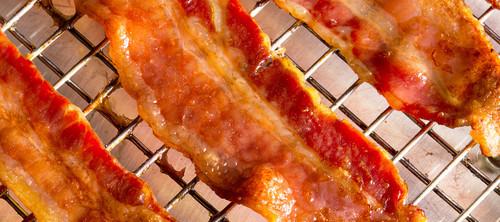
5 Tips for Cooking Crispy Bacon
This world is crazy for bacon, and not just eating it—opinions on the best way to cook perfect, crispy bacon run deep in the blood of pork eaters everywhere. That’s why the Epicurious Test Kitchen just spent a week cooking pounds and pounds of the stuff, in an attempt to cut through the bacon noise and crown a winning method. It was one salty, porky week. This is what we learned.
START YOUR BACON IN A COLD SKILLET
Trust us. When we tossed cold bacon into a hot skillet, it started to brown and crisp before the fat really started rendering out. That leaves you with two choices: Keep sizzling your bacon until the fat’s cooked through but the bacon burns, or take it off the heat and deal with fatty, flabby bacon. On the other hand, when we added it to a cold pan and then turned on the heat to medium, the fat had plenty of time to melt away, leaving us with crunchier (and less greasy) slices.
A CAST-IRON SKILLET COOKS BACON FASTER
For our first stove-top cooking test, we pitted a 12-inch cast iron skillet against a 12-inch stainless-steel skillet. When we started with cold bacon in a cold skillet and cooked over medium heat, the taste and texture were the same for the bacon from each skillet: nice and crunchy, with a lovely smoky depth of flavor, and some deeper browned and charred spots. But while the stainless-steel skillet took 11 minutes, the cast-iron skillet took only 8.
ADD WATER TO THE SKILLET IF YOU WANT TO CRUMBLE THE BACON
We’d heard from the folks over at America’s Test Kitchen that adding a bit of cold water to your cold skillet with your bacon yields better, crispier, bacon. So we gave it a go. It took a bit longer, but sure enough, all the water evaporated and then the bacon started crisping as it normally would. The result was thinner and crisper than the bacon cooked in the skillet without water: it shattered easily, and was very nice and crunchy. It wasn’t as salty, and we actually missed the thicker crunch of traditional bacon, but this strategy would be perfect if you wanted to use the bacon as a crumbled topping for, say, salad.
FOR MORE THAN 1 OR 2 SERVINGS, USE YOUR OVEN
Even in a 12-inch skillet, you can only fit 5 to 6 slices of bacon. So if you’re feeding a crowd, you want to heat up your oven instead. Baking your bacon on a wire rack set over a rimmed baking sheet allows the rendered fat to drip away from the bacon, helping it cook up even crunchier than pan-frying. (While bacon should be started in a cold pan if you’re cooking it on the stove-top, you can crank up the heat if you're baking your bacon in the oven. We found a temp of 450°F gave oven-baked bacon the same smoky depth as the stove-top kind. Just cook it for 20 minutes to get perfectly sizzled slices.) Even better, you can fit 10 to 12 slices on a rack, and it cooks without needing any attention: no flipping, no rotating, and—best of all—no messy splatter all over the stove.
COOKING BACON IN THE MICROWAVE IS SAD
In the microwave, we cooked the bacon padded between several sheets of paper towels on high until fully cooked and crisp, which took about 3 1/2 minutes in our machine. It was beautiful looking bacon: crinkly and golden-brown, without any sign of char. But when we bit into it, it wasn’t crisp enough, and it lacked the charred flavor we craved. Our vote? Stick to the pan or the oven.

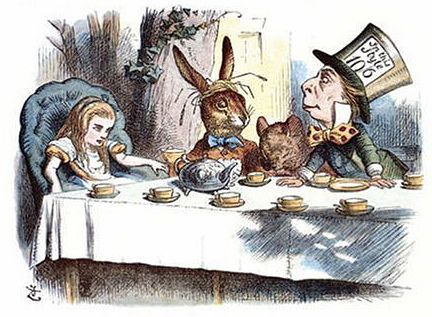
Five Things Alice in Wonderland Reveals About the Brain


Even though it’s been 150 years since Alice’s Adventures in Wonderland was first published, we are still finding new meaning in it. Lewis Carrol’s tale turns logic inside out, and along the way, gives neurologists insight about how the human brain operates. Characters in the book explore the way we perceive language, time, and our own corporeal bodies. For example, Alice changes her own size several times by the magic of eating or drinking.
In 1955, a psychiatrist called John Todd found that certain patients reported exactly the same feeling of “opening out like a telescope”. The disorder is known as Alice in Wonderland Syndrome, and it seems to be most common in children. “I have heard patients saying that things appear upside down, or even though mommy is on other side of the room, she appeared next to her,” says Grant Liu, a neurologist at the University of Pennsylvania in Philadelphia who has studied the phenomenon.

Carroll’s diaries show that he suffered migraines, which often trigger the syndrome – leading some to speculate that he was using his own experiences as inspiration. Liu suspects the syndrome can be pinned to abnormal activity in the parietal lobes, which are responsible for spatial awareness, skewing the sense of perspective and distance. But despite the fact that it can be disturbing, these fleeting illusions are generally harmless. “The majority are unaffected – and we just provide reassurance that the patient is not crazy and that other people also experience these things,” says Liu. Today, neuroscientists are trying to evoke the illusion in healthy subjects – which they think might shed light on the way we create our sense of self in the here and now.
And that’s only one of the five specific findings in neuroscience that relate to the more illogical passages in Alice in Wonderland outlined in an article at BBC Future.

The Grapes Of Wrath

10 Surprising Facts About John Steinbeck's Novel
John Steinbeck (1902-1968) was awarded the Nobel Prize for literature in 1962. His 1939 book The Grapes of Wrath, published 75 years ago on April 14, has sold more than 14 million copies in the past 75 years. Here are 10 things about The Grapes of Wrath that may surprise you.

Researchers Find New Reason To Drink Coffee

It May Reduce Risk Of MS
Drink up, coffee lovers: Neurologists say a healthy appetite for coffee may reduce your risk of developing multiple sclerosis. We're not talking a cup or two of joe in the morning. Even a triple espresso might not be enough to register a difference.
In a new study, researchers found that people who downed at least four cups of coffee per day were one-third less likely to develop multiple sclerosis than their counterparts who drank no coffee at all.

The Return of the 19th Century

A friend once told me that the wealthy elite didn't want to just "roll back" the New Deal, they wanted to roll back the entire 20th Century. His point was that all the social gains of the 20th Century were granted to us in order to combat global communism, and that with the collapse of communism the wealthy elite are going it take it all back.
I didn't fully appreciate his sentiments until recently.
The recent upsurge in global piracy seems strange and exotic in today's world, but in fact it is rather appropriate in the full context of national events.
Here is a list of trends which show the 21st Century is going to look a lot more like the 19th Century than the 20th Century.

Mind Blowing… These Unbelievable Facts Will DESTROY Your Understanding Of Time

Time has always perplexed the human race. We’ve tried to define it, track it, and measure it since the emergence of civilization. However, facts like these listed here show us how distorted our perception of time can be and how much we still need to learn about the fourth dimension.
17. The last time the Chicago Cubs won a World Series, women were not allowed to vote.
tm17 
The infamous cold streak by the Chicago Cubs baseball team extends back to 1908, when they won their second World Series. Women in the US acquired the vote in 1920.

Man convicted of belly bounce assault on elderly neighbor

A man from Belfast in Northern Ireland has been convicted of assaulting an elderly neighbor by using his belly to “bounce” her away from his home. Morrison Wilson, 58, claimed he was simply trying to get the pensioner out of his garden path during a dispute.
Belfast Magistrates Court heard the woman suffered injuries when she fell during the incident in October 2013. Wilson denied a charge of assault occasioning actual bodily harm. Although he was acquitted of that offense a judge found him guilty of a lesser common assault.
Wilson claimed the victim had been aggressive and “sticking her nose in” as he spoke to a motorist outside his home. He told Belfast Magistrates’ Court: “With my big belly, because she was flailing her hands about, I just bounced her back.” According to his account she fell backwards, landing on her tail bone area. He also claimed fertilizer was flung at him after the fall.
Questioned by the prosecution about his claim to have bounced his neighbor, Wilson replied: “What am I going to do? Grab her with my belly?” He added: “She was very aggressive, she wasn’t getting her own way... and I knew what was coming next.” Following a contested hearing District Judge Ken Nixon dismissed the assault occasioning actual bodily harm charge. But he ruled: “On an admission in terms of the defendant’s own evidence there is a conviction of [common] assault.” Wilson will return to court to be sentenced next month.

Man set fire to his house because his niece wouldn't take him to buy more booze

After his niece refused to drive him to the store to buy more liquor, a Florida man decided to set fire to his house, according to authorities. On Dec. 14, Jerome Clemons, 44, of Boynton Beach, who had already been drinking, asked his niece for a ride to the liquor store.
She told investigators she told him "No" and they got into an argument. To avoid further confrontation, the woman said she left the house. Not long afterwards, Clemons' brother arrived at the house. He told investigators Clemons was standing out on the porch mumbling to himself about being "tired of it all."
His brother started making dinner and went out to see if Clemons was okay. Then, he saw a huge flame burning at the northeast corner of the house. Clemons' brother was able to extinguish the fire with a hose. Officials said the structural damage was minimal, but a garbage container and an all-terrain vehicle were slightly damaged.
Boynton Beach fire officials later found Clemons walking down the street with a large burn on his forearm. Investigators determined Clemons poured gasoline against the wall outside and on the all-terrain vehicle and lit the fire while his brother was inside. Clemons had left the hospital before Boynton Beach police were able to detain him. He was arrested on Wednesday, where he was charged with arson, and is being held at the Palm Beach County Jail without bail.

Commuter escaped injury when escalator ate his trousers

A 35-year-old man lost his trousers at the Davis MBTA station in Massachusetts during the morning commute on Thursday. T rider Greg Murphy, who witnessed the aftermath, said he was on his way to work when he and dozens of other commuters happened across the bare-legged man and a disabled escalator at about 8:30am.
“I saw two MBTA workers at the bottom of the stairs, a guy wearing some fashionable blue gym shorts, and some pants at the bottom of the stairs that looked like they had been sucked in,” Murphy said. “He looked fine. He was just standing there, he had his backpack up on the side there and they seemed to be taking some information from him for a report.”
Murphy added, “He seemed to be taking it all in stride. He was keeping it cooler than I do on my best day.” T spokesman Joe Pesaturo said the unidentified commuter told T officials: “He was running down the escalator to catch a train when he slipped and fell. His pants got caught in the escalator. He was not injured and he did not request any medical attention.”
That escalator was examined by state inspectors, who found no defects and cleared it to reopen. “Customers are urged to please be mindful of loose clothing, keeping it clear of steps and sides and to stand clear of the sides of the escalator,” Pesaturo said. “It’s also important that escalator users face forward and keep a firm grip on the handrail.”

Woman knocked unconscious in drive-by egging

A woman was knocked unconscious in Seattle early on Tuesday when an egg thrown from a passing truck hit her in the head.
According to police, several people were standing outside a Crown Hill bar when someone inside a pickup “let loose a volley of eggs.”
At least two people, including a bar employee, were struck by the eggs. A woman was hit just behind her ear and was knocked unconscious. Police said her friends caught her as she fell to the ground.
The victim’s friends drove her to the hospital where she was treated. Witnesses told police the vehicle was a small black or green pickup with a canopy and dark tinted windows. Police are seeking more information about the incident.

Random Photos

Wyoming Legislature Votes To Allow Science-Based Climate Education In State Schools

by Katie Valentine
shutterstock_141891325
Science standards that treat climate change as fact are no longer banned in Wyoming, now that a bill reversing the state’s ban has been passed by the House and Senate.
Last March, Wyoming became the first state to reject the Next Generation Science Standards (NGSS), which were developed by 26 states and multiple science and education organizations and serve as guidelines for teaching science — including climate change and evolution — from state to state. The ban came in the form of a footnote in Wyoming’s budget, which stated that “neither the state board of education nor the department shall expend any amount appropriated under this section for any review or adoption of the next generation science standards.”
Now, pending Gov. Matt Mead’s signature, Wyoming’s Board of Education is free to adopt NGSS if it so decides. House Bill 23, introduced late last year by Wyoming Rep. John Patton (R), has cleared the House and Senate, despite some conflict over its wording. As originally introduced, the bill repealed the footnote about NGSS from the state’s budget entirely, but the version passed by the state’s Senate included an amendment stating that “the state board of education may consider, discuss or modify the next generation science standards, in addition to any other standards, content or benchmarks as it may determine necessary, to develop quality science standards that are unique to Wyoming.”
That amendment was concerning to NGSS supporters, who worried that the amendment would make it possible for Wyoming to remove or alter key parts of the standards. West Virginia’s Board of Education did just that last year — passing the NGSS but with key changes to sections that addressed climate change — before, facing public outcry, it backtracked and agreed to change the standards back to their original version and re-issue them for public comment.
“The Senate muddied the waters with its amendment to require new standards to be ‘unique to Wyoming,'” John Friedrich, Senior Campaigner for science education advocacy group Climate Parents said in a statement. “After all, the laws of physics, chemistry and biology are the same in Wyoming as everywhere else.”
Thankfully for NGSS advocates, the House and Senate reached a compromise on the bill, removing the offending amendment but adding a different stipulation, which stated: “the state board of education shall independently examine and scrutinize any science standards proposed or reviewed as a template in order to ensure that final standards adopted for Wyoming schools promote excellence.”
Climate Parents issued a statement of support of the compromise.
“We’re glad the legislature has voted to allow the State Board to do the job assigned it by state law, to thoroughly consider quality standards from all sources, including Next Generation Science Standards, for Wyoming students,” Marguerite Herman, a Climate Parents member in Cheyenne, said in a statement. “Our students deserve the very best standards, selected by Wyoming educators and scientists, so our students are prepared to compete with the best and the brightest.”
Objections to the way the NGSS treated climate change were a major reason for the original footnote to the state’s budget: Wyoming Rep. Matt Teeters (R), who co-authored the footnote, said in March that the standards’ treatment of climate change as “settled science” carried “all kind of social implications” and wasn’t what he wanted for Wyoming.
Rep. Patton, who introduced H.B. 23, told the National Journal last year that while he wasn’t an outspoken advocate of climate action, he wanted Wyoming students to get the best education possible.
“What I believe about global warming doesn’t matter. We want students to have access to the most up-to-date science,” Patton said in December. “Kids should have a chance to learn the science.”
The NGSS have been adopted by 13 states and the District of Columbia so far. They include a science-based treatment of climate change, a subject that is sometimes relegated to specialized, non-mandatory classes like Earth Science. The standards recommend that the topic of climate change be incorporated into the general curriculum, starting in middle school.

Global Rainfall And Snowfall Map

NASA's Global Precipitation Measurement mission has produced its first global map of rainfall and snowfall. The map covers more of the globe than any previous precipitation data set and allows scientists to see how rain and snow storms move around nearly the entire planet.

'The Economic System We Have Created Global Warming'

Interview with Naomi Klein
Interview Conducted by Klaus Brinkbäumer
SPIEGEL Interview with Naomi Klein: 'The Economic System We Have Created Global Warming'
Can we still stop global warming? Only if we radically change our capitalist system, argues author Naomi Klein. In an interview with SPIEGEL, she explains why the time has come to abandon small steps for a radical new approach.  more...

The Warming World

Is Capitalism Destroying Our Planet?
by Alexander Jung, Horand Knaup, Samiha Shafy and Bernhard Zand
The Warming World: Is Capitalism Destroying Our Planet?
World leaders decided in Copenhagen that global warming should be limited to 2 degrees Celsius. Achieving that target, though, would take nothing less than a miracle. With another round of climate negotiations approaching, it is becoming increasingly clear that mankind has failed to address its most daunting problem. More...

Hottest reefs on the planet

Newly discovered algal species helps corals survive in the hottest reefs on the planetAlgal species helps corals survive in the hottest reefs on the planet

A new species of algae has been discovered in reef corals of the Persian (Arabian) Gulf where it helps corals to survive seawater temperatures of up to 36 degrees Celsius […]

Looming Spikes

Humanity may be about to experience unprecedented temperature rise. Will it prompt climate action?

The 15 Most Amazing Landscapes And Rock Formations

Shaped and sculpted over millions of years, these stunning landscapes and rock formations hold invaluable clues to Earth's past and future.