 Some are already anticipating the Supreme Court's ruling on President
Barack Obama's health care law as the "decision of the century." But
the justices are unlikely to have the last word on America's tangled
efforts to address health care woes.
Some are already anticipating the Supreme Court's ruling on President
Barack Obama's health care law as the "decision of the century." But
the justices are unlikely to have the last word on America's tangled
efforts to address health care woes.
Thursday, June 21, 2012
Possible outcomes in pivotal health care law case
Some are already anticipating the Supreme Court's ruling on President
Barack Obama's health care law as the "decision of the century." But
the justices are unlikely to have the last word on America's tangled
efforts to address health care woes.
Health News
 For 20-somethings, health care hangs in the balance
Millions of young adults have turned to their parents' health insurance plans since the Affordable Care Act went into effect.
More
More
 Know The Enemy: Scientists Use Genetics To Get Ahead Of Malaria
Like the proverbial mosquito that buzzes in your year but won't die, a
lasting solution to malaria has been maddeningly elusive to health
experts.
More
More
The Kiss of Death
Eugene of My Modern Met pointed us to this wonderful piece of Memento
Mori artwork, titled the Kiss of Death in Barcelona's Poblenou Cemetery:

According to the story, in 1930, the Llaudet family was mourning the death of their son and created this sculpture for his tomb. The epitaph bears famous verses by one of Catalan's greatest poets, Jacint Verdaguer:
“And his young heart can not help;
in his veins the blood stops and freezes
and encouragement lost faith embraces
fall feeling the kiss of death”

Kurd with lemon accused of supporting terror
A Turkish prosecutor has demanded that a Kurdish man who is deaf,
illiterate and unable to speak be jailed for 25 years for supporting
terrorism. Possession of a half-lemon was cited as evidence against Mehmet Tahir Ilhan. Lemon can ease the effects of tear gas.
Mr Ilhan is charged with making propaganda for the banned Kurdistan Workers' Party (PKK) and with taking part in an illegal organization. Mr Ilhan, a bazaar porter from the city of Mersin, denies the charges.

Using sign language at a hearing in the south-eastern city of Adana, he said he had got caught up in a violent pro-Kurdish demonstration. Under Turkey's anti-terrorism law it is an offense to show any sign of support for the PKK.
Turkey's judiciary often administers harsh penalties on bafflingly slight evidence. However, even by Turkish standards, this case is extraordinary. If Mr Ilhan is found guilty, the court is expected to pass a sentence close to the 25 years that the prosecutor has asked for.
Mr Ilhan is charged with making propaganda for the banned Kurdistan Workers' Party (PKK) and with taking part in an illegal organization. Mr Ilhan, a bazaar porter from the city of Mersin, denies the charges.
Using sign language at a hearing in the south-eastern city of Adana, he said he had got caught up in a violent pro-Kurdish demonstration. Under Turkey's anti-terrorism law it is an offense to show any sign of support for the PKK.
Turkey's judiciary often administers harsh penalties on bafflingly slight evidence. However, even by Turkish standards, this case is extraordinary. If Mr Ilhan is found guilty, the court is expected to pass a sentence close to the 25 years that the prosecutor has asked for.
***
If this man was not a supporter of the Kurdistan Workers' Party before - he will be now ... good job, you idiots.
Man trying to document America's 'kindness' admits shooting himself
A man hitchhiking his way across America to write a book about the
kindness of strangers has reportedly admitted shooting himself in the
arm - and then concocting an elaborate story portraying himself as a
victim of random violence.
Ray Dolin of Julian, W.Va., had told authorities in Montana that a motorist stopped alongside him on a rural road last week and opened fire. A driver matching the description was even taken into custody in connection with the shooting.

But late on Thursday night, Dolin admitted to law enforcement officials that he'd injured himself.
Now, comes a mystery that might be worth of its own tome: Was it an accident that he tried to cover up? Or was it a calculated attempt to drum up publicity for the book? (And what happened to the weapon?) The incident remains under investigation by the Valley County Sheriff's Department, and charges are possible.
Ray Dolin of Julian, W.Va., had told authorities in Montana that a motorist stopped alongside him on a rural road last week and opened fire. A driver matching the description was even taken into custody in connection with the shooting.
But late on Thursday night, Dolin admitted to law enforcement officials that he'd injured himself.
Now, comes a mystery that might be worth of its own tome: Was it an accident that he tried to cover up? Or was it a calculated attempt to drum up publicity for the book? (And what happened to the weapon?) The incident remains under investigation by the Valley County Sheriff's Department, and charges are possible.
Maryland man accused of selling bogus energy credits
 A Maryland man faces trial in a $9.1 million fraud case that is
shedding light on problems in a renewable energy credits program run by
the U.S. Environmental Protection Agency .
A Maryland man faces trial in a $9.1 million fraud case that is
shedding light on problems in a renewable energy credits program run by
the U.S. Environmental Protection Agency .Germany's 'Forest boy' mystery solved; he's 20 and Dutch
 Berlin police said Friday that an English-speaking teenage boy
allegedly called Ray who wandered into the city nine months ago saying
he had been living in the forest for the last five years has been
spinning a yarn.
Berlin police said Friday that an English-speaking teenage boy
allegedly called Ray who wandered into the city nine months ago saying
he had been living in the forest for the last five years has been
spinning a yarn.Teresa Stone sentenced to eight years for conspiring to kill husband

Teresa Stone had dreamed of a life of “glory and
luxury” with her new husband and perhaps as much as $800,000
in life insurance payouts, prosecutors said.Instead, Stone left an
Independence courtroom Friday with her hands cuffed behind her,
sentenced to eight years in prison for conspiring with her minister and
lover to kill her ...
Bath salts linked to another bizarre biting attack

Police in Missouri are investigating the possibility that a woman was on synthetic drugs marketed as "bath salts" when she attacked and bit her neighbor.
Hood-Surfing
 Naked hood-surfer arrested
The driver described to police that Miller acted out of his mind, and held onto the hood of the car for four miles.


Volcanic Lightning

Photo: Carlos Gutierrez/Reuters
The water and frozen-ash particles, said [volcano seismologist Steve McNut]t—who's found volcanic plumes to be surprisingly water rich—rub against each other. As with shuffling shoes on carpet, the contact produces static charges. "That's what happens in ordinary thunderstorms" too, McNutt said.
Extreme Life: Surviving on Fumes
Wisps of volcanic gas, rather than photosynthesis, may energize mysterious microbes eking out an existence on the tallest volcanoes in South America’s Atacama Desert.
'Echoes' of the Big Bang Misinterpreted?

Read more
Will We Ever… Live on the Moon?
 What
are the chances that humans will return to the moon with a more
permanent mission? Dr. Phil Plait believes it will happen, but the real
questions are when, how, and why. The Apollo missions were an expensive
race against the Soviets, but with the proper technology and investment,
a permanent moon base could actually be profitable. One scenario is
mining and manufacturing. Asteroids are full or resources that can be
exploited for space travel, such as oxygen and water, plus other
valuable materials we can use. The moon comes in handy for this plan.
What
are the chances that humans will return to the moon with a more
permanent mission? Dr. Phil Plait believes it will happen, but the real
questions are when, how, and why. The Apollo missions were an expensive
race against the Soviets, but with the proper technology and investment,
a permanent moon base could actually be profitable. One scenario is
mining and manufacturing. Asteroids are full or resources that can be
exploited for space travel, such as oxygen and water, plus other
valuable materials we can use. The moon comes in handy for this plan.A critical aspect of this is being able to mine asteroidal material and process it, which Nasa and its contractors are studying. One line of thinking is that mined metals can be used to build structures in space that would be very difficult and pricey to construct on Earth and launch. Examples abound, including big spacecraft to use for crewed exploration of the planets, giant telescopes in orbit, space stations, and more. While the cost of the International Space Station (ISS) is estimated to be $100bn, much of that was simply getting previously-built components into space in the first place. If you already have those pieces in space, the cost is far less.And that’s just one reason we might go back to the moon. There’s lots more to read at the BBC’s Future blog here.
Smelting material in the near-weightless environment of an asteroid is one thing, but creating complex components of spacecraft is another. Manufacturing is likely to be easier in gravity, and the Moon is a perfect compromise for this.
Getting the materials to the Moon is not hard from an asteroid mining operation. And once built, getting even massive components off the Moon’s surface is far, far easier than it would be from Earth due to lower gravity and lack of air (it took a tremendous Saturn V rocket full of fuel to get to the Moon, but only the tiny Apollo ascent module to get back off). Building vehicles and other space-based structures on the Moon is vastly easier and less expensive than it would be here on Earth. From there, the rest of the solar system is an easy trip.

Tarantula with strange, antler-like fungal appendages

This unhappy fellow is a tarantula that has been colonized by cordyceps, a fungus that "invades and eventually replaces the host tissue." Paging Mr Mieville, your subconscious mind is manifesting again.
Bears Can Count

Let’s keep up the pace, humanity. Other animals are starting to catch up:
Scientists trained three American black bears (Ursus Americanus) to discriminate between groups of dots on a touchscreen computer: Two bears learned to pick the group with fewer dots, while the third learned to choose the group with more dots. In some trials, the group with fewer dots took up more space; in others, the dots moved. All three bears could use the number of dots to guide their choices, but the bear trained to pick groups with more dots performed better on its tests and could also discriminate with moving dots, researchers report online this month in the journal Animal Behaviour. Overall, the bears’ performance matched those of monkeys in previous studies, suggesting that animals can evolve impressive cognitive abilities without living in large social groups.Next, they’ll probably learn how to make and use fire.

Wednesday, June 20, 2012
The Daily Drift

Monument to the artist that is Mother Nature
Some of our readers today have been in:
Kuala Lumpur, Malaysia
Rijeka, Croatia
George Town, Malaysia
Sampaloc, Philippines
Purwokerto, Indonesia
Pasig, Philippines
Dhaka, Bangladesh
Kuala Terengganu, Malaysia
Mandaluyong, Philippines
Jerudong, Brunei
Lahore, Pakistan
Jerantut, Malaysia
Sanaa, Yemen
Ponce, Puerto Rico
Cape Town, South Africa
Doha, Qatar
Islamabad, Pakistan
Ankara, Turkey
Surabaya, Indonesia
Saint Petersburg, Russia
Kingston, Jamaica
Johannesburg, South Africa
Moscow, Russia
Today in History

| 451 | Roman and barbarian warriors halt Attila's army at the Catalaunian Plains in eastern France. | |
| 1397 | The Union of Kalmar unites Denmark, Sweden, and Norway under one monarch. | |
| 1756 | Nearly 150 British soldiers are imprisoned in the 'Black Hole' cell of Calcutta. Most die. | |
| 1793 | Eli Whitney applies for a cotton gin patent. | |
| 1819 | The paddle-wheel steamship Savannah arrives in Liverpool, England, after a voyage of 27 days and 11 hours–the first steamship to successfully cross the Atlantic. | |
| 1837 | 18-year-old Victoria is crowned Queen of England. | |
| 1863 | President Abraham Lincoln admits West Virginia into the Union as the 35th state. | |
| 1898 | On the way to the Philippines to fight the Spanish, the U.S. Navy seizes the island of Guam. | |
| 1901 | Charlotte M. Manye of South Africa becomes the first native African to graduate from an American University. | |
| 1910 | Mexican President Porfirio Diaz proclaims martial law and arrests hundreds. | |
| 1920 | Race riots in Chicago, Illinois leave two dead and many wounded. | |
| 1923 | France announces it will seize the Rhineland to assist Germany in paying her war debts. | |
| 1941 | The U.S. Army Air Force is established, replacing the Army Air Corps. | |
| 1955 | The AFL and CIO agree to combine names for a merged group. | |
| 1963 | The United States and the Soviet Union agree to establish a hot line between Washington and Moscow. | |
| 1964 | General William Westmoreland succeeds General Paul Harkins as head of the U.S. forces in Vietnam. | |
| 1967 | Boxing champion Muhammad Ali is convicted of refusing induction into the American armed services. | |
| 1972 | President Richard Nixon names General Creigton Abrams as Chief of Staff of the United States Army. | |
| 1999 | NATO declares an official end to its bombing campaign of Yugoslavia. |
Man's 'Bucket List' request for manicure-pedicure gets out of hand
For most people their “Bucket List” consists of grandiose dreams. Ideas
of one day skiing the Swiss Alps or climbing Mount Everest, maybe even
swimming with great white sharks off the Australian coast. But according
to Mentor Police, the “Bucket List” of a Cleveland man arrested on
Tuesday night consisted of something far less dramatic… receiving a
manicure and pedicure. According a police report on the alleged
incident, 43-year-old Charles Swinney, of Cleveland, was arrested the
evening of June 12th after he took his dreams of receiving a manicure
and pedicure a bit too far.
Authorities responded to the Asian Nails, on Tyler Blvd., in Mentor at 7:02 p.m. after receiving a call of an out of control man in the store. According to the report, Swinney had walked into the nail salon and asked for a mani-pedi, offering $100 for the service. Swinney was told by employees at the location that they would not be able to assist him because the salon was set to close shortly. The report states that Swinney then became upset and offered $300 for the mani-pedi, claiming that receiving the nail treatment was on his “Bucket List” and he wanted his nails done that day.

When police arrived tried to get Swinney to leave the location peacefully, but a brief struggle ensued. Swinney was quickly taken into custody and charged with inducing panic, resisting arrest and disorderly conduct. During the incident Swinney was holding a large amount of cash in his left hand, according to police, and was carrying a bag that he claimed had $10,000 inside. Swinney told officers following his arrest that he was on a mission to accomplish several items on his “Bucket List” that day. He also told police that he had been drinking at a local bar prior to his arrest.
Swinney informed officers that he had consumed 12 alcoholic beverages prior to making his way over to the nail salon. Swinney pleaded no contest to the charges on Wednesday in Mentor Municipal Court. He was found guilty of inducing panic and resisting arrest. The disorderly conduct charge was dropped, according to court records. Swinney received a two-day jail sentence, for which he was credited for time served, and was fined $1,750 plus court costs.
If a mani-pedi is on your 'bucket list' you need to get a life first then worry about a 'bucket list'.
Authorities responded to the Asian Nails, on Tyler Blvd., in Mentor at 7:02 p.m. after receiving a call of an out of control man in the store. According to the report, Swinney had walked into the nail salon and asked for a mani-pedi, offering $100 for the service. Swinney was told by employees at the location that they would not be able to assist him because the salon was set to close shortly. The report states that Swinney then became upset and offered $300 for the mani-pedi, claiming that receiving the nail treatment was on his “Bucket List” and he wanted his nails done that day.
When police arrived tried to get Swinney to leave the location peacefully, but a brief struggle ensued. Swinney was quickly taken into custody and charged with inducing panic, resisting arrest and disorderly conduct. During the incident Swinney was holding a large amount of cash in his left hand, according to police, and was carrying a bag that he claimed had $10,000 inside. Swinney told officers following his arrest that he was on a mission to accomplish several items on his “Bucket List” that day. He also told police that he had been drinking at a local bar prior to his arrest.
Swinney informed officers that he had consumed 12 alcoholic beverages prior to making his way over to the nail salon. Swinney pleaded no contest to the charges on Wednesday in Mentor Municipal Court. He was found guilty of inducing panic and resisting arrest. The disorderly conduct charge was dropped, according to court records. Swinney received a two-day jail sentence, for which he was credited for time served, and was fined $1,750 plus court costs.
If a mani-pedi is on your 'bucket list' you need to get a life first then worry about a 'bucket list'.
Robbing banks is a crappy way to earn a living

That is unless you run the bank ...
"Robbing banks: Crime does pay – but not very much," a paper by academic economists commissioned by the Royal Statistical Society and American Statistical Association on the economics of bank-robbery concluded that bank-robbers are wasting their time. The return from robberies is "rubbish". John Timmer summarizes the paper for Ars:
The basic problem is the average haul from a bank job: for the three-year period, it was only £20,330.50 (~$31,613). And it gets worse, as the average robbery involved 1.6 thieves. So the authors conclude, "The return on an average bank robbery is, frankly, rubbish. It is not unimaginable wealth. It is a very modest £12,706.60 per person per raid." "Given that the average UK wage for those in full-time employment is around £26,000, it will give him a modest life-style for no more than 6 months," the authors note. If a robber keeps hitting banks at a rate sufficient to maintain that modest lifestyle, by a year and a half into their career, odds are better than not they'll have been caught. "As a profitable occupation, bank robbery leaves a lot to be desired."Economists demonstrate exactly why bank robbery is a bad idea
Worse still, the success of a robbery was a bit like winning the lottery, as the standard deviation on the £20,330.50 was £53,510.20. That means some robbers did far better than average, but it also means that fully a third of robberies failed entirely.

The Mighty F Blog
 It’s not what you think. It’s a blog that deals with all kinds of
subjects: food, fun, foreign policy, fungus …as long as it starts with
an F!
It’s not what you think. It’s a blog that deals with all kinds of
subjects: food, fun, foreign policy, fungus …as long as it starts with
an F!The official mascot of the site is the Fennec fox.
There’s also a map in which you can explore F places and submit your ideas for more.
Hot Air Ballooning Over Turkey's Incredible Landscape

This Is How DJs Mixed Records Over 100 Years Ago

Think again!
It’s called the Chronophone, and it was invented in 1910 by French engineer Leon Gaumant to sync sound and film when the length of one gramophone simply wasn’t enough.
It’s capable of crossfading and mixing via two platters, with the sound pumped out via “twin gramophones, driven from a common electric motor between them. An air hose goes to each valvebox from the control valve just under the air pressure gauge…this control valve allowed the operator to crossfade between the two gramophones.”
I wonder what people would have thought about scratching records in 1910?

A 9 year old food blogger shut down by politicians ... or so they thought!
Great values that are being taught by those in power. Who really wants a
9 year old kid doing something to help school kids eat well and then
donate money to feed poor kids in Africa? How outrageous, right?
If the political class doesn't like being embarrassed by the terrible food that they're serving kids, they should fix the system rather than ban a kid from stepping up and trying to improve the system.
If the political class doesn't like being embarrassed by the terrible food that they're serving kids, they should fix the system rather than ban a kid from stepping up and trying to improve the system.
Obesity map hints at collective behavior
 An
international team of researchers’ study of the spatial patterns of the
spread of obesity suggests America’s bulging waistlines may [...]
An
international team of researchers’ study of the spatial patterns of the
spread of obesity suggests America’s bulging waistlines may [...]Soft drink consumption not the major contributor to childhood obesity
 Most children and youth who consume soft drinks and other sweetened beverages, such as fruit punch and lemonade, are not [...]
Why bless their little pea-pickin' hearts
7-Eleven Double Big Gulp Slimmin’ Down to 150% of Human Stomach Capacity
 Two
years ago, we told you that the 64-ounce 7-Eleven Double Big Gulp is actually
twice
as large as the average human stomach.
Two
years ago, we told you that the 64-ounce 7-Eleven Double Big Gulp is actually
twice
as large as the average human stomach. Well, 7-Eleven is slimming it down to a 50-ounce size (still 150% of human stomach capacity) ... not out of concern about America's growing waistline, but because the drink was too large for cup holders in most cars!

Turning to acid
Global Warming's Evil Twin
Threatens the West Coast's fisheries.
Over the next few decades, coastal waters off of California, Oregon, and Washington are in danger of becoming acidic enough to harm the rich fisheries and diverse marine ecosystems there, according to a new study
Fracking and earthquakes
The real risk is injecting liquid underground

The National Research Council published a report today, reviewing and
analyzing peer-reviewed literature, federal and state documents, data
requested from private companies, and more ... all in an effort to
better understand the link between earthquakes and natural gas fracking
techniques.Because this is the National Research Council, you can read the whole thing online for free. But here are the three key takeaways:
First: The actual process of hydraulic fracturing—injecting fluid into the ground to break rocks and release trapped natural gas—doesn't seem to come with a serious seismic risk. This process has been definitively linked to small earthquakes—no greater than 2.8 magnitude—at one location.
Second: Injecting wastewater from fracking back into the ground has a much more noticeable seismic effect. What's more, this effect goes far beyond fracking. Injecting liquids into the ground is part of advanced recovery for oil, conventional drilling for oil and gas, carbon capture and storage, and geothermal electricity generation. This should not be a surprise. We've known that human can induce small earthquakes since the 1920s and injecting large amounts of liquids into a space that previously didn't hold much liquid—what the NRC calls a fluid imbalance—is part of that.
The strongest induced earthquakes are related to hydrocarbon withdrawl—basically, oil drilling—in California, Illinois, Oklahoma, Texas, and Nebraska. Some of those events have reached magnitudes of 6.5.
But the highest frequency of events seems to be associated with a California geothermal site called The Geysers, which has experienced 300-400 events a year since 2005, some of them reaching a magnitude of 4.6.
Basically, whether we should be really worried about this effect or not is up for debate. None of these human-induced earthquakes have led to significant property damage or loss of life and, historically, human-induced earthquakes have been on the small side, magnitude wise. Also, we've been injecting liquid into the Earth for decades and the overall number of induced earthquakes remains small. But, if we are going to be concerned, we have to understand that this is not just a fracking problem. It's going to come into play any time you're extracting or injecting a large quantity of liquid from the earth without counterbalancing that liquid loss or gain.
Finally: The thing to keep your eye on is carbon capture and storage. There's only one commercial scale project in the whole world right now. So we really don't have enough data to know what's going on here. But, the paper points out, CCS involves injecting very large quantities of liquid. Larger than the quantities involved in, say, storage of wastewater from fracking. So while we don't know what will happen with CCS, there's definitely a potential for those sites to cause some earthquakes at the larger end of the human-induced-earthquake scale.
Read the full report (Executive Summary and Summary are particularly useful if you want a quick overview.)
Read a summary at Scientific American

Bamboo
A Beautiful And Versatile Material

Bamboo is booming, and is estimated to be worth upwards of $25 billion in 2012. There are a number of positive attributes of this grassy material that have helped it gain momentum in the marketplace.
Nature inspires new submarine design
 Superhydrophobicity
is one of most important interfacial properties between solids and
liquids. SHI Yanlong and his group from the College [...]
Superhydrophobicity
is one of most important interfacial properties between solids and
liquids. SHI Yanlong and his group from the College [...]Science News
Neutrons escaping to a parallel world?
In
a paper recently published in EPJ C¹, researchers hypothesized the
existence of mirror particles to explain the anomalous loss [...]
For Future Prosperity, U.S. Should Strengthen World-Class Research Universities
American
research universities are essential for U.S. prosperity and security,
but the institutions are in danger of serious decline unless [...]

Engineers perfecting carbon nanotubes for highly energy-efficient computing
Energy
efficiency is the most significant challenge standing in the way of
continued miniaturization of electronic systems, and miniaturization is
[...]
Continue Reading
Researchers develop optical displays from water and air
For many years, scientists have been pursuing ways to mimic the perplexing capability of the lotus leaf to repel water. [...]
Dad's love can be crucial for happy childhood

The Hardest Question
Patients with Locked-in Syndrome
 In the Dalton Trumbo novel Johnny Got His Gun,
a horribly wounded soldier loses his arms, legs, and face. He keeps his
wits, but is unable to communicate for a long time. When he can finally
let those around him know that he is still conscious, they ask him what
he wants. When he gives his answer, he is denied his only request. That
nightmare is a possibility for many people thanks to new technology.
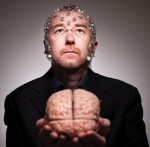
Neuroscientist Adrian Owen works to communicate with patients who are
thought to be in a vegetative state, but may be victims of Locked-In
Syndrome. Owen looks at brain function during fMRI scanning and tries to
discern whether increased activity in parts of the brain are attempts
to answer questions or communicate. He has had some success with several
patients.
In the Dalton Trumbo novel Johnny Got His Gun,
a horribly wounded soldier loses his arms, legs, and face. He keeps his
wits, but is unable to communicate for a long time. When he can finally
let those around him know that he is still conscious, they ask him what
he wants. When he gives his answer, he is denied his only request. That
nightmare is a possibility for many people thanks to new technology.
Neuroscientist Adrian Owen works to communicate with patients who are
thought to be in a vegetative state, but may be victims of Locked-In
Syndrome. Owen looks at brain function during fMRI scanning and tries to
discern whether increased activity in parts of the brain are attempts
to answer questions or communicate. He has had some success with several
patients.Owen’s discovery1, reported in 2010, caused a media furore. Medical ethicist Joseph Fins and neurologist Nicholas Schiff, both at Weill Cornell Medical College in New York, called it a “potential game changer for clinical practice”2. The University of Western Ontario in London, Canada, soon lured Owen away from Cambridge with Can$20 million (US$19.5 million) in funding to make the techniques more reliable, cheaper, more accurate and more portable — all of which Owen considers essential if he is to help some of the hundreds of thousands of people worldwide in vegetative states. “It’s hard to open up a channel of communication with a patient and then not be able to follow up immediately with a tool for them and their families to be able to do this routinely,” he says.On the surface, allowing such patients to have a say in their own future seems to be the humane thing to do. But how can we assess a patient’s intellectual ability and competence with such new technology? And how can we judge a patent’s mental health under such grim circumstances? And even if those questions are put to rest, what is the right thing to do? This is not just a theoretical argument. Tony Nicklinson, who can only communicate by moving his eyes, will petition a court next week to allow his doctor to legally end his life. Adrian Owen’s communication technique may uncover other patients with the same wish. But he is not ready to ask them yet.
Many researchers disagree with Owen’s contention that these individuals are conscious. But Owen takes a practical approach to applying the technology, hoping that it will identify patients who might respond to rehabilitation, direct the dosing of analgesics and even explore some patients’ feelings and desires. “Eventually we will be able to provide something that will be beneficial to patients and their families,” he says.
Still, he shies away from asking patients the toughest question of all — whether they wish life support to be ended — saying that it is too early to think about such applications. “The consequences of asking are very complicated, and we need to be absolutely sure that we know what to do with the answers before we go down this road,” he warns.
Living Stem Cells Survive in Corpse 17 Days After Death

Apparently the stem cells were able survive in the total absence of oxygen. "These cells are so resistant to extreme and deleterious conditions that they stay alive up to 17 days after death," Chrétien said. [...]
These stem cells in both dead mice and human corpses were dormant when discovered, with extraordinarily reduced metabolic activity, marking the first time scientists have found that stem cells were capable of such dormancy. The researchers suspect that chemicals given off after death, or the low levels of oxygen or nutrients in corpses, or a combination of all these factors, could have sent the stem cells into dormancy, helping them survive for weeks.
What a chronic ear infection looks like

Biofilms happen all over the place in nature. That slime that covers the surface of rocks at the bottom of a river or lake? That's a biofilm. The slick, green coating on the underside of a boat when you pull it out of the water? That's a biofilm, too. And so is the plaque that builds up on your teeth.
In the case of ears, though, biofilms might explain why it's so difficult to treat chronic ear infections—biofilms are not easily killed off by antibiotics. The image above, showing a biofilm-coated ear drum, was captured using a new imaging device that produces pictures from reflected light, the same way ultrasound makes images from reflected sound waves. It's part of a research paper that presents evidence about the role of biofilms in ear infection and long-term hearing loss.
Can Drinking Moonshine Really Make You Go Blind?

The idea that moonshine or other home-distilled liquors can cause blindness is rooted in truth, but it's important to separate the causes of said blindness from the alcohol distillation process itself. When homemade spirits cause damage to the optic nerve the culprit is almost always methanol, cousin to the ethanol you consume when you toss back any glass of tipple.
The Hitchhiking Adventures of Pre-Columbian Yeast
The far-flung locations of a particular species of yeast indicate ancient Polynesians migrated southward from Taiwan and then eastward across the Pacific and eventually South America carrying sweet potato plants.
That tingling in your mouth could be a squid trying to mate with you
If you eat a male squid that has not been disemboweled first, you
might end up with said squid's spermatophores—basically, sperm-filled
packets—attempting to burrow into your soft gum tissue the way they
burrow through the flesh of a lady squid. This apparently hurts. We
know, because it has happened to more than one person and those cases have been documented in peer-reviewed research journals.
You, Plus Your Closest 100 Trillion Bacterial Friends

The Human Microbiome Project aims to sequence the genetic material of a thousand or so different kinds of bacteria that call your body home:
Humans, he said, in some sense are made mostly of microbes. From the standpoint of our microbiome, he added, “we may just serve as packaging.”
The microbiome starts to grow at birth, said Lita Proctor, program director for the Human Microbiome Project. As babies pass through the birth canal, they pick up bacteria from the mother’s vaginal microbiome.
“Babies are microbe magnets,” Dr. Proctor said. Over the next two to three years, the babies’ microbiomes mature and grow while their immune systems develop in concert, learning not to attack the bacteria, recognizing them as friendly.
Train driver adopts baby owl he saved from railway tracks
When train driver Guo Zuchun saw a family of baby owls perching on the
tracks ahead of him, he could hardly believe his eyes. "They were so
small I almost didn't see them," said Gho, who was taking power station
workers to their plant in Chongqing city in southern China.

"But I slammed on the brakes and when we went to look there were three baby owls hopping around on the rails." Wildlife experts believe the little owl chicks' nest had been destroyed in a storm leaving the youngsters, then still too small to fly, stranded.
Two were given to a local wildlife center to be raised, but Guo was allowed to keep one as a pet. Now the young owl thinks his new life is a hoot, says Gou.

"I take him to work every day and he sits on the dashboard in front of me having a good look at what's going on around us," he said. "He seems to like riding the train more than he likes flying," laughed Gou.
"But I slammed on the brakes and when we went to look there were three baby owls hopping around on the rails." Wildlife experts believe the little owl chicks' nest had been destroyed in a storm leaving the youngsters, then still too small to fly, stranded.
Two were given to a local wildlife center to be raised, but Guo was allowed to keep one as a pet. Now the young owl thinks his new life is a hoot, says Gou.
"I take him to work every day and he sits on the dashboard in front of me having a good look at what's going on around us," he said. "He seems to like riding the train more than he likes flying," laughed Gou.


Subscribe to:
Posts (Atom)
