A top dino expert says we're '50 percent there' to reverting a chicken to a dinosaur.
Welcome to ...
The place where the world comes together in honesty and mirth.
Windmills Tilted, Scared Cows Butchered, Lies Skewered on the Lance of Reality ... or something to that effect.
Saturday, May 30, 2015
Tiger Temple Maul
The tigers at the 'Tiger Temple' roam freely around the monastery, where anyone can pay a fee to pet them.
Eruptions and Pink Iguanas
A volcano in the Galapagos Islands erupted Monday, raising fears for the world's only colony of pink iguanas.
Mozambique's Elephants
Poaching elephants for their ivory, prized in Asia for trinkets, is rampant in Africa.
How To Get a Cane Toad To Croak?
Australia's invasive cane toads are tough to kill, so
researchers tried making toadsicles: it's humane and effective, they
say.
Friday, May 29, 2015
The Daily Drift
Carolina Naturally is read in 203 countries around the world daily.
Today is - Bats Day
You want the unvarnished truth?
Don't forget to visit: The Truth Be Told
Some of our readers today have been in:
The Americas
Argentina - Brazil - Canada - Colombia - Ecuador - Mexico - Nicaragua - Puerto Rico
Sint Eustatius/Saba - United States
Europe
Albania - Belgium - Bosnia/Herzegovina - Bulgaria - Czech Republic - England - France - Germany
Greece - Iceland - Ireland - Italy - Latvia - Moldova - Netherlands - Poland - Portugal - Romania - Russia Serbia - Scotland - Slovenia - Spain - Sweden - Ukraine - Wales
Asia
Bahrain - China - India - Indonesia - Israel - Japan - Jordan - Malaysia - Pakistan - Saudi Arabia
Africa
Madagascar - South Africa - Tunisia
The Pacific
Australia - Philippines
Some of our readers today have been in:
The Americas
Argentina - Brazil - Canada - Colombia - Ecuador - Mexico - Nicaragua - Puerto Rico
Sint Eustatius/Saba - United States
Europe
Albania - Belgium - Bosnia/Herzegovina - Bulgaria - Czech Republic - England - France - Germany
Greece - Iceland - Ireland - Italy - Latvia - Moldova - Netherlands - Poland - Portugal - Romania - Russia Serbia - Scotland - Slovenia - Spain - Sweden - Ukraine - Wales
Asia
Bahrain - China - India - Indonesia - Israel - Japan - Jordan - Malaysia - Pakistan - Saudi Arabia
Africa
Madagascar - South Africa - Tunisia
The Pacific
Australia - Philippines
Today in History
1453
Constantinople falls to Muhammad II, ending the Byzantine Empire.
1660 Charles II is restored to the English throne, succeeding the short-lived Commonwealth.
1721 South Carolina is formally incorporated as a royal colony of England.
1790 Rhode Island becomes last of the original thirteen colonies to ratify the Constitution.
1848 Wisconsin becomes the thirtieth state.
1849 A patent for lifting vessels is granted to Abraham Lincoln.
1862 Confederate general P.G.T. Beauregard retreats to Tupelo, Mississippi.
1911 The first running of the Indianapolis 500.
1913 The premier of the ballet Le Sacre du Printemps (The Rite of Spring) in Paris causes rioting in the theater.
1916 U.S. forces invade the Dominican Republic.
1922 Ecuador becomes independent.
1922 The U.S. Supreme Court rules organized baseball is a sport not subject to antitrust laws.
1942 The German Army completes its encirclement of the Kharkov region of the Soviet Union.
1951 C. F. Blair becomes the first man to fly over the North Pole in single engine plane.
1953 Edmund Hillary and Tenzing Norgay become the first men to reach the top of Mount Everest.
1974 President Richard Nixon agrees to turn over 1,200 pages of edited Watergate transcripts.
1990 Boris Yeltsin is elected the president of Russia.
1660 Charles II is restored to the English throne, succeeding the short-lived Commonwealth.
1721 South Carolina is formally incorporated as a royal colony of England.
1790 Rhode Island becomes last of the original thirteen colonies to ratify the Constitution.
1848 Wisconsin becomes the thirtieth state.
1849 A patent for lifting vessels is granted to Abraham Lincoln.
1862 Confederate general P.G.T. Beauregard retreats to Tupelo, Mississippi.
1911 The first running of the Indianapolis 500.
1913 The premier of the ballet Le Sacre du Printemps (The Rite of Spring) in Paris causes rioting in the theater.
1916 U.S. forces invade the Dominican Republic.
1922 Ecuador becomes independent.
1922 The U.S. Supreme Court rules organized baseball is a sport not subject to antitrust laws.
1942 The German Army completes its encirclement of the Kharkov region of the Soviet Union.
1951 C. F. Blair becomes the first man to fly over the North Pole in single engine plane.
1953 Edmund Hillary and Tenzing Norgay become the first men to reach the top of Mount Everest.
1974 President Richard Nixon agrees to turn over 1,200 pages of edited Watergate transcripts.
1990 Boris Yeltsin is elected the president of Russia.
America's crumbling infrastructure
by Kaye Foley
America’s infrastructure could be
reaching a breaking point. Literally. When it comes to our
transportation infrastructure — that’s railroads, water pipelines,
ports, dams, bridges, airports and roads — the United States has gotten
way off track.
In fact, the American Society of Civil Engineers’ most recent report card gave America’s infrastructure a D+. And according to the World Economic Forum, the U.S. ranks 16th in quality of overall infrastructure, behind countries like France, Spain and Japan.
Our roads, for example, require a
lot of maintenance, especially after a long winter. All those potholes
and rough roads cost drivers an estimated $324 a year spent on car
repairs. Many roads are often jammed with traffic. Forty-two percent of America’s major urban highways are considered congested. And that costs the economy an estimated $101 billion in wasted time and fuel each year.
It’s not just the highways and roads. Around 70,000 bridges are structurally deficient, which means they’re not unsafe but are in poor condition due to deterioration.
So why is America’s infrastructure beginning to crumble? Maintaining
and improving infrastructure is expensive — really expensive. According
to the ASCE report, an estimated $1.7 trillion is needed by 2020 for our surface transportation to be improved.State and local governments largely finance infrastructure in the U.S., but when they’re short on funds, infrastructure moves down the priority list.
The federal government provides
crucial funding through something called the Highway Trust Fund, which
gets its revenue mostly from a gas tax. It’s 18.4 cents per gallon, but
it hasn’t been raised since 1993. The tax brings in around $34 billion
each year, which isn’t enough for all the infrastructure projects across
the nation.
Over the years, Congress has passed a series of fixes to keep the
fund going, but it is expected to go broke on May 31 if lawmakers don’t
act quickly. On May 19 the House passed a two-month extension,
and it is expected to also pass in the Senate. Still, a more permanent
fix is needed. Politicians on both sides of the aisle agree that this is
a critical issue. House Speaker John Boehner, R-Ohio, said in January, “We’ve got to find a way to deal with America’s crumbling infrastructure.”
But so far for Congress, and even
the White House, the road forward doesn’t include raising the gas tax.
And they can’t see eye to eye on other spending to allocate for
infrastructure either.
Your tax money at work
A railgun is an electrically powered electromagnetic projectile launcher based on similar principles to the homopolar motor...
Railguns are being researched as a weapon with a projectile that would use neither explosives nor propellant, but rather rely on electromagnetic forces to achieve a very high kinetic energy... railguns can potentially exceed Mach 10, and thus far exceed conventionally delivered munitions in range and destructive force, with the absence of explosives to store and handle as an additional advantage.
Railguns have long existed as experimental technology but the mass, size and cost of the required power supplies have prevented railguns from becoming practical military weapons. However, in recent years, significant efforts have been made towards their development as feasible military technology.
Do not call me girl
Women in the workforce
by Susan Grigsby
Even in my early twenties, I knew that the words we used shaped the way we think. Back before it was called politically correct, when it was merely seen as respect, we stopped referring to adult African American males as boys. But even the most liberal men of that era still referred to women as girls.
One day, up on that tenuous tightrope upon which the first woman in a man's job had to balance, I had a discussion with my boss, a Berkeley graduate working in San Francisco, about the word girl. Politely, with humor and a winning smile, I suggested that referring to an adult in the terms of childhood diminished her standing in his eyes. That it was not possible to see the professional woman when he was thinking of her as a child, as "less than" an adult member of his team. I remember saying that of course, it was his right to use whatever language he felt was appropriate, but that I did wish he would at least think about the word and what it implied, when he was using it.
Today, I am no longer in need of a paycheck issued by a man, so I can say it flat out, "Do not call me 'girl.' " I am not a child, and it doesn't matter how many women use the term to describe each other or themselves. It is inappropriate to label an adult as a child in any professional setting. Or in any discussion of adults in a professional setting.
The reason this needs to be said now, is that we are likely to nominate the first woman as president of the United States within the next year. We have to be prepared for the backlash that is sure to come, just as our black sisters and brothers have had to deal with the backlash created by the election of the first black president of the United States.
As a result, women are kept out of important meetings and kept from developing the kind of professional relationships that are so crucial to advancing on Capitol Hill. Not because they've done anything wrong, just because someone might think it looks bad. These policies are in a minority of congressional offices, but they're also not a one-off thing. Such policies are discriminatory and illegal—yet they're coming from members of Congress tasked with making the law. Talk about inspiring absolutely no confidence.Someone suggested that this illegal, discriminatory behavior was to protect the man from a sexual harassment claim. That intrigued my curiosity. How many actual claims of sexual harassment are filed every year? Is this a concern that most men should be troubled with? And if so, what should we do to eliminate it as a threat? According to the Department of Labor:
Of the 123 million women age 16 years and over in the U.S., 72 million, or 58.6 percent, were labor force participants—working or looking for work.According to the Equal Employment Opportunity Office in fiscal year 2014, there were a total of 26,027 claims filed alleging discrimination on the basis of sex. Those claims include sexual harassment as well as pregnancy and other sexually related claims. The total claims alleging sexual harassment were 6,862. Keep in mind that in order to file a federal lawsuit claiming sexual harassment, all administrative remedies, including an EEOC complaint, must be exhausted first. So in order to sue, a woman must first comply with all corporate procedures for filing a sexual harassment claim, submit to the corporation's attempts to mediate, and then if unsatisfied, she must file with the EEOC before a suit can be brought. There are a lot of hoops to jump through to file such a claim.
Although these numbers include a minority of male victims as well, I am using the feminine pronoun. But even if we were to assume that all claims were brought by women, that still results in a chance of .01 percent (6,862 divided by 72,000,000) that the woman sitting in your office will bring a claim against you if your office door is closed. And that assumes that some type of harassment actually occurs. The odds of a claim without reasonable basis (52.0 percent of filed claims), is .005 percent.
So for an infinitesimal chance that a false sexual harassment suit might be brought, women must be excluded from one-on-one meetings with men, staffing politicians at evening events and even serving as their drivers?
Sarah Mimms, for the National Journal, spoke with a representative from the congressional Office of Compliance about this issue.
"Policies, official or unofficial, that prohibit female staff from being alone with a Member can be discriminatory and create an unequal playing field in the workplace," OOC spokesman Scott Mulligan said in a statement to National Journal. "A practice like this means that women can never become trusted advisors or rise to high positions within an office based solely upon their gender. Employers should concentrate on ensuring that their staffs are trained in workplace rights laws and that the workplace is free from harassment and discrimination rather than trying to build unlawful fences around their female staff."Women already, (still) face an unequal playing field in the competition for leadership rolls in the workplace.
How Millennials Living With Parents Are Affecting the Housing Market
by Jason Notte

It's getting better for millennials financially, but the housing market is getting impatient.
A Ned Davis Research report
from a few months back indicated that joblessness, stagnant income and
student loan debt had not only set millennials back, but kept enough of
them away from buying homes to account for 3 million homes' worth of
property demand. That's 1 million more homes than the 2 million existing
homes, or 4.6-month supply, that the National Association of Realtors
says are in the national inventory.
According to the Census Bureau,
30.3% of millennials ages 18 to 34 still live at home with their
parents. That's more than 22 million out of 76 million millennials,
including nearly 12 million between the ages of 25 and 34. Eric Mintz,
portfolio co-manager at Eagle Asset Management, notes that millennials
living at home are a huge headwind for the overall economy.
“The marriage rate has been down,
but it has a lot to do with the financial well-being of the millennial
generation,” he says. “But it does appear to be on the mend and, as we
work our way through the recovery, household formation should start to
climb higher.”
Millennials have a whole lot of
other obstacles to clear before reaching that point, however. The
effective unemployment rate for millennials, including those who've
dropped out of the workforce, was 13.9% in March. Even those who are
employed are having a hard time saving. They're coming out of college with average student loan debt of more than $33,000 apiece, with more graduates having $40,000 or more in student loan debt than at any other time in U.S. history.
They'd like to own homes — and 43.4% of college-educated millennials do want to,
according to the Lending Tree — but 67.4% say they need a higher
salary, 28.7% want to pay off student loans first and 25.7% say
homeownership would be a possibility after they spent time and money on
other things, such as traveling, investing and philanthropic missions.
Besides, 44.8% have less than $5,000 in savings.
“As the economy is rebounding, this market segment is still feeling
longer-term effects of the recession,” says LendingTree founder and CEO
Doug Lebda. “Underemployment and low salaries combined with high student
debt and uncertainty about the future are a reality that is affecting
the housing market. The demand is there, but until this age group sees
higher salaries, lower debt levels and feelings of settlement,
millennial participation in the housing market will be slow.”Meanwhile, millennials' parents have been their most trusted financial advisors and biggest supporters. According to a survey by the Principal, millennials' parents still chip in for their cellphone bills (12%), car insurance (8%), health insurance (7%) and rent (7%). Their investment is starting to pay off.
Joe O’Boyle, a financial advisor and retirement coach with Voya Financial Advisors in Beverly Hills, Calif., notes that millennials living at home aren't always doing so because they're jobless. In many cases, it's the most fiscally responsible way they can pay down debt — if their parents go along with it. O'Boyle shared the story of a financially savvy millennial client who is a doctor in Los Angeles and made the conscious decision to live at home with her parents after finishing medical school.
“She used the estimated $4,000 a month that would have been going towards rent and utilities and the cost of living on her own towards paying down her student loans, building up her emergency reserves and savings towards a wedding fund,” he says. “She has a great relationship with her parents, and lived at home for two years — $96,000 in savings — to put herself in a better financial position to start a life with her soon-to-be husband.”
One of O'Boyle's other clients, a sales director with a six-figure salary, opted to live at home to pay off student loan and credit card debt and build a $36,000 travel fund to give himself $3,000 a month for a year abroad.
“He said he had no concerns
about finding a job upon his return,” O'Boyle says. “He would live with
his parents for a few months when he returned from his trip. This way he
could find a new job and build up his savings so he could live
comfortably on his own. He said, 'The time for this adventure is now,'
and he made it happen."
Overall, millennials have seen
their fortunes improve during the economic recovery. According to the
Principal, 32% of employed millennials have more job security than a
year ago and just 4% have less job security. Another 30% of millennials
say their savings are in better shape now than a year ago, while just
15% are less comfortable. Finally, 33% of millennials report their
overall financial situation is better than 12 months ago compared with
16% who say it has deteriorated.
Eventually, even among
millennials who live with their parents, that typically means a step
into the housing market. O'Boyle notes that many millennials with good
jobs who can afford to live on their own make the choice, with their
parents, to live at home so they can save money toward buying their
first home. In the costly Los Angeles housing market, one of his
millennial client who is an attorney with student loans or credit card
debt decided to live at home so she could save toward the down payment
on a home. She lived at home for three years after she finished law
school and saved up more than $200,000 to make a 20% down payment on a
home in a nice neighborhood near her office.
“She said that there were some
small sacrifices to her social life that came with living with her
folks, but that it allowed her to buy her first home and it was
definitely worth it,” O'Boyle says. “The trade-off for many millennials
living at home is giving up some of their independence today for greater
financial freedom tomorrow.”
Random Celebrity Photos
Marilyn Monroe in a 'Sack Dress' like many women wore during the rationing day of WW2.
Due to rationing and shortages and the depressed non-war supply part of the economy people began to make their own clothing (they had been for years but used fabrics bought at the store for just that ... now those cotton and denim fabrics where going to make military uniforms and the silks into parachutes) out of the only material in greater quantity - Feed and Flour Sacks.
15 of the Coolest Themed Bars in America

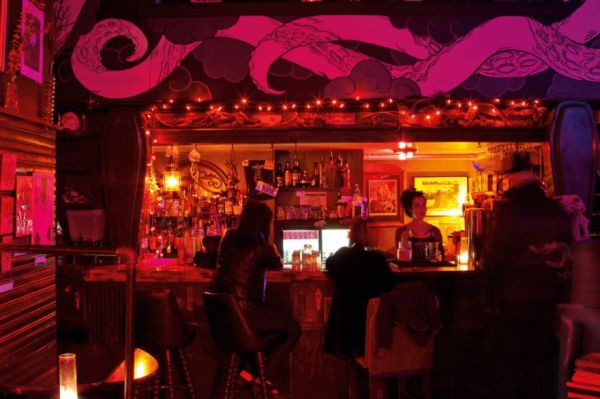
The Lovecraft Bar, Portland
With
so many bars and nightclubs located in our myriad great cities here in
the U. S., and the incredible competition for patrons between
establishments, owners have to work smart. They need at least one draw
(and preferably more) to keep people coming in the door. Whether the
lure is a classic idea such as with San Francisco's Tonga Room, or a
more modern twist, such as Mutts Canine Cantina in Dallas, it needs to
be done well, run well and produce the fun well. The Lovecraft
Bar of Portland, pictured above, takes advantage of the horror master
theme to the fullest. Creepy décor catering to a somewhat "goth" crowd. A
giant pentagram over the dance floor. Bizarre, old movies and burlesque
shows. Drinks strong enough to stir the dead. What could go wrong that
wouldn't be considered part of the dark evening?Check out this listing of cool, themed bars and nightclubs. Have you been to any on the list? Share your experience if you're so inclined. Last summer on an extended stay in San Francisco, my sister and I hung out at the Tonga Room more than once; a bar in which it regularly rains and thunders. A classic spot in the gorgeous Fairmont Hotel, this old-Hollywood, Polynesian tiki lounge — complete with a pool in the middle of the place in which a band plays on a floating raft — is cheesy, kitschy, stocked with delicious food and drink and an absolute blast.
Parents Share The Most Inappropriate Thing Their Kids Ever Did

When it comes to a topic such as children saying things and behaving in ways that are inappropriate, the article simply writes itself. So BuzzFeed found when they asked their community of readers to share the most inappropriate things their kids ever did. The following quotes are a sample of the responses they received. Read all of the responses here.
“We were getting ready to leave a birthday party and went up to the mother of the birthday child to thank her for inviting us. My 2-year-old son slapped her butt and said, ‘Thanks for the cake, babe.’ That’s how his father thanks me for dinner and apparently he thought it was just how you thank people for food.”—Tracy Mattea Grimes, Facebook7
“After my son learned what made boys and girls different, he started introducing himself to random people thusly: ‘Hi, I’m John, and I do NOT have a vagina.’”
—meaghanb44815185c
“My mom says that when I was little we were waiting for a train when a group of nuns sat down on the bench opposite us. I pointed at them and screamed, ‘Mommy! Look at the witches!! Look Mommy!! Witches!!!’”
—Laura Adler, Facebook
“My 3-year-old son told an older lady at the hair salon that he had a big penis.”
—mandyp430b718de

Clerk Provides Funny Commentary For That One Time She Was Held At Gunpoint

But clerks who are lucky enough to survive an armed robbery, especially those who survive by keeping their cool through the robbery, have every right to chuckle about it all after the encounter.
The clerk delivering the running commentary on this NSFW security video footage sent the video to her sister, meant for her eyes only, and of course the sister immediately posted it online for the world to see.
It's a good thing the clerk handled the robbery like she did, because her cool head and calm manner most likely saved her from being shot…or worse.
Terry Sawchuk Is The Face Of Hockey
Hockey is one of the roughest professional sports, and
one of the only sports where players don’t have to tell people which
sport they play when out of uniform- because their face does all the
talking for them!
One face in particular has come to be known as the face of hockey, and that face belongs to Terry Sawchuk, frankengoalie.
Sawchuk started tending goal pre-1966, when players weren't required to wear masks or head protection of any kind. When safety rules were implemented in 1966 LIFE magazine hired a professional makeup artist to recreate many of the facial injuries Terry had sustained during his sixteen years in the game for this eye opening photo.
The other injuries they couldn't effectively recreate include:

Sawchuk started tending goal pre-1966, when players weren't required to wear masks or head protection of any kind. When safety rules were implemented in 1966 LIFE magazine hired a professional makeup artist to recreate many of the facial injuries Terry had sustained during his sixteen years in the game for this eye opening photo.
The other injuries they couldn't effectively recreate include:
"a slashed eyeball requiring three stitches, a 70% loss of function in his right arm because 60 bone chips were removed from his elbow, and a permanent “sway-back” caused by continual bent-over posture."
Diverse Linkage
- Even Australians can't understand a strong Australian accent.
According to the QI elves, "in 1965 a US Senate Committee predicted that by the year 2000 the average working week would be 14 hours." (sourced from The Atlantic) - It is not mandatory for a chrysalis to be kept upright (or suspended) for a butterfly to develop normally - as long as the newly enclosed butterfly can climb somewhere to suspend his/her wings after emergence.
- Donkey milk (and salmon hatchery water) are being touted as beauty ingredients: "...this milk 'soothes sensitive skin and eczema,' thanks to its high protein and vitamin content."
- A dashpot is "a mechanical device, a damper which resists motion via viscous friction." That's the word for the doohickey that lets a door close slowly rather than slamming shut. They are also common components of automobile shock absorbers.
- The Soviet Union developed "spy dust" for tracking people. "...powder containing both luminol and a substance called nitrophenyl pentadien (NPPD) had been applied to doorknobs, the floor mats of cars, and other surfaces that Americans living in Moscow had touched. They would then track or smear the substance over every surface they subsequently touched."
- There is a medical entity colloquially referred to as "bicyclist's vulva" (explicit photo at the British Medical Journal). Interestingly it is not simple edema, but rather lymphedema.
- A "vindshield viper."
Get A Load of This Math Problem Using the “Old” Way and the “Common Core” Way
The world is laughing at us, folks …
This Color is Scientifically Proven to Bring Health and Happiness
Blaming the Genies
Beheadings, classism, and religious intolerance
Forgotten aspects of the United States' colonial heritage:
This practice was a carryover from the mayhem known to the colonists from their European forefathers' genocidal wars (p. 498):
Just as the Indians in Virginia were seen "defacing... and mangling [the colonists'] dead carcasses into many pieces, and carrying some parts away in derision," so the Virginians "ransaked their Temples, Tooke downe the Corpes of their deade kings from of[f] their Toambes," engaged freely in scalping, and did not hesitate to decapitate their enemies in campaigns of terror. (Percy, casually: "I cawsed the Indians heade to be Cutt of[f]"; Kiefft, coolly: ten fathoms of wampum for a Raritan's head, twenty for a suspected murderer's.)An excerpt (p. 502) from Bernard Bailyn's The Barbarous Years; The Peopling of British North America: The Conflict of Civilizations, 1600-1675.
This practice was a carryover from the mayhem known to the colonists from their European forefathers' genocidal wars (p. 498):
The retaliatory executions in the conquered city of Mons, in Hainault, proceeded at a leisurely pace: for a full year "ten, twelve, twenty persons were often hanged, burned, or beheaded in a single day. The experience and knowledge of such extreme but not uncommon events were carried to North America by the many veterans of the Dutch rebellion and the Thirty Years War who were sent to the colonies...From this book I also learned about the extreme classism towards the poor practiced by the colonists:
So closely linked were the incidences of racial conflict, so extended their dedly aftermaths, that one can conceive of a single, continuous Euro-Indian war - precisely the Virginia Company's hoped-for 'perpetuall Warr without peace or truce" - that lasted from 1607 to 1664 and beyond...
They therefore prohibited anyone "whose visible estates, reall and personall, shall not exceed the true and indifferent valew of two hundred pounds, shall weare any gold or silver lace, or gold and silver buttons, or any bone lace above two shillings per yard, or silk hoods or scarfes, uppon the poenaltie of tenn shillings for every such offense." Those who defied this ruling would be taxed at the level of wealth they pretended to - provided, they added in an elegiac conclusion that went to the heart of their discontents, that the law would not aply to anyone "whose education and imployments have binn above the ordinary degree, or whose estates have binn considerable, though now decaied." (p. 469)It was interesting to learn that the colonists and the Native Americans freely exchanged children for prolonged periods of time in order to develop bilingual translators (p. 304). There was also a lot of religious intolerance -
[The jews] were, Stuyvesant wrote his superiors in Amsterdam, "a deceitful race," blasphemers who would infect the entire colony with their elemental corruption. He appealed to the West India Company for permission to expel them forthwith... The colony had trouble enough, [Megapolensis] pointed out, with "papists, mennonites, and lutherans among the Dutch; also many Puritans or Independents and many atheists and varioius other servants of Baal among the English under this government, who conceal themselves under the name of christians; it would create a still greater confusion if the obstinate and immovable jews came to settle here." (p. 252-4)There's lots more in this comprehensive book about the often-suppressed "dark side" of the colonial existence in North America.
Later generations, reading back into the past the outcomes they knew, often gentrified this passage in the peopling of British North America, but there was nothing genteel about it. It was a brutal encounter—brutal not only between the Europeans and native peoples, despite occasional efforts at accommodation, and between Europeans and Africans, but among Europeans themselves...
Divergent Linkage
- A gif of a thirsty cow operating a pump handle.
- If you fold a Bank of England 10-pound note just right and tilt it, you can create a HappyQueen/Sad Queen.
- "A 65-year-old woman with stage IV breast cancer presented after being denied authorization to perform a banking transaction because her fingerprints were unrecognizable..." (because of a chemo-induced hand-foot syndrome)
- Video of thousands of crabs migrating as a pyramidal cluster, rather than spread out on the seafloor.
- An octopus chasing a crab in open water.
- Planning a trip to Ecuador? Take along lots of $2 bills.
- A history of the C-section in medieval times.
- "While the belief that prolonged close-up activities like reading and playing computer games cause short sightedness (myopia) is popularly held, new research indicates that a deficiency of sunlight is the true culprit... Our hypothesis that the mechanism of the effect of light was mediated by retinal dopamine."
- "The Mystery of the Leaping Fish"- "This short silent film from 1916 is a thinly veiled parody of the Sherlock Holmes series. Douglas Fairbanks stars as Coke Ennyday, a "Scientific Detective" with a cocaine habit. The film was released in 1916, a year before the Harrison Act that regulated narcotics came into force." Full-length (26 minute) video embedded at the link.
- Video of a dog practicing for the hammer throw.
Europa has more water than the Earth
An old APOD from NASA.
"...if all the water on [Jupiter's moon] Europa were gathered into a ball it would have a radius of 877 kilometers. To scale, this intriguing illustration compares that hypothetical ball of all the water on Europa to the size of Europa itself (left) - and similarly to all the water on planet Earth."
Thursday, May 28, 2015
The Daily Drift
Carolina Naturally is read in 203 countries around the world daily.
Today is - Sierra Club Day
You want the unvarnished truth?
Don't forget to visit: The Truth Be Told
Some of our readers today have been in:
The Americas
Argentina - Brazil - Canada - Chile - Colombia - Ecuador - Mexico - Nicaragua - Peru - Puerto Rico - Trinidad/Tobago - United States - Uruguay
Europe
Albania - Belarus - Belgium - Bosnia/Herzegovina - Bulgaria - Czech Republic - England - France - Germany - Greece - Iceland - Ireland - Italy - Latvia - Moldova - Netherlands - Poland - Portugal - Romania - Russia - Scotland - Serbia - Slovenia - Spain - Sweden - Switzerland - Ukraine - Wales
Asia
Bangladesh - Burma - India - Indonesia - Israel - Japan - Korea - Malaysia - Mongolia - Nepal - Oman - Pakistan - Sri Lanka - United Arab Emirates
Africa
Madagascar - South Africa - Tunisia - Zambia
The Pacific
Australia - New Zealand - Papua New Guinea - Philippines
Some of our readers today have been in:
The Americas
Argentina - Brazil - Canada - Chile - Colombia - Ecuador - Mexico - Nicaragua - Peru - Puerto Rico - Trinidad/Tobago - United States - Uruguay
Europe
Albania - Belarus - Belgium - Bosnia/Herzegovina - Bulgaria - Czech Republic - England - France - Germany - Greece - Iceland - Ireland - Italy - Latvia - Moldova - Netherlands - Poland - Portugal - Romania - Russia - Scotland - Serbia - Slovenia - Spain - Sweden - Switzerland - Ukraine - Wales
Asia
Bangladesh - Burma - India - Indonesia - Israel - Japan - Korea - Malaysia - Mongolia - Nepal - Oman - Pakistan - Sri Lanka - United Arab Emirates
Africa
Madagascar - South Africa - Tunisia - Zambia
The Pacific
Australia - New Zealand - Papua New Guinea - Philippines
Today in History
585 BC
A solar eclipse interrupts a battle outside of Sardis in western Turkey between Medes and Lydians. The battle ends in a draw.
1805 Napoleon is crowned in Milan, Italy.
1830 Congress authorizes Indian removal from all states to the western Prairie.
1863 The 54th Massachusetts, a regiment of African-American recruits, leaves Boston, headed for Hilton Head, South Carolina.
1859 The French army launches a flanking attack on the Austrian army in Northern France.
1871 The Paris commune is suppressed by troops from Versailles.
1900 Britain annexes the Orange Free State in South Africa.
1940 Belgium surrenders to Germany.
1953 Melody, the first animated 3-D cartoon in Technicolor, premiers.
1961 Amnesty International, a human rights organization, is founded.
1805 Napoleon is crowned in Milan, Italy.
1830 Congress authorizes Indian removal from all states to the western Prairie.
1863 The 54th Massachusetts, a regiment of African-American recruits, leaves Boston, headed for Hilton Head, South Carolina.
1859 The French army launches a flanking attack on the Austrian army in Northern France.
1871 The Paris commune is suppressed by troops from Versailles.
1900 Britain annexes the Orange Free State in South Africa.
1940 Belgium surrenders to Germany.
1953 Melody, the first animated 3-D cartoon in Technicolor, premiers.
1961 Amnesty International, a human rights organization, is founded.
These Kids Were Banned From Their School Carnival For Being Poor
A Bomb In DC
But it may just have been a pressure cooker and little more.
Bomb Squad Detonates Pressure Cooker Near US Capitol, 1 Arrested
Debunking the Myths of OCD
People
and pop culture latch onto psychological terms and extrapolate them to
people they know. Even themselves! Obsessive-Compulsive Disorder is one
of the more recent psychological fads. The real disorder is way more
serious than we commonly think, and doesn’t fit the descriptions we see
in the movies. This TED-Ed lesson by Dr. Natascha M. Santos explains the real OCD.
Genetically-engineered yeast is the future of flavor
Why
does grape candy taste so fake? What on earth is blue raspberry,
anyway? And what is the difference between natural and artificial, at
least when it comes to flavor?
6 Things You May Not Know About Holography

Even though it was invented over 70 years ago, holography remains the best candidate for achieving true 3D displays. Here are 6 things you may not know about the strange and wonderful world of holography.
Man wearing only underpants and socks left taped to traffic lights

An unfortunate man was left taped to traffic lights at Hazel Grove in Stockport, Greater Manchester on Saturday morning.
Motorists were left bemused when they pulled up at the lights to see the half-naked man attached to the metal pole.
Wearing just a pair of patterned briefs and socks, the man was strapped with his hands behind his back using duct tape and cling film.
It is not known how long he was left taped to the lights.
Wearing just a pair of patterned briefs and socks, the man was strapped with his hands behind his back using duct tape and cling film.
It is not known how long he was left taped to the lights.
Anger over kitchens on first floor of new homes
Internal changes to a new housing development have created tension
between a developer and neighboring residents.
Developer Bramber Construction Co Ltd has built four three-story houses
in Shoreham, West Sussex, with kitchens located on the first floor.
The original planning application for the site included kitchens on the
ground floor of the properties and the changes were made before an
amendment application was submitted.
Angry residents have hit out at the developer’s conduct and believe if
the internal layout of the houses is not changed back it will make a
mockery of the planning system.
Jose Enticknap, 59, said: “I think this sets a precedent. If we’re told
the developer can do what they want where do we stop? I’m gobsmacked
with all of it really.”
The development backs onto Mrs Enticknap’s Grade Two listed house. Concerns include overlooking, additional noise, smells and disturbance.
Mrs Enticknap and her husband Kevin said none of the above were issues
in the approved application.
The couple have lodged a formal complaint against Adur District Council
for ‘neglecting their duties in overseeing the development being built
to the agreed plans put in place by Adur planning office’.
Bruce Williams, chairman of Bramber Construction Co Ltd, lives in
Shoreham and said there was ‘no way’ he would be party to something he
should not be doing.
“The whole thing is unbelievable,” said Mr Williams. “We were advised to put them on the first floor by local agents who had quite a few people interested who wanted kitchens on the first floor. It costs more money to put them on the first floor. We are incredibly disappointed actually that it’s got to this stage.” The Shoreham Society had planned to present Bramber Construction Co Ltd with a plaque for the development being ‘exemplary’, but it will now withhold the award. Gerry Thompson, an architect and member of the Shoreham Society’s building and planning sub committee, called the alteration ‘significant’ and said the society objected to developers applying for retrospective planning approval. He said: “The developer has not built in accordance with planning approval. We are very strongly against that.”
Mr Williams submitted an application for variation of an approved application to Adur District Council on March 27. A council spokesman said: “The council is currently negotiating with the developers to reduce the amount of overlooking caused by relocating the kitchens to the first floor of this development.” He said the council relied on developers to build in accordance with approved plans, and for them to notify the council if internal layout elements are changed. The spokesman continued: “The developer has submitted a retrospective planning application for these amendments and the application will be assessed on its planning merits, having regard to all representations received from adjoining occupiers. The council remains hopeful that a compromise solution can be found to address the concerns of neighboring properties.”
“The whole thing is unbelievable,” said Mr Williams. “We were advised to put them on the first floor by local agents who had quite a few people interested who wanted kitchens on the first floor. It costs more money to put them on the first floor. We are incredibly disappointed actually that it’s got to this stage.” The Shoreham Society had planned to present Bramber Construction Co Ltd with a plaque for the development being ‘exemplary’, but it will now withhold the award. Gerry Thompson, an architect and member of the Shoreham Society’s building and planning sub committee, called the alteration ‘significant’ and said the society objected to developers applying for retrospective planning approval. He said: “The developer has not built in accordance with planning approval. We are very strongly against that.”
Mr Williams submitted an application for variation of an approved application to Adur District Council on March 27. A council spokesman said: “The council is currently negotiating with the developers to reduce the amount of overlooking caused by relocating the kitchens to the first floor of this development.” He said the council relied on developers to build in accordance with approved plans, and for them to notify the council if internal layout elements are changed. The spokesman continued: “The developer has submitted a retrospective planning application for these amendments and the application will be assessed on its planning merits, having regard to all representations received from adjoining occupiers. The council remains hopeful that a compromise solution can be found to address the concerns of neighboring properties.”
Train company apologizes for 'callous and tasteless' death announcement
A rail company has apologized after a staff member told passengers the
train was delayed because someone "couldn't be bothered to live any
more".
Passengers aboard a train to Plymouth were delayed after a fatality on
the line.
Esmee Phillips, 21, complained to First Great Western, saying "the
shocking and callous" loudspeaker announcement left people "completely
open-mouthed".
The company has apologized for "any distress caused".
Its services were disrupted on Friday after a man was killed by a train
between Slough and Reading.
Miss Phillips was traveling back from Oxford to Plymouth on a delayed
service and said a female staff member made two loudspeaker
announcements about the fatality.
She said the announcement said: "Our delays are due to someone who
couldn't be bothered to live any more.
"Because of this, there are severe delays. Some of you have missed your connecting flights for the Bank Holiday." Miss Phillips said she and other passengers "cringed" at the message. "It was shocking as it was said in a very callous and tasteless way, especially as you don't know what personal experiences other passengers have gone through," she said. Fellow passenger Jay Young said the announcements, made once near Westbury and again just before Exeter, made passengers in his carriage "gasp".
First Great Western said: "We expect high standards from our on board teams, who are trained to make clear announcements about delays. When this involves a fatality this should be done with sensitivity and care. We're sorry for any distress caused to customers yesterday and can confirm that this incident is under investigation."
"Because of this, there are severe delays. Some of you have missed your connecting flights for the Bank Holiday." Miss Phillips said she and other passengers "cringed" at the message. "It was shocking as it was said in a very callous and tasteless way, especially as you don't know what personal experiences other passengers have gone through," she said. Fellow passenger Jay Young said the announcements, made once near Westbury and again just before Exeter, made passengers in his carriage "gasp".
First Great Western said: "We expect high standards from our on board teams, who are trained to make clear announcements about delays. When this involves a fatality this should be done with sensitivity and care. We're sorry for any distress caused to customers yesterday and can confirm that this incident is under investigation."
Mystery over cremated remains from Michigan that washed up on Scottish beach
Morag Paterson was going for a swim near Inverness on Friday morning when something on the beach caught her eye.
A plastic bag sat near the water and was full of a greyish powder.
The bag was sealed and attached to it was a round metal tag that said
simply, “Central Michigan Crematory Battle Creek MI” with a five-digit
identification number.
And so the mystery began.
Paterson tried to email the crematory, run by Brutsche Concrete
Products, but could not get through, so she contacted the Battle Creek
Enquirer instead to make known what she had stumbled upon.
When they contacted the company’s Mickey Brutsche, he said they know who the remains belong to through the ID number. He has no idea how the remains ended up in Scotland but said remains have been known to show up far from where they might be expected. “It does happen somewhat often,” he said.
“They found the remains in Ireland (actually in the north of Scotland) and we are working with our records and the funeral home and letting them know. It happens a couple of times a year.” Brutsche would not identify the funeral home that handled the service and he said it would be the funeral home’s responsibility to notify the family. “But this is someone’s loved one so it’s up to them if they want it to be public or not,” he said.
When they contacted the company’s Mickey Brutsche, he said they know who the remains belong to through the ID number. He has no idea how the remains ended up in Scotland but said remains have been known to show up far from where they might be expected. “It does happen somewhat often,” he said.
“They found the remains in Ireland (actually in the north of Scotland) and we are working with our records and the funeral home and letting them know. It happens a couple of times a year.” Brutsche would not identify the funeral home that handled the service and he said it would be the funeral home’s responsibility to notify the family. “But this is someone’s loved one so it’s up to them if they want it to be public or not,” he said.
Man named Bacon arrested after becoming involved in sausage dispute
A man from Madison, New Jersey, was arrested recently for assaulting another person during a dispute over sausage.
On May 12 at 3:32am, Officer Lisa Esposito responded to a residence for a reported dispute in progress.
When Officer Esposito arrived, she found that Thomas Bacon, 19, had allegedly assaulted another person inside the house over eating a piece of sausage.
Because of the sausage, Bacon was charged with simple assault and released pending an appearance in the Madison Municipal Court.

When Officer Esposito arrived, she found that Thomas Bacon, 19, had allegedly assaulted another person inside the house over eating a piece of sausage.
Because of the sausage, Bacon was charged with simple assault and released pending an appearance in the Madison Municipal Court.
Woman hit self on head with bowling ball as cover for robbery
A 30-year-old employee of Pla-Mor Lanes bowling alley in Decatur,
Illinois, triggered a massive rapid response from police when she
reported she was knocked unconscious by a robber with a bowling ball who
emptied the company's safe.
However, when police looked at the surveillance video, it told a
different story.
At 9:25pm on Thursday, eight officers responded to the report of the
robbery, many of them using their emergency lights and traveling at "an
increased rate of speed," said an affidavit by patrol officer James
Weddle.
Jamie L. Gordon said "she had been struck in the head with a bowling
ball and all of the money, $2,100, had been stolen out of the safe,"
Weddle wrote in his statement.
She said she did not see her assailant because she was struck from
behind and knocked unconscious.
When a manager arrived at the bowling alley, he granted Weddle
permission to view the surveillance video.
"I observed Jamie walk into the office. Jamie walks over to the counter
in the office and picks up a red bowling ball with her left hand and a
cash drawer with her right hand," the affidavit said. "Jamie proceeds to
strike herself twice in the back, left side of her head with the
bowling ball."
Gordon then "dropped to the floor," where she remained for 13 minutes, waiting for another employee to discover her. After informing Gordon that he "just watched her strike herself in the head with a bowling ball twice on video," he asked her where the money was. "Jamie sighed and stated, 'Some of it is in my car.'" She led the officer to her car "where she pulled out a Hello Kitty brand bag full of money. The bag contained $439." When asked where the rest of the missing money was, Gordon said she had gambled it away in the bowling alley's slot machines.
During an interview, Gordon said she recently gambled away her pay check. After that, "she began taking money from the drawers and safe." She said she "already owed Pla-Mor Lanes $250" as a result of the other missing cash. "Jamie admitted to striking herself in the head with the bowling ball in an attempt to make it look like she had been robbed. Jamie advised she struck herself with the bowling ball so that she would have a knot on her head when police arrived." Gordon, who has no prior criminal record, was booked into the Macon County Jail, where she was being held on $7,500 bond.
Gordon then "dropped to the floor," where she remained for 13 minutes, waiting for another employee to discover her. After informing Gordon that he "just watched her strike herself in the head with a bowling ball twice on video," he asked her where the money was. "Jamie sighed and stated, 'Some of it is in my car.'" She led the officer to her car "where she pulled out a Hello Kitty brand bag full of money. The bag contained $439." When asked where the rest of the missing money was, Gordon said she had gambled it away in the bowling alley's slot machines.
During an interview, Gordon said she recently gambled away her pay check. After that, "she began taking money from the drawers and safe." She said she "already owed Pla-Mor Lanes $250" as a result of the other missing cash. "Jamie admitted to striking herself in the head with the bowling ball in an attempt to make it look like she had been robbed. Jamie advised she struck herself with the bowling ball so that she would have a knot on her head when police arrived." Gordon, who has no prior criminal record, was booked into the Macon County Jail, where she was being held on $7,500 bond.
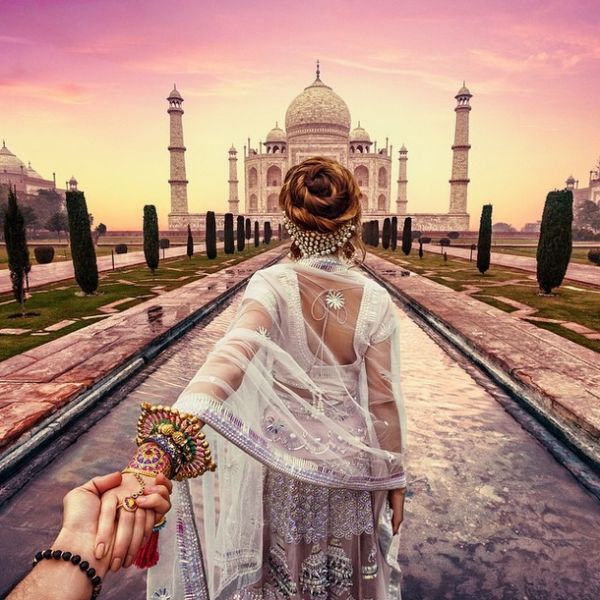
Photographer Follows His Girlfriend Through the Wonders of India

The results are beautiful and have only gotten better since they journeyed to India. Zakharova wore traditional Indian clothing and pulled Osmann through scenic parts of that country, including famous landmarks such as the Taj Mahal and the Jama Masjid mosque. Neatorama has more.
Welcome To Ordos
The World's Largest Ghost City

Grand Canyon Steam Train
Running between Williams, AZ and the Grand Canyon's south rim, a
distance of 64 miles, the Grand Canyon Railway has become a major
tourist attraction and people mover since its re-opening in 1989.
Built in 1901, the line is now owned by Xanterra Parks and Resorts.
While the railroad canceled its regular steam operations in 2008, they
still run ex-CBQ 2-8-2 4960 on select weekends throughout the year.
The world's first bumblebee highway created in Norway
The Norwegian capital Oslo has inaugurated the world's first 'bumblebee
highway', a corridor through the city pollen stations every 250 meters.
“The idea is to create a route through the city with enough feeding
stations for the bumblebees all the way,” Tonje Waaktaar Gamst of the
Oslo Garden Society said. ”Enough food will also help the bumblebees
withstand man-made environmental stress better.”
Bumblebees and other pollinating insects struggle in urban environments
where there are few flowers rich in nectar, effectively starving them.
Gamst and his team have placed flowerpots on rooftops and balconies along
a route from east to west through the city.
During the last few years, bees, bumblebees and other insects have
suffered, with many colonies dying out, causing damage to agriculture
that depends on the insects.
Six out of 35 Norwegian bumblebee species are close to extinction. Oslo's municipality is co-operating with environmental organizations, the public, and and companies, who are asked to plant bumblebee friendly flowers on their property. To help the insects along, the organization ByBi (Bee Town) has created an app, where the public can see the “grey areas”, long stretches with no food for bees, in order to encourage the planting of flowers in areas that don’t have nearby parks.
“It will be easy to see barriers and obstacles on the map. The goal is
to inspire people to fill these gaps.” Agnes Lyche Melvær of ByBi said.
The public will also be able to upload pictures of their projects to
improve the situation for bees and bumblebees, such as flowerpots and
bee hotels.
”Some bee species like to live in solitary rooms. They need small
hollows like a crack in an old tree truck. It’s very important to have
some old wood lying around,” says Melvær.
Six out of 35 Norwegian bumblebee species are close to extinction. Oslo's municipality is co-operating with environmental organizations, the public, and and companies, who are asked to plant bumblebee friendly flowers on their property. To help the insects along, the organization ByBi (Bee Town) has created an app, where the public can see the “grey areas”, long stretches with no food for bees, in order to encourage the planting of flowers in areas that don’t have nearby parks.
“It will be easy to see barriers and obstacles on the map. The goal is
to inspire people to fill these gaps.” Agnes Lyche Melvær of ByBi said.
The public will also be able to upload pictures of their projects to
improve the situation for bees and bumblebees, such as flowerpots and
bee hotels.
”Some bee species like to live in solitary rooms. They need small
hollows like a crack in an old tree truck. It’s very important to have
some old wood lying around,” says Melvær.
Subscribe to:
Posts (Atom)